
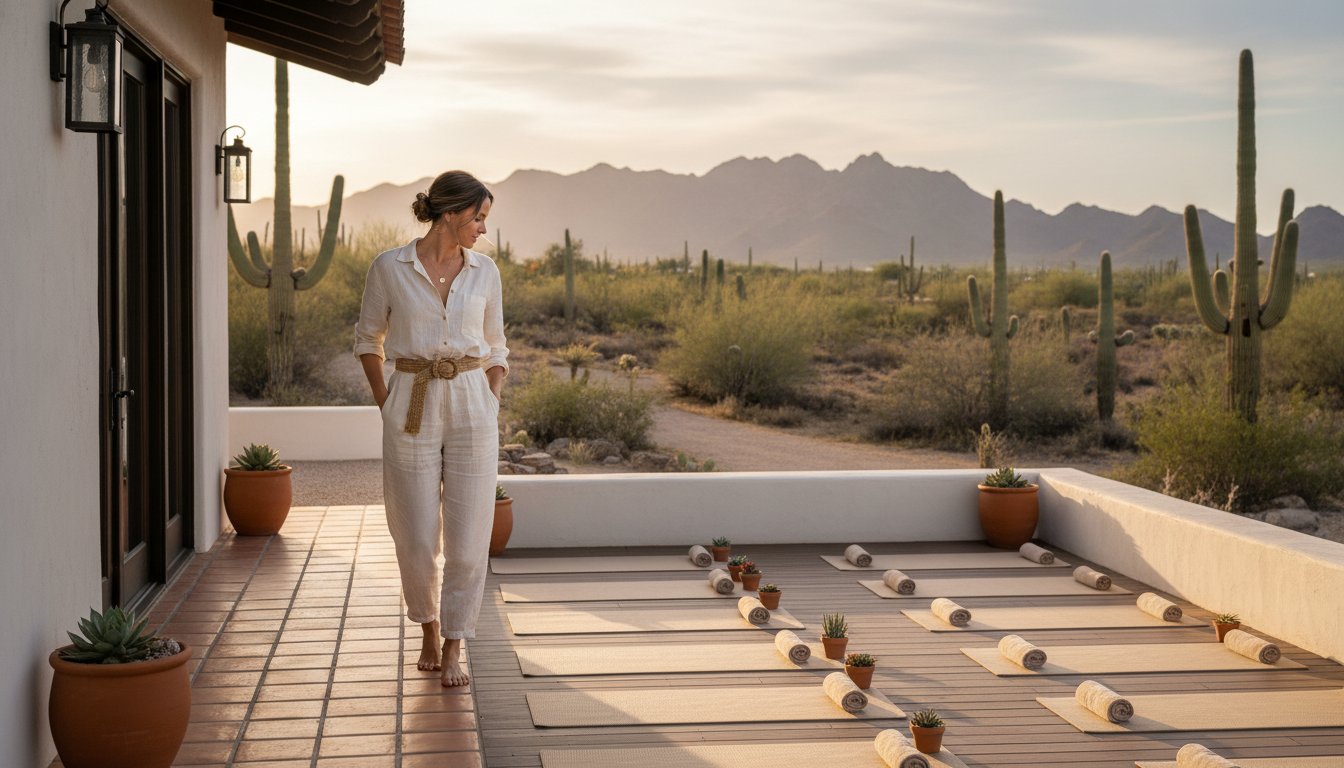

What if the most profound breakthrough of your 200-hour intensive happens not on the mat, but during a quiet moment on a sun-drenched, historic veranda? Many lead teachers find that planning a yoga teacher training retreat is a delicate dance between academic rigor and the art of hospitality. You likely already know that a cramped studio or a sterile, corporate hotel can stifle the very growth you’re trying to nurture. It’s natural to feel a sense of overwhelm when you’re balancing a complex curriculum with the heavy logistical weight of a residential intensive.
This guide is designed to replace that planning anxiety with the quiet confidence of a seasoned, gracious host. You’ll master a comprehensive framework that covers everything from financial break-even points to selecting a private estate that serves as a blank canvas for your vision. We’ll explore a detailed 12-month roadmap and a venue selection strategy that ensures your 2026 training is as seamless as it is soul-stirring. By the end, you’ll have the tools to create a sanctuary where your students can truly immerse themselves in the lineage of yoga without the distractions of the outside world.
Key Takeaways
- Distinguish your certification intensive from a standard wellness getaway by understanding the specific immersion needs of modern students.
- Master the complex logistics of planning a yoga teacher training retreat with a 12-month roadmap that guides you from initial vision to final curriculum delivery.
- Gain financial confidence by learning how to structure a comprehensive budget that balances luxury lodging costs with sustainable, tiered pricing models.
- Discover the “private buyout” advantage, ensuring your training remains a dedicated sanctuary free from outside interruptions or corporate distractions.
- Learn to curate a transformative environment by selecting a venue where architectural heritage and natural tranquility serve as a blank canvas for student growth.
Defining the Yoga Teacher Training Intensive Model
While a standard wellness getaway focuses on relaxation, a certification intensive demands a more rigorous architecture. It’s the difference between a weekend of rest and a profound professional rebirth. A Yoga Teacher Training Intensive is a comprehensive residential program meeting Yoga Alliance standards. When you’re planning a yoga teacher training retreat, you’re building a bridge between ancient wisdom and modern professional requirements. This model requires more than just a sequence of classes; it requires a sanctuary for change.
In 2026, we’re seeing a significant shift toward the “destination intensive.” Students are moving away from modular, weekend-only formats in favor of deep immersion. They seek out environments that offer a total escape from the noise of their daily lives. By stepping away from the familiar, students can fully inhabit the role of the practitioner. As the lead trainer, your responsibility expands beyond the curriculum. You become both the educator and the curator of a transformative experience, ensuring every detail supports the student’s journey.
The Benefits of a Residential Intensive
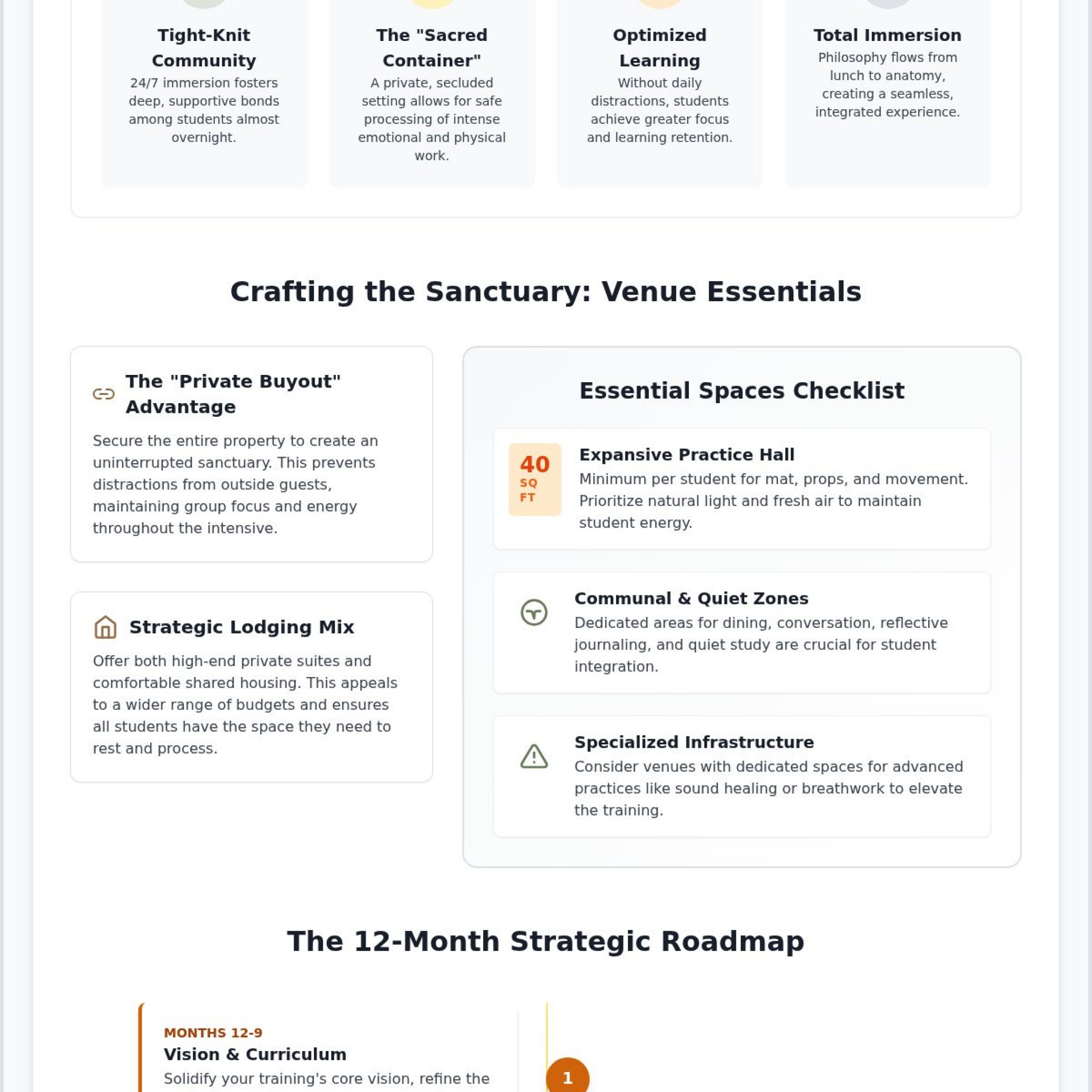
Choosing a residential model offers unparalleled advantages for student integration. Without the distraction of commutes or household chores, the group forms a tight-knit community almost overnight. This 24/7 environment optimizes learning retention. The philosophy discussed over lunch naturally flows into the afternoon anatomy session. By utilizing a private estate or a high-end guest ranch, you create a “sacred container.” This secluded setting allows students to process intense emotional and physical work in a space that feels safe, stable, and deeply supportive of their growth.
Teacher Readiness: Are You Ready to Lead?
Before you begin the process of planning a yoga teacher training retreat, take a moment for honest reflection on your own readiness. Leading an intensive requires hundreds of hours of prior teaching experience and a curriculum that is both robust and flexible. It’s often wise to bring in an assistant teacher or a dedicated retreat manager to handle the daily logistics. This allows you to remain fully present for your students’ breakthroughs. Setting clear intentions for their professional growth ensures that the experience remains focused and purposeful from the first sun salutation to the final certification ceremony.
Venue Requirements for a Successful Residential Intensive
When you shift from a local studio format to a residential model, your venue becomes much more than a backdrop. It is the silent co-teacher of your curriculum. Planning a yoga teacher training retreat requires finding a space that supports the intense physical and emotional labor of a 200-hour or 300-hour program. Unlike a commuter training where students return home each night, a residential intensive requires a “private buyout” approach. Securing an entire property ensures that your students’ early morning meditations aren’t interrupted by outside guests or the clatter of a public hotel lobby. This total seclusion is vital for maintaining the group’s focus and energy.
The property layout must accommodate different modes of learning and rest. Beyond the practice hall, you need communal dining areas that encourage deep conversation, quiet zones for reflective journaling, and comfortable study lounges where students can spread out their manuals. Providing a mix of lodging configurations is also a strategic move. Offering both high-end private suites and shared student housing allows you to appeal to a wider range of budgets while ensuring everyone has the space they need to process the day’s teachings. Integrating specialized infrastructure, such as dedicated areas for sound healing or breathwork, further elevates the professional quality of your offering.
The Essential Mat Space and Props
For a group of 15 to 30 students, your primary practice space must be expansive. You’ll want to calculate for at least 40 square feet per student. This isn’t just for the mat; it’s for the blocks, bolsters, straps, and textbooks that accompany a training. Lighting and ventilation are equally critical. A room flooded with natural light and fresh air keeps students alert during long philosophy lectures. If you’re still narrowing down your search, explore our detailed guide on Selecting the Ideal Yoga Teacher Training Retreat Venue to understand how aesthetics and location impact student retention.
Nourishment and Dietary Logistics
In a residential setting, the kitchen is the heart of the experience. Hiring a private chef who understands the specific needs of yogis is a game-changer. Meals should be designed for sustained energy and cognitive focus, avoiding the heavy, lethargic feeling that follows standard catering. You’ll need a meticulous system for managing allergies and specialized diets well before the first day. Providing high-quality, nourishing meals in a private villa setting allows your students to focus entirely on their growth, knowing their physical needs are being expertly met by a gracious host.
The Economics of Planning a Yoga Teacher Training Retreat
Financial stewardship is the quiet foundation upon which every successful intensive is built. When you’re planning a yoga teacher training retreat, you’re transitioning from a teacher to a business curator. This shift requires a meticulous approach to budgeting that balances your educational goals with the reality of operational costs. Your primary expense will almost always be the venue buyout. However, this fixed cost provides the stability needed to host a truly immersive experience. By securing a private villa or guest ranch, you eliminate the variable costs of renting external studio space and coordinating disparate student housing.
Understanding your “break-even” math is essential for peace of mind. You must calculate the exact number of students required to cover your venue hire, guest teacher fees, and marketing spend. Most seasoned hosts find that their first eight to ten students cover the baseline expenses, while subsequent registrations represent the profit that sustains their teaching career. To manage risk, always implement a clear policy regarding non-refundable deposits and professional liability insurance. These safeguards protect your vision from the unpredictability of student cancellations or external disruptions.
Budgeting for Luxury and Comfort
Investing in high-end accommodations is a strategic choice rather than a mere indulgence. Students are often more willing to commit to a higher tuition rate when they know they’ll be staying in a setting that reflects the quality of the curriculum. Don’t forget to account for the hidden costs of planning a yoga teacher training retreat. These include shipping heavy manuals, prop rentals, and curated student welcome kits. Allocating a small portion of your budget for “surprise and delight” moments, like a farewell dinner or a local heritage tour, transforms a standard certification into a lifelong memory.
Marketing Your Intensive
A successful intensive requires a deliberate 12-month marketing funnel. You can’t rely on last-minute registrations for a residential program. Start by leveraging social proof from previous classes and highlighting the unique aspects of your curriculum. Use evocative, atmospheric photography of your chosen venue to sell the experience before a single word is read. Potential students need to visualize themselves practicing in a sun-drenched courtyard or studying under a historic veranda. By showing them the tranquility they’ll inhabit, you move them from curiosity to a confirmed deposit.
12-Month Planning Timeline for a YTT Intensive
Planning a yoga teacher training retreat requires a methodical approach that mirrors the discipline of the practice itself. A 12-month cycle allows you to move from abstract vision to a grounded, physical reality without the stress of last-minute scrambling. Between months twelve and ten, your focus should be on securing a venue that aligns with your lineage and finalizing your curriculum. This is the time to decide if your “sacred container” will be a sprawling desert estate or a historic villa that reflects the depth of your teachings. Securing your dates early ensures you have the pick of the most tranquil, high-end properties.
By month nine, your digital presence must be ready. Launch your website and open early bird registration to capture the interest of those planning their professional development for 2026. As you move into months five through three, the focus shifts to student management. You’ll coordinate travel logistics and finalize your roster, ensuring each student feels welcomed before they even pack a bag. Finally, the last two months are for the tangible details. Print your manuals, finalize seasonal menus with your private chef, and conduct a final walkthrough of the property to ensure every corner is ready for your students’ arrival.
Curriculum Integration and Scheduling
An intensive is a marathon of the mind and body. You must balance rigorous study hours with restorative downtime to prevent student burnout. Mapping the daily flow is an art. Start with a silent morning practice, transition into anatomy or philosophy during the peak of the day, and end with gentle evening reflection. For a broader look at organizing successful events, see our How to Host a Yoga Retreat: 2026 Planning Guide. This balance ensures that the information isn’t just heard, but deeply integrated into the student’s own practice.
Student Onboarding and Preparation
Preparation begins long before the first mat is unrolled. Setting clear expectations for a residential intensive environment helps students arrive with the right mindset. Provide pre-retreat reading lists and preparatory assignments four months in advance. This ensures everyone starts from a shared foundation of knowledge. Regular communication cadences keep your students engaged and supported as they prepare for this life-changing immersion. If you are ready to find the sanctuary where your students will transform, browse our private guest ranch and villa accommodations to secure your 2026 dates.
Creating a Transformative Environment in a Private Villa
The environment you choose acts as a silent container for the profound shifts your students will experience. When you’re planning a yoga teacher training retreat, the physical space should do more than just house bodies; it should inspire the soul. A scenic desert or ranch setting offers a stark, beautiful contrast to the noise of modern life. This natural stillness allows students to hear their own thoughts and the wisdom of the teachings more clearly. Architectural heritage, such as the weight of thick walls or the shade of a historic courtyard, instills a sense of reverence. It reminds students that they are part of a long, respected lineage of practice and preservation.
While the curriculum provides the challenge, the venue must provide the recovery. Modern comfort is a vital tool in preventing student burnout during a multi-week intensive. A 200-hour program is physically and emotionally demanding. If students don’t have access to high-quality rest and tranquil surroundings, their capacity for learning diminishes. Understanding the science behind this is increasingly important; the growing field of nervous system retreat design reveals why an environment of atmospheric safety is essential for students to stop scanning for threats and begin the deep work of integration. The final transition from student to teacher is often punctuated by a graduation ceremony. Holding this ritual in a sun-drenched garden or under a vast evening sky ensures the experience concludes with a sense of expansive possibility before they begin their journey home.
The “Gracious Host” Approach to Leadership
Your leadership style during an intensive should mirror the qualities of a gracious host. This means balancing professional authority with personal approachability. You’re not just a lecturer; you’re a curator of their daily experience. Create small “rituals of place” throughout the property, such as a specific corner for morning tea or a communal fire pit for evening reflections. This thoughtful attention to detail ensures a seamless flow between indoor study and outdoor practice, making the entire estate feel like a home rather than a classroom.
Choosing Your Private Estate Partner
Selecting the right partner is the final, most critical step in planning a yoga teacher training retreat. A boutique resort or private guest ranch offers a level of flexibility that corporate hotels simply cannot match. You need a dedicated event venue that understands the specific rhythm of a wellness intensive. These specialized properties provide the professional infrastructure for your training while maintaining the intimate, boutique-style narrative your students crave. If you are ready to secure a sanctuary that balances Western heritage with sophisticated hospitality, explore our private estate rentals for your next intensive and begin building your 2026 legacy.
Your Vision, Grounded in Heritage
Successfully planning a yoga teacher training retreat is a journey of both logistical precision and creative vision. You’ve now seen how a 12-month roadmap can turn overwhelming complexity into a series of manageable, purposeful steps. By choosing a residential intensive model, you prioritize student immersion and create a sanctuary where real transformation can take root. The right venue serves as your most powerful co-teacher, offering a blend of historical reverence and modern comfort that prevents burnout and inspires deep focus.
Now is the time to secure the blank canvas for your 2026 curriculum. Our atmospheric private estates provide the seclusion necessary for deep focus, while our heritage-rich settings offer a timeless backdrop for your students’ growth. With seamless group lodging and dedicated event spaces, you can focus entirely on the art of teaching. Find the Perfect Private Estate for Your Intensive today and begin curating a legacy of wellness and wisdom. Your students are waiting for the space you are about to create.
Frequently Asked Questions
How far in advance should I book a venue for a yoga teacher training intensive?
You should aim to book your venue between 10 and 12 months in advance. High-end properties and guest ranches that accommodate residential intensives often have limited availability for multi-week buyouts. Securing your dates early gives you a firm foundation for your marketing funnel. It also allows you to finalize your curriculum with a specific physical space in mind, ensuring your daily schedule aligns perfectly with the property’s natural flow.
Can I host a 200-hour YTT in a private villa instead of a traditional studio?
You can certainly host a 200-hour YTT in a private villa, and many lead trainers now prefer this model. A residential setting removes the daily commute and outside distractions found in traditional studios. When planning a yoga teacher training retreat, choosing a villa allows you to create a dedicated “sacred container” where students live and breathe the practice. This total immersion often leads to higher learning retention and stronger community bonds.
What is the ideal group size for a residential teacher training retreat?
The ideal group size for a residential intensive typically ranges from 12 to 20 students. This number is large enough to foster diverse perspectives and a vibrant group energy, yet small enough for you to provide personalized alignment cues and mentorship. If your group grows beyond 15, it’s wise to bring an assistant teacher. This ensures every student receives the attention they need while you manage the broader arc of the training and logistics.
Do I need a special license to host a certification intensive in a rental property?
Hosting a certification intensive generally doesn’t require a specific “yoga license” for the property, but you should check local zoning for commercial events or short-term group rentals. You should also verify that your chosen location meets the space and safety requirements set by your certifying body. Always check with the property owner about their specific permits for hosting educational gatherings. This due diligence protects your business and ensures a professional environment for students.
How do I handle catering for a 21-day intensive without a full-time staff?
For a 21-day intensive, hiring a private chef is the most effective solution. Managing three nourishing meals a day for a large group is a full-time job that you shouldn’t take on yourself. Look for a chef who specializes in wellness retreats and understands how to plan menus that sustain energy without causing lethargy. Many high-end villas can recommend local culinary partners who are experienced in managing specialized diets and group dining logistics seamlessly.
What should I look for in a venue to ensure student privacy and focus?
Look for a venue that offers a complete private buyout to ensure your students aren’t sharing space with outside tourists. Secluded locations with expansive natural boundaries, like a private guest ranch, are ideal for minimizing noise and visual distractions. Specific architectural features, such as enclosed courtyards or thick-walled historic buildings, also help maintain a focused atmosphere. These physical barriers create a sense of safety and containment that is essential for deep emotional work.
Is it better to offer shared or private rooms for a teacher training?
It is best to offer a mix of shared and private rooms to accommodate different budgets and personality types. Shared rooms foster community and keep tuition more accessible for many students. However, some practitioners require the solitude of a private suite to process the day’s teachings and rest deeply. Providing these options ensures your training is inclusive while maintaining the high-end feel that modern students expect when planning a yoga teacher training retreat.
How do I incorporate local culture and heritage into a national-market retreat?
You can honor local heritage by selecting a venue with deep roots in its regional history, such as a restored Spanish villa or a historic ranch. Incorporate local flavors into your menu and invite regional artisans or historians for brief evening talks. These rituals of place ground your national-market retreat in a specific context. It adds a layer of depth to the experience, helping students feel a connection to the land as they grow.
0 Comment