
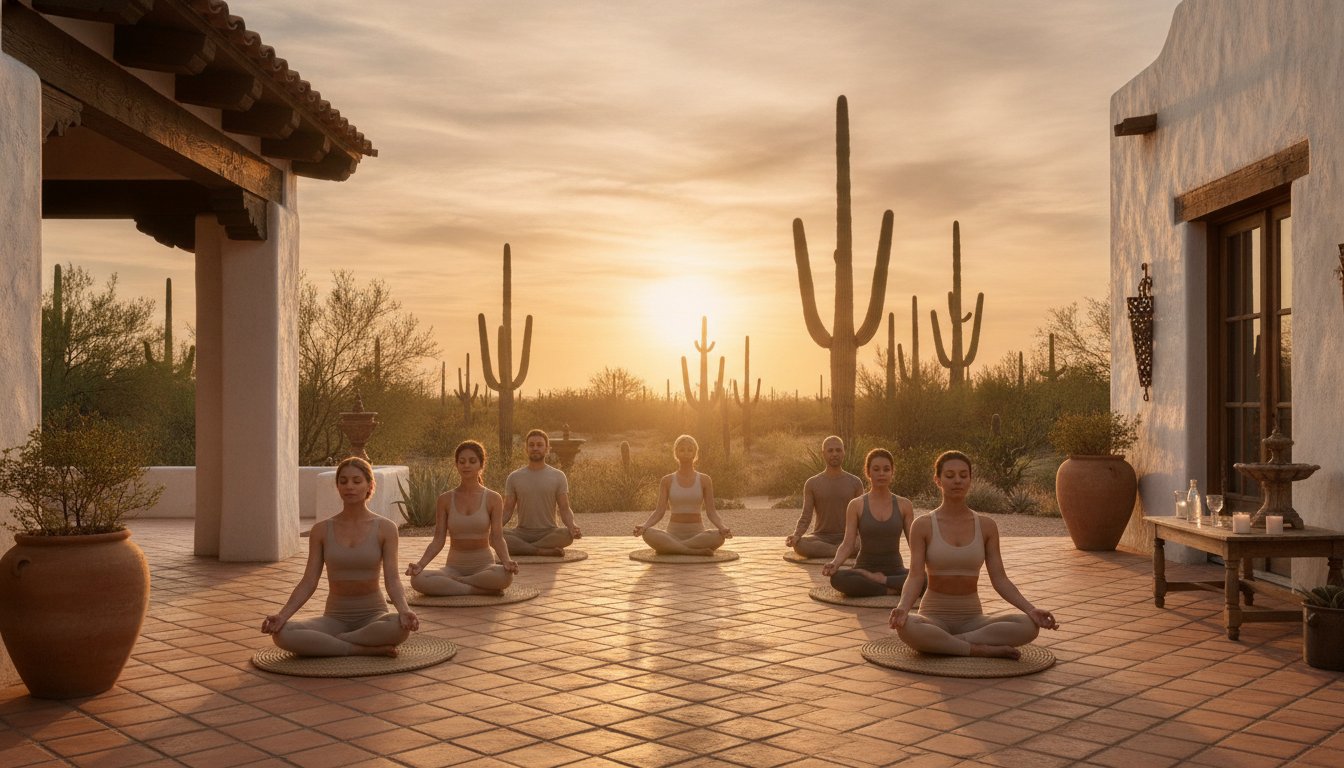

A truly transformative yoga retreat is far more than a sequence of asanas in a beautiful location; it is a meticulously crafted sanctuary where the environment itself acts as a silent co-teacher. While the dream of guiding students through a week of renewal is deeply inspiring, the reality of logistics often brings a sudden sense of overwhelm. You might find yourself worrying about the financial risk of unfilled spots, the complexity of venue contracts, or the delicate balance of pricing an experience that is both accessible and profitable.
It’s natural to feel this tension between your creative vision and the clinical precision required for success. This 2026 planning guide offers a professional roadmap for how to host a yoga retreat that honors both your business goals and your students’ growth. We will walk through the essentials of selecting a heritage-rich guest ranch, navigating modern travel regulations, and building a marketing strategy that resonates with the contemporary traveler. By blending a sense of place with modern hospitality, you can create a seamless, stress-free experience that leaves your students changed and your wellness business thriving.
Key Takeaways
- Establish a clear, sacred intention for your gathering to guide every planning decision and ensure a truly transformative student experience.
- Master the logistical roadmap of how to host a yoga retreat by identifying your break-even “Magic Number” and accounting for 2026 insurance and travel regulations.
- Select a private sanctuary or heritage-rich estate that offers exclusive buyouts to foster an immersive, distraction-free environment for deep practice.
- Build a sold-out guest list using evocative storytelling and early-bird incentives that focus on the emotional journey rather than just the daily schedule.
- Embrace the “gracious host” philosophy to manage group energy and on-site transitions with professional poise and intuitive care.
Defining Your Vision: The Foundation of a Transformative Retreat
Before you browse venues or draft a budget, you must anchor your plans in a singular, sacred intention. Understanding how to host a yoga retreat begins with defining the “Why” that breathes life into the experience. This core purpose acts as a compass, guiding every choice from the linen textures to the intensity of the morning vinyasa. Without this foundation, a retreat risks becoming a mere “yoga vacation”—a pleasant trip with occasional stretching. A transformative retreat, however, is a deliberate intensive designed to facilitate a specific shift, such as nervous system regulation or navigating a major life transition.
Your vision should culminate in a single-sentence mission statement to maintain focus throughout the planning process. For example: “This retreat provides a sanctuary for high-performance professionals to recalibrate through silence, heritage, and restorative movement.” This clarity ensures that every logistical detail serves the student’s evolution and helps you avoid the common pitfall of trying to be everything to everyone.
Crafting a Compelling Theme and Title
A theme is the atmospheric thread that weaves your entire schedule together. When you consider how to host a yoga retreat, align your theme with your authentic teaching strengths and the physical environment. If your venue is a historic guest ranch, perhaps your theme explores “Rooted Resilience” or “The Art of Preservation.” Use evocative language that promises a specific emotional outcome. Integrate this theme into every touchpoint, ensuring that evening meditations and shared meals echo the morning’s physical practice. This consistency transforms a series of classes into a cohesive journey of discovery.
Identifying Your Ideal Retreat Participant
A retreat for everyone is often a retreat for no one. You must profile your “Ideal Student” with precision to ensure the group energy remains harmonious. Determine if your curriculum demands an advanced level of practice or if it is a beginner-friendly sanctuary for renewal. Consider the demographic: are you hosting solo travelers seeking community, or professional peers looking for a sophisticated escape? Tailoring your curriculum to a specific group allows you to curate an environment where every guest feels seen. For those planning intimate, high-end gatherings, exploring private property buyouts can provide the exclusive focus necessary for these deep student shifts.
The Logistics of Profitability: Budgeting and Timelines
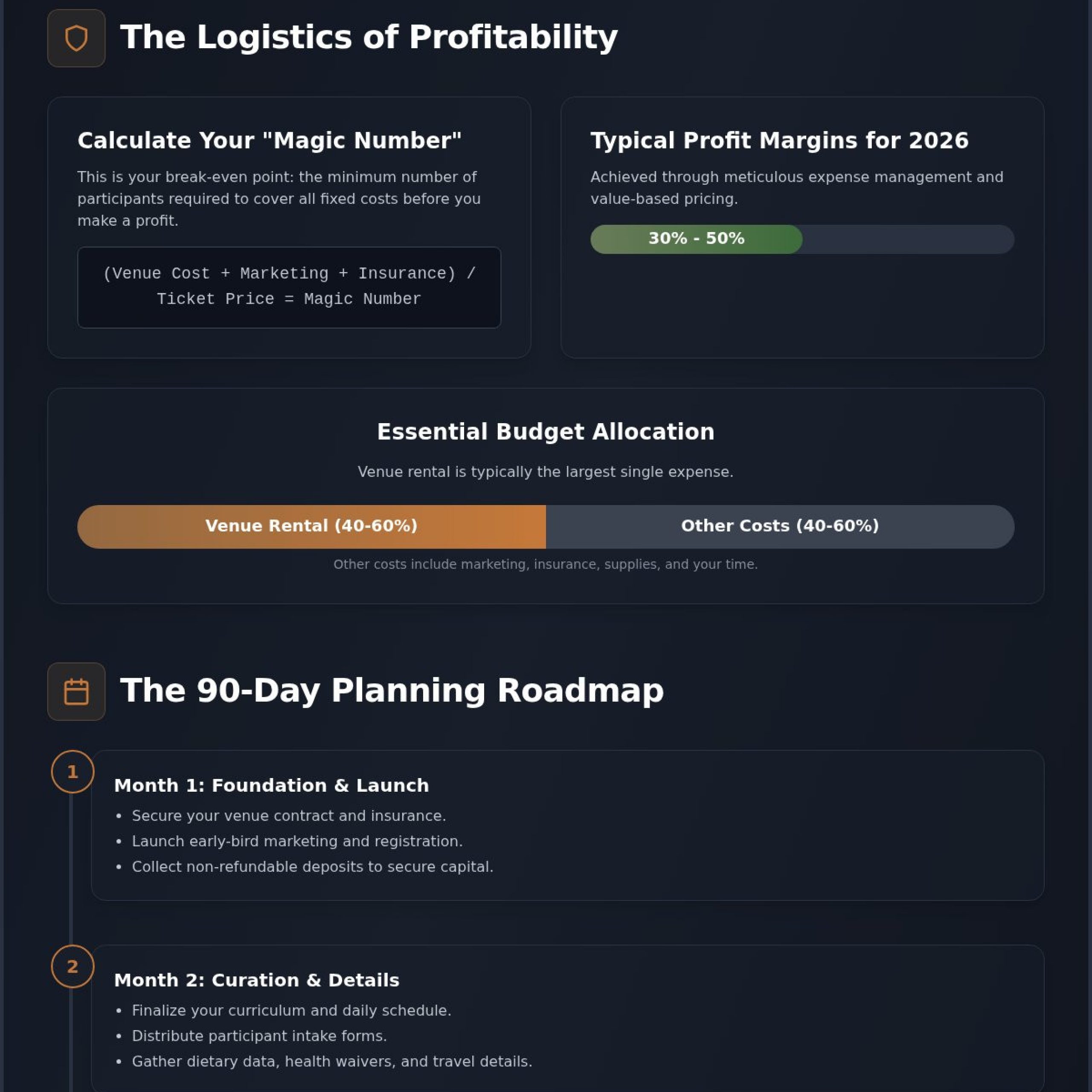
Transforming a spiritual vision into a viable business requires a shift from the ethereal to the analytical. When you consider how to host a yoga retreat, your “Magic Number” is the most critical metric. This is the minimum number of participants required to cover all fixed costs before you earn a single dollar of profit. To find it, sum your venue buyout, marketing spend, and insurance premiums, then divide by your per-person ticket price. In 2026, wellness retreats typically see profit margins between 30% and 50%, but these are only achieved through meticulous stewardship of your expenses. For a comprehensive framework on calculating these figures with confidence, our guide on how to price a wellness retreat provides the professional tools needed to identify your precise break-even point and select a pricing model that honors your brand’s unique heritage.
Revenue protection is equally vital. Establish a clear payment schedule that includes a non-refundable deposit. Your cancellation policy should be firm yet professional, perhaps offering a partial refund only if the spot is filled by another student. This structure ensures that your financial commitment to the venue remains secure regardless of last-minute changes in participant lives. Pricing should reflect the value of your expertise and the heritage of your chosen sanctuary, rather than just the cost of a bed and three meals.
The 90-Day Retreat Planning Timeline
A structured countdown prevents the frantic energy that can disrupt a tranquil hosting experience. Use this three-month roadmap to maintain your composure:
- Month 1: Secure your venue contract and launch your early-bird marketing. This initial momentum provides the capital needed for venue deposits.
- Month 2: Finalize your curriculum and distribute participant intake forms. This is the time to gather dietary data, health waivers, and travel details.
- Month 3: Confirm final logistics, assign rooms, and send a comprehensive orientation guide. These details ensure students arrive feeling held and informed.
Essential Budget Categories for Wellness Leaders
Venue rental typically accounts for 40% to 60% of a total retreat budget. Choosing between a per-head cost and a full property buyout depends on your desired intimacy level. For many teachers, securing an exclusive guest ranch buyout provides the best value and total control over the atmosphere. Beyond lodging, account for catering costs that accommodate complex dietary restrictions and marketing fees, which often range from $500 to $2,000 for specialized digital management. Don’t forget your liability insurance; a professional policy is non-negotiable for protecting your career and your students while you focus on their transformation.
Selecting Your Sanctuary: Why Venue Choice Dictates Experience
The physical environment of your retreat is far more than a backdrop; it is the container for the entire experience. When you’re learning how to host a yoga retreat, it’s vital to recognize that a venue acts as a silent co-teacher. A sacred space should do more than house guests. It should invite deep reflection through its very architecture and atmosphere. Historic properties, such as a guest ranch dating back to the 1920s, offer a sense of continuity and grounding that modern resorts often lack. This “heritage factor” serves as an anchor for students, connecting their personal practice to a broader story of preservation and renewal.
Beyond the aesthetic, the environment must support the specific physiological goals of your curriculum. A scenic, natural setting provides the sensory cues necessary for students to move out of “fight or flight” and into a state of restorative calm. Whether it’s the scent of sun-warmed earth or the sight of a clear, expansive horizon, these elements work in tandem with your teaching to facilitate lasting transformation. The same principle applies beyond yoga: athletic programs seeking sun-drenched, secluded estates for off-season conditioning will find valuable guidance in our resource on warm weather training camp venues, where climate-based strategies and private sanctuary selection are explored in depth. For those running certification programs, understanding how to choose the right yoga teacher training retreat venue is equally essential, as the demands of a multi-week intensive require an even higher standard of logistical precision and immersive environment.
Private Estate Buyouts vs. Large Resorts
Total privacy is paramount for deep emotional work and nervous system regulation. While large resorts offer certain conveniences, they often lack the exclusivity required for a truly immersive intensive. A private estate buyout allows you to curate the entire energy of the property from the moment guests arrive. There are no tourists by the pool or distractions in the lobby. In a self-contained, boutique setting, your group becomes a temporary community. This intimacy is essential for teacher trainings where students must feel safe to be vulnerable. If your theme focuses on “Rooted Resilience,” a rugged, scenic desert setting reinforces that message effectively, while those seeking coastal luxury might choose to leie luksusleilighet Elviria for a similarly private and high-end experience that avoids the distractions of a large hotel.
Before signing a contract, you must verify that the logistical details support your vision. Explore our private guest ranch accommodations for your next gathering to see how historic charm meets modern luxury. Use this checklist during your site visit:
- Acoustics and Flooring: Inspect the primary practice area for sound quality. High ceilings and hardwood or natural stone floors are ideal. Ensure the space is free from the hum of industrial air conditioners.
- Communal Dining: Shared meals are where community is forged. Look for venues that offer long, inviting tables and a kitchen capable of handling specialized, high-vibration nutrition.
- Lodging Configurations: Balance community with participant privacy. Ensure the rooms provide a peaceful retreat for students to process their experiences in solitude.
- Amenities and Props: Confirm if the venue provides high-quality bolsters, blocks, and straps, as shipping these items can significantly impact your budget.
Marketing and Community: Filling Your Sacred Space
Marketing is the first breath of the retreat experience, an extension of the gracious hospitality you’ll provide on-site. When you’re refining the plan for how to host a yoga retreat, your promotional strategy should prioritize evocative storytelling over a mere list of activities. Instead of detailing the daily schedule, describe the quiet dignity of a historic courtyard at dawn or the restorative power of a desert sunset. This approach sells the transformation rather than the logistics, inviting students to step into a narrative of renewal and heritage.
The “Early Bird” strategy is a professional essential for securing initial momentum. Offering a tiered pricing model encourages early deposits, which provides the necessary capital for venue buyouts. In 2026, students value transparency and social proof more than ever. Share “behind-the-scenes” video tours of your chosen sanctuary to demystify the experience. These glimpses into the physical space, combined with heartfelt testimonials, bridge the gap between a student’s desire for change and their decision to book a spot.
Crafting Your Sales Page and Offer
Your sales page must reflect the sophisticated balance of your teaching and the venue’s unique character. Highlight the benefits of an exclusive property buyout, emphasizing the total privacy and focus it affords. Clearly outline every inclusion to manage expectations from the start. This includes everything from specialized dietary menus to the specific props provided on-site. For those looking to master the art of group dynamics, read our guide on how to fill a group retreat for advanced strategies.
Building the Sangha Before Arrival
A successful retreat begins long before the first arrival. Building a sense of “Sangha,” or community, during the pre-trip phase ensures a smoother on-site experience. Host a pre-retreat virtual gathering to introduce participants and address logistical concerns. This high-touch registration process allows you to begin the “Gracious Host” role early, easing anxieties and fostering connection. Send a curated orientation package that includes a packing list tailored to the local climate and heritage. If you’re ready to host a yoga retreat that leaves a lasting impact, book your private guest ranch buyout and start building your community today.
The Art of Gracious Hosting: Managing the On-Site Experience
Once your guests arrive at the sanctuary you’ve prepared, your role transitions from logistical planner to the “Gracious Host.” This persona is the heartbeat of a successful event. It requires a sophisticated balance of professional poise and personal warmth. Understanding how to host a yoga retreat means realizing that you are the steward of the group’s collective energy. When a logistical hiccup occurs, such as a sudden change in weather or a minor catering delay, your calm response maintains the integrity of the retreat’s container. By treating every challenge with grace, you teach your students more about mindfulness than any lecture could provide.
Managing group energy is an intuitive art. You must recognize when the room needs a physical challenge and when it requires deep, restorative rest. Mid-retreat fatigue is common, and a skilled leader knows how to pivot the schedule to honor the participants’ nervous systems. While you are there to facilitate transformation, it’s essential to hold space for breakthroughs without overstepping into the role of a therapist. Providing a safe, historic environment allows students to process their own shifts while you remain the steady, grounded anchor of the experience. Facilitators who incorporate breathwork alongside movement will find additional guidance in our resource on choosing the ideal meditation retreat venue for somatic and breath-centered intensives.
Arriving with Intention: The First 24 Hours
The first day sets the frequency for the entire week. Begin with a meaningful opening ceremony that anchors the group in the retreat’s core mission. This is the time to establish community agreements regarding technology use and periods of noble silence. These boundaries aren’t about rigid rules, but about protecting the sanctuary you’ve created. To ensure your guests transition smoothly into this new rhythm, discover how to design nervous-system-friendly retreat schedules for maximum impact.
The Self-Care of the Leader
You cannot guide others toward renewal if you are depleted. Effective leadership in 2026 involves radical self-care and strategic delegation. Schedule host-only breaks throughout the day to recharge your own energy in solitude. If you’ve secured a private guest ranch buyout, leverage the expertise of the professional venue staff to handle baggage, dining logistics, and housekeeping. This allows you to stay present for the curriculum. Most importantly, maintain your personal practice. Staying grounded in your own movement and breath ensures you can continue to serve as a knowledgeable curator of the retreat experience without succumbing to host fatigue.
Bringing Your Vision of Transformation to Life
Bringing your vision to life requires more than just a passion for yoga; it demands a partnership between your creative spirit and a grounded, logistical foundation. By anchoring your plans in a clear mission, mastering the clinical math of profitability, and selecting a venue that acts as a silent co-teacher, you ensure a seamless experience for both yourself and your students. Marketing then becomes an act of service, inviting your community into a narrative of renewal that begins long before they arrive on-site.
As you consider how to host a yoga retreat in 2026, remember that the environment you choose dictates the depth of the transformation. Solana Spanish Villas offers the perfect sanctuary, blending the historic charm of a 1920s guest ranch with the boutique privacy required for intimate, high-impact gatherings. Our team provides expert event hosting support, allowing you to remain fully present for your students while we manage the refined details of modern hospitality.
The path to becoming a transformative host is a rewarding journey of personal and professional growth. We invite you to view our private villa rentals for your 2026 yoga retreat and discover a space where history and wellness meet. Your students are waiting for the sanctuary only you can create.
Frequently Asked Questions
Do I need special insurance to host a yoga retreat?
Yes, you must maintain your own liability coverage even if the venue has its own policy. General liability insurance for yoga instructors in 2026 costs between $150 and $300 annually. A combined general and professional liability policy for a solo teacher is typically under $400 per year. These policies provide essential protection with coverage limits usually reaching $1,000,000 per occurrence, ensuring your professional career remains secure during travel.
How far in advance should I start planning my yoga retreat?
You should ideally begin the process 12 to 18 months before your desired dates. Many premier retreat centers and historic guest ranches book their calendars one or two years in advance to accommodate high demand. This long lead time allows you to secure a heritage-rich sanctuary and provides a sufficient window for your 90-day marketing launch. Early planning ensures your community can request time off and save for the experience.
What is a typical profit margin for a small group retreat?
Wellness retreats in 2026 generally produce profit margins between 30% and 50%. For a 20-person gathering with a mid-range ticket price of $1,500, a host can gross $30,000. After accounting for venue hire, which typically consumes 40% to 60% of the budget, a dedicated professional can see earnings between $10,000 and $50,000 per event. Your specific profit depends on your “Magic Number” and the efficiency of your administrative spend. Organizers who want to move beyond guesswork and build a rigorous pricing structure will benefit from our dedicated resource on how to price a wellness retreat, which walks through the mathematics of hosting with heart-centered financial clarity.
Should I include airfare in the retreat price?
It’s generally wiser to exclude airfare to avoid the complexities of Seller of Travel laws. If you combine flights with lodging and instruction, you’re legally classified as a “Tour Operator” under 2026 Package Travel Regulations. This status requires additional financial protections and specific liability insurance. Instead, offer clear arrival windows and suggest local shuttle services to keep your registration process streamlined and legally compliant for a wellness leader.
How do I handle dietary restrictions for a large group?
Managing nutrition requires a high-touch intake process at least 60 days before arrival. Use a detailed participant form to gather data on allergies and preferences, such as vegan or gluten-free requirements. Share this data with your venue’s culinary team immediately. A professional guest ranch with a “gracious host” philosophy will be accustomed to crafting specialized, high-vibration menus that ensure every student feels nourished and safely included at the communal table.
What happens if I don’t fill all the spots on my retreat?
If you don’t reach your “Magic Number” by your contract’s drop date, you may need to pivot your strategy. This is why non-refundable deposits and tiered marketing are vital when learning how to host a yoga retreat. You can offer a last-minute incentive to your waitlist or consider a co-hosting model to share the financial risk. Always maintain a 5% to 15% contingency fund in your budget for these unexpected scenarios.
Is it better to host a retreat at a hotel or a private estate?
A private estate or guest ranch buyout is almost always superior for creating a transformative container. Hotels often have transient guests and distractions that disrupt the group energy. A self-contained sanctuary allows for exclusive focus on your curriculum and deeper nervous system regulation. For organizers scouting verified villas or beachfront homes in the Dominican Republic and Latin America, Simple Stay ai inc provides a curated selection of properties that maintain this level of boutique exclusivity. This approach ensures that your students feel held in a private, scenic environment where the heritage of the space adds a layer of quiet dignity.
While no retreat-specific license exists, you must hold a valid yoga teaching certification and current CPR training. Legal documentation is your most important credential. Ensure you have a comprehensive liability waiver, a participant agreement, and a media release in place. These documents, combined with professional insurance, establish you as a reliable and heritage-conscious leader who understands the modern needs of the wellness travel industry and the students you serve. For those planning to expand into certification programs, our dedicated guide on selecting the ideal yoga teacher training retreat venue offers the specialized criteria needed to evaluate properties for multi-week intensives.
0 Comment