
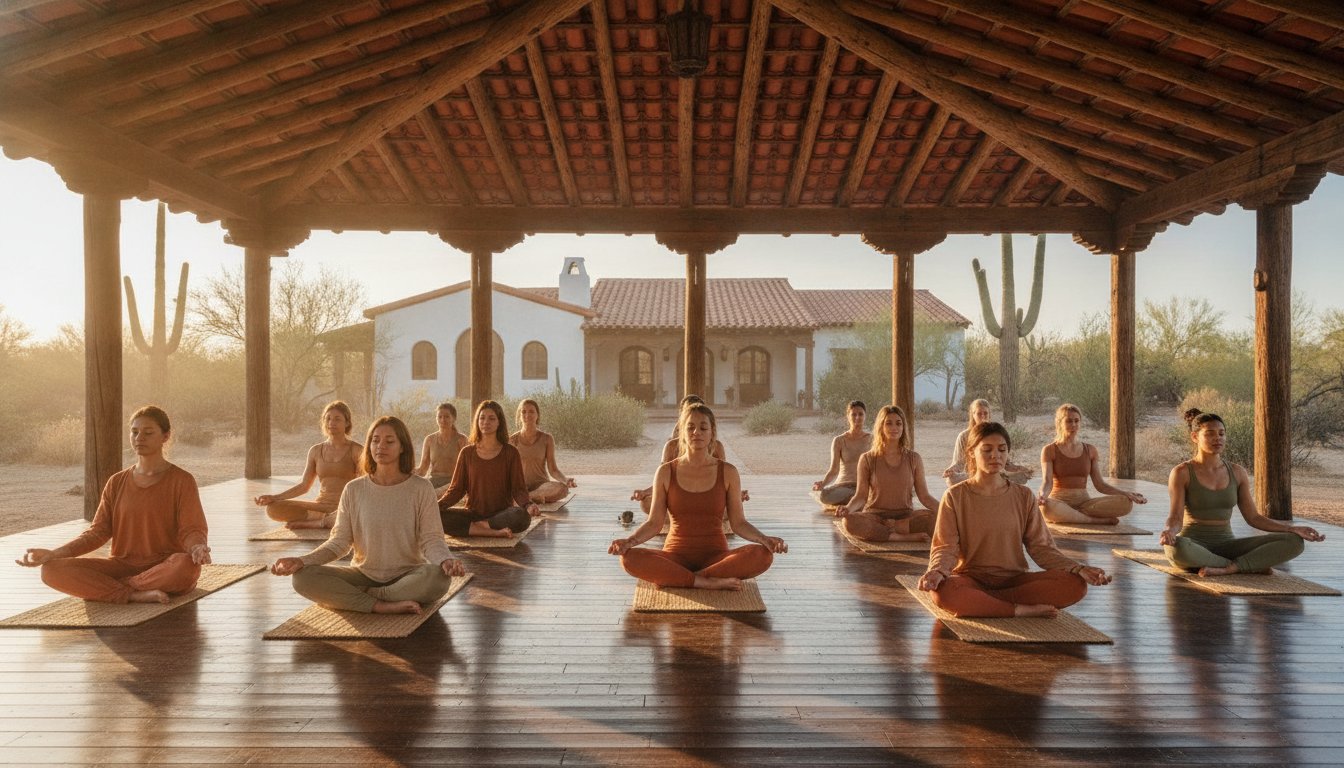

What if the success of your next certification program depended less on the curriculum and more on the silence between the sessions? As a lead teacher, you’ve likely spent months refining your syllabus, yet selecting the wrong yoga teacher training retreat venue can unravel that hard work with a single afternoon of poolside noise or a cramped practice space. You deserve a setting that acts as a curated sanctuary, where the environment does the heavy lifting of grounding your students so you can focus on the teaching.
It’s exhausting when a beautiful location fails to meet the logistical demands of a twenty-one day intensive, leaving you to manage meal delays or rooming puzzles instead of holding space. This guide explores how to identify a venue that prioritizes deep student immersion and professional logistics. We’ll examine the critical elements of high quality lodging, distraction free environments, and the seamless operations required to support a marathon of the nervous system as the global yoga market continues its shift toward holistic mental well being. By the end, you’ll know exactly how to book a space that supports both your vision and your students’ recovery.
Key Takeaways
- Understand why specialized residential facilities outperform standard vacation rentals for the unique, long-term demands of a professional 200-hour certification program.
- Identify the essential physical requirements for a dedicated practice shala and how diverse breakout zones facilitate essential peer-to-peer teaching sessions.
- Evaluate the financial and energetic benefits of a private estate buyout to ensure your yoga teacher training retreat venue remains a distraction-free sanctuary.
- Streamline your planning with a professional vetting process for long-stay logistics, covering everything from complex dietary catering to student recovery spaces.
- Discover how the historic charm and grounded atmosphere of a private guest ranch can support your vision and provide a professional yet intimate retreat experience.
The Critical Role of Venue Selection in Yoga Teacher Training
A yoga teacher training retreat venue is far more than a simple backdrop for physical practice; it’s a specialized residential facility engineered for long term intensive study. Unlike a standard vacation rental or a bustling resort, these spaces must accommodate the rigorous demands of a 200-hour program, where students live, eat, and breathe the curriculum for weeks at a time. Choosing the right environment is the first step in establishing “The Container,” a psychological and physical boundary that dictates the emotional safety of your participants. When a venue feels secure and secluded, students can drop their guards and engage in the profound self inquiry that modern Yoga teacher training standards require.
In 2026, we’re seeing a distinct shift away from crowded tourist hubs toward private estates and historic guest ranches. This movement is driven by a need for exclusivity. A standard hotel often fails because the “tourist gaze” of other guests can make students feel self conscious during vulnerable moments of practice or study. By selecting a private yoga teacher training retreat venue, you eliminate external noise pollution and the distractions of transient holidaymakers, ensuring that the energy of the group remains focused and contained.
Immersion vs. Vacation: Why the Distinction Matters
It’s vital to remember that a teacher training is a professional development intensive, not a holiday. While the setting should be beautiful, its primary purpose is to facilitate learning. Students need spaces that support eight to ten hours of daily study, ranging from vigorous asana to quiet meditation. A venue for teacher training must serve as both a laboratory for learning and a sanctuary for recovery. Without this balance, students risk burnout before they even reach their final exams. This distinction ensures your program is respected as a serious academic and spiritual endeavor.
The Impact of Environment on Nervous System Regulation
Deep retention of complex philosophy and anatomy relies heavily on the state of a student’s nervous system. Natural surroundings and intentional quietude aren’t just aesthetic choices; they’re functional tools that aid in the absorption of new information. An atmospheric setting, rooted in heritage and tranquility, builds the prestige of your teaching brand and allows for a true “nervous system reset.” For a deeper look at creating these transformative spaces, you might explore our sanctuary for the soul guide. When the environment is stable, students can move beyond basic survival and into the high level cognitive states required for mastery.
Essential Features of a High-Performance YTT Venue
A high-performance yoga teacher training retreat venue functions like a well-oiled machine, quietly supporting your curriculum without drawing attention to its own gears. While the atmosphere sets the mood, the technical specifications of the property determine whether your students can maintain the stamina required for a month of study. The “flow” of a property is paramount; you must consider how easily a group of twenty people can transition from a sunrise meditation to a communal breakfast, and then into a four-hour anatomy lecture without losing their collective focus.
The Anatomy of a Perfect Practice Space
The primary practice shala is the heart of your training. For an eight-hour day, flooring is a non-negotiable technical detail. Hardwood or specialized resilient surfaces are essential to prevent joint fatigue during repetitive vinyasa or long-held yin postures. Natural light is equally vital for maintaining circadian rhythms, yet the space must offer sophisticated climate control to keep students comfortable during intense physical work or sedentary philosophy hours.
Acoustics often make or break the learning experience. A professional venue ensures that the practice space is secluded from the noise of kitchen staff or maintenance, providing the silence necessary for meditation. Additionally, look for clear wall space for inversion workshops and dedicated, organized areas for prop storage. A cluttered room leads to a cluttered mind, so a venue that reflects the organization of a professional studio is a significant asset. If your curriculum incorporates somatic or breathwork elements, the same acoustic and spatial standards apply; our guide to choosing the ideal meditation retreat venue in Tucson explores these requirements in depth.
Breakout Zones and Community Areas
Learning happens in the classroom, but integration happens in the “third spaces.” Lounges, fire pits, and shaded patios are essential for student bonding and peer teaching exercises. These areas allow trainees to process complex emotions and physical breakthroughs away from the formal mat setting. Equally important are private nooks where a student can retreat for individual reflection or journaling.
The architectural heritage of a venue can also serve as a silent teacher. Historic structures and curated desert landscapes provide a sense of timelessness that inspires creative sequencing and deepens the connection to the lineage of yoga. When the environment feels grounded and storied, the students feel part of something larger than themselves. To see how these elements come together in a boutique setting, you might explore our curated collection of private villas, which are designed to support both group movement and individual rest.
Finally, never underestimate the power of restorative sleeping quarters. Exhausted trainees require high-quality linens, comfortable mattresses, and absolute darkness to recover from the day’s rigors. A venue that prioritizes rest ensures that your students arrive at the mat each morning with the mental clarity needed to succeed.
The Luxury of Privacy: Why Private Estates Outperform Resorts
The primary objection many lead teachers face when selecting a yoga teacher training retreat venue is the perceived cost of a private buyout compared to a per-room hotel booking. While the initial line item may appear higher, the value of total privacy is immeasurable for a 200-hour intensive. In a resort setting, your students are just one of many priorities for the staff. In a private estate, your group is the only priority. This “Exclusive Use” model transforms the property into a dedicated campus, allowing your brand’s identity to permeate every corner of the grounds. It shifts the experience from a shared public space to an intimate, boutique-style narrative that feels both professional and personal.
Eliminating Distractions for Deep Focus
Sharing a pool or dining hall with vacationing families can instantly break the “vibe” of a silent morning or a deep philosophy lecture. The “tourist gaze”—the curious or confused looks from outsiders—can make students feel like they’re on display during vulnerable emotional releases. Total privacy eliminates this friction. When everyone on the property is part of the training, a unique psychological safety develops. You don’t have to worry about external noise pollution or the distractions of transient holidaymakers. For more on the logistics of this model, see our private group buyout FAQ. This security allows students to fully commit to their practice without the self-consciousness that public spaces often trigger.
Customizing the Experience to Your Curriculum
Corporate resorts often operate on rigid schedules that don’t align with the fluid needs of a 26-day transformation cycle. A private estate offers the flexibility to adjust meal times for sunset ceremonies or dim the lighting in common areas to support restorative practices. You aren’t just renting rooms; you’re curating a closed-loop environment. A luxury guest ranch provides this level of curated seclusion while offering the high-end amenities that support student recovery.
This level of control extends to the sensory details of the property. You have the freedom to influence the environment in ways that a standard hotel wouldn’t permit, such as:
- Choosing specific scents or incense for the practice shala.
- Rearranging common room furniture to facilitate group discussions.
- Utilizing outdoor spaces for fire ceremonies or midnight meditations without disturbing other guests.
- Displaying your school’s branding or educational materials throughout the property.
When the entire property becomes an extension of your yoga school, it builds immense trust with your students. It positions your program as a premium, world-class experience where every detail has been thoughtfully considered. This immersive atmosphere is what separates a standard certification from a life-changing journey.

Managing Long-Stay Logistics for Intensive Training Groups
Hosting fifteen to thirty people for a month is a marathon of hospitality that requires more than just a beautiful practice space. It’s a logistical puzzle where the pieces include professional kitchen standards, reliable laundry systems, and the delicate management of group dynamics. Vetting a yoga teacher training retreat venue for a twenty-one to thirty day stay requires a different lens than a weekend event. You must ensure the property doesn’t just look stunning in a brochure but actually functions under the pressure of continuous, high-intensity occupancy without the infrastructure showing signs of strain.
Catering for the Yoga Body and Mind
A training schedule is a living organism, often shifting with the energy and physical needs of the room. Buffet-style dining is generally superior to plated service for these intensives, as it allows students to choose portions and ingredients that match their hunger levels and recovery needs. If your curriculum follows traditional Sattvic principles, your catering partners must understand the nuance of providing fresh, non-processed, and vegetarian options that sustain energy without causing lethargy. A venue with a professional-grade kitchen and established relationships with wellness-focused chefs allows you to delegate these complex dietary requirements, ensuring your students are nourished rather than just fed.
The 30-Day Living Experience
By the second week of a program, the novelty of the location often fades and the reality of the workload takes over. This is when “home comforts” become essential for student retention and morale. High-speed internet is a functional requirement for students researching anatomy or submitting their final philosophy assignments. On-site laundry facilities are a non-negotiable for trainees who are practicing twice daily and don’t want to spend their limited downtime searching for a local laundromat.
Evaluating the restorative quality of the bedrooms is about more than thread count; it’s about sound insulation and the ability for each student to find true solitude. Explore our group-ready villas to see how we balance these domestic needs with a high-end retreat atmosphere. Room assignments are also a key part of the “gracious host” approach. A well-designed yoga teacher training retreat venue offers a mix of shared and private quarters, allowing you to match students based on their budget while ensuring everyone has a sanctuary for recovery. When the logistics are seamless, the students feel held, allowing them to focus entirely on the transformation you’ve promised them.
To ensure your next certification program is supported by a venue that understands the demands of a long-term intensive, view our available private estates and begin planning your 2026 dates today.
Elevating Your Training at a Private Guest Ranch
The guest ranch model has emerged as a premier choice for a yoga teacher training retreat venue in 2026. It offers a distinct “distraction-free zone” that supports the deep work of a professional certification program. At Solana Spanish Villas, our Western heritage provides a profound sense of grounding that complements the ancient lineage of yoga. When students practice in a setting that has stood for over a century, they feel a connection to something enduring. The expansive desert landscape serves as an open-air cathedral for sunrise practices and silent meditations, allowing the environment to do the heavy lifting of student immersion.
The Heritage and Modern Comfort Fusion
A historic setting adds immediate authority to your program. It signals to potential students that your training is a serious, well-considered endeavor. However, the rustic charm must be balanced with the refined amenities expected by the modern traveler. We prioritize a “gracious host” approach that pairs 1920s architecture with essential modern comforts. High-end linens support the physical recovery of exhausted trainees, while reliable climate control ensures that the heat never interferes with a four-hour philosophy lecture. As you plan your 2026 yoga retreat, look for venues that offer this specific blend of atmospheric history and contemporary quality. If your program also incorporates vibrational healing modalities, our sound healing retreat venue and logistics checklist offers complementary guidance on securing the acoustic sanctity these sessions demand.
Next Steps for Yoga School Leads
Selecting your yoga teacher training retreat venue is a high-stakes decision that requires personal verification. We recommend initiating a site visit at least twelve months before your intended start date. During your walkthrough, look beyond the aesthetics. Test the acoustics of the practice space, walk the path from the bedrooms to the kitchen, and inquire about the staff’s experience with long-term groups. Because 200-hour intensives require a significant block of time, booking nine to twelve months in advance is critical to securing your preferred seasonal window.
View your venue choice not just as a rental, but as a dedicated partner in your students’ success. A property that understands the rhythm of a training program becomes a silent co-teacher, holding the space so you can focus on the transmission of knowledge. We invite you to contact us to discuss your teacher training dates and discover how our private estate can serve as the sanctuary for your next certification program.
Crafting Your Legacy in a Curated Sanctuary
Selecting your yoga teacher training retreat venue is a fundamental declaration of the quality you intend to offer your students. By choosing a private estate over a public resort, you eliminate the energetic friction of the outside world and allow your curriculum to take root in a dedicated, distraction-free environment. A successful 200-hour program requires a sanctuary that balances high-performance practice spaces with the restorative comforts of home. You’ve worked hard to build your syllabus; the environment should work just as hard to support it.
Solana Spanish Villas provides a unique fusion of historic 1920s charm and professional event capabilities. Our exclusive private group buyout options ensure that your school is the sole focus of our hospitality, offering the secluded desert setting your trainees need for deep immersion. When you combine heritage architecture with modern lodging, you create an atmosphere that honors the lineage of yoga while supporting the needs of the contemporary practitioner. It’s about more than just a place to stay; it’s about holding the space for evolution.
Secure Your Private Estate for Your 2026 Yoga Teacher Training and begin crafting a transformative experience that your students will carry with them forever. We’re ready to help you host a program that truly resonates.
Frequently Asked Questions
How far in advance should I book a yoga teacher training retreat venue?
You should aim to book your yoga teacher training retreat venue at least nine to twelve months in advance. Because these programs require a consecutive block of twenty to thirty days, securing a property’s calendar is the most competitive part of the planning process. Early booking ensures you secure the ideal seasonal window for outdoor practice while giving you ample time to market the program to your students.
What is the ideal student-to-bathroom ratio for a 30-day intensive?
The ideal student-to-bathroom ratio is one bathroom for every two students, though one to three is manageable in high-end boutique settings. For a thirty-day intensive, personal hygiene and morning routines shouldn’t become a source of stress or delay. Ensuring that students have adequate space for their physical recovery and daily rituals is essential for maintaining the group’s collective focus and emotional well-being throughout the month.
Do most YTT venues include catering, or do I need to hire an outside chef?
Many specialized venues offer in-house catering, but private estates often provide the flexibility to bring in an outside wellness chef. This allows you to tailor the menu specifically to your school’s dietary philosophy, such as a Sattvic or vegan diet. It’s best to look for a venue that offers a professional kitchen and a list of trusted catering partners who understand the unique nutritional needs of active yoga trainees.
What technical amenities are essential for the yoga shala or practice space?
Essential technical amenities include resilient flooring to prevent joint fatigue and sophisticated climate control for eight-hour study days. You also need dedicated wall space for inversion workshops and an organized storage area for blocks, bolsters, and straps. High-quality acoustics are equally vital; the space must remain silent during meditation and lectures, even if the property’s hospitality staff is active in nearby areas like the kitchen or dining hall. Hosts who also incorporate breathwork or somatic sessions into their curriculum will find additional guidance in our resource on selecting a meditation retreat venue in Tucson that meets these specialized acoustic and spatial demands.
Is a private estate more cost-effective than a hotel for a large group?
A private estate is often more cost-effective for groups of fifteen or more when you factor in the value of a total buyout. While per-room hotel rates might seem lower, hotels frequently add hidden fees for meeting room rentals and equipment. A private yoga teacher training retreat venue provides a flat-fee environment where every lounge, patio, and kitchen facility is included, allowing for a truly immersive and branded experience without unexpected costs.
How do I handle student room assignments to ensure privacy and community?
Balance room assignments by offering a mix of private singles for those needing deep solitude and shared doubles for students seeking community support. During the intake process, ask students about their sleep habits and social needs. Grouping like-minded individuals together helps prevent friction during a long stay. A gracious host approach involves providing enough common “third spaces” so that shared rooms never feel like the only place to retreat.
What happens if a student needs to leave the training early—what are the venue policies?
Venue policies typically require payment for the entire block of rooms regardless of individual student departures. Since you are booking the property as a private estate buyout, the venue’s contract is with the lead teacher or school, not the individual student. It’s vital to have your own student contracts mirror these terms, ensuring that your financial commitment to the sanctuary is protected even if a student’s personal circumstances change during the program.
Can I host a YTT at a venue that is also hosting other guests?
While possible, hosting a training alongside other guests often breaks the “container” of emotional safety. The presence of vacationing families or transient travelers can make students feel self-conscious during vulnerable moments of practice. For a high-end certification, a private buyout is superior. It ensures the entire property remains a dedicated sanctuary where every person on the grounds is aligned with the training’s purpose and the group’s collective energy. Teachers who also offer vibrational healing sessions alongside their certification programs will find our 2026 sound healing retreat planning checklist a valuable resource for evaluating acoustic and privacy requirements at any prospective venue.
0 Comment