


What if the cost of your gathering was not a source of anxiety, but a quiet reflection of the sanctuary you’ve so carefully curated? Many gifted organizers feel a lingering sense of guilt when attaching a premium price to their healing work, or they find themselves overwhelmed by the invisible costs that threaten their bottom line. Understanding how to price a wellness retreat requires a delicate balance between heart-centered service and rigorous financial clarity. You deserve to feel as grounded in your economics as you do in your practice, ensuring that your vision remains sustainable for years to come.
We’ll help you master the mathematics of hosting by providing a professional framework for calculating logistical expenses, professional fees, and those essential profit margins. You’ll discover how to identify your precise break-even point and select a pricing model that honors your brand’s unique heritage. This journey through the logistics of planning will replace uncertainty with a structured, sophisticated strategy. By the end of this guide, you’ll have the confidence to present your rates with grace, knowing that every dollar supports the transformative experience you provide for your guests.
Key Takeaways
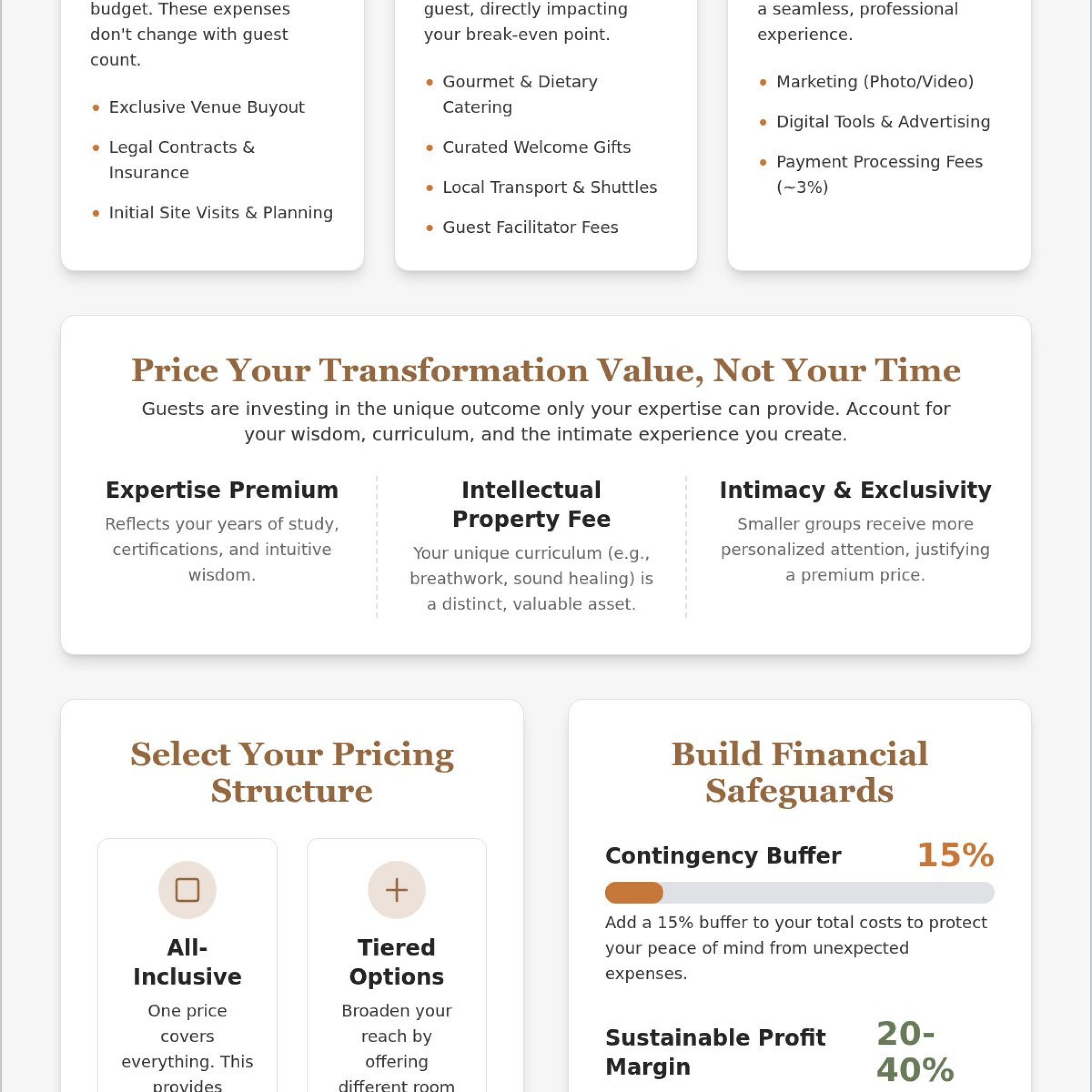
- Master the art of distinguishing between fixed and variable costs to ensure every logistical detail, from private estate buyouts to legal contracts, is fully accounted for.
- Learn how to price a wellness retreat by shifting your perspective from hourly rates to “Transformation Value,” honoring the depth of your professional expertise.
- Explore the psychological benefits of all-inclusive pricing and how tiered room options can broaden your reach while maintaining an air of exclusivity.
- Protect your peace of mind by implementing a 15% contingency buffer and targeting sustainable profit margins between 20% and 40%.
- Understand how selecting an atmospheric, heritage-rich venue serves as a primary driver for perceived value and justifies premium investment from your guests.
Calculating the True Cost of Your Wellness Experience
A successful retreat begins long before the first guest arrives at your sanctuary. To understand how to price a wellness retreat, you must first pull back the curtain on the logistical architecture that supports your vision. A retreat is more than a gathering; it’s a carefully managed ecosystem where financial clarity ensures the longevity of your service and the depth of your impact. By identifying every expense early, you protect the tranquility of the experience from the stress of unexpected bills.
Fixed vs. Variable Cost Framework
Fixed costs are the steadfast pillars of your budget. They don’t change, whether you host five guests or fifteen. The most significant fixed expense is often the venue. Opting for the exclusive buyout of a private estate provides a secluded, distraction-free environment that justifies a higher ticket price. Other fixed expenses include legal contracts, insurance, and the initial site visits required to ensure every corner of the property aligns with your brand’s standards. These costs form the baseline that must be covered before you see a single dollar of profit.
Variable costs, by contrast, scale with your guest count. These expenses directly impact your break-even point. When you’re meticulous about these details, you prevent the “hidden leak” that often drains retreat profits. Consider this checklist of often-overlooked variable expenses:
- Gourmet Catering: Organic, locally sourced meals tailored to specific dietary needs.
- Curated Welcome Gifts: Artisanal journals, essential oils, or heritage crafts that reflect the sense of place.
- Local Transport: Private shuttles for group excursions or transfers from nearby transit hubs.
- Facilitator Fees: Compensation and travel for guest instructors or specialized healers brought in for specific sessions.
The Marketing and Administrative Overhead
The Wellness Tourism Market is increasingly competitive, making professional storytelling a necessity. You should allocate a specific budget for high-quality photography and videography during the event. This allows you to build a visual archive that sells your future offerings with authenticity and grace. Don’t forget the digital logistics; email software, social media advertising, and website maintenance are all part of the administrative burden.
Finally, you must account for the technical friction of modern commerce. Credit card processing fees, which typically hover around 2.9% plus $0.30 per transaction, should be integrated into every ticket price. If you don’t account for these, you’re essentially giving away a portion of your revenue to the payment gateway. Overhead is the invisible engine of a successful retreat, quietly ensuring that the experience feels effortless for the attendee while remaining sustainable for the host.
Determining Your Professional Value and Expertise Premium
One of the most common pitfalls in learning how to price a wellness retreat is the tendency to view your time through the lens of an hourly employee. As a facilitator, you aren’t simply “working” for the duration of the event; you’re providing a portal to a different way of being. This is the Expertise Premium. It accounts for the decades of study, the certifications, and the deep, intuitive wisdom you bring to the circle. When guests invest in your retreat, they’re paying for a specific transformation that only your unique background can provide.
High-end hospitality requires a strategic approach to revenue, and it is vital to understand them when positioning your brand against competitors. Intimacy and curriculum depth justify a premium price point. A group of ten guests receiving personalized attention in a heritage setting offers far more value than a crowded workshop in a sterile hotel room. By limiting your guest count, you increase the perceived value and the actual quality of the experience.
The IP (Intellectual Property) Fee
Your curriculum is a distinct asset, separate from the cost of lodging or organic meals. Whether you’re leading a specialized sound healing journey or a rigorous breathwork intensive, this intellectual property represents the “soul” of the experience. You should price these modalities based on the rarity of the skill and the intensity of the facilitator’s energetic output. Don’t be afraid to separate the cost of the “bed” from the cost of the “breakthrough.” This clarity helps attendees understand that they are paying for both world-class hospitality and world-class guidance.
Quantifying Planning and Admin Hours
Many organizers ignore the invisible labor that happens months before the first guest arrives. A standard three-day retreat often requires 40 to 60 hours of administrative work, covering everything from guest vetting to logistical coordination. When you analyze how to price a wellness retreat, remember that your planning hours are just as valuable as your teaching hours. If you don’t assign a professional rate to these hours, you’re essentially subsidizing the retreat with your own unpaid labor, which is a fast track to burnout. Factoring in this administrative fee ensures you remain a “gracious host” who is fully present and energized for your attendees.
Choosing a venue that mirrors this level of professional excellence is the final step in solidifying your value. You might consider how a private estate with dedicated event spaces can serve as the perfect canvas for your high-value curriculum, providing the seclusion necessary for deep work.
Selecting a Pricing Structure: All-Inclusive vs. Tiered Models
Choosing the right financial framework for your gathering is a vital part of being a gracious host. It sets the tone for the guest’s entire journey. When you’re determining how to price a wellness retreat, you must decide between the seamless ease of an all-inclusive rate and the strategic flexibility of tiered models. An all-inclusive structure is often the preferred choice for boutique estates. It allows attendees to leave their wallets behind and immerse themselves fully in the rhythm of the day. For those seeking a deeper look at value-based frameworks, this event pricing guide offers excellent insights into balancing costs with perceived value.
Psychologically, an all-inclusive price provides immediate peace of mind. It signals that every need has been anticipated, from organic nourishment to curated workshops. You can still offer “Add-on” experiences, such as 1-on-1 coaching or specialized spa treatments, as optional enhancements. This keeps the base price clear while allowing for personalized luxury. It’s a way to honor the guest’s desire for choice without cluttering the initial invitation with too many decisions. Once your pricing structure is in place, pairing it with proven wellness retreat marketing ideas will help you communicate that value to the right audience and fill your dates with confidence.
Tiered Pricing Based on Accommodations
Offering different tiers based on room occupancy is a practical way to make your retreat accessible to a wider audience while still honoring the luxury of privacy. Private suites often command a 30-50% premium over shared rooms. This reflects the deep value of a personal sanctuary where a guest can process their transformation in solitude. To help you navigate these choices, consider our guide on Retreat Room Assignments: Privacy vs. Community, which explores how layout affects the collective energy of your group.
The Early Bird and Last-Minute Strategy
Securing early deposits is essential for managing your cash flow and confirming your venue. A common strategy is to set an Early Bird deadline approximately 90 days before the event starts. This creates a sense of urgency and rewards your most committed community members. Avoid the temptation to discount tickets at the last minute. Doing so can damage your brand’s integrity and frustrate those who paid full price early on. Instead, use the “Anchor Price” method by clearly displaying the standard rate as the fair value, making the early discount feel like a genuine gift of appreciation for their trust.
Financial Safeguards: Buffers, Fees, and Profit Margins
A thoughtful organizer recognizes that financial stability is the foundation upon which deep healing is built. When you’re refining how to price a wellness retreat, you aren’t just calculating numbers; you’re ensuring the safety of your sacred container. This requires a meticulous approach to safeguards that protect your energy and your assets from the unpredictable nature of hosting. By building a fortress of financial clarity, you can remain a “gracious host” even when logistical challenges arise.
One of the most vital protections is the 15% Buffer Rule. This isn’t a suggestion; it’s a necessity for accounting for inflation, sudden venue needs, or minor logistical shifts that occur between the planning phase and the event date. Alongside this buffer, you must define a sustainable profit margin. Most successful hosts aim for a margin between 20% and 40% after all costs are settled. This ensures your business can invest in future preservation and quality. Don’t forget to account for the structural obligations of your region, such as sales tax, occupancy tax, and self-employment tax, which can quickly erode your earnings if they aren’t integrated into the ticket price from the start.
The Break-Even Analysis
Understanding your numbers starts with a clear break-even analysis. You must calculate exactly how many attendees are required to cover your hard costs, including the venue buyout and catering. Once this baseline is established, you can identify your “Sweet Spot” attendee count, the number of guests that maximizes profit without sacrificing the intimacy of the experience. The break-even point is the precise moment your risk turns into reward. For a comprehensive approach to building these financial foundations, a thorough retreat planning checklist can help you account for every cost category before you commit to a single booking.
Payment Plans and Registration Logistics
Structuring your registration process correctly is just as important as the final price. Using a non-refundable deposit protects your cash flow and ensures that only committed attendees join your circle. Many organizers find that offering payment plans significantly increases conversion rates for premium experiences, as it makes the investment feel more manageable. You can find detailed operational guidance on this in our guide to Deposits and Deadlines: A Retreat Registration Plan. Automating the collection of final balances is also a wise choice, as it removes the need for awkward financial conversations during the retreat itself.
To ensure your next gathering is supported by a setting that reflects this level of professional excellence, reserve a private estate for your wellness retreat and host with total confidence.
How the Right Venue Choice Elevates Your Retreat’s Perceived Value
The choice of venue is often the single most influential factor in your financial framework. When you consider how to price a wellness retreat, you’re not just selling a bedroom; you’re selling an environment that facilitates deep transformation. A private estate buyout offers a level of exclusivity that a public resort simply can’t match. In a standard hotel, your guests might share the pool with tourists or hear the noise of a nearby event. On a private property, the silence is yours to own. This seclusion justifies a higher ticket price because it removes external distractions, allowing for the immersive, quiet work that premium clients seek.
Evaluating venue amenities requires a discerning eye for what truly moves the needle for your guests. Does a saltwater pool or a dedicated meditation garden add $500 or $1,000 in perceived value to your attendee? Often, the answer lies in the logistical ease these spaces provide. A dedicated event space allows you to keep your altars or equipment set up throughout the stay, avoiding the friction of sharing communal rooms. This seamless flow is a hallmark of high-end hosting, ensuring the experience feels effortless for the guest and manageable for the organizer.
Private Estate Buyouts vs. Public Resorts
The “no external guests” policy of a private buyout is a powerful lever for premium pricing. It allows for a completely customized schedule and nutrition plan, free from the constraints of a resort’s standard operating hours. You can view premium private estate options to see how these sanctuaries provide the necessary canvas for your vision. When every person on the property is part of your circle, the sense of safety and community deepens instantly. Determining how to price a wellness retreat becomes much simpler when the venue itself communicates a message of absolute privacy and care.
Leveraging Heritage and Atmosphere
Architecture carries an emotional weight that guests can feel the moment they arrive. A venue with a story, perhaps one featuring hand-carved beams, historical craftsmanship, or a unique heritage, becomes an integral part of your retreat’s value proposition. You aren’t just renting space; you’re inviting guests into a legacy of renewal and preservation. For more detailed tips on matching your venue to your mission, our How to Host a Yoga Retreat: 2026 Planning Guide explores the nuances of selection. Ultimately, you must choose a venue that carries the weight of your premium pricing, ensuring that the physical environment reflects the high-value transformation you provide.
Cultivating a Sustainable Legacy of Hosting
Your journey toward a profitable and soul-nourishing event begins with the courage to value your own expertise. By integrating a rigorous 15% contingency buffer and shifting your perspective from hourly rates to transformation value, you’ll ensure that your practice remains both generous and sustainable. Mastering how to price a wellness retreat is ultimately about honoring the sacred container you’ve built, allowing the financial structure to support the weight of the healing work you perform.
The final piece of this sophisticated puzzle is the environment itself. A setting that reflects your commitment to quality will naturally justify your premium investment. We invite you to Explore Private Estate Venues for Your Next Retreat and discover our private, scenic desert settings. With dedicated event spaces for wellness gatherings and sophisticated heritage-conscious architecture, we provide the quiet exclusivity your guests deserve. Step into your role as a gracious host with the confidence that every logistical and financial detail is perfectly aligned. Your vision is ready to flourish in a place that honors your heritage and your future.
Frequently Asked Questions
How much profit should I make on a wellness retreat?
Aim for a profit margin between 20% and 40% after all expenses are settled. This range allows you to reinvest in your business and compensates you for the emotional labor of hosting. When you’re determining how to price a wellness retreat, remember that profit is essential for long-term sustainability. Without a healthy margin, you risk burnout and cannot provide the high-quality, heritage-conscious experience your guests expect and deserve.
Is it better to offer an all-inclusive price or tiered options?
Choosing between these models depends on your brand’s promise of intimacy. All-inclusive pricing provides a “gracious host” experience where guests leave their wallets behind, fostering deep immersion. Tiered options are better when your venue offers varied accommodations, such as private suites versus shared rooms. This strategy makes the retreat accessible to different budget levels while still preserving the exclusivity of a private estate buyout for those seeking total seclusion.
How do I handle people who say my retreat is too expensive?
When a potential attendee questions the price, reframe the conversation around the “Transformation Value” rather than the nightly rate. Explain how the curated curriculum, exclusive venue, and professional expertise create a rare sanctuary for growth. If someone finds the cost prohibitive, it may simply mean they aren’t your target audience for this specific high-end offering. Stand firm in your value with grace, knowing your pricing reflects the quality provided.
Should I include airfare in my wellness retreat pricing?
It’s generally best to exclude airfare from your wellness retreat pricing. Coordinating flights for guests from across the country introduces significant logistical risk and liability. Instead, offer clear guidance on the best arrival times and provide a private shuttle from the nearest transit hub. This approach keeps your pricing transparent and allows guests to manage their own travel preferences while you focus on the immersive experience at the venue.
What is the most common hidden cost in retreat planning?
Payment gateway fees are the most common hidden cost, often taking nearly 3% of every ticket sold. Other overlooked expenses include marketing software and specialized insurance. When learning how to price a wellness retreat, building in a 15% contingency buffer is vital. This safeguard protects your profit margin from these invisible leaks, ensuring the financial health of your gathering remains secure even when unexpected logistical needs arise.
How do I calculate a break-even point for a small group retreat?
To calculate your break-even point, divide your total fixed costs by the profit made on each individual ticket. Fixed costs include your venue buyout and marketing spend, while variable costs cover food and supplies. Knowing exactly how many attendees are needed to cover these hard costs allows you to host with confidence. Once you reach this number, every additional registration represents a move toward your desired profit margin and reward for your risk.
Can I charge for my time spent planning the retreat?
You absolutely should charge for the time spent planning and coordinating the event. Most professional organizers dedicate between 40 and 60 hours to administrative tasks for a three-day retreat. By assigning a professional rate to these hours, you ensure that your labor is honored and your business remains viable. This fee covers the invisible work of logistics, communication, and curriculum development that happens long before the first guest arrives.
How much should I set for a non-refundable deposit?
Setting a non-refundable deposit of 25% to 50% of the total ticket price is a standard practice that protects your cash flow. This initial payment secures the guest’s commitment and covers the immediate costs of booking a private estate or hiring specialized facilitators. Clearly communicating this policy from the start ensures that your attendees are serious about their journey, allowing you to plan with the stability required for a high-quality experience.
0 Comment