
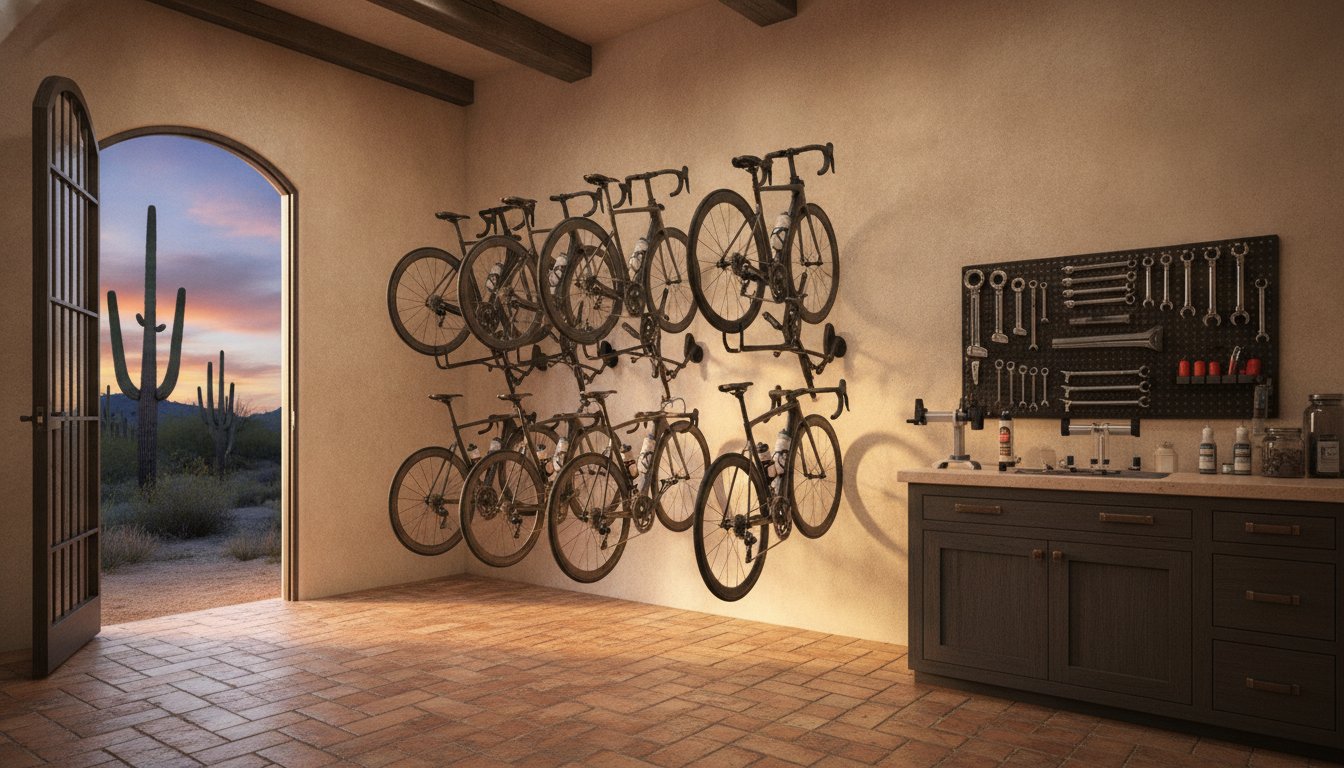

If you wouldn’t park a precision-engineered sports car in a crowded public lot, why should your elite carbon fiber frame settle for anything less than a private sanctuary? For the dedicated cyclist, a bike isn’t just equipment; it’s an extension of the self and a significant investment in performance. When searching for the ideal mindfulness retreat venue, an inspiring location offers a serene backdrop for focus, but the logistics of your 2026 training camp require more than just a beautiful view. You need absolute certainty that your gear is shielded from the elements and protected from the heartbreak of accidental damage or theft.
We understand that anxiety over cramped storage or a lack of dedicated repair space can cloud the clarity of your training. This guide outlines the essential standards for professional-grade, climate-controlled bike storage that ensures your gear remains as ready as your spirit. By prioritizing secure, expansive areas designed for daily maintenance, you can enjoy seamless transitions from rest to the road. You’ll learn exactly what features to demand for your 2026 residency to ensure every participant experiences total peace of mind and effortless daily preparation.
Key Takeaways
- Understand why a dedicated mechanical sanctuary is the foundation of a successful 2026 training camp, providing more than just a standard garage for elite gear.
- Explore how a premier mindfulness retreat venue Tucson provides the gated privacy and tranquil environment necessary to safeguard high-performance endurance equipment.
- Implement a three-layer security model that combines perimeter control with internal rack safety to ensure your team’s bikes are protected at all times.
- Create a professional mechanical workflow with a dedicated tech zone and wash station, allowing for efficient daily tune-ups and repairs.
- Enhance the overall camp experience by connecting secure storage with recovery amenities, ensuring a seamless transition from intensive training to relaxation.
Why Professional Bike Storage is the Backbone of a 2026 Training Camp
A world-class training camp in 2026 demands a fundamental shift in perspective. We no longer view bike storage as a mere utility. Instead, we define it as a “mechanical sanctuary.” This is a space where high-performance machines are treated with the same reverence as the athletes who ride them. A standard residential garage won’t suffice for a professional group residency. When you select a mindfulness retreat venue Tucson groups often seek for its quietude, that same sense of order must extend to your equipment. If the storage isn’t professional-grade, the mental energy of your athletes will be drained by anxiety rather than fueled by the road ahead.
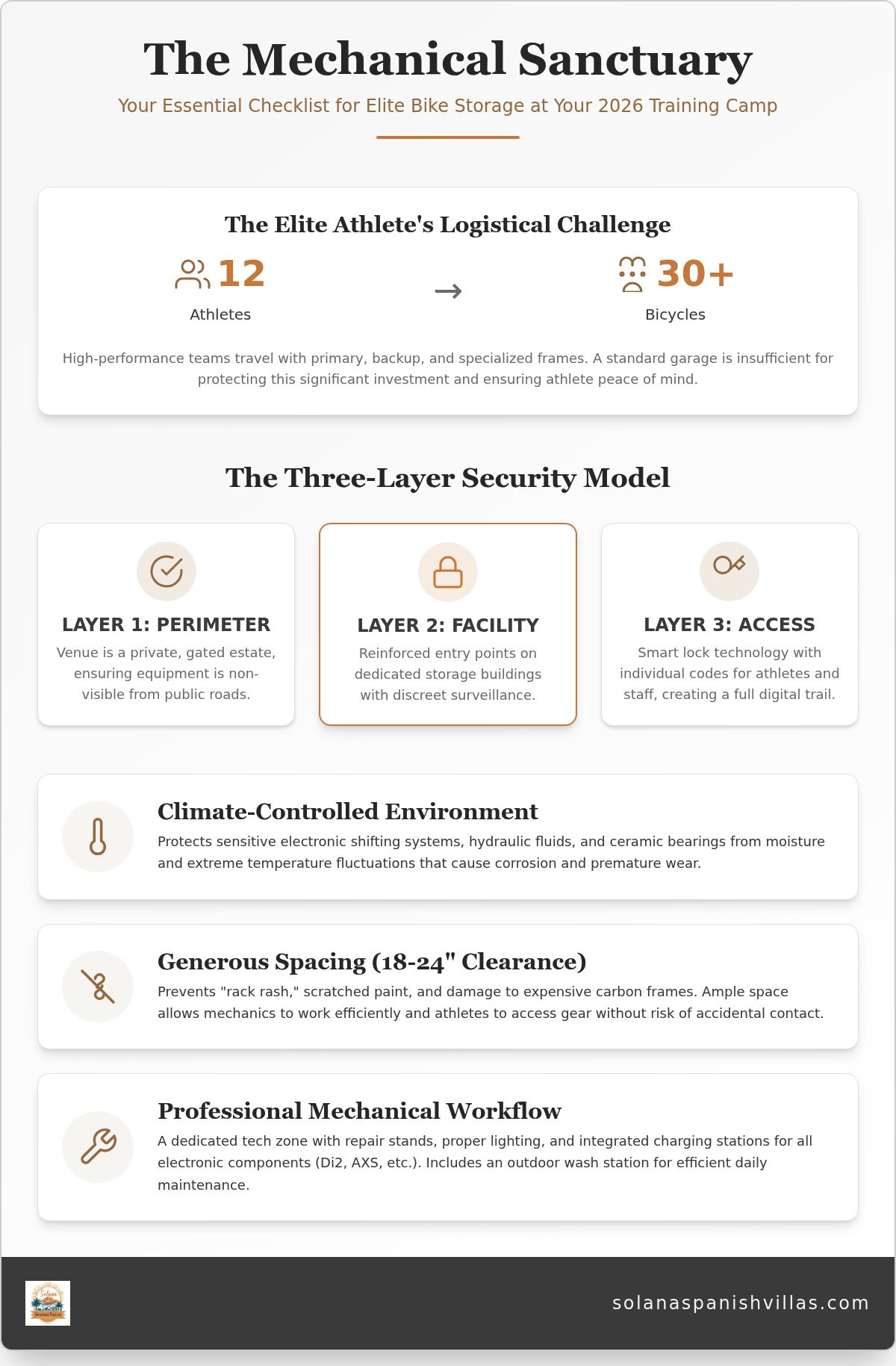
The “N+1” reality is a significant logistical hurdle for any 2026 camp organizer. Elite athletes rarely travel with just one bicycle. Between primary road frames, gravel setups, and essential backups, a group of twelve can easily arrive with thirty or more bikes. This volume requires more than simple floor space. It necessitates a structured system that prevents expensive carbon frames from touching. Organized storage isn’t just about aesthetics; it’s about protecting a massive financial investment and ensuring that every morning starts with a smooth transition from the rack to the saddle.
The Evolution of Athlete-Friendly Lodging
The landscape of high-end rentals has evolved. It’s no longer enough for a property to be “bikes allowed.” The new standard for elite teams is “bikes prioritized.” Private villa buyouts and heritage estates offer a unique structural advantage in this regard. Their historic architecture often includes enclosed courtyards and secure, thick-walled outbuildings that provide a level of natural security modern constructions lack. This “gracious host” approach means providing a space where a team mechanic can work through the night without ever disturbing the tranquility of the main house.
Risk Assessment for Group Residencies
Many standard rentals have hidden vulnerabilities. A basic garage door is often the weakest point of a home, and keeping bikes in bedrooms is a recipe for logistical chaos. While a mindfulness retreat venue Tucson visitors love might offer peace, it must also offer protection against “mechanical friction.” Scratched paint, compromised carbon, and bent derailleurs are common when gear is packed too tightly. By choosing a venue with dedicated, climate-controlled areas, you eliminate the daily stress of navigating a cramped space. Proper storage allows athletes to focus entirely on their recovery and performance.
The 2026 Cycling Camp Bike Storage Checklist
The architecture of a premier training camp requires more than aesthetic beauty; it demands a rigorous approach to physical safeguarding. When you choose a mindfulness retreat venue Tucson groups often prefer for its tranquility, the security of your high-performance gear must be absolute. Secure storage starts with reinforced entry points and ensuring that your equipment is entirely non-visible from public roads. This level of discretion is a hallmark of private, gated estates where privacy is the ultimate luxury. It’s about creating a perimeter that feels open to the athlete but impenetrable to the outside world.
Climate control is equally vital for the 2026 athlete. Modern electronic shifting systems and ceramic bearings are sensitive to moisture and extreme temperature fluctuations. A climate-controlled environment prevents the subtle corrosion that can lead to mechanical failure on a high-speed descent. Additionally, proper spacing is non-negotiable. We recommend ensuring 18-24 inches of clearance between high-value frames to prevent “rack rash” and allow mechanics to move freely during evening inspections. This space allows for a respectful distance between bikes, mirroring the personal space athletes require for their own recovery.
Access Control and Surveillance
Modern security relies on sophisticated, non-invasive technology. Smart locks allow for individual athlete codes, granting 24/7 access to the bike room without the need for shared keys. This creates a clear digital trail, which is essential for managing support staff and ensuring only authorized personnel enter the mechanical zone. In a private estate setting, discreet surveillance provides an extra layer of protection without disrupting the feeling of a peaceful retreat. It allows camp managers to monitor the mechanical sanctuary remotely, providing peace of mind without the intrusive presence of traditional security guards.
Charging and Electronic Integration
The “Charging Rush” is a real phenomenon in 2026. After a six-hour training block, every athlete needs to charge Di2 or AXS batteries, power meters, and GPS head units simultaneously. A professional facility must provide dedicated charging stations with voltage stability and surge protection to safeguard these expensive components. Organized cable management is essential to prevent trip hazards, ensuring the mechanical zone remains a safe, efficient workspace. When coordinating a camp at a mindfulness retreat venue Tucson offers, you’ll find that providing these integrated power solutions is a signature of a gracious host who anticipates every technical need. If you’re looking for a property that understands these meticulous details, you can view available private estates that cater to elite group residencies.
Evaluating Venue Security: Beyond the Standard Lock
Security for a 2026 training camp must be viewed through a sophisticated, three-layer lens. It’s not enough to simply lock a door. True protection begins at the perimeter, extends to the building’s structural integrity, and concludes with individual internal rack security. When you select a mindfulness retreat venue Tucson teams often choose for its secluded atmosphere, you’re investing in a natural defense. A gated, private estate provides a psychological and physical barrier that standard hotels simply cannot match. This layered approach ensures that even if one element is compromised, your high-performance gear remains shielded behind multiple tiers of defense.
The structural choice between historical outbuildings and modern additions is a critical consideration. Heritage architecture often provides a unique advantage for secure storage. Thick masonry walls and heavy, traditional timber doors offer a level of physical resistance that modern, lightweight materials often lack. These older structures, when properly retrofitted with 2026 smart technology, create a fortress-like environment. However, you must ensure these spaces are also ventilated. A damp, stagnant environment can be just as damaging to a bike’s drivetrain as a physical threat. Choosing a mindfulness retreat venue Tucson visitors find both historic and well-maintained guarantees that your mechanical assets are housed in a space that respects their value.
Insurance requirements for elite gear have become increasingly stringent. In 2026, many providers require specific storage conditions, such as climate control and professional-grade locking systems, to maintain coverage for group residencies. Before finalizing your venue, confirm that the storage area meets these non-negotiable standards. It’s a small detail that prevents a catastrophic financial loss if an unforeseen event occurs. A gracious host will be happy to provide the necessary documentation regarding their security protocols and structural safety ratings.
Internal Rack Systems and Stability
The method of storage is just as vital as the room itself. While wall-mounted systems maximize group density, floor-based racks are often preferred for protecting carbon rims. Hanging bikes by the wheels remains a debated practice in 2026, as many manufacturers suggest it places unnecessary stress on high-end carbon layups. We recommend customizable floor configurations that can accommodate varied bike types, from deep-section road wheels to wide gravel tires. This ensures every frame is held securely without touching its neighbor, preserving the pristine finish of every athlete’s investment.
Fire Safety and Battery Management
Modern cycling is powered by lithium-ion technology, which introduces new safety requirements for enclosed storage. A professional 2026 facility must implement strict battery management protocols. This includes dedicated charging zones equipped with fire suppression systems specifically rated for electrical fires. Proper ventilation is also essential, especially if the space is used for indoor cleaning or maintenance. These safety measures reflect a deep commitment to athlete well-being, ensuring that the mechanical sanctuary remains a safe environment for both gear and personnel.
The Mechanical Workflow: Planning for Maintenance and Repairs
When the final climb of the day is conquered, the focus shifts from the athlete’s endurance to the machine’s integrity. A professional 2026 training camp requires a meticulously planned mechanical workflow that begins the moment the tires leave the pavement. This isn’t just about having a stand in the corner. It’s about creating a dedicated Tech Zone where every movement is optimized for efficiency. Just as a mindfulness retreat venue Tucson groups rely on provides a sanctuary for the mind, your mechanical zone must offer a sanctuary for the bicycle, ensuring it’s ready for the next dawn.
The ideal workflow follows a logical path: from the road to the wash station, and finally to the secure rack. This sequence prevents grit and road grime from entering the pristine mechanical sanctuary. Accommodating a team mechanic is a hallmark of a gracious host. They require high-output lighting for detailed inspections, expansive bench space for component overhauls, and absolute tool security. When these elements are integrated into the property’s design, the transition from training to recovery becomes effortless for both the rider and the support staff.
Wash Station Essentials
A professional bike wash is a non-negotiable requirement for 2026 residencies. High-pressure sprayers are the enemy of modern ceramic bearings and sensitive electronic seals. Instead, look for low-pressure systems that gently rinse away debris. The station should include dedicated storage for bio-degradable cleaning supplies, reflecting a commitment to environmental stewardship. Finally, a designated drying zone is essential. Ensuring a frame is moisture-free before it enters climate-controlled storage prevents rust on small steel bolts and eliminates water spots on pristine carbon finishes.
Tool and Spare Part Logistics
Managing the inventory of a dozen elite athletes is a complex task. Secure lockers for team-wide spare parts, such as tires, chains, and cassettes, allow for organized logistics throughout the residency. Ergonomic lighting is another critical detail, especially for those late-night mechanical emergencies that often precede a big mountain day. If you’re planning a high-performance group stay, you can explore our spacious properties for your next camp to see how heritage architecture can support modern mechanical needs. By providing these professional facilities, you ensure that your athletes can focus entirely on their performance, knowing their gear is in expert hands.
Elevating the Athlete Experience with Professional Facilities
The mark of an exceptional residency is found in the seamless integration of high-performance utility and restorative comfort. A “gracious host” philosophy dictates that meticulous mechanical support is not an afterthought but a central pillar of the guest experience. When you select a mindfulness retreat venue Tucson visitors choose for its quietude, that same sense of order should extend to the mechanical sanctuary. By providing professional facilities, a venue honors the dedication of the athletes and the heritage of endurance sports, creating an environment where peak performance feels like a natural outcome of the surroundings.
The physical layout of the estate plays a vital role in this experience. It’s about more than just a secure room; it’s about the path from the final pedal stroke to the first moment of recovery. A venue that understands the rhythm of a 2026 training camp will ensure that the storage area is strategically positioned to minimize the need for walking bikes through living spaces. This thoughtful design allows athletes to transition quickly from the intensity of the road to the tranquility of the lounge, keeping the focus on renewal rather than logistics. The same principles that inform a well-structured corporate retreat agenda template — balancing deep-work intensity with restorative hospitality — apply equally to designing a high-performance training camp schedule.
Transitioning from Road to Relaxation
Strategic placement of storage near primary entry points is essential for maintaining the flow of a group residency. Ideally, the bike room should be recovery-adjacent, allowing riders to move directly from stowing their gear to wellness zones or nutritional stations. This proximity reduces the friction of daily routines, ensuring that the time spent off the bike is as productive as the time spent on it. For those looking to expand their options, check out our guide on Warm Weather Training Camp Venues: The 2026 Guide to Elite Performance to see how location and layout intersect.
Planning Your 2026 Residency
Vetting a venue for mechanical excellence requires a proactive approach during the planning stages. When drafting your 2026 residency RFP, include specific requirements for secure, climate-controlled storage and dedicated tech zones. Don’t hesitate to request a virtual tour of the mechanical facilities to verify the quality of the racks, lighting, and wash stations. This level of diligence ensures that your chosen mindfulness retreat venue Tucson location meets the high standards your team expects. For a comprehensive look at organizing your stay, refer to The Ultimate Triathlon Camp Planning Checklist to ensure no detail is overlooked in your search for the perfect estate.
Crafting Your Professional Training Sanctuary for 2026
The success of a 2026 training camp isn’t just measured by miles ridden; it’s defined by the peace of mind found in a perfectly organized mechanical sanctuary. We’ve explored how professional-grade storage, climate control, and a dedicated tech workflow transform a simple rental into a high-performance base. When you choose a mindfulness retreat venue Tucson groups respect for its serenity, you’re choosing a space where every detail, from reinforced entry points to ergonomic lighting, supports your team’s focus. Precision matters.
Our private gated estate offers the ultimate protection for your investment, featuring spacious historic outbuildings specifically designed for high-capacity group stays. These heritage structures provide the structural integrity and space needed for complex maintenance while maintaining a tranquil atmosphere. It’s time to elevate your residency from a standard trip to a curated professional experience. You can Secure Your Professional Training Base for 2026 and ensure your gear is safe. We look forward to hosting your journey to peak performance.
Frequently Asked Questions
Is it safe to store high-end carbon bikes in a shared group garage?
Storage is only safe if the space is professionally managed with individual spacing and high-quality racks. Shared garages without designated zones often lead to accidental impact or frame friction. A premium venue ensures that bikes never touch, protecting delicate carbon layups. When selecting a mindfulness retreat venue Tucson groups prefer for elite camps, prioritize properties that offer organized, non-visible storage to prevent overcrowding and maintain gear integrity throughout the 2026 season.
What are the minimum security requirements for a cycling camp venue?
A professional venue must provide a three-layer security model including perimeter gating, reinforced building entry, and internal rack locks. Beyond physical barriers, 2026 standards require smart access control and non-invasive surveillance. These features ensure that only camp participants and authorized staff can enter the mechanical zone. This layered approach creates a sanctuary where athletes can rest deeply, knowing their high-performance equipment is shielded behind multiple tiers of professional defense.
Should I look for climate-controlled bike storage?
Yes, climate control is essential for protecting modern electronic groupsets and sensitive hydraulic systems. Extreme temperature fluctuations or high humidity can lead to seal degradation and electronic signal failure. When searching for a mindfulness retreat venue Tucson visitors appreciate for its environmental balance, ensure the storage area maintains a stable temperature. This preservation of technical integrity is vital for ensuring every bike performs flawlessly and remains reliable throughout your 2026 residency.
How much space does each bike need in a professional storage room?
Each bike requires approximately 18 to 24 inches of lateral clearance to prevent accidental contact and “rack rash.” This spacing allows mechanics to move freely between rows for nightly inspections and adjustments. In a professional 2026 storage room, floor-based racks are often preferred to wall-mounts to avoid placing unnecessary stress on deep-section carbon rims. Providing ample square footage ensures a seamless workflow and maintains the pristine finish of every athlete’s investment.
Do private estates typically offer better security than hotels for cycling groups?
Private estates offer a natural security advantage because they provide exclusive access and gated perimeters. Unlike hotels with high foot traffic and public parking, a private villa ensures your equipment is shielded from public view. The heritage architecture of these estates often includes thick-walled outbuildings that are inherently more secure than standard commercial garages. This exclusivity provides a level of tranquility and protection that is unmatched by the busy environment of traditional hospitality.
What electrical capacity is needed for a group of 20 athletes charging electronics?
A group of 20 athletes will need at least 40 to 60 dedicated charging points for Di2 batteries, GPS units, power meters, and recovery tools. The storage area must have a stable power infrastructure with surge protection to prevent damage to sensitive electronics. In 2026, it’s essential to have a dedicated circuit for the charging zone to avoid overloads. This ensures every device is fully powered and ready for the next day’s training block.
Can I perform major mechanical repairs in the bike storage area?
Major repairs are possible if the venue provides a dedicated tech zone with professional lighting and workstands. A gracious host understands that mechanical emergencies happen and will offer a space designed for late-night overhauls. This area should be separate from the main storage racks to prevent grease contamination. Having a well-lit, ergonomic workspace allows team mechanics to perform their duties efficiently without disrupting the calm environment of the rest of the camp.
How do I verify a venue’s bike storage before booking for 2026?
You should request a virtual tour or detailed floor plans of the mechanical facilities before finalizing your 2026 booking. Ask specifically about the type of rack systems used, the presence of climate control, and the proximity of the wash station. A reliable venue will provide high-resolution photos and documentation of their security protocols. This diligence ensures that the property can truly accommodate the meticulous needs and high standards of a professional endurance group.
0 Comment