
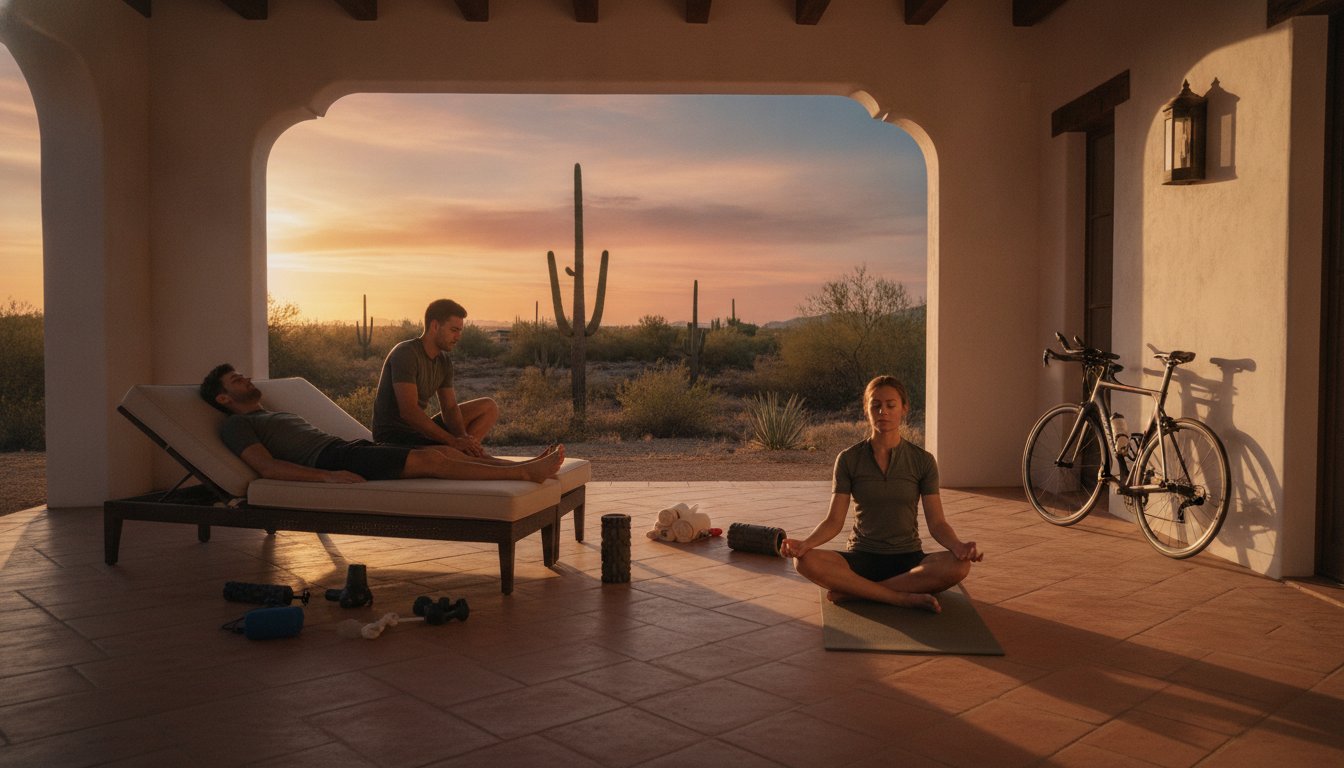

A triathlon camp is only as good as the recovery it facilitates. While many organizers focus solely on mileage and split times, the true success of an elite training retreat hinges on the quiet sanctuary found between sessions. You likely recognize the frustration of traditional hotels where crowded lobbies and public dining rooms disrupt the focused mindset your athletes need. Finding a venue that offers both technical infrastructure and a sense of peaceful retreat is the difference between a good week and a transformative one.
This comprehensive guide provides the ultimate checklist for choosing a venue in 2026, ensuring every logistical detail from secure bike storage to group nutrition is handled with grace. We’ll walk through the process of vetting a private guest ranch or villa to serve as your team’s base camp. You’ll learn how to prioritize privacy and dedicated recovery spaces to improve performance markers and keep your athletes returning year after year. From understanding the latest 2026 USA Triathlon rule updates to managing high-volume catering, we’ll cover the essentials for a seamless, professional experience.
Key Takeaways
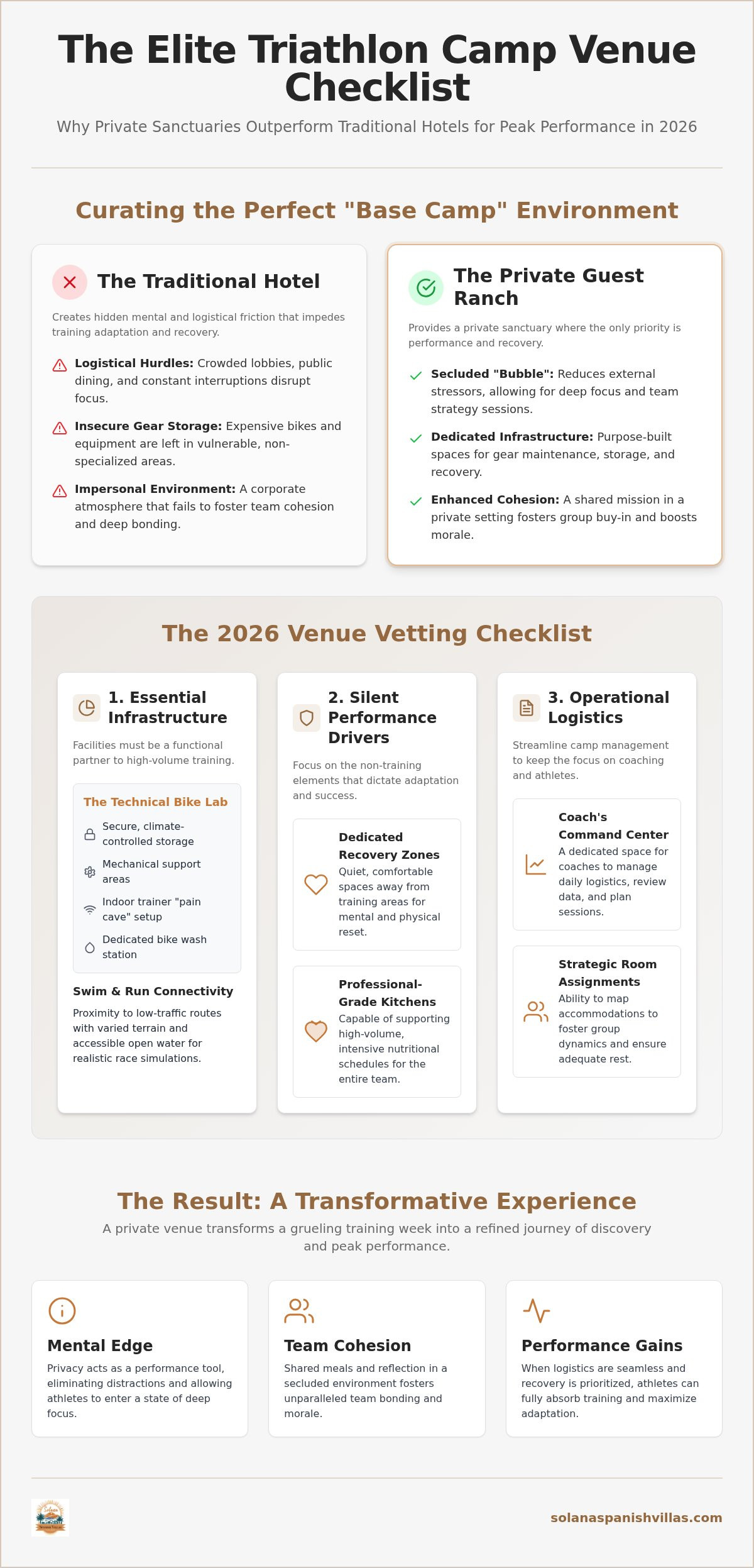
- Understand why a private guest ranch offers the ultimate “base camp” for a triathlon camp, providing a serene environment that fosters deep focus and team bonding away from the friction of traditional hospitality.
- Vet potential venues using a rigorous infrastructure checklist that covers everything from open water proximity to secure, climate-controlled storage for elite cycling equipment.
- Prioritize the silent drivers of performance by ensuring your venue features dedicated recovery zones and professional-grade kitchens capable of supporting intensive nutritional schedules.
- Streamline your operations with a step-by-step approach to mapping room assignments and establishing a dedicated command center for coaches to manage daily logistics with ease.
Why Venue Choice Dictates the Success of Your Triathlon Camp
Selecting the right location for a triathlon camp goes far beyond finding a bed near a pool. It involves curating an environment where the physical demands of a modern multi-sport race meet the restorative quiet of a private estate. In 2026, the standard for athlete-friendly lodging has shifted. Coaches and athletes now demand more than basic utility; they seek a “base camp” that minimizes logistical friction and maximizes psychological focus. The environment isn’t just a backdrop. It’s a performance tool.
Large-scale hotels often come with hidden costs that drain an athlete’s energy. These aren’t just financial, but mental. The constant hum of a crowded lobby, the lack of secure bike storage, and the impersonal nature of corporate hospitality create subtle stressors that can impede training adaptation. Privacy acts as a performance tool, providing the necessary seclusion for team meetings and strategy sessions without the prying eyes of the public. A private venue allows for total immersion, creating a sanctuary where the only priority is performance.
The Mental Edge of a Private Sanctuary
Training for three disciplines requires an immense cognitive load. When you choose private guest ranch accommodations, you create a “bubble” environment. This seclusion reduces external stressors, allowing athletes to bond deeply during shared meals and evening reflections. Group buyouts foster better team cohesion than individual bookings because they ensure every person on the property is part of the same mission. This shared energy is essential for maintaining morale during high-volume training blocks.
Logistics vs. Luxury: Finding the Sweet Spot
Finding the right balance means evaluating functional infrastructure alongside atmospheric surroundings. A successful triathlon camp needs immediate access to low-traffic cycling routes, yet it also requires a place for the mind to rest. Triathletes have a significant “gear footprint,” including expensive bikes and drying wetsuits. You need a property designed to handle these needs without cluttering living areas. Consider these essential logistics:
- Proximity to varied terrain for run and bike sessions.
- Dedicated spaces for gear maintenance and storage.
- Atmospheric surroundings that encourage a mental reset between sessions.
A venue with historical charm and modern comfort provides that necessary sense of renewal. It transforms a grueling training week into a refined experience, where the journey of discovery is just as important as the final race result.
Infrastructure Checklist: Essential Facilities for Swim, Bike, and Run
A successful triathlon camp requires more than just access to roads and water. It demands a facility that understands the technical nuances of the sport. In 2026, athletes arrive with sophisticated equipment, from electronic shifting to integrated hydration systems, and they expect their environment to support this technology. Your venue must act as a functional partner, providing the physical space required for high-volume training without compromising the safety of expensive gear.
The Technical Bike Lab: Beyond Just a Rack
High-value time trial bikes deserve better than a communal rack in a public garage. A premium venue provides secure, climate-controlled storage that protects sensitive carbon frames and electronics from temperature fluctuations. When vetting a property, look for a dedicated “Bike Lab” area where athletes can perform daily maintenance. This space should be separate from living quarters to keep grease and gear away from relaxation zones. For those planning a high-end retreat, choosing a private villa rental ensures your group has exclusive access to these facilities without outside interference.
Essential bike infrastructure includes:
- A dedicated bike wash station with adequate drainage and soft-bristle brushes.
- Indoor space with high-speed Wi-Fi and ample power outlets for smart trainer “pain cave” setups.
- On-site mechanical support areas equipped with work stands and precision tool kits.
- Proximity to low-traffic routes that offer both flat time-trial sections and challenging climbs.
Swim and Run Connectivity
Swimming requirements are twofold. While proximity to open water is a significant draw, especially for practicing 2026 USA Triathlon wetsuit regulations in water below 78.0 degrees, reliable lap pool access is non-negotiable for technique work. Coaches should verify lane rental agreements with local aquatic centers at least six months in advance. Running terrain diversity is equally vital. A venue that offers both soft trails for recovery runs and paved paths for speed work allows you to manage athlete fatigue effectively throughout the week. Coaches looking to build out a dedicated run-focused block alongside their triathlon training will find valuable guidance in this comprehensive resource on planning a high-performance running camp in Tucson, which covers everything from local trail permits to elite athlete recovery protocols.
The ideal transition practice area is a flat, private expanse of asphalt or packed dirt, at least 50 meters long, situated away from vehicle traffic to allow for safe high-speed mounting and dismounting drills.
Providing these technical amenities ensures a seamless experience that allows athletes to focus entirely on their performance. If you’re ready to host your next elite group, consider the benefits of a high-end guest ranch that balances historical charm with modern endurance infrastructure.
Recovery and Nutrition: The Silent Performance Drivers
Training is only as effective as the recovery that follows it. In a high-performance triathlon camp, the time spent away from the road is just as critical as the intervals themselves. This requires a venue that understands the “gracious host” philosophy, where every detail of the environment supports physical and mental renewal. From the temperature of the sleeping quarters to the layout of the dining hall, your choice of venue dictates how well your athletes absorb the training load and prepare for the next day’s challenges.
Fueling the Miles: Kitchen and Dining Requirements
A successful training retreat relies on a kitchen that functions with the precision of a professional workshop. When athletes burn several thousand calories daily, “chef-ready” infrastructure becomes a necessity rather than a luxury. You need deep refrigeration for bulk meal prep and expansive counter space for efficient group assembly. Private villas often provide the intimate, high-end kitchen environment that commercial hotels lack, allowing your support staff to prepare nutrient-dense meals without the distraction of other guests. Consider the charm of an outdoor terrace for post-ride celebrations. There is a unique magic in sharing a meal under the stars after a long day of training, where the cool evening air provides a natural reset for the senses. Before you commit, review these Essential Questions to Ask Before Booking a Retreat Venue to ensure the culinary setup matches your team’s scale.
The Recovery Suite: Physical and Mental Renewal
Physical renewal requires more than just a place to sleep. It demands dedicated recovery zones for massage, compression therapy, and ice baths. A venue with historical reverence and thick-walled privacy provides the quiet environment needed for focused physical therapy sessions. Ensure there is ample floor space for group stretching or core stability routines, where athletes can move freely without feeling cramped. Heated pools and hot tubs aren’t just for leisure; they are critical tools for thermoregulation and muscle repair after intensive sessions. This focused atmosphere helps athletes transition from the high-intensity stress of training to a state of calm and recovery.
Sleep hygiene is the bedrock of training adaptation. Evaluate room configurations to ensure every athlete has the privacy and quiet required for deep, restorative rest. Finally, communal dining areas serve a vital dual purpose. They aren’t just for fueling; they are where “athlete-to-athlete” knowledge transfer happens. These shared moments of reflection foster a sense of belonging and heritage that traditional, impersonal lodging cannot replicate. When athletes feel cared for as guests in a triathlon camp, their performance markers reflect that sense of security and renewal.
Managing Group Dynamics: The Operational Checklist
Managing the delicate balance between high-intensity training and the social fabric of a group is an art form. For a triathlon camp to succeed, the operational logistics must be invisible to the athlete yet robust for the staff. This starts with a methodical approach to the property’s layout, ensuring that the environment supports the team’s goals without feeling like a clinical institution. When you host in a space that values historical charm and modern hospitality, the venue itself helps regulate the energy of the group.
Room Assignments and Privacy
Assigning rooms is more than a logistical puzzle; it’s about honoring the individual’s need for renewal. While shared rooms offer affordability, you must carefully evaluate Retreat Room Assignments: Privacy vs. Community to ensure every participant has a sanctuary for rest. High bathroom-to-athlete ratios are essential to avoid the friction of morning training rushes, where every minute of preparation counts. A property with multiple private wings or separate villas allows for natural social distancing while maintaining a sense of shared heritage.
The Coach’s Command Center
Your staff requires a dedicated nerve center to manage the technical demands of a modern triathlon camp. This “Command Center” must be equipped with high-speed Wi-Fi capable of handling simultaneous data uploads from dozens of wearable devices and power meters. Meeting spaces with seamless AV capabilities allow for evening “chalk talks,” where coaches can review swim footage or analyze power files in a professional setting. A dedicated meeting space is non-negotiable for 2026 camps because it provides the focused environment necessary for data-driven video analysis and strategic debriefs away from the distractions of living quarters.
Beyond the indoor facilities, coordinating logistics for Support and Gear (SAG) vehicles is a primary concern. You need ample parking and wide access points for loading and unloading equipment without disrupting the tranquility of the grounds. A well-organized staging area ensures that vehicles are ready to move at a moment’s notice, providing a safety net for athletes on long rides. Finally, don’t overlook the importance of scheduled downtime. Scenic common areas, such as sun-drenched courtyards or shaded patios, provide the perfect backdrop for organic conversation and mental reset. These moments of quiet reflection are where the strongest team bonds are forged.
If you’re ready to secure a venue that handles these complex dynamics with ease, explore our private guest ranch buyout options for your next elite retreat.
Why Private Guest Ranches are the Elite Choice for 2026
The choice of a training venue is a statement of intent. It tells your athletes that their recovery, their mental state, and their privacy are top priorities. In 2026, the elite choice for a triathlon camp is the private guest ranch. Unlike traditional resorts where athletes must navigate public lobbies and crowded dining rooms, a ranch buyout provides a distraction-free setting. This seclusion is a powerful tool against mental fatigue, allowing the brain to switch from the high-alert state of training to a deep, restorative calm. When you remove the background noise of public hospitality, you create space for total immersion in the sport.
By blending Western heritage with modern endurance needs, these venues offer an evocative backdrop for a grueling training week. The sense of place, the architectural history, and the natural beauty of a private estate foster a feeling of tranquility and escape. It’s an environment that respects the past while providing the refinement required for modern high-performance teams. This unique combination ensures that the journey of discovery during the training block is just as rewarding as the physical gains made on the road.
Sophisticated Hospitality for High-Performance Teams
Traditional corporate hotels often fail to understand the specific rhythm of an endurance athlete. The “Gracious Host” model, however, emphasizes personal service and an intimate, boutique-style narrative. It’s about having a property layout that can be rearranged for a team strategy session or a kitchen that understands the scale of high-calorie catering. Positioning a private villa rental as your base camp provides a level of exclusivity that fosters deep team bonding. You don’t just stay at the property; you curate the entire experience to fit your camp’s specific goals.
A Legacy of Excellence: Heritage Meets Performance
Historic properties offer a more memorable and evocative experience than modern, cookie-cutter alternatives. There’s a palpable sense of pride in preservation at these sites, which aligns perfectly with the discipline required for a triathlon camp. When athletes are surrounded by craftsmanship and heritage, they feel part of a legacy of excellence. This mental engagement is vital for athlete satisfaction and long-term retention. Integrating local culture and comfort into the training block helps athletes stay engaged and mentally fresh throughout the stay.
As you plan your upcoming season, refer to our Warm Weather Training Camp Venues: The 2026 Guide to find the perfect climate and setting for your needs. Teams focused on cycling disciplines will also benefit from reviewing the essential 2026 checklist for cycling group lodging in Tucson to ensure every detail of your basecamp meets elite performance standards. Securing your 2026 training sanctuary now ensures your team has the privacy, infrastructure, and peaceful retreat they deserve to perform at their best.
Elevate Your Training Sanctuary for 2026
Choosing the right venue for your 2026 training retreat isn’t just about finding a place to sleep. It’s about securing a base camp where the infrastructure for elite performance meets the tranquility required for deep recovery. You’ve seen how dedicated technical spaces, professional-grade kitchens, and private room configurations transform a training block from a logistical hurdle into a seamless experience. By prioritizing privacy and atmosphere, you ensure your athletes remain focused and ready to meet the demands of their training.
Our properties offer a unique blend of historic 1920s architecture and modern renovations, providing a sophisticated setting for intensive retreats. With private, scenic desert settings that eliminate the friction of traditional hotels, we provide dedicated support for group retreats and intensive training. We invite you to explore our private guest ranch properties for your next triathlon camp. Your athletes deserve a space that respects their dedication. We look forward to helping you host a camp that sets a new standard for excellence.
Frequently Asked Questions
What is the ideal group size for a private triathlon camp?
The ideal size for a private triathlon camp is typically between 10 and 30 athletes. This range ensures a sense of community while allowing for the intimate, boutique-style narrative that high-end venues provide. Smaller groups benefit from highly personalized coaching and a “gracious host” approach. Larger groups may require more complex logistics, but staying under 30 preserves the tranquility and focused environment essential for deep training and recovery.
How far in advance should I book a venue for a triathlon camp?
You should aim to book your venue at least nine to twelve months in advance, especially for peak spring training dates. High-end properties often have limited availability for full buyouts. Early booking ensures you can secure specific lane rentals at local pools and coordinate with specialized caterers. If you’re planning for the 2026 season, starting the search a year out allows for thorough vetting of the infrastructure and technical facilities.
Do private villa rentals typically include bike storage?
Many private villa rentals offer secure spaces, but you must verify climate control and security protocols specifically for high-value equipment. A dedicated bike lab or secure garage is essential for a professional triathlon camp. Look for properties that confirm storage capabilities for your specific group size. Standard vacation rentals often lack the “wrenching” space needed for daily maintenance. Prioritize venues that cater specifically to endurance athletes, and consult a dedicated resource like the 2026 checklist for cycling group lodging in Tucson to benchmark what a properly equipped property should offer.
Can we bring our own chef to a private guest ranch?
Most private guest ranches allow outside catering or personal chefs when you secure a full property buyout. This is a significant advantage for managing group nutrition and high-calorie requirements. You should confirm the kitchen is “chef-ready” with professional-grade refrigeration and ample prep surfaces. Having your own chef ensures that meal timing aligns perfectly with the training schedule, providing a seamless transition from the road to the dining table.
What happens if we need mechanical support during the camp?
Venues designed for endurance teams often provide a dedicated mechanical work area equipped with stands and basic tools. However, you should plan to bring a professional mechanic for larger groups to handle complex repairs. Some high-end guest ranches maintain relationships with local bike shops for emergency parts or specialized service. Establishing a “Command Center” on-site allows your mechanic to work efficiently without disrupting the tranquility of the restorative recovery zones.
Is a private buyout more expensive than a block of hotel rooms?
A private buyout often provides superior value compared to a hotel block because it eliminates the logistical friction of public spaces. You gain exclusive access to professional kitchens, private recovery zones, and dedicated meeting areas. While the initial cost may vary, the benefits of total privacy and improved athlete focus often result in higher satisfaction. For a professional triathlon camp, the ability to control every aspect of the environment is a significant performance advantage.
How do we handle laundry for a large group of athletes?
High-volume training generates significant amounts of laundry, so you should ensure the venue has multiple high-capacity machines or a dedicated laundry service. Private villas often include on-site facilities that allow athletes to manage their own gear between sessions. For larger groups, coordinating a daily “kit wash” service keeps the living areas tidy and ensures everyone has fresh apparel for the next day’s ride. This attention to detail is crucial for maintaining professional standards.
What should we look for in a “SAG” support vehicle parking area?
A “SAG” (Support and Gear) parking area must be spacious, flat, and easily accessible without blocking athlete movement or thoroughfares. You need enough room for loading and unloading heavy equipment, coolers, and spare wheels. Ideally, the staging area should be near the bike storage lab to streamline morning departures. Look for a venue that offers wide access points and secure overnight parking for multiple vehicles to ensure your support team can operate with total efficiency.
0 Comment