
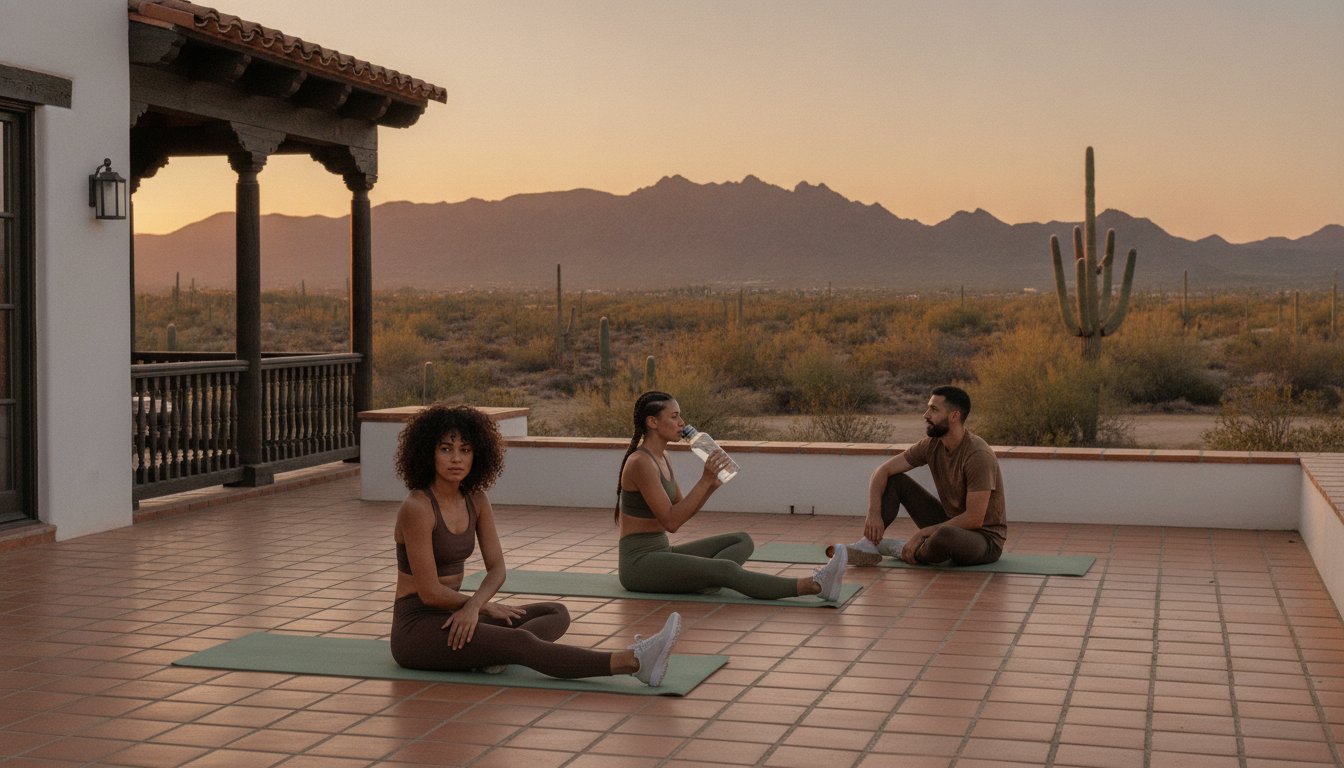

The most grueling miles of a championship training block aren’t actually conquered on the trail, but in the quiet hours of stillness that follow. When you’re organizing a professional-grade running camp tucson, the desert landscape offers an unparalleled canvas for grit and endurance. However, we understand that the logistical weight of housing a group, securing permits, and managing athlete recovery can often overshadow the training itself. You deserve to focus on the split times and the strategy, not the stress of group dining or trail access.
This comprehensive guide provides a turnkey framework for planning your 2026 retreat, ensuring every detail from local Pima County permitting to elite nutrition is handled with precision. We’ll show you how to transform a historic 1920s guest ranch into a private sanctuary where athletes can thrive. You’ll learn to select routes that challenge the lungs and soul, while discovering how the right lodging acts as a vital performance variable. From the rugged beauty of Saguaro National Park East to the sophisticated comfort of a boutique villa, we’ll walk through the essentials of a camp that builds both speed and spirit.
Key Takeaways
- Discover why Tucson’s unique “Live High, Train Low” accessibility and reliable desert climate make it the premier choice for 2026 athletic retreats.
- Learn to align your training environment with specific performance goals, whether you’re prioritizing technical trail work or high-speed base building.
- Understand how a private estate buyout for your running camp tucson provides the essential kitchen access and team seclusion required for elite-level recovery.
- Master the 2:1 ratio of training to recovery to ensure your athletes remain injury-free while integrating vital mobility and strength workshops.
- Explore how a historic 1920s sanctuary like Solana Spanish Villas balances sophisticated modern luxury with the rugged demands of high-performance training.
Why Tucson is the Premier Destination for a Running Camp in 2026
Tucson has earned a storied reputation as the “Endurance Capital” of the Southwest, a title it holds with a quiet, rugged pride. Every year, elite triathletes and marathoners descend upon this high-desert basin to find the perfect synergy of climate and topography. By choosing to host a running camp tucson in 2026, you’re placing your team in a location where the infrastructure supports excellence, from world-class recovery facilities to a local culture that understands the needs of a sunrise training schedule. The city isn’t just a backdrop; it’s a performance tool designed by nature.
The Performance Advantage of the Desert Climate
The physiological magic of Tucson lies in its unique geography. While the city sits at a base elevation of roughly 2,400 to 2,600 feet, the looming presence of Mount Lemmon allows for a “Live High, Train Low” strategy that is rare in North America. Athletes can sleep in the crisp, thinner air of the higher elevations and descend to the valley floor for high-intensity workouts. This approach maximizes the benefits of altitude training while ensuring that muscle power isn’t compromised by the lack of oxygen during sprints.
The “Tucson Training Effect” is the singular result of combining this moderate altitude with 300+ days of consistent sunshine and varied, challenging terrain. The dry heat acts as a natural catalyst for blood plasma expansion, improving aerobic capacity in a way that humid environments simply can’t match. Beyond the science, the vast, sun-drenched vistas of the Sonoran Desert provide a profound mental reset. It’s a place where the scale of the landscape humbles the ego and refocuses the mind on the miles ahead.
Tucson’s Iconic Running Routes for 2026
Diversity of terrain is Tucson’s greatest gift to the coach. When you organize a running camp tucson, you can curate an itinerary that touches every surface imaginable, ensuring your athletes never grow bored or plateaued. The following locations are essential for any high-performance schedule:
- The Loop: This 130-mile network of car-free, paved paths is the gold standard for long, steady-state runs or tempo work where an uninterrupted rhythm is vital.
- Saguaro National Park East: The Cactus Forest Loop offers eight miles of rolling pavement and countless miles of winding desert trails, all framed by the park’s namesake giants.
- Sabino Canyon: For those seeking vertical gain, the canyon provides steep climbs and spectacular views that make every drop of sweat feel earned.
Whether your team needs the flat, fast stretches of the city’s paved paths or the technical challenges of a mountain ascent, the desert provides. The accessibility of these routes means less time in transit and more time focused on the work that matters.
Step 1: Selecting the Ideal Training Environment
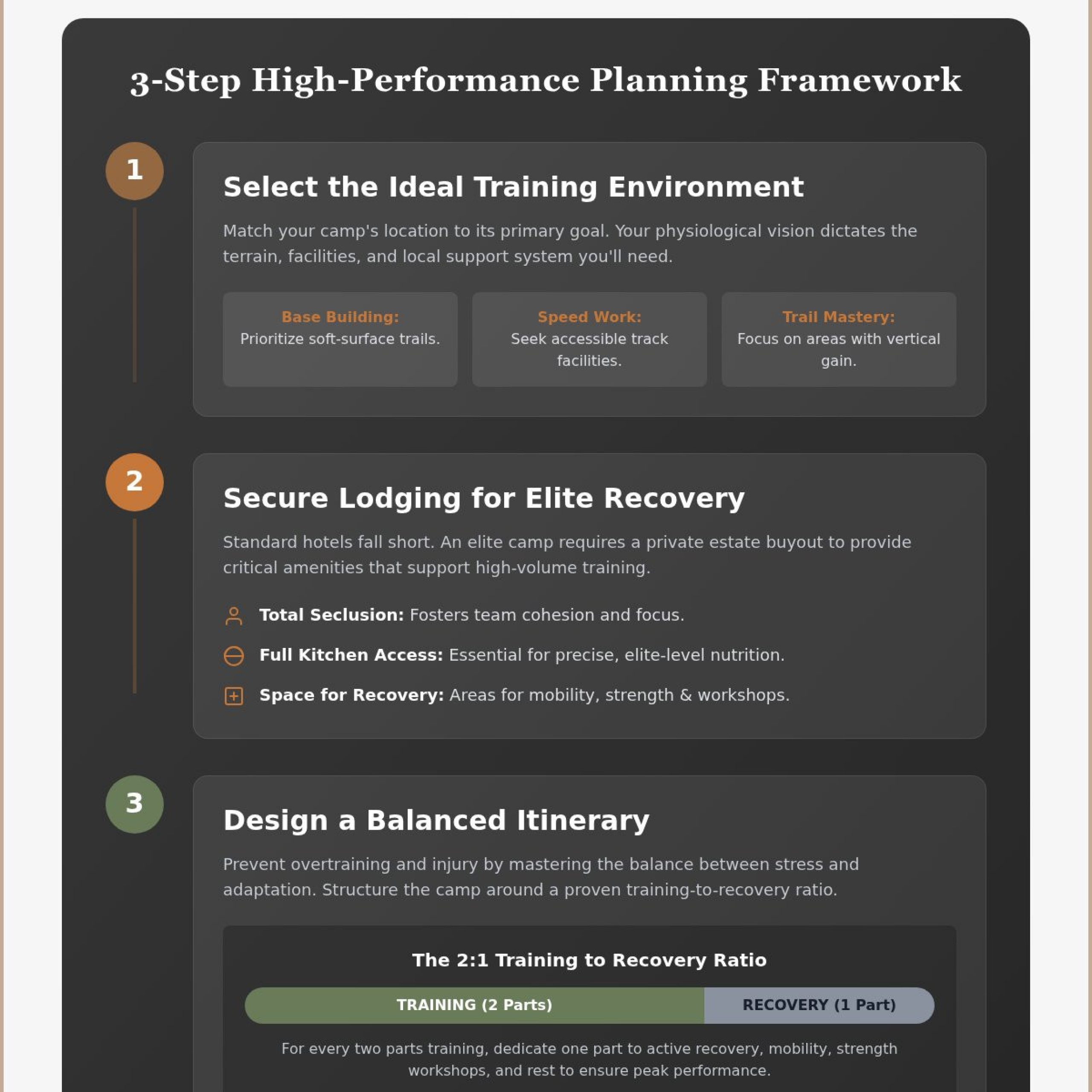
Planning a successful running camp tucson requires more than just a passion for the sport; it demands a clear physiological vision. Before you begin the logistics, determine if your 2026 camp aims for high-volume base building, high-intensity speed work, or technical trail mastery. Tucson offers the infrastructure for all three, but your primary goal dictates which corner of the valley you should call home. A team focusing on marathon volume will seek different terrain than a group of mountain runners looking for vertical gain.
Accessibility is the cornerstone of a stress-free experience for national participants. Tucson International Airport (TUS) provides seamless access to the eastern trails, while Phoenix Sky Harbor (PHX) remains a reliable alternative just two hours away. Beyond travel, evaluate the local support system. Tucson is home to elite-level physiotherapists and accessible track facilities that allow coaches to monitor splits with precision. Always consult the 2026 local event calendar to ensure your dates don’t clash with city-wide festivals, such as the Tucson Gem and Mineral Show, which can impact transportation and lodging availability.
Terrain Matching for Athlete Goals
The desert floor and mountain foothills offer a diverse menu of surfaces. For injury prevention during high-volume weeks, prioritize soft-surface trails like those found in Tucson’s trail-running paradise. These paths provide the necessary cushioning for tired joints while still offering enough technicality to keep the mind engaged. If you’re looking for warm weather training camp venues that offer immediate access to these varied routes, focus on the Tanque Verde area near the national park boundary.
Navigating Seasonal Weather Patterns
Timing is everything in the Sonoran Desert. February through April is widely considered the “Golden Window” for a running camp tucson, offering crisp mornings and mild afternoons. During these months, you should design your schedule around the “Morning Window.” Start runs at sunrise to capitalize on the cool desert air before the temperature swings upward. This rhythm allows for a full afternoon of recovery, core work, or mobility sessions in a climate-controlled environment.
Hydration and sun protection aren’t just suggestions here; they’re essential performance factors. Encourage athletes to utilize electrolyte-heavy hydration strategies and high-SPF protection even on overcast days. By respecting the desert’s unique patterns, you ensure your team spends their energy on the trail rather than fighting the elements. If you’re ready to secure a private sanctuary for your team, early planning for these peak 2026 months is highly recommended to ensure the best trail access.
Step 2: Securing Lodging that Supports High-Volume Recovery
The success of a running camp tucson often hinges on the hours spent between workouts. In a high-performance environment, lodging is more than a place to rest; it is a critical performance variable that dictates how well an athlete absorbs the day’s training. While standard hotels or university dorms offer basic utility, they frequently lack the privacy and specialized infrastructure required for elite-level focus. A private estate buyout allows coaches to control the environment, ensuring that the team’s rhythm isn’t interrupted by outside guests or restrictive breakfast hours.
Nutrition is the fuel of any successful camp, making full kitchen access a non-negotiable requirement. High-performance athletes require specific meal timing and macro-nutrient ratios that standard hotel catering rarely accommodates. Having a communal kitchen allows for group meal prep, which not only ensures dietary precision but also serves as a natural setting for team bonding. Additionally, proximity to trailheads is essential to minimize “windshield time.” Every minute spent in a van is a minute lost to recovery or sleep. By positioning your base near Pima County’s network of trails, you ensure that the transition from the breakfast table to the trail is seamless and efficient.
The “Home Base” Philosophy for Teams
A shared living space creates an organic atmosphere for growth that separate rooms simply cannot replicate. When athletes share a villa, the informal conversations over coffee or while stretching in the living room become the foundation of team culture. This “home base” philosophy is equally effective when planning a triathlon camp, where logistics for gear and multi-sport transitions are even more demanding. Essential amenities like high-capacity laundry facilities are also vital; high-volume training weeks generate a significant amount of technical gear that needs to be ready for the next sunrise session.
Recovery Infrastructure Essentials
Recovery is an active process, and the physical environment must support it. Access to a pool or a dedicated cold-plunge area is invaluable for managing the inflammation that comes with desert running. Beyond the physical, mental recovery requires quiet zones. These are spaces specifically designated for afternoon naps and reflection away from the group’s energy. Coaches should also look for venues that allow for a “Treatment Room” where massage therapists or PTs can work on athletes without distraction. Finally, a communal “War Room” equipped for video analysis and strategy sessions allows the team to transition from physical exertion to intellectual mastery of their sport. For multi-sport teams who also cycle, selecting a mindfulness retreat venue in Tucson with dedicated gear storage ensures that every piece of precision equipment is protected and ready for the next session.
Step 3: Designing a Balanced High-Performance Itinerary
A successful running camp tucson is a delicate dance between exertion and stillness. You aren’t just planning a series of runs; you’re orchestrating a physiological transformation for your athletes. We recommend following a 2:1 ratio: for every hour of high-intensity effort, schedule two hours of active recovery or education. This rhythm prevents the cumulative fatigue that often plagues poorly planned camps. Integrating non-running sessions, like sunrise yoga or mobility workshops, helps athletes stay supple despite the desert’s dry heat. By the time the mid-week slump arrives on Wednesday or Thursday, your team will need a low-impact day. Use this time for a mental reset or an evening workshop on shoe technology and mental performance. These sessions turn a simple training trip into a comprehensive growth experience. Much like a well-structured corporate retreat agenda template that balances deep-work intensity with restorative hospitality, your camp itinerary should follow a deliberate narrative arc that moves athletes from exertion into strategic recovery.
Sample 7-Day Camp Structure
The first two days should focus on acclimatization, allowing the body to adjust to the 2,500-foot base elevation with easy aerobic miles. On Day 3, introduce the “Big Effort,” such as a sustained climb on Mount Lemmon or a long run through the rolling hills of Saguaro National Park. Day 4 should be a deliberate pivot toward recovery and local culture. It’s the perfect time to explore a historic guest ranch or enjoy a quiet afternoon by the pool. This break ensures that by Day 5, the team is ready for speed work or technical trail sessions without risking injury from overtraining.
Managing Mixed Ability Levels
Managing different fitness levels is a common challenge for coaches. Out and back routes are your best friend for keeping a group together. They allow faster runners to push their pace while ensuring no one is left behind at the finish. For long desert stretches, utilizing a support vehicle (SAG) provides a safety net for hydration and medical needs. You can also empower individual pacing by sharing GPS-based routes ahead of time. This allows each athlete to find their own flow while remaining part of the collective journey. It’s about creating an environment where everyone feels challenged but supported.
Ready to host your team in a space designed for elite focus? Secure your 2026 private estate buyout and start planning your ultimate itinerary in the heart of the Sonoran Desert.
Elevating the Experience at Solana Spanish Villas
Solana Spanish Villas stands as a historic 1920s sanctuary, offering a rare fusion of Western heritage and modern luxury for the discerning coach. For those organizing a running camp tucson, the ability to secure a private estate buyout is a fundamental advantage. It transforms the property from a mere lodging option into a dedicated high-performance laboratory where every variable is under your control. The villas provide the quiet seclusion necessary for deep recovery, tucked away from the hum of city traffic and the distractions of public resorts. This is a place where the environment is curated to match the intensity of your training goals.
The Tanque Verde advantage is perhaps the most compelling reason to choose this location. Situated near the eastern edge of the valley, the villas offer immediate access to the world-class routes mentioned earlier in this guide. You’re minutes from the rolling pavement of Saguaro National Park East and the technical climbs of the Rincon Mountains. This proximity ensures that the transition from a focused group breakfast to the first mile of a long run is effortless, reducing the logistical friction that can drain a team’s energy over a week-long camp.
A Boutique Guest Ranch Experience
The atmosphere at Solana is defined by the “gracious host” approach, where sophisticated hospitality supports elite performance. Every detail, from the hand-crafted architectural elements to the expansive outdoor recovery areas, is designed to inspire tranquility. It’s a guest ranch Tucson experience that prioritizes renewal as much as exertion. The property’s professional-grade kitchens allow your team’s nutritionists to prepare specific, timed menus, while the sprawling grounds provide ample space for mobility drills and team workshops under the desert stars.
Logistics Made Simple for Coaches
We understand that a coach’s primary focus should be on the athletes, not the coordination of local vendors. The Solana team acts as a knowledgeable steward of the local culture, assisting with everything from catering recommendations to local transport coordination. Secure storage for technical gear and professional meeting spaces for evening strategy sessions ensure that the administrative side of your camp runs as smoothly as the training itself. By providing a structured yet intimate environment, we allow you to focus on the split times and the strategy that will define your 2026 season. If you’re ready to define the next chapter of your team’s success, Book your 2026 running camp at Solana Spanish Villas today and experience the pinnacle of desert training.
Charting Your Path to Peak Performance in the Sonoran Desert
Tucson is more than just a training destination; it’s a strategic partner in your team’s athletic development. By capitalizing on the physiological advantages of the high-desert floor and the reliable sunshine of the surrounding peaks, you provide your athletes with an edge that few other locations can replicate. Success for your 2026 season depends on your ability to balance these high-intensity efforts with a sanctuary that prioritizes stillness and professional-grade recovery. A truly elite running camp tucson thrives when the logistics are invisible, allowing the coach’s focus to remain entirely on the split times and the strategy.
Every detail, from the technical challenge of the trails near Saguaro National Park East to the communal bonding over athlete-specific meals, contributes to the final result. You deserve a venue that acts as a dedicated steward of your goals. With a private historic estate buyout and boutique luxury amenities, we invite you to plan your elite 2026 running camp at Solana Spanish Villas. Let the desert’s timeless beauty and our proximity to iconic trails be the foundation for your most successful training season yet. The horizon is wide, and the trails are waiting.
Frequently Asked Questions
What is the best time of year for a running camp in Tucson?
Late February through April offers the most consistent training conditions for an elite retreat. During these months, you’ll find the ideal balance of crisp mornings and mild afternoons. This window avoids the extreme summer heat and the unpredictable winter rains. It’s the perfect time to capitalize on Tucson’s 300 days of sunshine. Coaches can plan rigorous double-day sessions without the risk of heat exhaustion or trail closures.
How much does it cost to organize a private running camp?
The cost varies significantly based on the level of luxury and the size of your group. Organizing a private running camp tucson involves budgeting for lodging buyouts, specialized catering, and transportation. You should also account for permitting fees if you plan on hosting organized events in public parks. While self-directed camps are more affordable, a professional-grade experience usually requires a dedicated budget for private facilities and recovery infrastructure.
Is Tucson safe for trail running given the desert wildlife?
Tucson’s trails are safe if you follow standard desert protocols. Wildlife like javelinas and rattlesnakes are common but generally avoid human contact. We recommend running in pairs and staying on marked trails during daylight hours. Always keep your eyes on the path ahead and listen for the distinct warning of a rattlesnake. Most local runners find that respect for the environment is the best way to ensure a safe training session.
Do I need a car for a running camp in Tucson?
Yes, a vehicle is essential for accessing the diverse range of trailheads across the valley. While some lodging options are close to specific parks, having a van or rental car allows your team to reach Mount Lemmon or the various sections of The Loop. This mobility ensures you can vary the terrain and elevation throughout the week. It also makes grocery runs for athlete-specific meal prep much more efficient for your support staff.
How do I handle hydration and nutrition for athletes in the dry heat?
Managing hydration in the dry desert heat requires a proactive strategy that starts before the run. Athletes should prioritize electrolyte-rich drinks over plain water to combat the rapid loss of minerals. We suggest designing your schedule around the “Morning Window” to avoid peak temperatures. Utilize the professional kitchens in your villa to prepare high-carb, nutrient-dense meals that support the increased metabolic demands of training at a moderate altitude.
Can Solana Spanish Villas accommodate professional coaches and their athletes?
Solana Spanish Villas is specifically designed to act as a private sanctuary for professional coaches and their teams. Our historic estate buyouts offer the seclusion needed for video analysis and strategy sessions. With flexible lodging for groups of 10 to 30 people, the property provides both communal bonding spaces and quiet zones for recovery. The onsite professional kitchens and expansive outdoor areas ensure that every logistical need of a running camp tucson is met.
What running routes are closest to Solana Spanish Villas?
Solana Spanish Villas is perfectly positioned near the Tanque Verde area, offering immediate access to Saguaro National Park East. The Cactus Forest Loop and various rolling desert trails are just a short drive or warm-up run away. Additionally, the base of the Catalina Highway is nearby, providing a direct route for those seeking the vertical challenges of Mount Lemmon. This proximity reduces transit time and maximizes the time your athletes spend on the trail.
Is altitude a factor when training in Tucson?
Altitude is a significant factor, as Tucson sits at a base elevation of roughly 2,400 to 2,600 feet. This moderate height provides a subtle aerobic challenge without the extreme recovery demands of higher mountains. For teams looking to integrate “Live High, Train Low” strategies, the proximity to Mount Lemmon allows for sessions at much higher elevations. This combination helps improve red blood cell count and overall endurance capacity over the course of a camp.
0 Comment