


Did you know that in 2026, nearly 40% of retreat participants wait until the final thirty days to book their spot? This last minute culture often leaves organizers in a delicate dance between securing venue deposits and maintaining an open door for their community. Implementing a thoughtful retreat registration payment plan isn’t just a logistical necessity anymore. It’s a gracious extension of hospitality that removes the financial barriers often preventing soulful transformation. By offering flexibility, you invite your guests into a space of ease before they even arrive at your door.
You likely understand the frustration of manual spreadsheets and the anxiety of chasing late installments as your event date approaches. It’s exhausting to balance the warmth of your mission with the cold reality of bank balances. This guide promises to help you master the logistics of flexible payments to ensure your event remains both accessible and financially resilient. We will explore how to integrate modern “Buy Now, Pay Later” trends, navigate the implications of the Hotel Fees Transparency Act, and establish a predictable cash flow that honors both your vision and your bottom line.
Key Takeaways
- Learn how a flexible payment structure transforms a boutique gathering from an aspirational dream into an accessible reality for your most dedicated attendees.
- Discover the formula for an “Anchor Deposit” that covers your initial venue costs and protects your event’s financial foundation from the start.
- Streamline your logistics with a retreat registration payment plan that uses automation to eliminate manual tracking while preserving a warm, personal guest experience.
- Master the timing of your installments by reverse-engineering your registration deadlines to match your specific venue rental obligations.
- Identify your “Go/No-Go” milestone to ensure your retreat is financially viable before you commit to final, non-refundable expenses.
The Strategic Value of a Retreat Registration Payment Plan
A retreat is more than a simple gathering; it’s a carefully curated journey into a world of tranquility and renewal. When you host a high-end experience at a private estate, the initial cost can sometimes feel like a barrier to the very people who need that sanctuary most. A well-structured retreat registration payment plan serves as a bridge, allowing guests to commit to their personal growth without the immediate pressure of a single, large transaction. It transforms a premium price point into a series of manageable steps, ensuring your boutique experience remains accessible to a broader audience. This approach honors the guest’s financial reality while preserving the exclusivity of your offering.
Beyond accessibility, these plans offer a steady rhythm of financial support for your event. Instead of waiting for a final surge of registrations, you create a predictable cash flow that aligns with your venue installments and catering deposits. Each payment milestone also acts as a natural touchpoint for engagement. These are opportunities to share a piece of history, a teaser of the upcoming menu, or a gentle reminder of the peaceful escape that awaits them. By the time the guest arrives, you’ve already built a relationship based on consistency and transparency.
Accessibility vs. Financial Risk
True hospitality involves balancing the needs of your guests with the stability of your business. High-end villa rentals often require significant upfront commitments. By establishing a clear repayment plan, you can secure non-refundable anchor deposits that cover these essential costs while offering flexibility for the remaining balance. This strategy effectively reduces “sticker shock” for those seeking luxury group stays. It expands your market by inviting attendees who value the quality of a historic property but prefer to manage their cash flow over several months. You can explore our boutique properties to see how the right setting justifies this professional financial approach.
The Gracious Host Approach to Finance
The first transaction is often the first true interaction a guest has with your retreat’s energy. Rather than adopting a cold, corporate tone of “collections,” approach your billing with the warmth of a dedicated steward. Use language that feels like an invitation to a shared heritage. Clear, transparent terms communicated with empathy build a foundation of trust that lasts long after the final installment is paid. This supportive enrollment process ensures that the journey toward renewal begins the moment they click “register,” setting a sophisticated tone for the entire transformative experience. It’s about making the logistical path as smooth and peaceful as the retreat itself.
Building Your Installment Framework: Essential Components
Crafting a financial framework is much like laying the stones for a garden path. It requires precision and foresight to ensure every step feels secure underfoot. A structured retreat registration payment plan provides this vital stability. It allows you to honor your financial commitments to vendors while giving your guests the space they need to breathe. By breaking down the total cost into manageable segments, you transform a significant investment into a series of comfortable commitments.
The Anatomy of a Non-Refundable Deposit
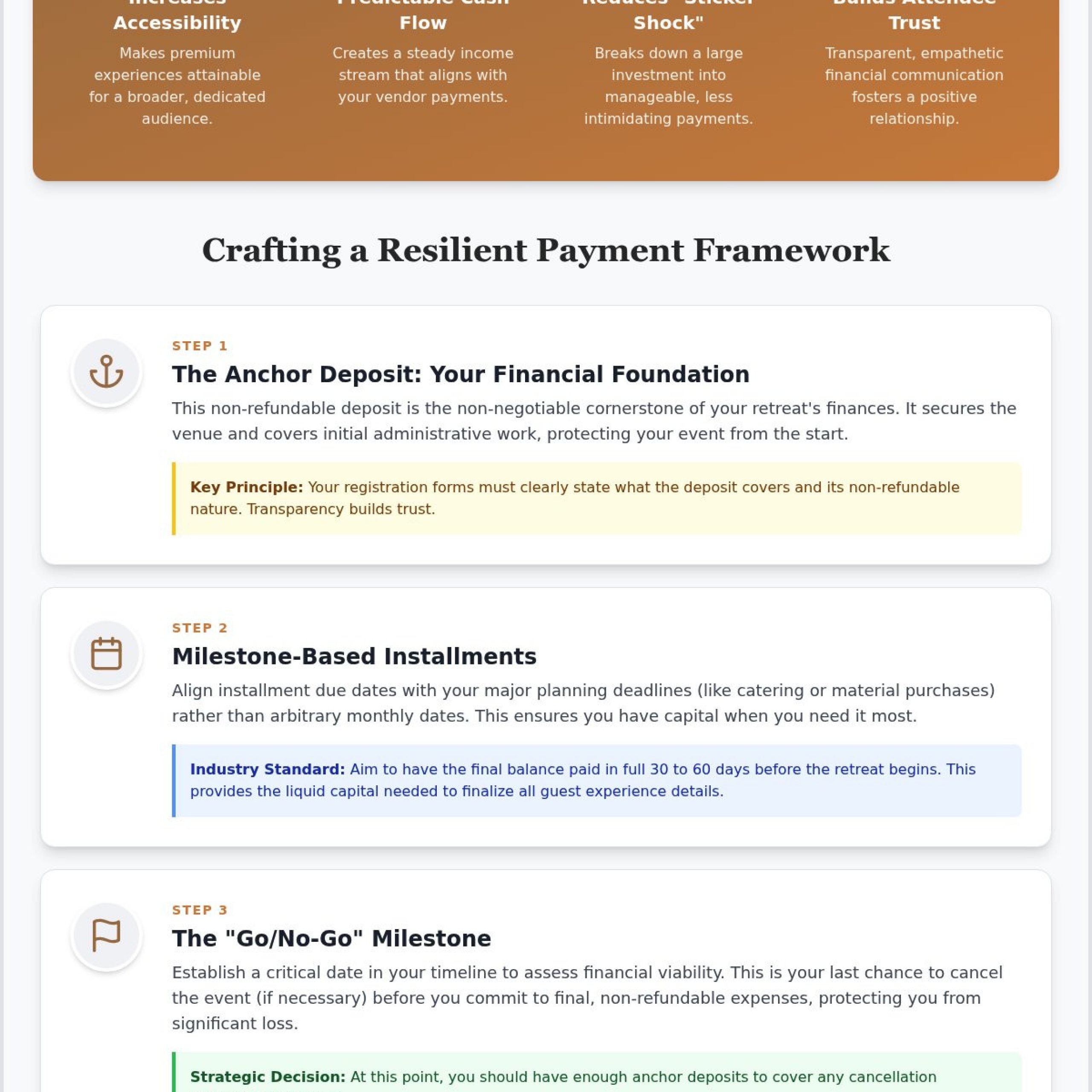
The Anchor Deposit acts as the non-negotiable financial foundation that secures the physical space and administrative resources required to bring your retreat to life. When calculating this amount, look closely at your venue’s “kill fees” and the hours spent on early logistics. In 2026, legal clarity is paramount. Your registration forms must state exactly what the deposit covers and under what conditions it is withheld. This transparency doesn’t just protect your business; it builds a bridge of trust with your attendees. It’s a professional standard that reflects the quality of the experience you’re curating.
Milestone-Based Scheduling
Monthly installments offer a predictable cadence, but milestone-based schedules often align better with the actual flow of retreat planning. You might set payments to coincide with major catering deadlines or the purchase of curated materials. Regardless of the frequency, the final balance should typically be settled 30 to 60 days before the start date. This industry standard ensures you have the liquid capital needed to finalize every detail of the guest experience. If you’re organizing corporate retreats, this timeline is particularly helpful for managing internal procurement cycles.
Encourage early commitment by offering a “Pay-in-Full” incentive. While a flexible retreat registration payment plan increases accessibility, having a portion of your guests pay upfront provides an immediate cushion for early expenses. When a payment is missed, reach out with the spirit of a gracious host. A gentle inquiry often reveals a simple oversight rather than a lack of commitment. Handling these moments with grace preserves the relationship and ensures the participant arrives feeling welcomed rather than scrutinized.
Finally, consider how to weave in sliding scales or scholarship spots. These varied payment levels allow you to maintain a diverse and vibrant community without compromising the retreat’s overall financial health. By balancing high-ticket registrations with accessible options, you create a rich tapestry of experiences that reflects the inclusive nature of your mission. This thoughtful approach to finance mirrors the care you put into every other aspect of your retreat’s heritage and hospitality.
Navigating Payment Models: Automation vs. Manual Flexibility
Selecting the right mechanism for your retreat registration payment plan is a delicate balance between modern efficiency and the intimate service your guests expect. In the world of boutique hospitality, the way money moves should be as seamless as the check-in process at a historic estate. You must decide whether to embrace the swiftness of automation or the personalized touch of manual invoicing. Both paths have their merits, depending on the scale of your gathering and the depth of your administrative resources.
Credit card transactions are the standard for convenience, yet they carry merchant fees that typically hover around 2.9% plus a small fixed cost. For high-ticket executive retreats, Automated Clearing House (ACH) transfers offer a sophisticated alternative with significantly lower fees. While ACH requires a bit more effort from the guest, the savings on a large group booking can be substantial. As a gracious host, you must decide whether to absorb these processing costs as a business expense or pass them to the attendee. Many organizers find that rolling these fees into the total price maintains a sense of transparency and ease, avoiding the “junk fee” feel that modern travelers increasingly dislike. One often-overlooked strategy for reducing these overall costs is planning a weekday retreat, which can unlock venue savings of up to 25% compared to peak weekend rates, giving you more financial flexibility to absorb processing fees graciously.
Choosing Your Payment Gateway
In 2026, financial security is a cornerstone of guest trust. Your payment gateway must adhere to the highest encryption standards to protect sensitive data. When integrating payments with your registration forms, look for “card vaulting” capabilities. This allows your system to securely store information for future installments without requiring the guest to re-enter their details. A retreat-specific processor should also offer automated reminders, ensuring that the next step in their journey toward renewal is handled with professional punctuality.
The Hidden Costs of Payment Plans
While installments increase accessibility, they introduce administrative complexities that require a steady hand. Failed transactions and expired credit cards are the quiet thieves of an organizer’s time. Each declined payment requires a gentle, high-touch follow-up to maintain the relationship while securing your cash flow. If you find yourself spending hours on manual bookkeeping, it may be time to invest in a dedicated management tool. Understanding these operational nuances is essential for anyone learning how to make a retreat profitable while maintaining a high standard of care. Balancing the time cost of manual oversight against the software fees of automation is a strategic decision that shapes the financial health of your event.
Small group gatherings often benefit from manual invoicing. It allows for a level of flexibility that automated systems sometimes lack, such as adjusting a deadline for a long-time client. However, as your community grows, the “high-touch” approach can become a bottleneck. The goal is to create a system that feels supportive rather than transactional, ensuring the financial logistics never overshadow the transformative experience you’ve worked so hard to curate.
The Ultimate Retreat Payment & Registration Checklist
Before the first invitation is ever sent, a successful organizer must design the policy architecture that supports their vision. A well-crafted retreat registration payment plan requires a pre-launch phase where you define your break-even point and the maximum duration of your installments. This calculation ensures that your event remains financially viable even if you offer extended flexibility to your guests. By mapping out these milestones early, you create a sense of grounded confidence that resonates through every subsequent interaction.
Your registration form should be a seamless blend of inspiration and clarity. It must include mandatory “Terms and Conditions” check-boxes that outline your payment expectations and refund boundaries. This is also the ideal moment to gather essential participant data. A comprehensive intake form should capture dietary needs, room preferences, and travel details, allowing you to curate a bespoke experience that honors each guest’s unique requirements. Understanding these nuances is a core part of Pricing a Wellness Retreat effectively, as venue selection and guest amenities directly influence your bottom line.
Once a guest commits, the communication loop must be impeccable. Automated receipts should provide more than just a confirmation; they should offer a clear schedule of future charges. This transparency prevents surprises and reinforces your role as a reliable, detail-oriented professional. Implement a reminder system that sends notices seven days and twenty-four hours before an automatic charge. If a payment fails, have a compassionate default protocol ready. A warm, personal reach-out can often resolve the issue while maintaining the tranquil spirit of your retreat.
Drafting Your Refund Policy
A sophisticated refund policy balances guest protection with your own financial stability. Tiered schedules are the industry standard for boutique events. For example, you might offer a full refund minus the deposit ninety days out, but move to a zero-refund policy thirty days before the event. This structure accounts for the non-refundable commitments you’ve made to your venue and caterers. In the post-2020 landscape, including a robust Force Majeure clause is essential for managing unforeseen global events. You might also consider allowing transferability, where an attendee can sell their spot to another person, ensuring your retreat remains full while providing the guest with a graceful exit strategy.
The physical environment of your retreat serves as the silent partner in your financial strategy. To see how a historic, high-quality estate can anchor your event’s value, view our private villas and begin envisioning your next gathering. A professional setting justifies a professional payment structure, allowing you to focus on the transformative journey ahead.
Aligning Attendee Payments with Venue Obligations
The heartbeat of a successful event is the synchronization between your incoming guest revenue and your outgoing venue commitments. When you curate an experience within a historic estate, you’re assuming a role of stewardship that extends to the financial health of the project. A retreat registration payment plan is the mechanism that ensures your personal liability is minimized while your vision is fully realized. By reverse-engineering your registration deadlines from your villa rental contract, you create a timeline that protects your investment and provides peace of mind. The venue is your anchor. Trust is your currency.
Every professional retreat needs a “Go/No-Go” date. This is the specific milestone where you evaluate your collected deposits to decide if the gathering is viable. It typically aligns with the final date you can cancel or adjust your venue contract without incurring heavy penalties. Having this date clearly defined allows you to move forward with confidence or pivot with grace. As your registration strategy matures, these plans also allow you to scale. Distributing costs over several months makes it possible to book larger, more prestigious estates that might otherwise seem out of reach for a single upfront payment. Before committing to any property, reviewing a comprehensive all inclusive guest ranch site visit checklist can help you identify hidden costs and ensure the venue fully supports your group’s technical and logistical needs.
Matching Milestone Deadlines
To maintain a tranquil flow of operations, your attendee “Final Balance” dates must always precede your venue “Final Payment” dates. We recommend a 14-day buffer between these two milestones. This window accounts for unexpected bank delays, failed transactions, or the occasional late installment from a guest. It ensures that when you sit down to settle your balance with the property owners, the funds are already secure in your account. You can Explore Luxury Group Accommodations to see the types of high-quality properties that require this level of professional financial alignment. This methodical approach reflects the same attention to detail you bring to your wellness or corporate programming.
The Final Step: Securing Your Dates
A solid registration plan gives you the courage to sign a venue contract with total certainty. It transitions you from a hopeful planner to an authoritative host who understands the fusion of old-world charm and modern financial convenience. When your roster is paid in full well before the first guest arrives at the gate, your mental energy shifts. You’re no longer chasing invoices; you’re perfecting the welcome experience. The journey of discovery for your guests begins with your own sense of preparation. Plan your next professional retreat with Solana Spanish Villas and experience the serenity that comes from a perfectly balanced event strategy.
Securing Your Vision with Financial Clarity
Mastering a retreat registration payment plan is the final step in transitioning from a visionary planner to an authoritative host. By aligning your guest’s journey with your venue’s milestones, you create a foundation of trust that begins long before the first suitcase is unpacked. You’ve established the frameworks, automated the reminders, and drafted the policies that protect both your community and your investment. These logistical details are the quiet stewards of your retreat’s success, allowing you to lead with a heart that is fully present and unburdened by financial static.
Our historic boutique resort settings offer the sophisticated backdrop your next event requires. With professional event hosting capabilities and versatile spaces designed specifically for wellness and corporate retreats, we provide the heritage and modern comfort your guests deserve. It’s time to move from the spreadsheet to the sanctuary and focus on the transformative experience you’ve worked so hard to curate.
View Available Properties for Your Next Group Retreat
Your commitment to excellence and accessibility will resonate with every participant who walks through our gates. We look forward to helping you host an experience that is as seamless as it is transformative.
Frequently Asked Questions
What is a standard deposit amount for a group retreat?
A standard deposit typically ranges from 25% to 50% of the total experience cost. This initial investment, often called an anchor deposit, secures a guest’s place within our historic boutique settings and allows the organizer to fulfill primary venue obligations. By establishing this non-refundable foundation, you ensure the financial resilience of the retreat while inviting guests to commit to their journey of renewal.
How far in advance should the final retreat payment be due?
Industry standards suggest that the final payment should be due 30 to 60 days before the arrival date. This window provides the necessary liquid capital to finalize catering, materials, and boutique amenities. Setting this deadline early allows the organizer to focus on hospitality rather than logistics as the event approaches, ensuring a tranquil transition from planning to hosting.
Should I charge extra for attendees who choose a payment plan?
While some organizers add a small administrative fee to cover credit card processing, many prefer to roll these costs into the overall price. This approach maintains the “gracious host” aesthetic and avoids the friction of additional fees at checkout. A transparent retreat registration payment plan builds trust by presenting a single, all-inclusive investment that honors the guest’s desire for both quality and simplicity.
How do I handle a participant who misses an installment?
When a participant misses an installment, start with an automated reminder followed by a compassionate, personal inquiry. Often, a failed transaction is merely a result of an expired card or a simple oversight. Approaching these moments with warmth rather than a corporate tone preserves the relationship and ensures the guest feels welcomed and supported throughout their enrollment journey.
Can I offer a payment plan without using expensive software?
You can certainly manage installments without high-end software by utilizing manual invoicing through platforms like PayPal or Stripe. This high-touch approach is often ideal for intimate gatherings or executive retreats where personal connection is paramount. While it requires more administrative time, it allows for greater flexibility and avoids the monthly subscription costs associated with dedicated retreat management tools.
What happens to the payment plan if I have to cancel the retreat?
If you must cancel the retreat, your pre-defined refund policy dictates the outcome. Generally, participants should receive a full refund of their installments, though the non-refundable deposit may be retained if your venue contract requires it. Clear communication during this phase is essential to maintain your reputation as a reliable curator and steward of your community’s trust.
Is it better to have monthly payments or a 3-part installment plan?
Monthly payments are excellent for retreats with long lead times, as they offer smaller, digestible amounts. Conversely, a three-part installment plan—deposit, mid-point, and final balance—often works best for shorter registration windows. Choosing the right rhythm depends on your audience’s preferences and your need for predictable cash flow to meet specific venue and vendor milestones.
How do I protect myself from credit card chargebacks?
Protecting yourself from chargebacks requires a robust registration process where guests must actively agree to your terms and conditions. Ensure your refund policy is clearly displayed and that every transaction is accompanied by a detailed receipt. Maintaining thorough records of guest communication and attendance can serve as vital evidence if a financial dispute arises, safeguarding your event’s stability.
0 Comment