


What if the most memorable retreat isn’t the one with the grandest venue or the fullest schedule, but the one designed to work financially from the start? Learning how to make a retreat profitable means looking beyond ticket sales and accounting for the real cost of creating a thoughtful, well-run experience.
If you’re unsure which expenses belong in your plan, worried participants won’t accept your price, or wondering how many bookings you can count on, you’re not alone. A retreat can feel generous and restorative without requiring you to absorb costs or take on more risk than you can manage.
This guide connects revenue, expenses, and profit, then shows how to shape an offer and format around your audience and delivery capacity. You’ll find practical ways to plan pricing, promotion, enrollment, and venue requirements, and to assess different enrollment outcomes before committing to costs. The goal is to build a retreat that respects both the participant experience and the sustainability of your business.
Key Takeaways
- Learn how to make a retreat profitable by planning around revenue, total expenses, and the profit you want to retain.
- Build a financial model that accounts for fixed and variable costs, staffing, promotion, payment processing, and a contingency.
- Choose a retreat format and group size that fit your audience, facilitation capacity, and intended guest experience.
- Use conservative, expected, and optimistic enrollment scenarios to guide deadlines and decisions before committing to major costs.
- Compare venues by how well their lodging, event spaces, policies, and operational details fit your retreat plan.
Why a Fully Booked Retreat Can Still Be Unprofitable
A retreat can fill every place and still leave its organizer with little to show financially. Attendance measures demand, not what remains after you deliver the experience and cover its costs. Start by separating sales, cash flow, and profit, then account for the obligations behind each booking.
What does it mean for a retreat to be profitable?
Revenue is what the retreat earns; expenses are what it costs to plan and deliver; profit is what remains after those expenses are deducted. Cash received is different: it’s the money actually collected by a particular date, and it may not include outstanding balances or account for refunds and unpaid obligations. Treat it as a snapshot, not the final result.
For a simple hypothetical, imagine confirmed bookings worth 100 fictional accounting units. By the retreat date, 80 units have been collected, while 20 remain unpaid. If total expenses are 75 units and all bookings are ultimately paid with no refunds, final profit is 25 units. But after paying those expenses with the cash on hand, only five units remain until the balance arrives. This isn’t a price benchmark. It shows why a retreat can be profitable on paper but short on cash at a critical moment.
A sustainable profit target depends on your goals. It might compensate you for your work, fund future events, or support a wider business. Include the value of your planning and on-site hours, even if you don’t pay yourself a formal wage. Event management brings together budgeting, site selection, and logistics, all of which can affect the final result.
Why can a sold-out retreat still lose money?
Bookings can look reassuring while the budget tightens. Payment-processing fees reduce collections; cancellations can trigger refunds or leave costs uncovered; and a contingency helps cover unexpected expenses. Organizer time is easy to overlook, too. If you price only for visible expenses, your apparent profit may amount to unpaid labor.
Enrollment assumptions matter just as much. Committing to costs before checking whether your audience is ready to book can leave you responsible for expenses that require more attendees than you can realistically attract. Test interest and model what happens if enrollment falls short before making commitments that are difficult to reverse.
More attendees don’t always mean more profit. Each additional participant may bring added delivery costs or require more staffing, space, and coordination. A larger group can also change the feel of a carefully facilitated retreat. To understand how to make a retreat profitable, compare the revenue from another booking with its added costs and the experience you intend to provide.
Build a Retreat Profit Model Around Realistic Revenue and Costs
A clear model turns a retreat idea into a plan you can test before making major commitments. List expected income and expenses side by side, then note when money is expected to arrive or leave. This helps you assess both whether the event could earn a profit and whether you’ll have enough cash to meet costs as they come due.
Which retreat revenue assumptions should organizers test?
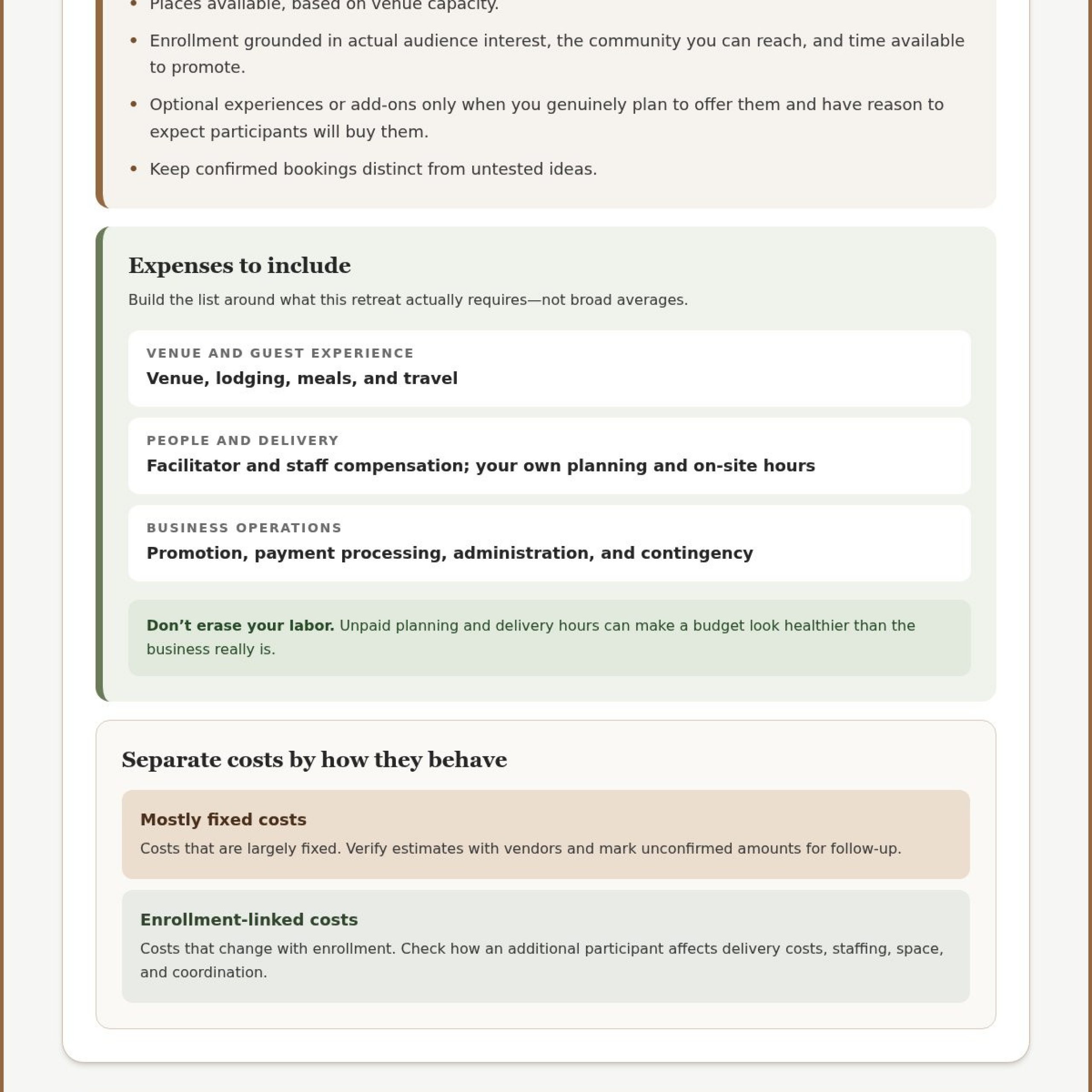
Start with the number of participant places available. Estimate enrollment using actual audience interest, the community you can reach, venue capacity, and the time available to promote the retreat. Count an add-on or optional experience as income only if you genuinely plan to offer it and have reason to expect participants will buy it. Keep confirmed bookings separate from ideas that are still untested.
Deposits can support cash flow, but they aren’t automatically available to spend. Put payment dates, remaining balances, refund conditions, and cancellation terms in writing. Then forecast when funds will be collected and which obligations they need to cover. Clear financial boundaries are one of several useful risk management strategies to consider as you plan.
Which expenses belong in a retreat budget?
Build the expense list around what your retreat actually requires. Include venue and lodging, meals, facilitator and staff compensation, travel, promotion, payment processing, administration, and a contingency for uncertain or unexpected needs. Count your own planning and delivery hours, too. Unpaid organizer labor can make a budget look healthier than the business really is.
Separate costs that are largely fixed from those that change with enrollment. Verify estimates with vendors instead of relying on broad averages, and mark unconfirmed amounts for follow-up.
| Cost behavior | Examples to check |
|---|---|
| Mostly fixed | Venue hire, promotional work, facilitator travel, and planning or administrative time. |
| Enrollment-dependent | Per-person lodging or meals, participant materials, and transaction fees tied to payments. |
Some expenses have both fixed and variable elements, so confirm how vendors calculate them. A venue that provides event hosting and lodging may simplify coordination, but compare its actual inclusions and terms with your plan. For a practical venue reference, review short-term lodging details as one part of your research.
Forecast revenue and expenses together. A promising sales total means little unless it covers the full cost and timing of delivery. This is the heart of how to make a retreat profitable: build projections from evidence and revise them as real bookings and verified costs come into view.
Compare Retreat Formats by Capacity, Workload, and Financial Risk
Format shapes more than the calendar. It affects how much coordination you’ll manage, what kind of space participants need, and which costs depend on attendance. A focused single-day gathering may be simpler to deliver, while a residential or multi-day retreat can create more time for immersion alongside added logistical demands. No format is automatically the most profitable. The right fit depends on your audience, offer, and capacity to host it well.
How does group size change the retreat business model?
A smaller group can make personal attention and thoughtful facilitation easier, but fewer bookings may leave fixed expenses spread across fewer participants. A larger group may increase revenue, yet it can also require more staff, suitable event space, additional lodging arrangements, or a different facilitation plan. Before setting capacity, confirm the venue’s actual limits and room arrangements. Then consider whether the group size supports the experience you’re promising.
Which retreat format fits the audience and the organizer?
Begin with the outcome participants want, then choose the shortest schedule that can genuinely support it. A focused offer can be easier to explain and deliver than a broad itinerary with multiple activities, transitions, and suppliers. Residential and non-residential plans also differ in coordination: lodging-based gatherings require attention to overnight arrangements, while day events may depend more on arrival, departure, and session logistics. For further planning, see this guide to event venues with lodging.
| Format | Likely operational demands | Questions to verify |
|---|---|---|
| Single-day | Session space, arrival flow, meals or refreshments if offered, and a focused schedule. | Can participants travel in and out easily? Does the schedule allow enough time for the promised outcome? |
| Residential | Event space plus lodging coordination, overnight needs, and clear communication about what’s included. | Are lodging arrangements suitable for the group? Which services and costs are included in the venue proposal? |
| Multi-day, non-residential | Repeated venue access, daily transitions, and coordination of sessions and participant travel. | Will attendees manage daily travel? Are the space and schedule available across the full program? |
Use the table as a starting point, not a formula. Compare the format’s workload and delivery requirements with your available time and verified costs. This is a practical way to decide how to make a retreat profitable without expecting a larger group or longer itinerary to solve a mismatch between the offer and the people it serves.
Use Enrollment Scenarios and Clear Policies to Reduce Financial Risk
Registration is a signal, but a sound decision depends on knowing what you’ll do if bookings develop differently than hoped. Before confirming commitments, follow a deliberate sequence: test audience demand, compare enrollment scenarios with your financial model, set review dates, and decide whether to proceed, adjust, or cancel. This keeps decisions grounded in actual commitments rather than optimism alone.
How can an organizer test retreat demand before committing?
Start with conversations with people who match your intended audience. Ask what they hope to gain, what format suits them, and what might prevent them from attending. An interest list can show who wants updates, while transparent early registration can show who’s willing to take a concrete step. Keep the distinction clear: enthusiasm and sign-ups for updates are not the same as paid bookings.
Before promoting details as final, check venue and supplier terms, including dates, payment deadlines, cancellation conditions, and what is actually included. If a detail is still being confirmed, say so plainly rather than promising an arrangement you may not be able to deliver.
Which enrollment and cancellation decisions should be made early?
Set internal review dates early enough to act before important supplier or venue deadlines. At each review, compare confirmed enrollment with three forecasts:
- Conservative: Enrollment is below your expected level. Can the retreat still proceed without compromising the experience or creating an unacceptable loss?
- Expected: Bookings develop in line with your current evidence. Do projected income and delivery plans remain aligned?
- Optimistic: Demand is stronger than expected. Can the venue, staffing, and program accommodate additional participants well?
Decide in advance what each scenario means in practice. You might revise the format, adjust optional elements, seek an agreed supplier change, or cancel by a stated date if the plan no longer works. Build a contingency for low enrollment, supplier changes, and unexpected expenses. Confirm which options are actually available before relying on them.
Write registration terms in plain language, including deposit and balance timing, refund conditions, and what happens if the organizer cancels or changes the event. Policies must comply with applicable requirements, which can vary. If you’re uncertain about contract or consumer-protection obligations, seek advice from a qualified legal professional before publishing terms. Scenario planning is a practical part of how to make a retreat profitable: it helps protect the participant experience while giving you time to manage financial exposure.
Choose a Retreat Venue That Supports a Sustainable Guest Experience
A venue is more than a backdrop. Its spaces, lodging, policies, and practical support shape how smoothly the retreat runs and how comfortable participants feel. Choose a setting that suits the schedule and intended experience while fitting the financial model. A beautiful setting alone can’t make an unsuitable arrangement workable.
What should retreat organizers compare when evaluating venues?
Assess each proposal against your actual plan, not just its first impression. Confirm whether event spaces suit your activities and schedule, whether lodging arrangements fit your group, and what privacy and accessibility considerations need attention. Ask what staffing or operational support is included and what responsibilities remain with you or your team.
Compare proposals side by side. Record the details that affect both delivery and risk:
- Inclusions and restrictions: What spaces, lodging, equipment, and services are included? Are there limits on timing, activities, or outside suppliers?
- Access and operations: Who coordinates setup, transitions, and on-site needs? Which areas can participants use?
- Financial terms: When are payments due, and what are the cancellation or change terms?
- Open questions: What still needs written confirmation before you promote the venue or promise particular arrangements?
Keep unresolved details visible in your planning notes. Verify them directly rather than treating assumptions as confirmed features.
How can a suitable venue contribute to a stronger offer?
A setting can reinforce the purpose of a retreat, whether participants need a focused environment for a corporate gathering or a restorative atmosphere for a wellness retreat. Practical details matter just as much: a comfortable flow between overnight stays and programmed gatherings may reduce coordination points, though it doesn’t guarantee lower costs. Check how the arrangement works for your guests and compare its full terms with other options.
Solana Spanish Villas is an independently owned historic guest ranch and boutique resort, with short-term lodging and hosting for corporate and wellness retreats. The property dates to the 1920s and has been renovated and reopened. Confirm current spaces, lodging details, suitability, availability, and terms directly before including them in your plan. Venue fit is one part of how to make a retreat profitable: a sound choice needs to support both the guest experience and realistic delivery.
If you’re considering a lodging-based retreat, explore available retreat lodging as a starting point for your venue research.
Build a Retreat That’s Thoughtful and Sustainable
A retreat’s success isn’t measured by a full room alone. It comes from aligning a meaningful offer with realistic costs, a suitable format, and enrollment decisions grounded in confirmed commitments. A clear profit model helps you price with care, while scenario planning and written policies prepare you to respond if bookings or plans change.
Venue fit matters, too. Look for a setting that supports the experience you’re promising and makes practical details manageable. Solana Spanish Villas is an independently owned historic guest ranch and boutique resort, with a renovated property dating back to the 1920s and short-term lodging and event hosting for corporate and wellness gatherings. Confirm current details and suitability as you compare options.
If you’re exploring a setting for your gathering, explore available retreat lodging. Careful planning around how to make a retreat profitable can help you create an experience that serves your guests and supports a sustainable business. Start with clear numbers, make considered commitments, and give your retreat a strong foundation.
Frequently Asked Questions
How much profit should a retreat make?
There’s no single profit target that suits every retreat. Decide what the event needs to contribute to your business, such as compensation for your time, funds for future retreats, or income beyond covering expenses. Then calculate the target against realistic enrollment and the full cost of delivery. To understand how to make a retreat profitable, track profit as revenue minus expenses, and review cash timing separately so money owed isn’t mistaken for money available.
Can a small retreat be profitable?
Yes, a small retreat can be profitable if its revenue covers its expenses and leaves enough to meet your goals. A more intimate group may support closer facilitation, but fewer bookings also mean fixed expenses are shared across fewer people. Model costs at your intended capacity and at a lower enrollment level, too. Then confirm that the venue, program, staffing, and price work for the group size you can realistically attract.
What expenses should I include when planning a retreat?
Include every cost needed to plan and deliver the experience, not only the most visible venue charge. Depending on the format, budget for event space, lodging, meals, facilitation, staff, travel, promotion, administration, and payment processing. Add a contingency for uncertain or unexpected expenses, and include the value of your own planning and delivery time. Verify vendor estimates directly and note which figures are still unconfirmed rather than relying on general averages.
How do I calculate whether my retreat will break even?
Divide your fixed costs by the amount each participant contributes toward those costs after their individual expenses. That gives you the number of bookings needed to break even, assuming your estimates are accurate. For example, subtract per-person costs and payment fees from the price per booking to find the contribution per participant. Include all relevant fixed expenses, then compare the result with realistic venue capacity and validated audience demand before committing.
Is it better to charge one price or offer different retreat packages?
Choose the pricing structure that makes the offer clear and manageable for your audience. One price can be easier to explain when everyone receives the same core experience. Different options may suit participants with genuinely different needs, but offer only variations you can deliver clearly and cost accurately. For each option, specify what’s included, estimate its expenses, and check whether it supports the intended experience without creating unnecessary operational complexity.
How can I tell whether enough people will register for my retreat?
Use evidence stronger than general enthusiasm. Speak with people who match your intended audience, gather interest through a list, and make registration details transparent so potential participants can decide whether to commit. Treat expressions of interest as useful feedback, not confirmed income. Set review dates, compare paid bookings with your conservative and expected forecasts, and verify venue and supplier deadlines. This helps you assess demand while there’s still time to adjust your plan.
What happens if my retreat does not get enough bookings?
Decide in advance what you’ll do if registration falls short of the level your budget requires. At a scheduled review point, compare confirmed bookings with upcoming payment deadlines and the retreat’s minimum viable enrollment. Depending on supplier terms, you might adjust the format, reduce optional elements, postpone, or cancel. Clearly explain payment, refund, and cancellation terms before registration, and seek qualified legal advice if you’re unsure whether your policies meet applicable requirements.
0 Comment