


What if filling your retreat had less to do with posting more and more to do with helping the right people picture the experience you’re creating? Learning how to fill a group retreat starts with that shift: you’re not just selling an itinerary, you’re inviting guests into a thoughtfully designed experience.
If you’re concerned about low attendance, unsure how to price for profit, or overwhelmed by marketing channels, you’re not alone. Promoting a retreat can feel uncomfortable when every message seems to ask for a sale. Clear positioning, a considered registration plan, and a welcoming invitation can help people understand what the retreat offers and decide whether it’s right for them.
This 2026 guide will help you build a practical enrollment plan, set pricing with your costs and goals in view, and create a registration process that supports confident decisions. You’ll also learn how a private, distinctive setting can give prospective guests a vivid sense of the retreat before they arrive.
From shaping your offer to nurturing interest and managing sign-ups, here’s how to work toward a full retreat and a waitlist with greater confidence.
Key Takeaways
- Position your retreat around the meaningful experience guests hope to have, not just the schedule of activities.
- Learn how to fill a group retreat with a phased enrollment plan that builds interest before registration opens.
- Use clear cost calculations and thoughtfully tiered room options to shape pricing that supports your goals.
- Match personal invitations, email, and atmospheric social content to the people most likely to value your retreat.
- Choose a private, distinctive venue whose setting and comfort help guests imagine themselves there.
Crafting a Magnetic Retreat Vision That Sells Itself
A schedule tells prospective guests what they’ll do. A compelling vision explains why the experience may matter to them. Rather than leading with a list of sessions, describe the change the retreat is designed to support: for example, making space to step back from daily demands, reconnect with others, and return with a clearer sense of direction.
Start by identifying the journey from a specific frustration to a desired feeling or outcome. For a wellness retreat, that might mean moving from constant stimulation toward time for rest and reflection. For a corporate group, it could mean stepping away from daily demands to reconnect around shared priorities. Team-building can support that purpose by helping groups align around goals and effectiveness, two of the foundations of organizational development.
Turn the vision into a name and a one-sentence promise. Keep the name memorable and relevant, then make the promise clear without guaranteeing results. For example: “A quiet reset for leaders ready to make room for clearer thinking and stronger connection.” Use this message consistently across your website, invitations, and social posts.
Defining Your Ideal Participant Persona
Marketing to “everyone” can leave no one feeling specifically invited. Instead, picture the person most likely to value this experience. Consider what fills their days, what feels draining, what they hope to change, and what might make them hesitate to register. A corporate organizer may prioritize privacy and focused conversation; a wellness guest may be seeking calm, comfort, and room to unplug.
Use those motivations to shape your language. Speak to the aspirations your retreat genuinely supports, such as renewal, reconnection, or time away from routine. Avoid broad promises. Specific, honest language helps the right participant recognize themselves in the invitation.
The Power of the Transformation Narrative
Use a simple before-and-after framework in your sales copy. Describe a starting point your audience may recognize, then explain how the retreat’s setting, structure, and shared experience are designed to offer a different perspective. Keep the transformation grounded: present an opportunity for change, not a guaranteed outcome.
Atmosphere helps make that story tangible. High-quality photos and short videos can convey the feel of a private setting, comfortable accommodations, and the character of a historic guest ranch. A distinctive venue can act as a silent partner in sales, helping people imagine themselves there before they register. For executive and wellness groups, privacy and thoughtful surroundings may be meaningful parts of the invitation.
Finally, add your own reason for hosting. A brief account of your experience or motivation can show why you’re equipped to guide the retreat and what care went into its design. That personal context makes the promise feel human, not simply polished marketing. It’s a practical first step in learning how to fill a group retreat: help the right people see both the purpose and the place.
Building a Strategic Marketing Timeline for Maximum Enrollment
A retreat can be thoughtfully designed and still struggle to fill if its invitation arrives too late. Give people time to consider the dates, arrange their schedules, and decide whether the experience is right for them. A 90-day enrollment plan is a useful framework for replacing last-minute promotion with a steady sequence of invitations, reminders, and useful details.
Days 90–75: Tease and build a waitlist. Share the retreat’s central idea, dates, and the kind of experience guests can expect. Offer an early look at details in exchange for an email sign-up, and personally invite people who seem like a strong fit. Focus on why the retreat may matter to them, not just the fact that registration is coming.
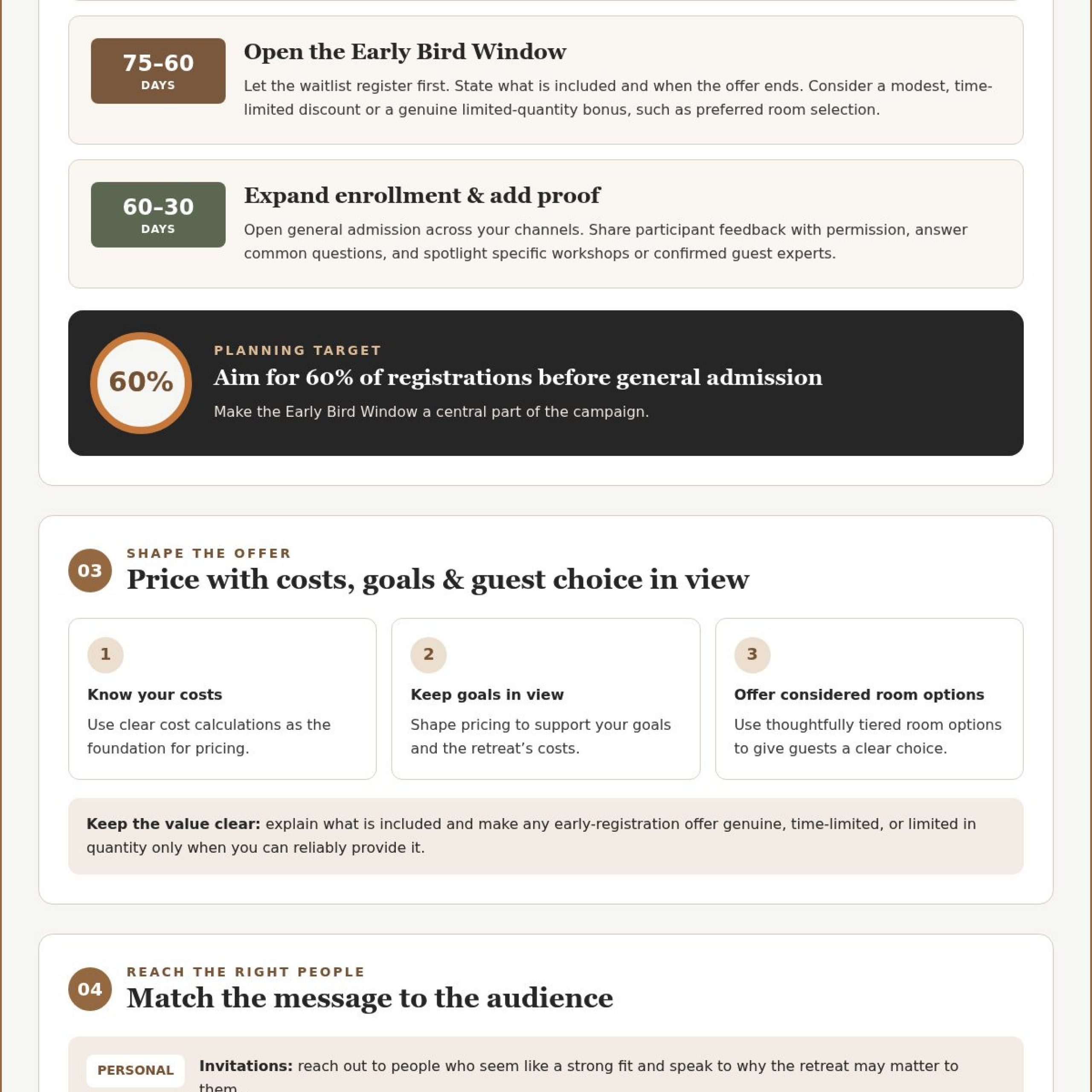
Days 75–60: Open the Early Bird Window. Make registration available to your waitlist first, with clear information about what’s included and when the offer ends. A modest, time-limited discount can reward early commitment without making the regular price feel inflated. Alternatively, consider a genuine limited-quantity bonus, such as preferred room selection, if you can reliably provide it.
For planning purposes, make the Early Bird Window a central part of the campaign, with a target of 60% of registrations before general admission.
Days 60–30: Expand enrollment and add proof. Open general admission across your channels. Share authentic participant feedback with permission, answer common questions, and spotlight specific workshops or confirmed guest experts. During a quieter stretch, behind-the-scenes updates can keep the retreat in people’s minds: introduce the setting, explain a session’s purpose, or show how you’re preparing the guest experience. For corporate retreats, connect activities to goals such as communication and trust; UC Berkeley’s guide to Building an Effective Team offers a useful framework for thinking about those outcomes.
Days 30–0: Make a clear final call. State the actual registration deadline and any genuine capacity limits. Remind interested people what they need to decide, including dates, accommodations, and the retreat’s purpose. Don’t manufacture scarcity. A gracious, direct message is more reassuring than pressure.
Encouraging Commitment Through the Middle Weeks
If interest slows, add useful information instead of repeating the same announcement. Share a testimonial that reflects a real guest’s experience, reveal a confirmed workshop detail, or post a brief behind-the-scenes update. If privacy and comfortable accommodations are important to your retreat, the private retreat accommodations can help prospective guests picture the setting. A steady, informative approach makes how to fill a group retreat feel less like a hard sell and more like a thoughtful invitation.
Pricing Strategies and Tiered Packages to Drive Conversions
A retreat price needs to feel understandable to a prospective guest and cover the real cost of delivering the experience. Start with a complete budget, including venue and lodging, meals or activities you’re responsible for, facilitator fees, payment-processing charges, marketing, and a contingency reserve. Then calculate the break-even point: divide total costs by the net revenue you expect to keep per attendee. As a stress test, check whether the retreat could break even at 65% capacity rather than relying on every space selling.
Build your ticket price from that calculation, not from guesswork or a competitor’s rate. A lower price isn’t automatically easier to sell; it can make the experience seem less valuable. An unexplained premium can also leave guests unsure what they’re paying for. Show the value clearly. For a deeper walkthrough, see How to Price a Wellness Retreat.
Designing Packages and a Profitable Price Point
Tiered options let guests choose the level of privacy and comfort that suits them without requiring you to discount the whole retreat. You might offer a shared-room rate alongside a private-room rate, with the differences spelled out. Comfortable accommodations can be an important part of the value, especially for executive or wellness groups who prioritize privacy. Make sure each tier still contributes appropriately toward shared costs.
An all-inclusive price can simplify the decision. State exactly what it covers and identify any exclusions so participants aren’t left calculating unexpected expenses. If you offer a payment plan, set installments and due dates that align with your cash flow and venue commitments. Installments can lower the immediate barrier to registration, but only use terms you can administer reliably.
Deposits, Deadlines, and Clear Policies
A deposit can help confirm a participant’s commitment and provide funds toward costs you must pay in advance. Before collecting it, check your venue agreement and decide what cancellation and refund terms you can responsibly offer. Don’t describe a deposit as non-refundable unless that term is appropriate for your arrangement and clearly disclosed before payment.
Set final-payment dates with venue deadlines in mind, then communicate them in plain, gracious language. Explain what each payment secures, what happens if someone cancels, and how to ask questions. Transparent policies support your planning and help guests make an informed choice. This balance of financial clarity and hospitality is part of how to fill a group retreat without compromising profitability or trust.
Multi-Channel Promotion: Finding Your Ideal Attendees
A strong retreat invitation reaches people where they already pay attention, then gives them a clear next step. Rather than relying on one social platform or sending the same announcement to everyone, coordinate email, social content, trusted partners, and personal conversations around one consistent promise. This is how to fill a group retreat with people who understand its value, not just collect clicks.
Email Marketing: The Engine of Retreat Sales
Begin with a personal note to past participants and people who’ve shown interest. A direct invitation can feel more considered than a mass broadcast, especially for a high-commitment retreat. Then use a five-email sequence: announce registration, explain the experience, answer common questions, share a participant perspective or confirmed detail, and send a clear deadline reminder. Where possible, tailor messages for past attendees. Choose subject lines that suggest a feeling of calm or belonging without overstating what the retreat offers.
Keep each email focused on one useful idea. Make the dates, registration steps, accommodations, and inclusions easy to find. A warm, personal message can open the door; clear details help the reader decide.
Social Proof, Partners, and Personal Outreach
Use short videos to give prospective guests a sense of place: show a quiet corner, distinctive architecture, or another detail that conveys the setting’s character. A venue’s heritage and modern comfort can help communicate value before a guest reads every detail. Share testimonials only with permission, and name or introduce confirmed participants only if they’re comfortable with it.
Collaborate with aligned facilitators, professional communities, or other leaders whose audiences match the retreat’s purpose. Give partners a concise description and ready-to-share details, and agree clearly on how referrals will be handled. For premium or specialized retreats, personal outreach matters. A one-to-one conversation lets you understand someone’s needs, answer questions, and explain the experience without pressure.
Keep scarcity truthful. If capacity is genuinely limited, share the accurate number of remaining spaces; don’t say “only a few spots left” unless it’s true. You can also invite interested guests to learn who else is attending, but get permission before sharing names or personal details. Respectful proof builds trust. Manufactured urgency can erode it.
If privacy and comfortable accommodations are central to your offer, explore private retreat accommodations as you shape the setting and story you’ll share with prospective guests.
The Role of the Right Venue in Ensuring Participant Commitment
Your venue does more than host the retreat. It helps tell the story. A distinctive guest ranch, with a scenic setting and a sense of history, gives your website and promotional materials a vivid visual anchor. In that way, the property can become a silent partner in sales: prospective guests can picture the atmosphere and imagine being there before they register.
Privacy can be part of the appeal, especially for executive groups and wellness retreats. Compared with a public hotel, a private setting may offer a greater sense of separation from everyday routines and other guests. That doesn’t make one type of venue right for every group. Consider what your participants need to feel comfortable, focused, and at ease, then describe those benefits accurately in your invitation.
Select a Venue That Supports the Experience
A boutique atmosphere may suit a retreat centered on reflection or connection better than a conventional conference room, while a structured corporate program may still need dedicated meeting space. Before committing, confirm the features your schedule depends on: suitable gathering areas, group dining arrangements, private lodging options, and any equipment required for planned sessions. Ask what’s included and what you’ll need to coordinate separately.
Think of the venue as part of the program, not just its backdrop. If the retreat includes quiet reflection, check whether there’s an appropriate peaceful area. If scenic views matter to the experience, confirm that the setting and access fit your plans. Don’t advertise amenities or activities until you’ve confirmed they’re available for your group.
Reduce Uncertainty Before Guests Arrive
Travel can bring practical questions. Help prospective participants feel prepared by sharing clear information about lodging arrangements, arrival instructions, accessibility considerations, what’s included, and who to contact with questions. A well-equipped venue can support a smoother experience, but verify details such as meeting-room setup, connectivity, and on-site support rather than assuming they’re provided.
Ask venue representatives how group stays and event logistics are handled. A gracious, responsive approach can make planning feel more personal, while clear answers help you set accurate expectations. The more confidently you can explain the guest experience, the easier it is for people to decide whether the retreat fits their needs.
As you consider how to fill a group retreat, choose a setting that supports both your promise and your practical requirements. Explore properties for group stays to see how private, boutique accommodations might complement a retreat’s appeal.
Build Your Next Retreat With Confidence
Filling a retreat begins with a clear promise: who it’s for, what experience it offers, and why guests should commit. A thoughtful timeline gives that invitation time to reach people, while transparent pricing and consistent, personal promotion help them make an informed decision. Together, these practices give you a practical roadmap for how to fill a group retreat without relying on last-minute pressure.
The setting matters, too. A private, scenic environment can help guests picture a change of pace, while the venue’s character becomes part of the story you share. Solana Spanish Villas brings together a boutique property with heritage dating to the 1920s and event venue capabilities, offering organizers a distinctive setting for wellness and corporate retreats.
Explore our private guest ranch villas for your next retreat and consider how a setting with history, comfort, and room for connection could support the experience you’re creating. With a clear vision and a considered plan, you can invite the right participants with confidence.
Frequently Asked Questions
How far in advance should I start promoting my group retreat?
Begin promoting your retreat about 90 days before registration closes or the retreat begins. That gives you time to build awareness, invite early interest, and answer questions. For corporate retreats or dates that are in high demand, research venue booking needs early as well. Use a phased plan: start with a preview and waitlist, follow with registration, then share helpful details and reminders as the date approaches.
Is it better to have a niche theme or a broad appeal to fill spots?
A focused theme usually makes it easier for the right people to recognize that the retreat is meant for them. Define the audience and the need the experience addresses, such as leadership connection or time for wellness and renewal. You can still welcome a range of participants, but avoid vague messaging that could describe any retreat. Specific, honest language helps potential guests assess whether the experience fits their goals.
How do I handle people who are interested but say they can’t afford it?
Respond with understanding, then make the options clear without pressuring them. If your budget supports it, offer tiered accommodation choices or a payment schedule with transparent due dates. Explain what each option includes so guests can compare value confidently. Don’t discount impulsively or promise financial assistance you can’t provide. If the retreat isn’t within someone’s budget, thank them for their interest and leave the conversation on a gracious note.
What is the most effective social media platform for retreat marketing?
The best platform is the one your intended participants already use and where you can communicate the retreat’s value clearly. Short-form video can help convey atmosphere through brief glimpses of the setting, sessions, or preparation. Pair those posts with practical details and a direct path to registration. Track inquiries and sign-ups by channel, then devote more effort to the platforms that bring relevant interest rather than simply views.
Should I offer discounts if my retreat isn’t full two weeks before the start?
Not automatically. A last-minute price cut may unsettle people who already registered and can make the retreat seem less valuable. First, contact interested prospects personally, clarify what’s included, and address unanswered questions. If you choose to add an incentive, consider a genuine, limited bonus that fits your budget rather than a steep discount. Share accurate capacity or deadlines only; never create urgency that isn’t real.
How many participants do I need to make a retreat profitable?
Calculate your break-even attendance by dividing the retreat’s fixed costs by the net amount you retain from each participant after variable expenses. Include venue commitments, facilitator fees, marketing, processing costs, and a contingency buffer in your budget. Then set a minimum enrollment target above break-even if possible, so a small number of cancellations won’t immediately put the retreat at a loss. Revisit the calculation whenever costs or package inclusions change.
Can I fill a retreat if I don’t have a large following on social media?
Yes. A large audience isn’t the only path to enrollment. Start with personal invitations to people who already know your work, past participants, and professional or community contacts who fit the retreat. Ask aligned facilitators or trusted partners to share the opportunity with their audiences, and make it easy for them to explain who the retreat is for. One-to-one conversations can be especially helpful for answering questions about a higher-commitment experience.
What happens if I don’t reach my minimum number of participants?
Decide in advance what you’ll do if enrollment falls short, and state the minimum, decision date, and relevant cancellation or refund terms clearly before accepting registrations. When the decision point arrives, compare confirmed attendance with your costs and venue commitments. Depending on your agreements and policies, you may proceed, adjust the plan with participant consent, reschedule, or cancel and follow the stated refund terms. Communicate directly and promptly.
0 Comment