
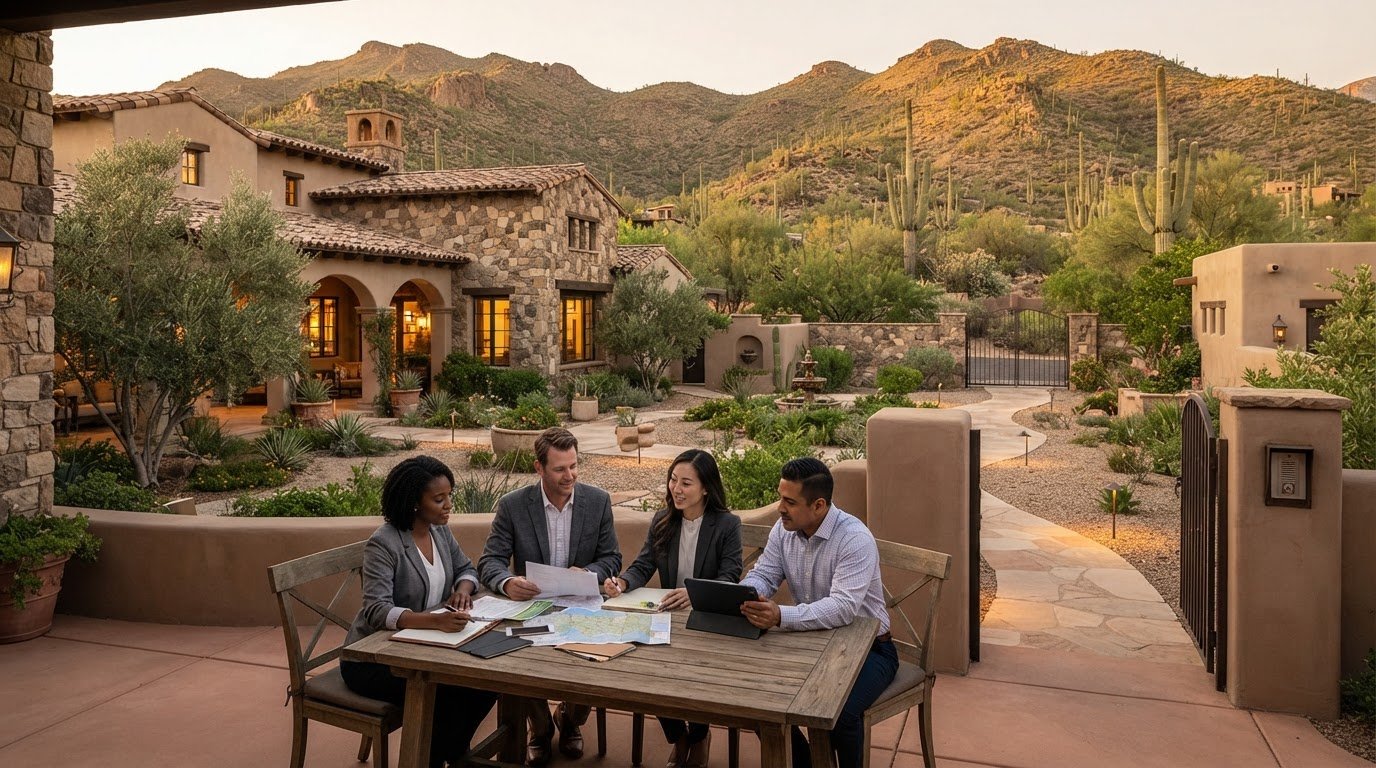

The most secluded retreat isn’t necessarily the most secure. When finding a private and secure retreat location, a remote setting may promise quiet while raising practical questions: who can enter, how guests get around, and what happens if someone needs urgent help? A venue’s reassuring description is a starting point, not proof of the arrangements in place.
Look beyond the scenery. Privacy, clear access arrangements, reliable communication, and understandable emergency procedures can help a group feel at ease, whether you’re planning a wellness gathering or a focused corporate retreat.
This guide will help you compare venues using practical criteria and ask informed questions before booking. You’ll learn what to check about shared spaces, guest access, communication, and emergency planning, and how to weigh a peaceful setting against your group’s needs. The goal is to choose a retreat that feels calm and welcoming, with arrangements you’ve had the chance to verify.
Key Takeaways
- Define what privacy and security mean for your group before comparing venues. A reassuring description isn’t a substitute for clear answers.
- Use four areas to guide your questions: guest access, personal privacy, communications, and emergency procedures.
- Compare whole-property use, dedicated group areas, and shared spaces against your group’s needs, including transport and access considerations.
- Make finding a private and secure retreat location a consistent process: shortlist options, document responses, review available information, and confirm terms.
- Solana Spanish Villas offers historic guest-ranch lodging and group event hosting. Verify current arrangements and fit against your requirements.
What Finding a Private and Secure Retreat Location Really Means
Finding a private and secure retreat location means choosing a venue that can explain who may access the spaces your group will use, which areas are shared, and what emergency arrangements are available. Privacy is about who can enter or overhear, and how the venue manages shared areas. Security is about proportionate protections, clear communication, and a credible response plan. Distance from other buildings may create a sense of seclusion, but it doesn’t confirm any of these arrangements.
Privacy and security are related, but they aren’t interchangeable. A secluded landscape can offer quiet and room to unwind while leaving questions about guest access or emergency readiness unanswered. A venue with more activity nearby may still provide the privacy a group needs through clear arrangements. Physical security can involve interdependent measures, such as barriers, surveillance, and access control, as described in this overview of physical security measures. Ask what the venue actually provides rather than inferring it from the setting.
Does a secluded retreat location automatically feel private and secure?
No. A remote setting shapes the atmosphere, but it doesn’t tell you who may enter guest areas, how shared spaces are used, or what emergency procedures are in place. Treat scenery and solitude as part of the experience, then ask separately about practical arrangements. This is routine planning, not a reason for alarm. Clear answers help guests arrive with realistic expectations and settle in more comfortably.
Which groups need a higher level of privacy?
Privacy needs depend on what guests will discuss or do. Leadership teams handling sensitive work may need fewer interruptions and more control over shared spaces. Wellness participants may value quiet between activities, while a private celebration may call for clarity about who else will be on site. Group size, schedule, and attendee expectations all affect the right fit. Organizers weighing executive-group needs can also consult this corporate retreat venue guide.
Before comparing venues, describe the experience you want in practical terms: which areas the group needs, when quiet matters most, and what attendees should know about access and unexpected situations. These details give you a consistent standard for evaluating each option, without assuming that “private” or “remote” means the same thing at every venue.
How to Assess Privacy and Security at a Retreat Location
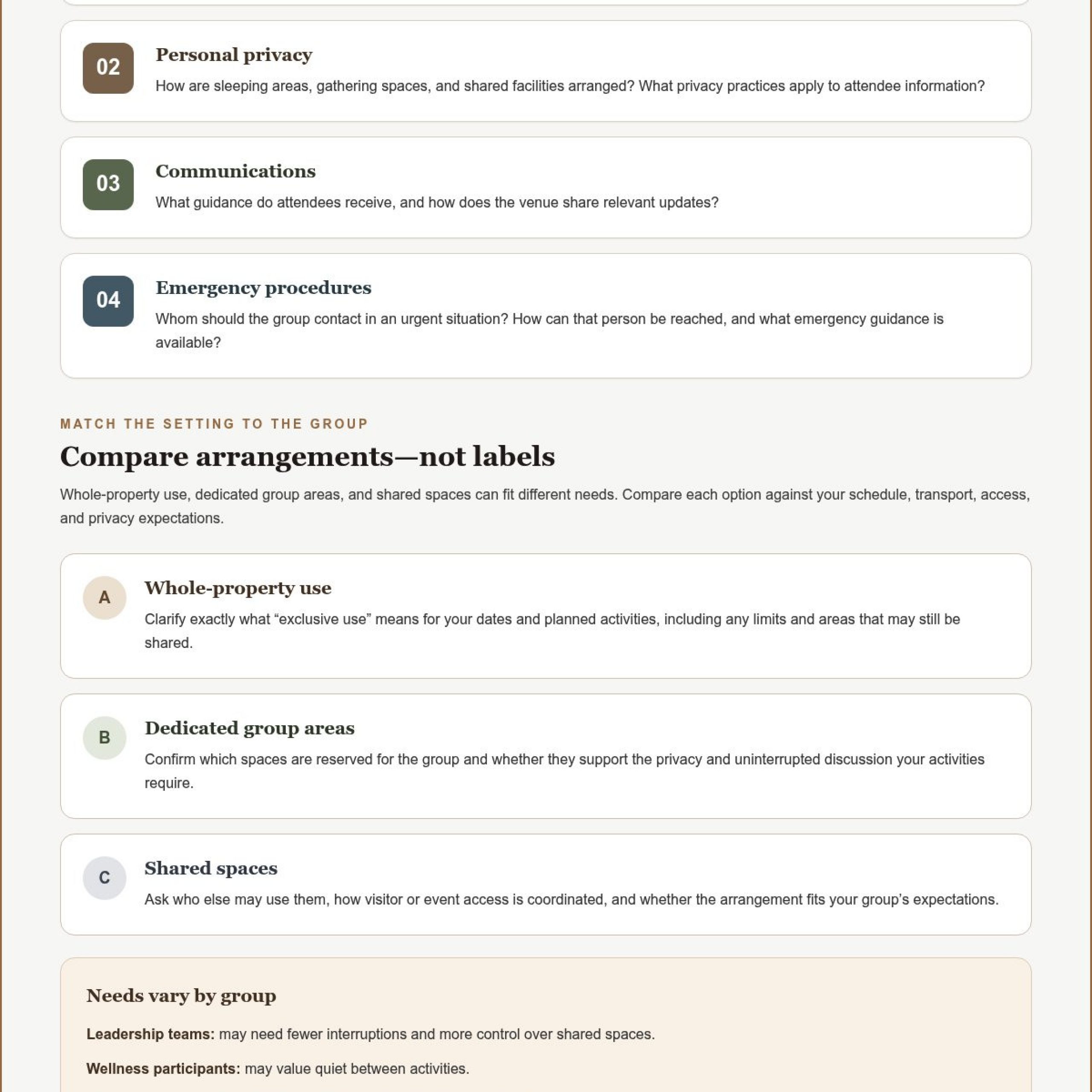
Turn broad claims into questions you can compare. When finding a private and secure retreat location, assess four areas: guest access, personal privacy, communications, and emergency procedures. Together, they show how a venue’s arrangements fit your group, rather than asking you to rely on labels such as “private” or “secure.”
Guest access covers who may enter guest areas and how visitors or event attendees are handled. Personal privacy concerns the separation of sleeping areas, gathering spaces, and shared facilities. Communications means understanding what guidance attendees receive and how the venue shares relevant updates. Emergency procedures cover whom to contact, how to reach them, and what instructions are available if plans change unexpectedly.
A useful rule of thumb: verify who can enter, where the group can gather privately, how information is communicated, and what to do in an emergency. Arrangements vary by venue, so ask for current, specific answers rather than assuming a feature is standard everywhere.
What should organizers verify about access and personal privacy?
Ask which areas are reserved for guests, which are shared, and how visitors or event access are coordinated. Then compare the sleeping arrangements and gathering spaces with your group’s expectations. A team that needs uninterrupted discussion may have different requirements from a group mainly seeking quiet between activities. Ask how the venue handles attendee information and what privacy practices apply. Request relevant details in writing, including any limits, before relying on them.
Keep a record of the response. If promotional material uses phrases such as “exclusive use” or “private areas,” clarify exactly what they mean for your dates and planned activities.
How should emergency readiness and communication be evaluated?
Ask whom the group should contact in an urgent situation, how that person can be reached, and what emergency guidance the venue provides. Confirm the details rather than assuming a particular response arrangement. Check whether attendees can use their usual communication methods on site, and understand transport access so you can plan arrivals and contingencies. A remote setting isn’t inherently unsafe, but clear, practical information is especially useful when planning for one.
For a structured perspective on reviewing a facility, consult CISA’s physical security assessment resource. Use it as a reference for thoughtful questions, not as evidence that a venue has specific safeguards. Useful answers are transparent, current, and relevant to the way your group will use the space.
Compare Retreat Settings by Privacy, Access, and Group Needs
Venue types offer different balances of control, shared amenities, and coordination. A whole-property arrangement may give a group more control over how spaces are used, while dedicated group areas or shared guest spaces may involve more interaction with other guests or events. None is automatically the right choice. The best fit depends on your group’s privacy and access needs, schedule, transport arrangements, and the emergency information the venue can confirm.
| Setting | Private-use arrangements | Shared spaces and access | Transport and emergency information |
|---|---|---|---|
| Whole-property use | Clarify which areas, if any, are reserved for your group and what “exclusive use” covers. | Ask whether other guests, visitors, or events may be present during your dates. | Confirm arrival instructions, transport access, and what emergency guidance is provided. |
| Dedicated group areas | Establish which rooms or gathering areas are set aside and when they’re available. | Check how guests move between reserved and shared areas, including during event transitions. | Ask how attendees should reach the venue and whom to contact for urgent guidance. |
| Shared guest spaces | Find out which spaces are shared and whether quieter or more private areas are available. | Discuss likely overlap with other guests, visitors, or concurrent events. | Review access and transport details alongside the venue’s emergency information. |
Private property, dedicated spaces, or shared venue: what changes?
The key trade-off is how much control your group needs compared with the convenience of shared amenities and the venue’s operating arrangements. Arrival patterns matter: staggered arrivals may require different coordination from a group arriving together. Outside visitors and concurrent events may also affect movement, noise, and the sense of privacy. Ask whether other guests or events will use nearby spaces during your dates. Treat exclusive-use language as specific to your booking, and confirm its scope and terms in writing.
How do retreat purpose and setting shape the right choice?
A wellness gathering may prioritize quiet, privacy between sessions, and a setting that supports reflection. A work retreat may place more emphasis on gathering space, predictable access, and coordination across the schedule. A historic guest ranch or scenic landscape can give a gathering a distinctive sense of place, but atmosphere alone doesn’t establish privacy practices or security arrangements. For ideas on how setting can shape participant experience, see the wellness retreat guide.
Compare venues against your group’s actual plans rather than choosing by setting alone. The right fit is the one whose space, access arrangements, shared-use expectations, transport details, and emergency information align with attendees’ needs.
A Practical Process for Shortlisting and Verifying Retreat Locations
A consistent process makes venue comparisons clearer and helps separate appealing presentation from arrangements that meet your group’s needs. Use the same criteria for each option. Keep a written record of confirmed details, unanswered questions, and any conditions attached to the booking.
- Define your needs. Note the group’s privacy expectations, lodging and gathering needs, preferred schedule, and acceptable travel arrangements. Decide which requirements are essential and where you can be flexible.
- Shortlist suitable settings. Compare whole-property use, dedicated group areas, and shared venues against those criteria. Set aside options that can’t clearly explain relevant access arrangements or answer essential questions.
- Ask focused questions. Request details about the spaces your group will use, possible event overlap, visitor access, and emergency information. Ask each venue the same questions so you can compare the answers.
- Review evidence. Ask for written clarification and, where practical, arrange a site visit or live walkthrough. Check how guests move between sleeping and gathering areas, which spaces are shared, and whether arrival instructions fit your plans.
- Confirm terms. Before booking, check what the agreement includes, what is restricted, and whom to contact with questions or concerns. Resolve important uncertainties in writing rather than relying on informal assurances.
What should go into a first shortlist?
Start with the group’s real requirements, not a venue’s most photogenic features. A quiet wellness gathering may need different arrangements from a work retreat with a full schedule and coordinated arrivals. Consider lodging alongside event space if keeping the group in one setting would make the experience more cohesive. Remove options that can’t explain the arrangements relevant to your priorities, then compare the remaining venues using the same written criteria.
How can organizers confirm claims before booking?
Ask the venue to clarify in writing what private use covers, which areas are shared, how visitors are handled, and whether other events may overlap with your plans. Review the booking terms for included spaces, restrictions, and the appropriate contact for concerns. If an in-person visit isn’t practical, a live walkthrough can help you understand the layout and access routes beyond what photographs show.
For organizers exploring lodging alongside group arrangements, view available group lodging options and assess their fit against your needs. As you continue finding a private and secure retreat location, use your comparison notes to guide the final decision and confirm unresolved details before committing.
Choose a Retreat Location That Feels Private Without Overpromising Security
A strong choice isn’t necessarily the most isolated venue or the one with the most reassuring description. It’s the venue that fits your group’s needs and answers practical questions clearly, including how spaces are used, what access arrangements apply, and what emergency information is available. Keep the distinction in view: an appealing setting can create a sense of calm, but it doesn’t verify specific safeguards.
Solana Spanish Villas offers historic guest-ranch lodging and group event hosting. The property dates to the 1920s and has been renovated and reopened as a boutique resort, bringing Western heritage together with modern comfort. These details describe its atmosphere and hosting model, not its specific privacy practices, access controls, or security features. As you continue finding a private and secure retreat location, compare each venue’s confirmed arrangements with your group’s written requirements.
When can an on-property stay and gathering space simplify planning?
Having lodging and gathering space in one setting may help create a more cohesive experience, with fewer transitions between where guests stay and where the group meets. Whether that arrangement suits your retreat depends on the spaces available and how they’re used during your dates. Ask what areas the group may use, whether other guests or events could be present, and how access is managed. Confirm the scope of any private-use arrangement rather than assuming the whole property is reserved.
Compare the venue’s answers with your organizer’s written privacy and access requirements. If the details don’t align, ask whether an adjustment is possible or consider another setting. A graceful setting matters, but a well-matched plan matters more.
What should you confirm directly with Solana Spanish Villas?
Before making a decision, ask about current availability, lodging details, event arrangements, and access procedures for your intended dates. Confirm which areas are included, what may be shared, and what emergency guidance the venue can provide. Check that the answers address your group’s schedule and needs. An online listing or inquiry can help you explore options, but it doesn’t guarantee a specific feature or booking outcome.
If the property may suit your gathering, you can explore current lodging options and verify the details directly. A thoughtful choice brings together the atmosphere you’re seeking and the clear, current information your group needs to feel at ease.
Choose a Retreat with Confidence
Finding a private and secure retreat location means matching a venue to your group, then verifying the details that shape its experience. Look beyond scenic isolation: clarify access, shared spaces, communication, and emergency arrangements. Compare venues against the same criteria, and confirm important terms directly before booking.
Solana Spanish Villas is an independently operated historic guest ranch dating back to the 1920s. Recently renovated and reopened as a boutique resort, it offers a distinctive sense of heritage and place, alongside lodging and group event hosting. Those qualities describe the atmosphere, not specific security provisions. Ask about current arrangements and whether the property fits your plans.
Explore Solana Spanish Villas to learn more as you consider your retreat options. With clear questions and thoughtful comparisons, you can make an informed choice and plan a gathering that feels peaceful and right for your group.
Frequently Asked Questions
What makes a retreat location private?
Privacy depends on how much control your group has over guest access, shared areas, outside visitors, and interruptions. A scenic or remote location may feel secluded, but that doesn’t confirm private use. Ask which spaces are reserved, whether other guests or events may be present during your dates, and what privacy practices apply. Get important arrangements in writing before booking so your expectations and the venue’s terms are clear.
Can a secluded retreat location still have practical security concerns?
Yes. Seclusion describes the setting, not the venue’s access arrangements, communications, or emergency procedures. Ask whom guests should contact in an urgent situation, how that person can be reached, and what emergency guidance is provided. Check transport access and whether attendees can use their usual communication methods. These are ordinary planning questions, not reasons to assume a remote property is unsafe. Consider the answers in light of your group’s needs.
How do I know if a retreat venue is genuinely private?
Ask for specific details about private-use areas, shared facilities, visitor access, concurrent events, and access arrangements for your dates. Request written confirmation of conditions that matter to your group, such as which gathering spaces are reserved. If practical, arrange a site visit or live walkthrough to understand how the areas connect. Words such as “private” or “exclusive” are prompts for questions, not a substitute for clear booking terms.
What security questions should I ask before booking a retreat location?
Ask who can enter guest and event areas, how access is managed, whom to contact in an urgent situation, and what emergency guidance is available. Clarify which spaces are shared and whether another gathering may overlap with your dates. If the retreat involves sensitive discussions or particular participant needs, explain those requirements so the venue can respond in context. Keep a written record of answers and unresolved questions before committing.
Is a private property buyout always the best choice for a retreat?
No. A property buyout may give a group more control over shared spaces, but that level of control may not be necessary for every retreat. Dedicated gathering areas could suit your plans if access, event overlap, and guest privacy are explained clearly. Compare actual arrangements with your group’s priorities, size, and schedule. Don’t assume one venue format is automatically more private or secure than another.
What should I compare when choosing between retreat locations?
Compare privacy arrangements, guest access, shared spaces, emergency communication, transport, lodging fit, and whether the venue can accommodate your planned activities. Use the same written criteria for each option, and ask for clarification where details are unclear. Finding a private and secure retreat location means looking beyond secluded photographs to the arrangements that affect your group’s stay. A strong fit meets practical needs and communicates limitations clearly.
Can a guest ranch work as a private retreat location?
A guest ranch can suit groups looking for lodging and event hosting in a distinctive setting, but its fit depends on the property’s current arrangements. Ask whether areas are shared with other guests, what event spaces are available, and how access is handled. Solana Spanish Villas is an independently operated historic guest ranch that combines lodging with group event hosting. Confirm current availability and the details that matter to your group directly with the property.
0 Comment