
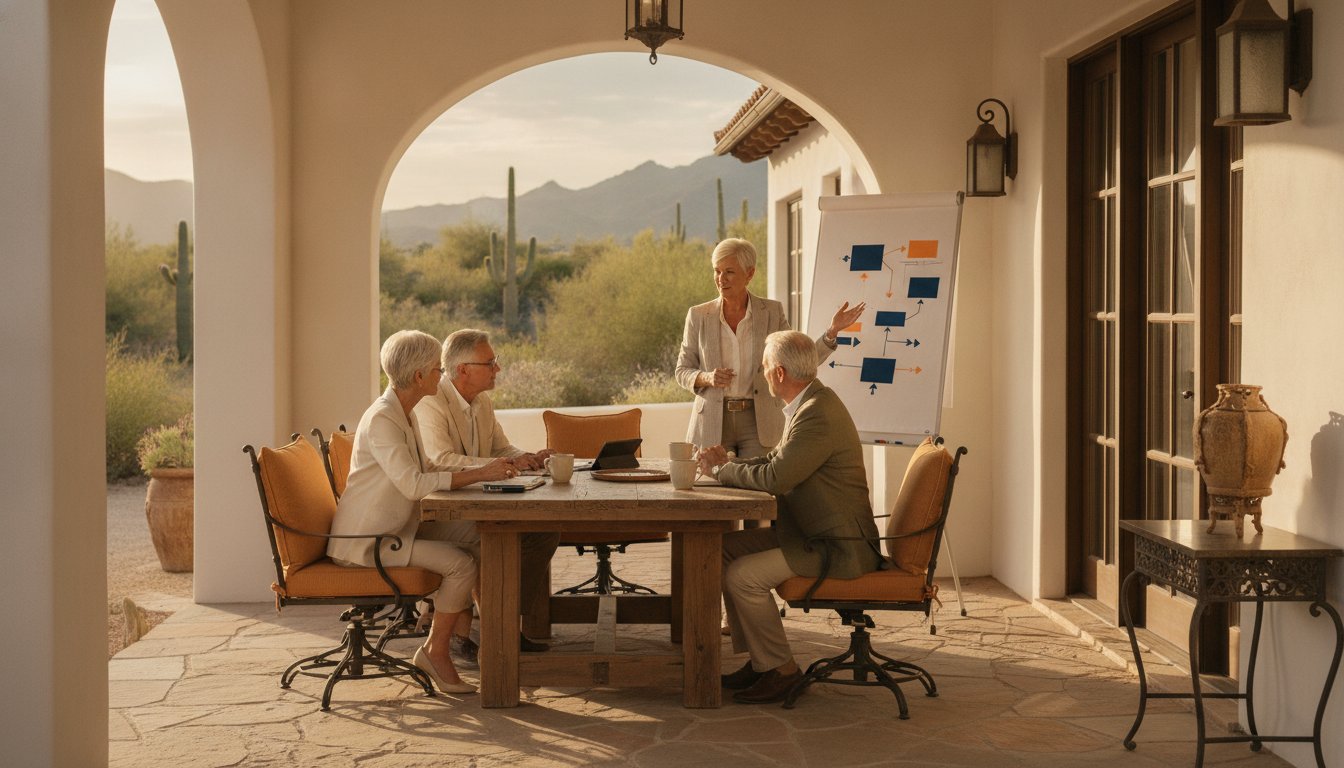

Most executive retreats fail not because of a lack of talent, but because they remain trapped in the same tactical weeds they were meant to escape. You’ve likely felt the frustration of a session that devolves into a mundane list of tasks, leaving your senior leadership uninspired and disconnected from the bigger picture. It’s a common struggle to find that elusive space where the environment actually encourages innovation rather than stifling it with the cold, corporate atmosphere of a standard boardroom. To break this cycle, you need a strategic planning offsite agenda that balances rigorous analysis with the psychological safety required for true alignment.
We believe a retreat should be a sanctuary for renewal and deep reflection, where the journey of discovery is as vital as the final destination. This guide provides a structured, three-day framework designed to transform high-level vision into an actionable corporate strategy your team will actually execute. You’ll discover a day-by-day roadmap that fosters trust, encourages bold thinking, and ensures every leader leaves with a shared sense of purpose. By shifting your focus from the immediate to the intentional, you can unlock the 26% increase in productivity that research shows follows a well-executed offsite.
Key Takeaways
- Learn how to transition from a restrictive boardroom mentality to an expansive offsite mindset by prioritizing tactical detachment and visionary thinking.
- Master a structured 3-day strategic planning offsite agenda that artfully blends communal evening rituals with focused “Deep Work” and essential restorative breaks.
- Discover practical methods like the “Parking Lot” technique to neutralize dominant voices and ensure your final strategy reflects the collective wisdom of the entire leadership team.
- Understand why the physical environment—from natural light to architectural heritage—serves as a silent partner in stimulating innovation and psychological safety.
- Identify the critical venue criteria, such as privacy and exclusive-use settings, that transform a simple meeting into a high-impact sanctuary for corporate renewal.
The Architecture of a High-Impact Strategic Planning Offsite
A successful retreat begins with a deliberate departure from the everyday. It’s not just a change of scenery; it’s a profound shift in perspective. While the boardroom is built for efficiency and oversight, the offsite is a sanctuary for expansive thinking. This tactical detachment allows leaders to stop reacting to the immediate and start shaping the future. By stepping away from the hum of the office, you create the mental space necessary to build a truly high-impact strategic planning offsite agenda.
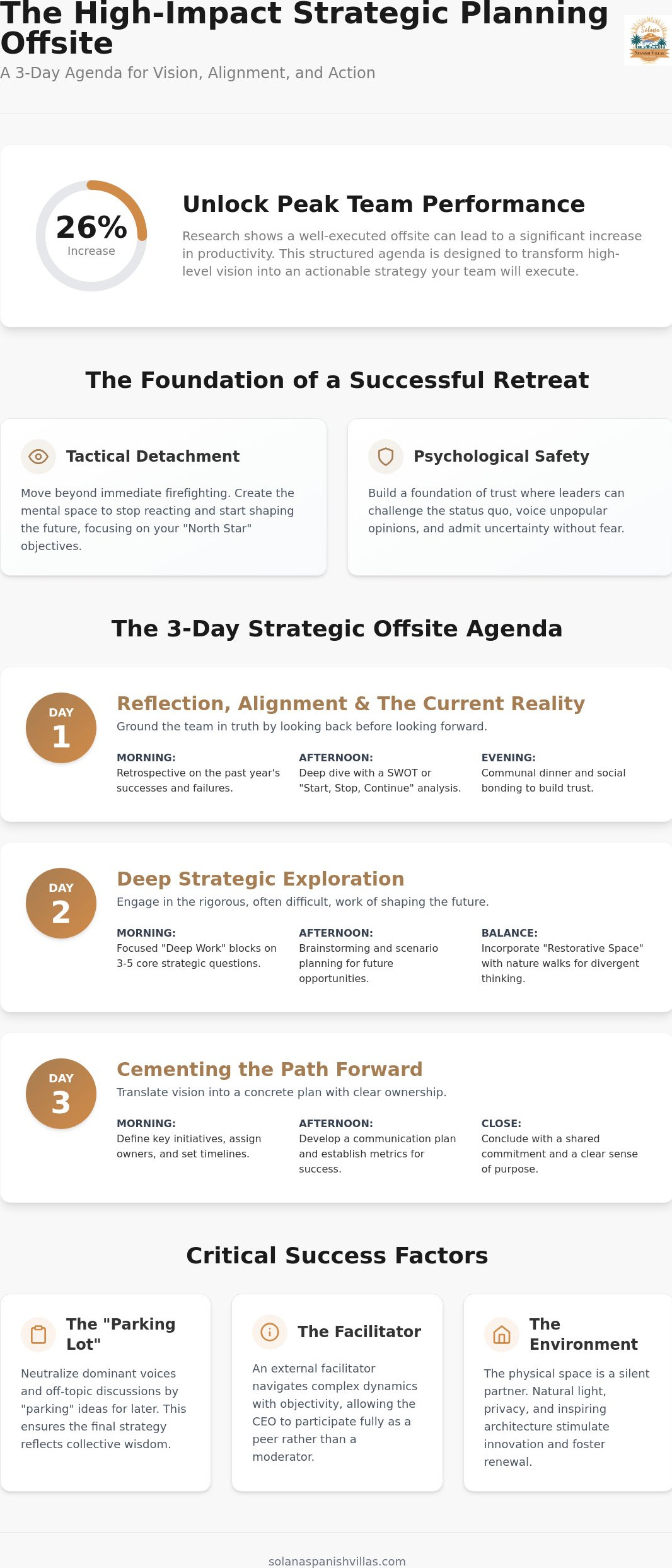
Why is a three-day format considered the gold standard for executive alignment? The answer lies in the rhythm of human connection. The first day is for shedding the weight of the office. The second is for deep, often difficult, strategic exploration. The third is for cementing the path forward. This deliberate pacing mirrors the historical process of strategic planning, where long-term objectives are refined through rigorous debate and reflection. Without this time, teams often settle for surface-level consensus rather than deep-seated belief.
At the heart of this architecture lies psychological safety. Without a foundation of trust, your agenda is just a list of topics. Leaders must feel secure enough to challenge the status quo, voice unpopular opinions, and admit uncertainty. In an environment that feels more like an intimate retreat than a sterile hotel, these barriers naturally begin to dissolve, allowing for a more authentic level of collaboration and innovation.
Shifting from Tactical Firefighting to Long-Term Vision
Too many gatherings fall into the “status report” trap. Instead of analyzing what happened last quarter, the focus must remain on your “North Star” objective. Before drafting your strategic planning offsite agenda, identify three to five core questions that define your future. These questions should be the lens through which every session is viewed, ensuring the conversation stays elevated and purposeful. This clarity prevents the retreat from devolving into another series of tactical to-do lists.
The Role of the Facilitator: Internal vs. External
Deciding who leads the room is a critical strategic choice. An external facilitator can navigate complex team dynamics with an objectivity that an internal leader often lacks. This allows the CEO or founder to step out of the moderator role and participate fully as a peer. Establishing clear “Rules of Engagement” is also vital. Whether it’s creating no-device zones or ensuring every voice is heard, these boundaries protect the sanctity of the retreat and ensure high-level engagement remains the priority.
The 3-Day Strategic Planning Offsite Agenda Template
The most effective strategic planning offsite agenda isn’t just a schedule; it’s a carefully designed narrative arc. It begins not with a PowerPoint, but with a sense of place. The “Check-In” evening serves as a vital bridge between the noise of the city and the clarity of the retreat. By hosting a communal dinner in an intimate setting, you signal to your leadership team that this time is different. This initial evening of hospitality builds the trust necessary for the rigorous work ahead.
Throughout the retreat, the secret to maintaining high-level engagement is balance. We advocate for a structure that pairs intense “Deep Work” blocks with “Restorative Space.” Mental fatigue is the enemy of innovation. By incorporating nature-based breaks, whether a quiet walk through desert trails or a moment of reflection under a wide sky, you stimulate divergent thinking. These pauses are where the most profound insights often surface. For those seeking a sanctuary for this transformative work, choosing private guest ranch accommodations can provide the seclusion and inspiration your team needs.
Day 1: Reflection, Alignment, and the Current Reality
The first full day is about grounding the team in truth. The morning begins with a retrospective on the past year, asking what we truly learned from our successes and failures. In the afternoon, we move into a SWOT analysis or a “Start, Stop, Continue” framework to define the current landscape. The evening ends with social bonding in a relaxed, boutique setting—whether gathering around a fire pit or choosing to explore Sunset Cruise excursions—to solidify team cohesion before the heavy lifting of Day 2.
Day 2: Visioning, Innovation, and Strategic Pillars
Day 2 is the core of the strategic planning offsite agenda. The morning is dedicated to the “Blue Sky” session, where you imagine the company’s position in three to five years. In the afternoon, the team distills this vision into three or four actionable strategic pillars. We close the day with individual reflection time. Providing a tranquil environment for leaders to process these ideas privately ensures that the eventual commitment is deeply personal and sincere.
Day 3: Action Planning, Ownership, and the Path Forward
The final day turns vision into reality. The morning focuses on assigning specific “Owners” and “Milestones” for each pillar, ensuring accountability. In the afternoon, we address “The Elephant in the Room,” providing a safe space for unresolved conflicts to be aired and settled. The retreat concludes with a “Unity Statement,” a shared promise that ensures every leader leaves in 100% alignment. This final commitment session is the bridge back to the corporate world, turning high-level vision into actionable strategy.
Overcoming Common Offsite Obstacles: Ensuring Productivity
Even the most meticulously crafted strategic planning offsite agenda can face hurdles when high-level personalities gather in one room. Managing “Dominant Voices” is perhaps the most critical challenge for any facilitator. To ensure a true diversity of thought, you must create a space where quieter, more analytical leaders feel empowered to contribute. Techniques like silent brainstorming or “round-robin” feedback can prevent a single perspective from steering the entire ship. This ensures the final strategy is a collective masterpiece rather than a solo performance.
Tactical distractions are another common obstacle that can stall progress. When a leader brings up a granular “to-do” item or a minor operational fix, use the “Parking Lot” technique. By visually capturing these items on a dedicated board or digital document, you acknowledge their importance without allowing them to derail the strategic momentum. This keeps the group focused on the long-term vision while providing a clear list of items to be addressed once everyone returns to the office.
Disagreements are not only inevitable; they’re often necessary for growth. The goal isn’t to avoid conflict, but to handle it with grace and purpose. When tensions rise, lean into the psychological safety established at the start of the retreat. Frame disagreements as a collaborative search for the best solution rather than a personal contest. Finally, to avoid the “Post-Offsite Slump,” schedule a brief follow-up meeting within 48 hours of your return. This keeps the momentum alive and ensures that the “Unity Statement” crafted on Day 3 translates into immediate action.
Maintaining Engagement through Strategic Variety
To prevent mental fatigue, vary the rhythm of your sessions throughout the day. Alternating between whole-group debates and small breakout pods allows for different types of interaction and deeper focus. We often suggest “Kinesthetic Learning” through walking meetings. Moving through a scenic, natural landscape can literally shift the brain into a state of divergent thinking, sparking ideas that would never surface in a stationary chair. Don’t fear “White Space” in your strategic planning offsite agenda. These unscripted moments often lead to the most significant organic breakthroughs of the entire retreat.
Logistics that Support Leadership Focus
The physical environment is the silent partner in your success. While standard conference hotels often feel sterile and transactional, “Boutique Hospitality” offers an intimate, exclusive setting that fosters deep work and group cohesion. High-quality, nourishing catering is just as vital. Heavy, processed meals lead to afternoon energy crashes that kill productivity. Ensure your venue provides seamless AV and reliable connectivity. When the logistics are handled by a gracious and detail-oriented host, leaders are free to devote their full attention to the strategy at hand without the frustration of technical interruptions.
Why the Environment is Your Secret Strategy Partner
A truly transformative strategic planning offsite agenda requires more than just a sequence of meetings; it demands a physical space that breaks the corporate script. Most executive sessions are held in windowless boardrooms that reinforce the very tactical habits you’re trying to escape. When your surroundings are sterile, your thinking remains transactional. To unlock visionary strategy, you must place your team in an environment that signals a departure from the mundane and an invitation to the extraordinary.
Seclusion is the silent partner of high-level alignment. By choosing a private estate or a guest ranch, you eliminate the external distractions of a bustling city or a shared hotel lobby. This sense of place, rooted in heritage and craftsmanship, inspires a different caliber of conversation. It moves the team away from “what we must do tomorrow” toward “what legacy we will build over the next decade.” In a sanctuary of tranquility, leaders find the mental clarity to address complex challenges with a renewed sense of purpose.
The Psychology of Space and Creative Breakthroughs
The relationship between architecture and cognition is well-documented through the “Cathedral Effect.” This psychological concept suggests that high ceilings and expansive vistas promote abstract, relational thinking, while lower ceilings are better suited for detail-oriented tasks. By hosting your strategic planning offsite agenda in a space with soaring views and natural light, you’re literally priming the brain for innovation. Outdoor settings further this effect by reducing cortisol levels and opening the mind to calculated risk-taking. Nature provides what researchers call “Soft Fascination”—the ability of a natural landscape to restore directed attention and heal mental fatigue, allowing for deep work that feels effortless rather than forced.
From Boardrooms to Private Guest Ranches
Moving your retreat to a private guest ranch offers an exclusive-use advantage that traditional venues cannot match. Your team owns the entire atmosphere, ensuring total privacy for sensitive discussions. Integrating modern comfort with Western heritage creates a unique narrative experience that honors the past while looking toward the future. This fusion of old-world charm and contemporary refinement provides a sophisticated backdrop for professional development. For more insights on selecting the perfect setting, consult The Ultimate Guide to Corporate Retreat Venues to ensure your next session is as impactful as possible.
Ready to host your next retreat in a setting that inspires legacy thinking? Explore our private guest ranch accommodations to discover how a sense of place can transform your corporate strategy.
Implementation: Booking Your Strategic Planning Venue
Selecting the right vessel for your strategic planning offsite agenda is as critical as the topics you choose to discuss. A venue is more than a backdrop; it’s the physical container for your team’s collective energy. To achieve high-impact results, you must look beyond the standard conference hotel. While traditional resorts offer convenience, they often lack the privacy and soul required for deep, strategic reflection. A private villa or an exclusive-use guest ranch provides a level of group cohesion that shared spaces simply can’t replicate. Here, your team doesn’t just meet; they inhabit a shared narrative of Western heritage and modern refinement.
The ROI of a well-executed offsite extends far beyond the three days spent in session. When leaders feel truly hosted in a sanctuary of tranquility, the resulting clarity leads to faster decision-making and higher executive retention. It’s an investment in the long-term health of the organization. By balancing easy accessibility with the feeling of “getting away,” you ensure your team arrives with their energy intact, ready to transition from tactical firefighting to legacy-level thinking. This environment facilitates the “Unity Statement” mentioned earlier, ensuring the momentum doesn’t dissipate the moment the retreat ends.
Essential Venue Checklist for Executive Teams
Success lies in the details. Even in a secluded desert setting, high-speed connectivity is non-negotiable for the moments when the outside world requires a brief touchpoint. Evaluate on-site lodging for its ability to support multi-day immersion. You want rooms that feel like private retreats, not corporate cells. Look for architectural depth, seeking venues that offer “Great Rooms” for spirited full-group debates alongside intimate, quiet corners for the one-on-one breakthroughs that often happen during the “White Space” of your agenda.
Securing Your Dates for 2026
The most sought-after boutique locations often require planning six to nine months in advance, especially for peak seasons. Coordinating a national leadership team takes time and a dedicated steward to manage the logistics. As you look toward your next fiscal cycle, consider how a sense of place will influence your results. We invite you to explore private villa availability for group stays and begin the journey toward a truly high-impact executive retreat. Planning early ensures your team has the sanctuary they need to build a future they actually believe in.
From Vision to Actionable Legacy
A transformative retreat is more than a break from the office; it’s a deliberate investment in your company’s soul. By moving away from the sterile boardroom and embracing a strategic planning offsite agenda that prioritizes deep reflection and group alignment, you set the stage for breakthroughs that resonate for years. You’ve learned that the right architecture, both in your schedule and your surroundings, is the catalyst for moving from tactical firefighting to visionary leadership.
At Solana Spanish Villas, we provide a private guest ranch with 1920s historic charm, expertly curated for corporate retreat success. Our boutique resort privacy ensures your executive team can focus entirely on the path forward without distraction. We invite you to Plan Your Executive Retreat at Solana Spanish Villas and experience the profound impact of a sanctuary designed for renewal and deep reflection. The journey toward your next great strategy begins with a single, intentional step into a space that honors your legacy while fueling your future. We look forward to hosting your team’s next breakthrough.
Frequently Asked Questions
What should be included in a strategic planning offsite agenda?
A comprehensive strategic planning offsite agenda must balance rigorous analysis with restorative space. It should include a retrospective of the previous year, a SWOT analysis to define the current reality, and a “Blue Sky” visioning session. Essential components also include dedicated blocks for deep work, communal meals to build trust, and a final session to assign owners and milestones for each strategic pillar.
How long should a strategic planning retreat last?
Three days is widely considered the gold standard for executive alignment. This duration provides a deliberate narrative arc: one day to shed the weight of daily operations, one day for expansive innovation, and a final day for concrete action planning. Research shows that 71% of corporate offsites include at least one overnight stay, confirming that multi-day immersion is vital for deep reflection.
Who should attend the executive strategic planning offsite?
Attendance should be limited to the senior leadership team and key decision-makers responsible for the organization’s long-term trajectory. Keeping the group intimate, typically under 15 people, ensures that every voice is heard and fosters a high level of psychological safety. Occasionally, a professional facilitator is included to guide the conversation while the CEO participates as a peer.
What is the best location for a corporate strategy retreat?
The ideal location is a secluded, private setting that offers a complete departure from the corporate environment. Venues with historical depth and natural beauty, such as a private guest ranch, provide the “Cathedral Effect” necessary for abstract thinking. Choosing an exclusive-use property ensures total privacy for sensitive discussions and allows the team to fully own the atmosphere.
How do you measure the success of a strategic planning offsite?
Success is defined by the level of team alignment and the clarity of the resulting roadmap. While industry data shows a 26% increase in productivity following these retreats, the most practical metric is the execution of the “Unity Statement.” If every leader leaves with a shared sense of purpose and a clear list of accountabilities, the offsite has achieved its primary goal.
Should we use an external facilitator for our offsite?
Employing an external facilitator is often the difference between a productive session and a stalled one. A professional can navigate complex team dynamics with objectivity and ensure that dominant voices don’t overshadow quieter, analytical contributors. This allows the internal leader to focus entirely on the strategic planning offsite agenda without the burden of moderating the group.
How do you keep the team focused during a 3-day agenda?
Maintaining focus requires a varied rhythm that alternates between high-intensity debates and low-pressure reflection. Use the “Parking Lot” technique to capture tactical items for later, preventing them from derailing high-level discussions. High-quality, nourishing catering and frequent breaks in natural settings are also essential to prevent mental fatigue and keep energy levels stable across all three days.
What are the best team-building activities for a strategic offsite?
The most effective activities are those that feel organic and restorative rather than forced or corporate. Communal dining, storytelling around a fire pit, or walking meetings through a scenic landscape encourage genuine connection. These low-pressure experiences build the trust necessary for difficult strategic conversations, proving that the journey of discovery is just as important as the final business destination.
0 Comment