
In 2025, global employee engagement dropped to just 20 percent, leaving many leaders to wonder why their once-vibrant offices now feel sterile and transactional. When the average cost of losing a single team member has climbed to $45,236, learning how to improve team morale is no longer a soft skill; it’s a vital financial strategy. You likely see the signs already. Productivity is dipping despite reasonable workloads, and your most talented people seem to be “quiet quitting” before they eventually walk out the door. It’s exhausting to manage a team that feels disconnected from their work and each other.
This guide offers a sophisticated framework for revitalizing your workplace culture through intentional environmental shifts and the restoration of human trust. We’ll explore how to move beyond superficial perks to create deep psychological safety and shared experiences that actually last. You’ll gain a clear roadmap to transform a stagnant atmosphere into a resilient, high-performance sanctuary where innovation can finally flourish. It’s time to move away from corporate coldness and toward a culture that feels both professional and deeply personal.
Key Takeaways
- Establish a foundation of psychological safety where leadership transparency creates a genuine sense of belonging and security for every team member.
- Discover how to improve team morale by integrating natural elements and scenic environments that break down sterile, restrictive corporate hierarchies.
- Replace temporary office perks with sustainable daily rituals that honor work-life harmony and protect your staff against transactional burnout.
- Leverage the transformative power of a physical reset in a private, heritage-rich setting to dissolve negative patterns and restore human connection.
- Focus on building collective emotional resilience and a shared sense of purpose to successfully transition from a sterile workplace to a high-performance culture.
The Anatomy of Team Morale: Why Connection Trumps Productivity
Morale is often mistaken for a simple tally of smiles in a breakroom or the presence of a well stocked coffee station. In reality, it’s the invisible thread of emotional resilience and shared purpose that binds a group together during seasons of intense pressure. When leadership focuses solely on output, teams often descend into a state of transactional burnout. This is a quiet, sterile exhaustion where work is completed, but the heart is absent. Determining how to improve team morale starts with acknowledging that culture isn’t a checklist; it’s a living environment that requires constant stewardship.
In 2025, global employee engagement dropped to a startling 20 percent. This disconnect costs the global economy trillions, yet the solution isn’t found in more software or tighter deadlines. High performing teams don’t just need better tools. They need a sense of place and a feeling of belonging. When a workplace feels like a sanctuary rather than a factory, people naturally move from being mere participants to becoming dedicated contributors. This shift from corporate coldness to a more intimate, boutique style culture is the foundation of long term organizational ROI.
The Difference Between Satisfaction and Morale
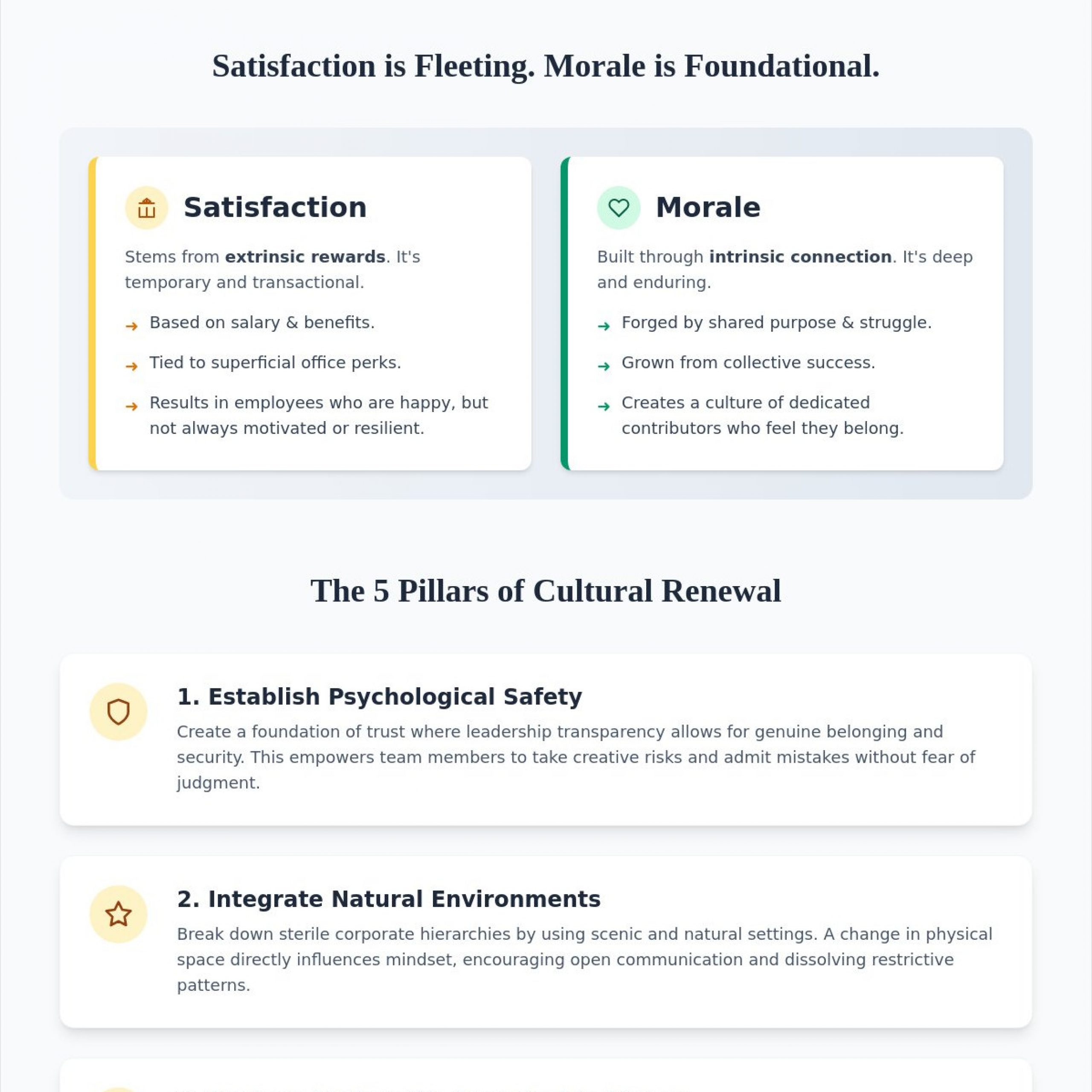
A happy employee isn’t always a motivated one. Satisfaction often stems from extrinsic rewards like salary or benefits, which are essential but fleeting. Morale is deeper. It’s built through shared struggle and the quiet triumph of collective success. You can see the signs of eroding morale long before the turnover begins. It shows up in the silence of a meeting where no one takes a creative risk. It manifests as a lack of spontaneous collaboration. By understanding employee morale as a communal spirit, leaders can spot these subtle shifts and act before the culture turns sterile.
The Cost of Cultural Neglect
The financial burden of a disengaged workforce is no longer a theoretical concern. With the average cost of employee turnover rising to $45,236 per person in 2026, neglect is an expensive habit. When morale is low, innovation stifles. People stop asking “what if” because they no longer feel safe enough to fail. This lack of psychological safety acts as a weight on your company’s growth, preventing the very breakthroughs needed to stay competitive. Team morale is a strategic asset that requires active, intentional cultivation to remain vibrant. Investing in how to improve team morale is a commitment to the longevity and heritage of your organization.
Building Foundations of Trust and Psychological Safety
True cultural renewal begins when the “corporate mask” is set aside in favor of genuine human connection. Psychological safety is the shared belief that a team is safe for interpersonal risk taking. It means an employee can admit a mistake or propose a radical idea without the lingering fear of embarrassment. When considering how to improve team morale, leaders must realize that safety isn’t built through policy, but through the consistent, quiet actions of those in charge. It is the difference between a workplace that feels like a cold institution and one that feels like a supportive community.
The traditional “Open Door Policy” is often a hollow gesture. It places the burden of courage on the employee to cross a threshold into a space of power. A more effective approach is for leaders to step out of their offices and inhabit the same spaces as their teams. This active presence dissolves the sterile barriers of hierarchy and invites spontaneous dialogue. By encouraging employee led initiatives, you grant your team a sense of agency. This allows them to shape their own environment rather than simply existing within one that feels imposed upon them.
Radical Transparency and Vulnerability
Trust is a mirror. If leadership remains opaque, the team will naturally respond with caution. Sharing your own professional challenges or admitting when you don’t have all the answers creates an authentic leadership presence that people want to follow. This vulnerability isn’t a sign of weakness; it’s an invitation for the team to be equally honest. You can find many ways to improve staff morale at no cost by simply fostering feedback loops that prioritize responsiveness over performance. When people feel heard, they feel valued.
Investing in Individual Growth
Management must evolve from a system of oversight to one of mentorship. This requires a shift in focus from what an employee can do for the company to what the company can do for the employee’s long term legacy. Aligning individual career aspirations with the team’s mission creates a powerful synergy. When you support professional development, you are signaling a deep respect for their craftsmanship and potential. This investment in the person, rather than just the role, is a cornerstone of how to improve team morale and ensuring your best talent feels a sense of preservation and care.
Sometimes, these foundational shifts require a change of scenery to take root. Stepping away from the daily grind to a private, tranquil setting allows for the deep reflection necessary to rebuild these bonds. A corporate retreat can serve as the perfect catalyst for this cultural renewal, providing a gracious space where trust can be restored at a relaxed, steady pace.
The Environmental Catalyst: How Physical Space Influences Mindset
The physical environment acts as a silent participant in every team interaction. While many leaders focus on digital tools or policy updates, the most profound answers to how to improve team morale often lie in the very walls and windows surrounding the workforce. The Biophilia Hypothesis suggests that humans possess an innate tendency to seek connections with nature. When a team is confined to a sterile office with flickering fluorescent lighting and windowless meeting rooms, mental clarity begins to fracture. Replacing these “corporate cages” with natural light and organic textures isn’t just about aesthetics; it’s about honoring the biological needs of your people.
Moving a team to a scenic, private setting triggers an immediate psychological shift. The “Boardroom Barrier”, where heavy tables and rigid seating reinforce corporate hierarchy, is dissolved in favor of open, inviting spaces. In these environments, the architectural heritage and a deep sense of place inspire a level of creative thinking that simply cannot occur in a generic cubicle. It’s a transition from a transactional workspace to a sanctuary for deep work and reflection. This shift allows the team to breathe, lowering the collective cortisol levels that often stifle genuine connection.
The ROI of Nature-Based Environments
Research consistently highlights the benefits of green spaces on cognitive function and innovation. Natural settings provide what psychologists call “soft fascination”, a type of effortless attention that allows the brain’s directed attention mechanisms to rest. This reduction in mental fatigue is essential for solving complex problems. When considering how to improve team morale, look at the environment as a strategic investment. A team that feels inspired by their surroundings is a team that is more likely to take the creative risks necessary for growth.
- Increased cognitive flexibility through exposure to natural landscapes.
- Higher levels of “flow state” in environments that prioritize tranquility.
- Improved emotional regulation when teams have access to private, outdoor spaces.
Designing for Serenity and Reflection
Designing a space for serenity allows for the kind of difficult, transformative conversations that are often suppressed in a traditional office. Privacy is a rare luxury in a modern world of open floor plans and constant digital pings. When a team is granted an exclusive, high quality environment, it signals that their contributions are truly valued. This sense of being “hosted” rather than merely “managed” is a powerful catalyst for cultural renewal. For those seeking environmental inspiration, you might explore The Ultimate Guide to Corporate Retreat Venues to see how place can redefine professional development. A well curated setting doesn’t just change where you work; it changes how you think.
Implementing Daily Rituals and Sustainable Work-Life Harmony
Sustainable culture isn’t found in a ping-pong table or a Friday happy hour. These are often fleeting perks that feel transactional rather than transformative. To truly understand how to improve team morale, we must look toward rituals. Rituals are the rhythmic heartbeat of a high performance team, providing a sense of structure and meaning that transcends the daily task list. With 55 percent of U.S. workers reporting burnout in 2026, the need for sustainable harmony has never been more urgent. It’s about creating a pace that allows for both excellence and rest.
Respecting boundaries is the first step in preventing the long term exhaustion that leads to turnover. When leaders honor “unplugged” moments, they signal that their employees are more than just units of production. This restoration of human connection often begins with the simple act of pausing. By intentionally creating spaces where communication is paused, you allow your team to reclaim their focus and mental clarity. This isn’t just a kindness; it’s a strategic necessity for maintaining a resilient workforce.
Five Steps to Improving Daily Morale
Building a healthier daily rhythm doesn’t require a massive budget. It requires intentionality and a willingness to challenge the “always on” corporate status quo.
- Audit your meeting schedule: Eliminate the life sapping overkill of back to back calls that leave no room for actual work.
- Establish peer-to-peer recognition: Structured programs can lower voluntary turnover by as much as 31 percent when colleagues celebrate each other’s craftsmanship.
- Prioritize deep-work blocks: Carve out dedicated times where all internal notifications are silenced to encourage uninterrupted creativity.
- Incorporate micro-breaks: Encourage physical movement and brief moments of reflection to prevent cognitive fatigue.
- Define clear “off” hours: Protect the evening and weekend hours to ensure your team returns on Monday with a sense of renewal.
The Power of Small, Authentic Gestures
Personalized notes of appreciation carry a weight that generic corporate gifts can never match. When a leader takes the time to acknowledge a specific achievement, it honors the individual’s unique contribution to the group’s heritage. Celebrating personal milestones, like a work anniversary or a personal triumph, shows that you value the “whole person” rather than just the worker. These small, authentic gestures foster social bonds that make a workplace feel like a boutique community. If you’re ready to move beyond daily rituals and invest in a deeper cultural reset, consider how a corporate retreat in Tucson can provide the sanctuary your team needs to flourish.
The Transformative Power of Offsite Retreats and Shared Experiences
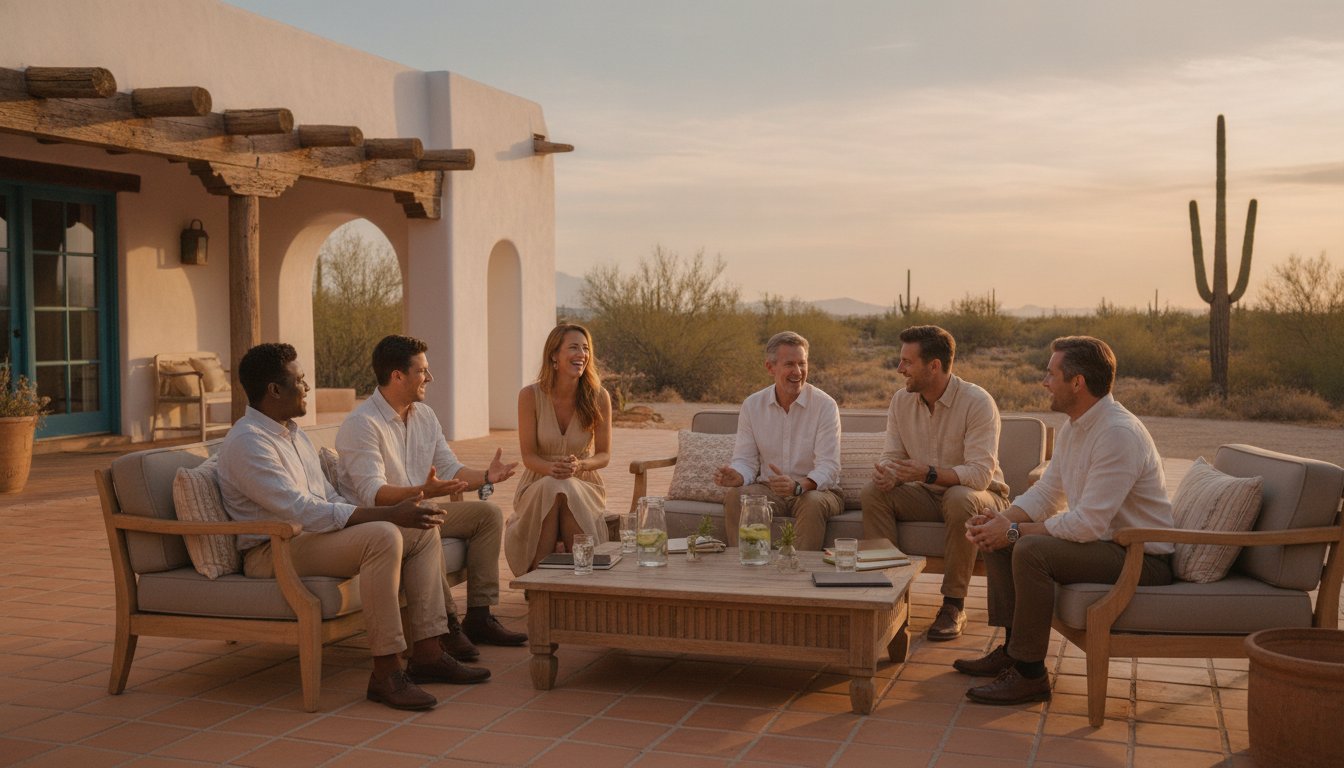
Sometimes, the only way to truly break entrenched negative patterns is through a total physical reset. While daily rituals sustain a healthy culture, a deep seated malaise often requires a complete departure from the familiar. This is how to improve team morale at a strategic level; it moves the conversation from the sterile office to an environment that encourages deep reflection. Exclusive use venues provide a level of privacy that public hotels simply cannot match. When a team has the entire property to themselves, the barriers of rank and role begin to dissolve, allowing for authentic human connection to take center stage.
Combining professional development with the restorative power of a guest ranch offers a unique fusion of productivity and peace. Shared adventures, whether they involve exploring desert trails or gathering around a historic hearth, forge lasting bonds that survive long after the retreat ends. These heritage rich environments act as a silent mentor, reminding the team that they’re part of a larger story. It’s a strategic investment in team longevity that pays dividends in loyalty and innovation. For many organizations, this physical getaway is the only way to move beyond the transactional and toward the truly collaborative.
Planning the Strategic Escape
Designing a successful retreat requires a delicate balance between focused work and essential renewal. A common mistake is packing the itinerary so tightly that the team returns more exhausted than when they arrived. Instead, choose a venue that offers both professional facilities and scenic serenity. This allows for high level strategy sessions in the morning followed by restorative experiences in the afternoon. If you’re looking for the perfect setting for your next reset, you can explore Event Venues with Lodging to find an immersive hosting solution that fits your vision.
From Boardroom to Boutique Resort
A change in scenery is often the catalyst needed for major breakthroughs in strategy and vision. When you step away from the daily grind into a boutique resort, the brain is freed from the “fight or flight” mode of constant deadlines. This is where the role of the “gracious host” becomes vital. By providing a seamless, stress free experience, the venue allows leadership to focus entirely on their people. It’s about moving from a transactional mindset to a philosophy of stewardship. Ready to elevate your team’s morale? View our private properties and retreat spaces to begin your journey toward cultural renewal.
Cultivating a Legacy of Connection and Resilience
Restoring a vibrant culture is an act of stewardship that goes far beyond surface level perks or digital connectivity. It requires a foundational commitment to psychological safety, where transparency and vulnerability replace corporate coldness. By shifting your team from sterile, transactional workspaces to environments rich with natural light and heritage, you invite a deeper level of creative reflection. When you commit to learning how to improve team morale, you aren’t just adjusting a performance metric; you’re investing in the very soul and longevity of your organization.
True transformation often begins with a deliberate pause in a place designed for both strategy and serenity. Solana Spanish Villas offers a boutique, historic setting perfectly suited for deep cultural work and high impact executive offsites. As a gracious host, we provide the private sanctuary your leadership needs to dissolve negative patterns and forge lasting human bonds. We invite you to plan your team’s transformative retreat at Solana Spanish Villas and discover the profound impact of a physical reset. Your team’s journey toward renewal is a path worth taking, and the rewards of a resilient, motivated culture are waiting for you.
Frequently Asked Questions
What are the first signs that team morale is declining?
Silence in meetings and a sudden lack of creative risk-taking are often the earliest warnings. When employees stop asking “what if” and move toward purely transactional behavior, the collective emotional resilience is fraying. You might also notice a subtle withdrawal from social interactions or a rise in absenteeism as the workplace begins to feel sterile and uninspiring.
How can I improve morale without a large budget for raises?
Focus on autonomy, recognition, and the quality of the daily experience. Research from 2026 indicates that personalized notes of appreciation and structured peer recognition programs can lower voluntary turnover by 31 percent. Respecting professional boundaries and carving out dedicated blocks for deep work are effective strategies for how to improve team morale without increasing payroll costs.
Why do traditional team-building activities often fail?
Most traditional activities feel forced or performative rather than authentic. They often take place in sterile environments that reinforce the very corporate hierarchies they aim to dissolve. When an event feels like an obligation, it adds to mental fatigue rather than providing the restorative reset necessary for genuine human connection and shared purpose.
How does the physical work environment impact employee engagement?
The environment acts as a silent participant that either inspires clarity or reinforces stagnation. Sterile, windowless offices can stifle innovation by increasing cortisol levels and mental fatigue. Incorporating natural light and scenic views honors the biological need for “soft fascination,” which allows the brain to rest and regain its creative edge in a sanctuary like setting.
What is the role of leadership vulnerability in boosting morale?
Vulnerability is the cornerstone of psychological safety and authentic trust. When a leader admits to a challenge or shares their own professional journey, it grants the team permission to be equally honest. This authenticity moves the culture away from corporate coldness toward an intimate, boutique style narrative where people feel safe enough to fail and innovate.
Can a corporate retreat really solve long-term cultural issues?
A physical reset is often the only way to break entrenched negative patterns that have become part of the daily office routine. Moving the team to a private, heritage rich setting provides the sanctuary needed for difficult, transformative conversations. While a retreat is a catalyst rather than a one time fix, it sets the stage for long term cultural renewal.
How do I measure the success of morale-boosting initiatives?
Look beyond simple satisfaction scores toward metrics like retention rates, absenteeism, and the frequency of spontaneous collaboration. You can also track the reduction in “quiet quitting” behaviors and the rise in creative risk taking. A successful initiative results in a resilient team that feels a renewed sense of shared mission and collective pride.
What are the best ways to improve morale in a remote or hybrid team?
Prioritize intentionality over proximity to ensure every team member feels a genuine sense of belonging. In a digital space, it’s easy for work to become purely transactional and isolated. You can learn how to improve team morale by replacing constant pings with meaningful rituals and hosting occasional in person offsites in tranquil settings to solidify digital bonds.
0 Comment