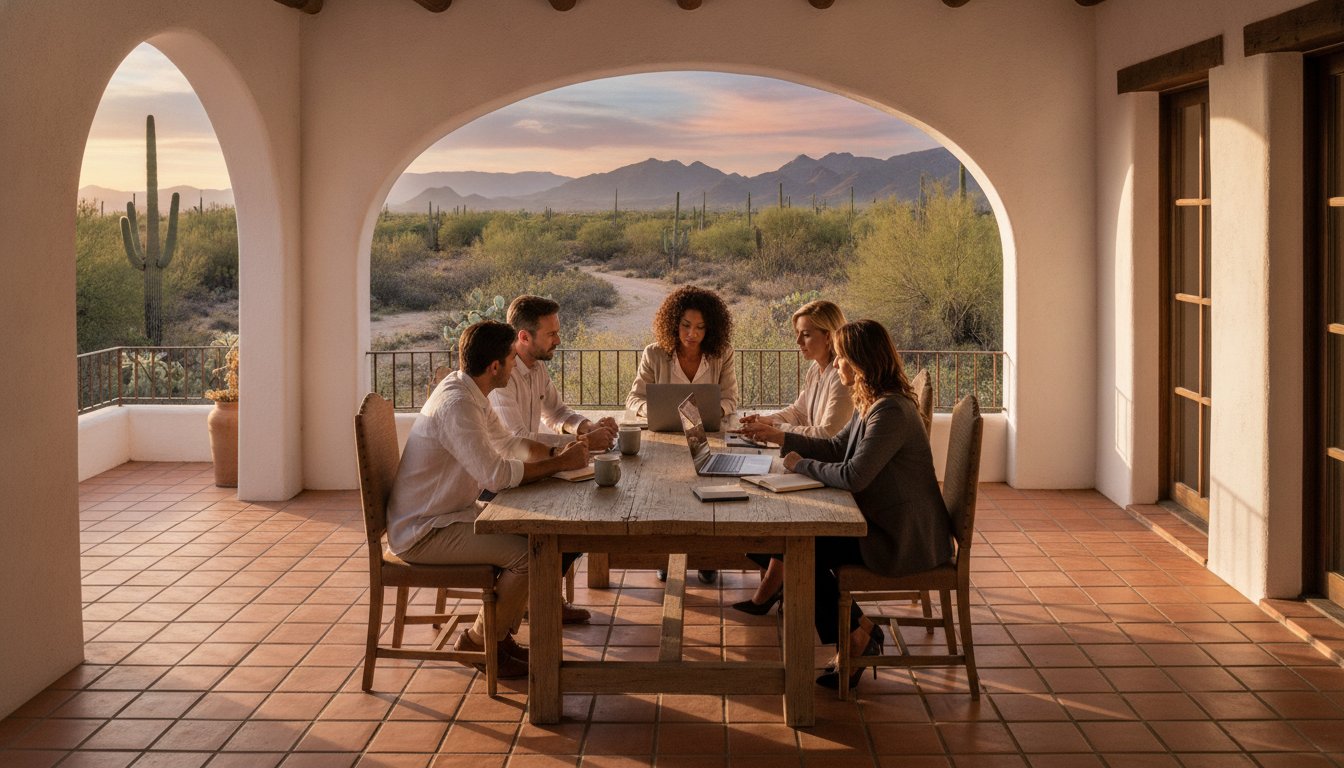

With countryside retreats seeing a 308% surge in popularity, the modern workforce is clearly signaling a desire for more than just another boardroom with a different view. You likely feel the weight of this shift. It’s the delicate task of balancing a productive work agenda with the deep, restorative relaxation your team deserves after months of digital disconnect. This company offsite planning guide serves as your gracious host through the complexities of 2026, from managing the 17-week lead time required for smaller groups to navigating new sustainability reporting standards.
We promise to help you master the art of corporate retreat planning by focusing on evocative, atmosphere-driven experiences that don’t sacrifice logistical precision. We’ll explore how to select a venue that inspires innovation and create a seamless timeline that ensures your team returns with a measurable improvement in cohesion. By the end of this guide, you’ll have the tools to move beyond simple group lodging and into the realm of meaningful, heritage-conscious gathering that fosters true connection.
Key Takeaways
- Define a clear emotional arc and strategic purpose for your retreat to ensure every activity serves a deeper goal of team alignment or innovation.
- Discover how choosing an evocative venue, such as a private guest ranch, can inspire the creative breakthroughs that sterile corporate environments often suppress.
- Navigate the complexities of 2026 scheduling with a company offsite planning guide that masters the six-month countdown and accounts for nuanced budgeting.
- Implement the 70/30 rule to balance rigorous work sessions with the unstructured, nature-based moments that foster genuine team cohesion.
- Learn to embody the “gracious host” role during the event, managing logistics with subtle precision so your team can focus entirely on renewal and discovery.
Intentional Foundations: Defining Your Offsite’s Strategic Purpose
Every transformative journey begins with a quiet moment of clarity. A successful retreat isn’t merely a break from the routine; it’s a deliberate departure toward a specific destination of the mind. When you begin using this company offsite planning guide, the first step isn’t choosing a venue or a menu. It’s defining the “why” with surgical precision. Given that 91% of companies organizing these retreats now operate in remote or hybrid environments, the need for intentionality has never been higher. We often see teams fall into the trap of generic “team building” without a clear North Star. Instead, consider the emotional arc you want your team to travel. Do they arrive weary and leave inspired? Or do they arrive fragmented and leave as a singular, cohesive force?
Selection should be an act of curation. Invite those whose contributions are essential to the specific goals, rather than simply following an organizational chart. This ensures every voice in the room carries weight and every discussion yields results. To protect your investment, distinguish between essential outcomes and nice-to-have luxuries early on. This clarity allows the budget to support the experiences that truly move the needle. You’ll find that a well-structured company offsite planning guide prioritizes these high-impact moments over superficial perks, ensuring every dollar spent serves a strategic end.
The Four Pillars of Offsite Objectives
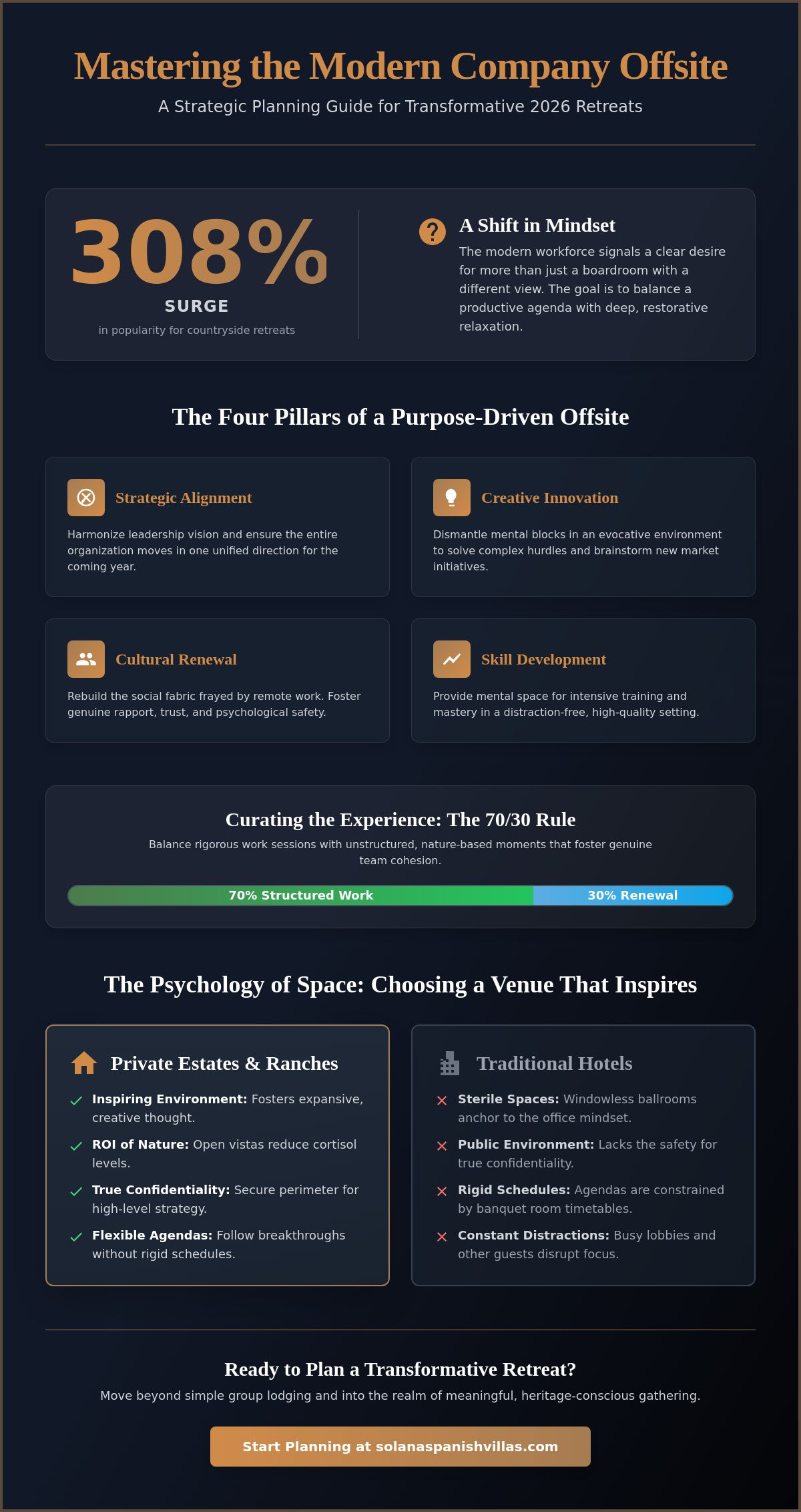
- Strategic Alignment: This is about the shared horizon. It’s the time for leadership to harmonize their vision, ensuring the entire organization moves in one direction for the coming year.
- Creative Innovation: Standard offices often stifle the very imagination they require. A new, evocative environment helps dismantle mental blocks to solve complex product hurdles or brainstorm new initiatives.
- Cultural Renewal: Remote work can fray the social fabric of a team. Rebuilding trust requires a return to foundational team-building principles to foster genuine rapport and psychological safety.
- Skill Development: Sophisticated retreats provide the mental space for intensive training. Without the hum of daily pings, teams can achieve mastery in a distraction-free, high-quality setting.
Inclusivity and Accessibility in Planning
True hospitality considers every guest with equal care. Your venue must cater to diverse physical and dietary needs with grace, never as a last-minute adjustment. It’s vital to balance high-energy group sessions with quiet, restorative spaces for introverted reflection. This ensures every personality type finds value in the experience and feels comfortable participating. Inclusivity serves as a cornerstone of modern corporate hospitality, ensuring every participant feels seen, respected, and fully capable of contributing to the collective goal.
The Psychology of Space: Choosing a Venue That Inspires
Standard corporate hotels, with their windowless ballrooms and fluorescent lighting, often act as a psychological anchor to the very office environment you’re trying to escape. These spaces are designed for high-volume efficiency, not deep-seated inspiration. This company offsite planning guide emphasizes the “Psychology of Space.” When you remove the distractions of a busy lobby and replace them with the quiet rustle of desert flora or the sweeping views of a mountain range, you trigger a physiological shift. Research into the “ROI of Nature” suggests that open vistas significantly reduce cortisol levels. This allows the brain to move from a state of “survival” into one of expansive problem-solving and creative thought.
Choosing an “Exclusive Use” venue, such as a private estate or a Guest Ranch Tucson, provides a secure perimeter that fosters true confidentiality. High-level strategy requires a sense of safety that a public hotel simply cannot provide. The absence of rigid banquet room schedules allows your agenda to breathe. If a breakthrough occurs at 10:00 PM by a fire pit, you have the freedom to follow that spark without a concierge clearing the room for the next morning’s breakfast buffet. The environment becomes a silent partner in your team’s success.
Private Estates vs. Traditional Hotels
The primary advantage of a private estate lies in the organic connection it fosters. In a traditional hotel, team members often retreat to their individual rooms the moment a session ends. In a private villa, shared common areas and communal dining tables encourage the “hallway conversations” that are often more productive than the scheduled sessions themselves. This environment supports the academic steps for building an effective team by creating a sense of shared belonging and mutual trust. For those seeking this level of intimacy, exploring options like Solana Spanish Villas can provide the perfect architectural backdrop for group cohesion.
Matching Venue Style to Team Culture
- Historic Ranches: These are ideal for leadership retreats or heritage-conscious brands. The sense of history and preservation grounds the team in a legacy larger than themselves.
- Modern Villas: For tech teams or startups, sleek and high-efficiency environments mirror their own internal pace while providing a necessary “digital detox” atmosphere.
- Boutique Resorts: Best suited for wellness-focused offsites where the goal is renewal and reward.
Evaluating technical needs like high-speed Wi-Fi and seamless AV integration remains a logistical necessity, but they shouldn’t overshadow the natural environment. The best company offsite planning guide approach is to ensure the technology is invisible but available, allowing the beauty of the surroundings to lead the experience. Whether you’re looking for an Airbnb Tucson for a small team or a larger Event Venue Tucson, the goal is to find a space that feels like a home, not a headquarters.
Logistical Mastery: A Step-by-Step Planning Timeline
Precision is the silent engine of a peaceful retreat. While the atmosphere provides the inspiration, a meticulously crafted logistical framework ensures that your team remains focused on the journey rather than the mechanics of the trip. To achieve this, your company offsite planning guide must account for the significant lead times required in the current market. For gatherings of fewer than 100 people, industry data suggests a booking lead time of at least 17 weeks, while larger groups often require 23 weeks to secure the most desirable dates and venues. Starting six months in advance isn’t just a recommendation; it’s a necessity for those seeking a seamless experience.
Managing a geographically distributed team adds a layer of complexity to transport logistics. The goal is to transform the arrival from a chore into a curated experience. This begins with clear communication and ends with a warm welcome that sets the tone for the days ahead. Think of the arrival not just as a check-in, but as the first chapter of your story. High-quality “swag” should offer genuine utility and a sense of place, perhaps a locally sourced leather notebook or a high-end reusable bottle, rather than generic corporate trinkets that often end up forgotten.
The Planning Timeline: 6 Months to Day Zero
- Phase 1 (Month 6 to 4): Focus on the intentional foundations discussed earlier. Set your core objectives, scout for a venue that matches your culture, and finalize your dates to avoid the rush.
- Phase 2 (Month 3 to 2): Begin drafting the agenda, ensuring a balance between work and renewal. This is the time to select catering partners and finalize transport arrangements for remote team members.
- Phase 3 (Month 1): Confirm the final headcount and gather detailed dietary requirements. Brief your external facilitators and conduct a final walkthrough of the logistical “emotional arc” to ensure no detail is overlooked.
Budgeting for Impact
A sophisticated budget accounts for the nuances of the experience, moving well beyond the simple nightly room rate. Hidden costs often reside in service fees, specialized AV rentals for hybrid sessions, and the transport required for off-site excursions. It’s essential to allocate significant funds for high-quality catering. Food is more than sustenance; it’s the fuel for long brainstorming sessions and a primary vehicle for team connection. For deeper insights into selecting a location that fits your financial and strategic goals, consult The Ultimate Guide to Corporate Retreat Venues. This resource helps you evaluate venues based on their ability to elevate the executive experience while maintaining logistical control. By factoring in these variables early, you ensure that the retreat feels like a generous investment in your team’s future rather than a budgetary compromise.
Curating the Experience: Agendas That Balance Work and Renewal
A common pitfall in corporate planning is the urge to overpack every hour with structured productivity. True mastery of a company offsite planning guide requires the discipline of the 70/30 Rule. By dedicating 30% of your time to unstructured moments, you provide the team with the mental margin necessary for deep reflection and spontaneous connection. This isn’t wasted time. It’s an investment in the high-yield breakthroughs that occur when the formal agenda ends. The best ideas often happen during the “white space” of an agenda, sparked by a casual comment during a walk or a shared realization over coffee.
Designing nature-based team building activities ensures the experience feels authentic rather than forced. Instead of traditional trust falls, consider a guided desert hike or a heritage-focused tour of a local ranch. These activities ground the team in their surroundings and foster a sense of shared discovery. Integrating wellness into the schedule, such as a morning movement session under the open sky or a quiet evening reflection by a fire pit, reinforces the “gracious host” philosophy of care and renewal.
Crafting the Perfect Day
- Morning: Reserve these hours for high-energy strategy sessions. The mind is freshest; the soft morning light provides a tranquil backdrop for tackling complex problems.
- Afternoon: Transition into experiential learning. Use the natural environment to test new concepts or engage in collaborative challenges that move beyond the boardroom.
- Evening: Focus on social bonding. Curated dining experiences featuring local flavors provide a sensory-rich environment for storytelling and building lasting rapport.
Facilitating for Breakthroughs
Breakthroughs require a deliberate dismantling of the office hierarchy. In a sophisticated retreat setting, every voice must carry equal weight to unlock collective intelligence. You might lead culture-focused sessions internally to maintain a personal touch, but consider hiring a professional facilitator for high-stakes strategic shifts. An external expert provides a neutral perspective and the tools, such as design thinking workshops, to navigate difficult conversations with grace. To see how a curated environment can transform your next gathering, explore our corporate retreat offerings and begin planning an agenda that truly inspires.
Seamless Execution: Transforming a Plan into a Transformative Retreat
The transition from a conceptual plan to a physical reality requires a shift in perspective. You’re no longer just a planner; you’ve become a steward of the team’s experience. As the “Gracious Host,” your primary objective is to ensure that the logistical machinery runs silently in the background. This company offsite planning guide concludes with the art of execution, where the focus remains on maintaining a sanctuary for innovation. When you’ve secured an exclusive-use venue, you have the rare opportunity to curate every sensory detail, from the soft morning light in the meeting room to the precise timing of a sunset dinner.
Capturing the output of your retreat is a delicate task. If you pause a high-energy brainstorming session to fill out a spreadsheet, you risk killing the momentum. Instead, use passive capture methods. Designate a scribe or use visual recording tools that document breakthroughs without interrupting the narrative. The goal is to return to the office with a clear, actionable roadmap while the emotional resonance of the retreat is still fresh. Private villa rentals represent the future of these gatherings because they provide the intimacy needed for high-impact retreats that a crowded hotel simply cannot replicate.
The Final Checklist for the Planning Lead
- Digital Readiness: Confirm Wi-Fi strength in every breakout area. Identify “dead zones” early to ensure they are used for reflection rather than frustration.
- Lodging Walk-through: Inspect every room to ensure a consistent standard of comfort. Every guest should feel equally valued and welcomed.
- Staff Briefing: Meet with the venue team to discuss the specific “vibe” of the group. Ensure they understand the need for confidentiality during sensitive strategy sessions.
Measuring Retreat ROI
The success of an offsite is measured long after the bags are unpacked. Use post-event surveys to gauge team sentiment and the clarity of the mission. Don’t just ask if they enjoyed the food; ask if they feel more aligned with the company’s 2026 goals. Track project momentum in the following months to see if the offsite actually accelerated your strategic roadmap. Measurable improvement in team cohesion is the ultimate reward for your meticulous planning. Ready to host? Explore our event venues with lodging for your next offsite and begin the journey toward a truly transformative team experience.
Cultivating the Future of Your Team
A truly transformative retreat isn’t just about the sessions on the agenda. It’s about the feeling of the sun on your face during a morning breakthrough and the quiet confidence that every detail is being managed with professional grace. By prioritizing intentional foundations and the psychology of space, you ensure your team returns with more than just notes; they return with a renewed sense of purpose. This company offsite planning guide has provided the framework to balance logistical precision with the evocative, atmosphere-driven experiences that modern teams crave.
When you’re ready to move beyond standard corporate settings, consider the sanctuary of a historic 1920s estate. We offer a seamless blend of luxury lodging and professional event spaces, all within a secure, exclusive-use perimeter for total privacy and strategy security. Our modern boutique amenities and heritage-conscious atmosphere provide the perfect backdrop for your next high-impact strategy session. Plan Your Sophisticated Offsite at Solana Spanish Villas today. We look forward to welcoming you and helping you host an experience your team won’t soon forget.
Frequently Asked Questions
How far in advance should I start planning a company offsite?
You should begin the process at least six months before your desired dates to ensure the best selection of venues. For groups under 100 people, a lead time of 17 weeks is typical, while larger gatherings often require 23 weeks to secure high-quality locations. This timeline allows you to follow a comprehensive company offsite planning guide without the stress of limited availability. It ensures you have your choice of the most evocative seasons and settings.
What is a reasonable budget per person for a corporate retreat in 2026?
Budgeting for 2026 requires a focus on the total experience, accounting for rising transport costs and a projected 15% increase in general liability insurance premiums. You should prioritize funds for high-quality catering and unique, nature-based activities that drive genuine engagement. While average industry costs fluctuate, a sophisticated retreat is often viewed as a strategic investment in team retention and innovation. It’s best to request a tailored proposal to ensure your financial plan aligns with your specific cultural goals.
How do I choose between a hotel and a private villa for my team?
Choose a private villa if your goal is deep connection and strategy security within an intimate, boutique-style environment. Villas offer your team exclusive use of the grounds, which fosters organic conversations and a sense of shared belonging. Hotels are generally better suited for massive conventions where you require hundreds of identical rooms and standardized services. For leadership retreats or innovation workshops, the privacy of an estate provides a superior psychological backdrop for creative breakthroughs.
How can I ensure remote employees feel included in the offsite planning?
Inclusion begins long before the arrival date by involving remote staff in the initial goal-setting phase. Use pre-event surveys to understand their preferences for activities and dietary needs, ensuring they feel seen as individuals rather than just names on a list. Providing clear, concierge-style travel support helps alleviate the logistical anxiety often felt by distributed teams. When they arrive to a warm, personalized welcome, the digital distance dissolves into a sense of shared purpose.
What are the best team-building activities that don’t feel “cringe”?
The most successful activities are those rooted in a sense of place and authentic discovery rather than forced corporate games. Consider nature-based challenges like guided desert navigation, heritage tours, or collaborative outdoor cooking that move away from traditional icebreakers. These experiences feel like a gift of shared adventure and foster genuine rapport among colleagues. When activities align with the natural environment, they encourage a relaxed, steady pace of connection that feels entirely authentic.
How do I balance work sessions with free time in the agenda?
Adopting a thoughtful rhythm is essential for avoiding retreat burnout and maintaining high levels of engagement. We recommend the 70/30 rule, where 30% of the schedule remains entirely unstructured for rest or casual reflection. This “white space” allows the brain to process the high-energy strategy sessions held in the mornings. It ensures that the journey of discovery feels restorative rather than exhausting, allowing for spontaneous breakthroughs during the quiet moments of the day.
Should I hire an external facilitator for my company offsite?
Hiring a professional facilitator is wise when navigating high-stakes strategic shifts or complex team dynamics that require a neutral perspective. An external expert brings specialized tools, such as design thinking workshops, to keep the conversation productive and focused. This allows leadership to participate fully as peers rather than managing the clock. For cultural renewal or simple alignment, an internal lead can often maintain a more personal, “gracious host” touch that feels intimate and sincere.
What are the essential tech requirements for a remote retreat venue?
High-speed, redundant Wi-Fi is the non-negotiable foundation for any modern retreat, especially for teams that rely on digital collaboration. You also need seamless AV integration for hybrid sessions to include team members who cannot travel. Look for venues that offer professional-grade equipment that remains unobtrusive, preserving the tranquil atmosphere of the surroundings. This company offsite planning guide suggests conducting a thorough tech walkthrough to identify any potential dead zones before your first session begins.
0 Comment