

A successful retreat isn’t defined by the number of beds available, but by the exclusivity of the environment and the heritage of the host. You want a space that breathes with your team, yet the fear of hidden costs or a mismatched atmosphere can turn an inspiring vision into a logistical headache. With 79% of companies now prioritizing employee wellbeing as a core business goal, the stakes for your 2026 gathering are higher than ever. To protect your vision, you need a precise set of questions to ask a retreat venue before you sign any contract.
It’s understandable to feel a sense of trepidation when vetting a location that looks perfect on a screen but might lack the soul or privacy your group requires. We believe that planning should be as tranquil as the stay itself, moving away from corporate coldness toward a more intimate, boutique experience. This guide provides a foolproof checklist that covers everything from catering nuances to lodging logistics. You’ll gain the clarity needed to ensure your next offsite is a seamless blend of old-world charm and modern refinement, allowing your team to focus entirely on connection and renewal.
Key Takeaways
- Secure total property exclusivity to ensure your group remains the sole focus of the host throughout your stay.
- Refine your vetting process with a targeted list of questions to ask a retreat venue regarding suite configurations and the blend of historical charm and modern utility.
- Evaluate the versatility of meeting spaces and catering flexibility to ensure the logistics support a seamless, productive experience.
- Protect your investment by uncovering potential hidden fees and clarifying cancellation policies before finalizing your booking.
- Discover why the intimate atmosphere of a private estate provides a higher return on engagement and team bonding than traditional hotels.
Availability and Exclusivity: Ensuring Your Group’s Privacy
The true value of a retreat lies in the sanctuary it provides. When you step onto a property, you aren’t just booking a set of rooms; you’re securing a container for transformation. One of the most critical questions to ask a retreat venue is whether your group will have exclusive use of the grounds. While some commercial hotels might view exclusivity as a luxury, in the context of deep team bonding or wellness work, it’s a necessity. Shared venues often lead to diluted focus. Imagine a breakthrough strategy session interrupted by the bustle of a wedding party or a separate corporate group in the next room. A private environment ensures that the energy of your event remains contained and uninterrupted.
The Impact of Total Exclusivity
True privacy allows for a level of vulnerability and openness that’s impossible in public spaces. When you have the property to yourself, every corner becomes a potential breakout space, from the quiet library to the sun-drenched patio. You should verify if the venue allows external visitors, such as day-pass guests or outside diners, during your stay. A
comprehensive guide to event management will tell you that site selection is the foundation of attendee experience. In 2026, where 70% of companies host offsites to rebuild culture in a remote world, the “sense of place” shouldn’t be compromised by strangers. Ask specifically about shared dining facilities and whether your meal times will be private or communal with other guests.
Booking Windows and Flexibility
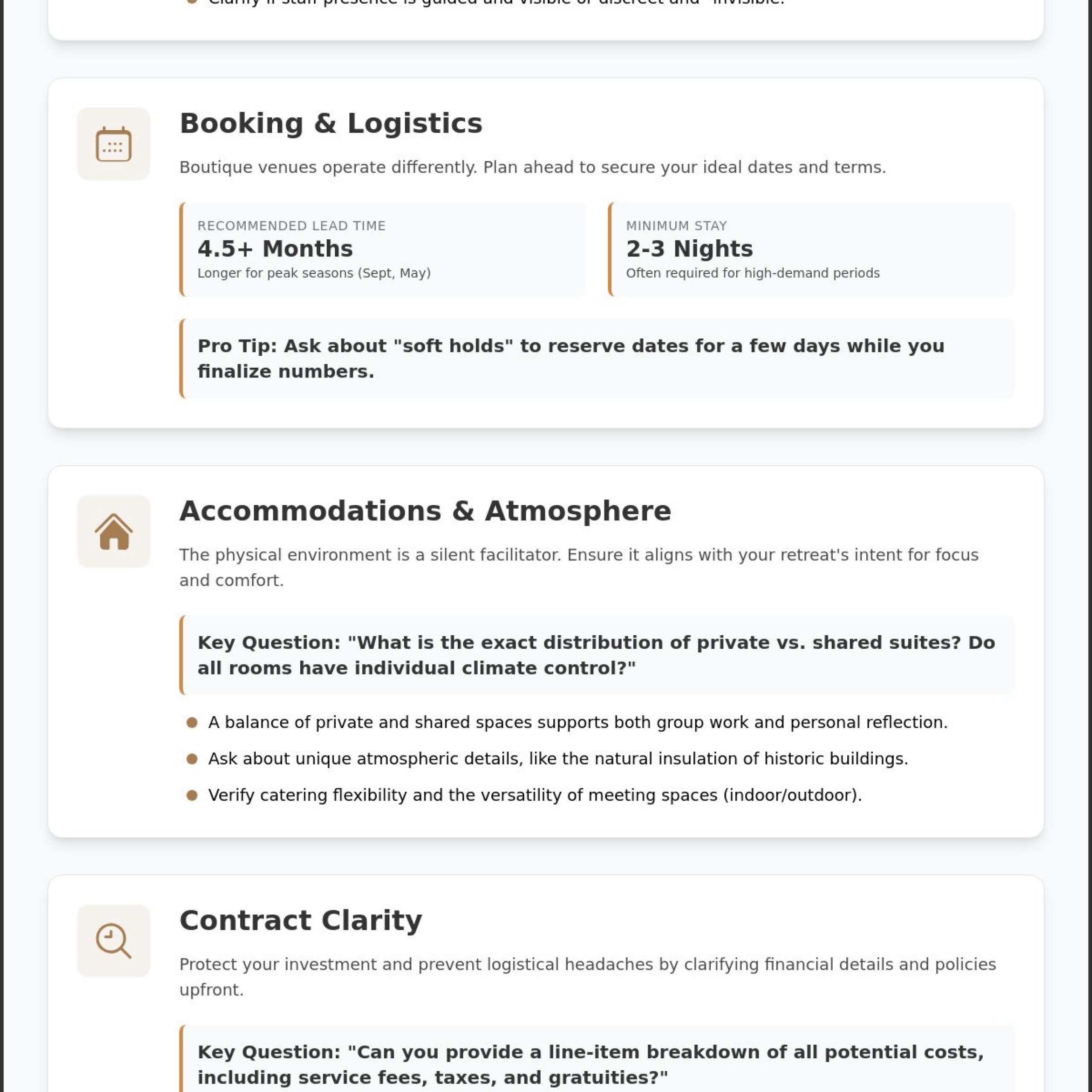
Securing a boutique guest ranch or private estate requires a different rhythm than booking a standard hotel. Most high-end venues for corporate or wellness retreats recommend a lead time of at least 4.5 months. During peak seasons like September or May, this window might stretch even further. When inquiring, ask about “soft holds.” These allow you a few days of grace while you finalize attendee numbers without losing your preferred dates. You should also understand the minimum stay requirements. Many historic properties require a two or three-night stay during high-demand periods to maintain the quality of service and atmosphere.
Another detail often overlooked is the “buffer zone” between check-ins. Ask how much time exists between the departure of the previous group and your arrival. A gracious host ensures the property is fully reset, aired out, and restored to its natural tranquility before you step foot on the gravel path. Finally, clarify the presence of on-site staff. Do you prefer a “ghost” service where the team is invisible but attentive, or a more guided experience where a steward is available to share local history? Each approach changes the atmosphere of your retreat, so choose the one that aligns with your group’s desired level of seclusion. These are the essential questions to ask a retreat venue to ensure the logistics match your vision.
Accommodations and Atmosphere: Aligning Space with Intent
The physical environment of a retreat acts as a silent facilitator for your group’s progress. While logistical checklists often focus on the number of pillows, the most impactful questions to ask a retreat venue delve into how the space influences the psyche. A venue that balances historical reverence with modern refinement creates an atmosphere of stability and inspiration. It moves away from the sterile, interchangeable feel of a corporate hotel, offering instead a “sense of place” that grounds attendees. This connection to the surroundings is a key component in Forbes’ guide to crafting a company retreat, which emphasizes that the right location is foundational to achieving strategic goals.
When evaluating lodging, precision is your best ally. You must confirm the exact distribution of private versus shared suites. In 2026, the trend toward purposeful downtime means guests value their own sanctuary for reflection. Ask the host about sensory details that affect comfort throughout the seasons. Is there individual climate control in every suite? Does the thick masonry of a historic building provide natural insulation and quiet? These details ensure that the physical experience matches the high-quality intent of your programming.
The Gracious Host Philosophy
A venue’s character is often revealed by its commitment to preservation. You can distinguish a dedicated steward from a high-turnover operation by inquiring about the provenance of the furnishings and the history of the architecture. Boutique venues prioritize craftsmanship and heritage, ensuring that guests feel like honored visitors in a private home rather than units in a system. When a venue honors its past, it invites guests to step out of the frantic pace of the present and into a timeless space where deep work can flourish. If you’re seeking such an environment, exploring the unique character of private Spanish-style estates in Tucson can provide the perfect backdrop for your next gathering.
Lodging Logistics for Groups
Practicality must accompany beauty. Inclusive planning requires asking about accessible accommodations early in the process. Beyond the physical layout, inquire about the quality of high-end amenities. A central gathering point within the living quarters allows for those organic, late-night conversations that often lead to the most significant breakthroughs. These moments are the true ROI of a well-chosen retreat location.
- Are the linens and toiletries sourced with a focus on quality and sustainability?
- Is there a central hub, such as a courtyard or a fireside lounge, located within the lodging area?
- Does the property offer high-speed connectivity that remains reliable even within thick, historic walls?
Confirming these details helps you move beyond the standard vetting process. You aren’t just looking for a place to sleep; you’re curating an experience that respects the comfort and dignity of every attendee. By prioritizing these questions to ask a retreat venue, you ensure the atmosphere supports the transformative work you’ve planned.
Facilities and Logistics: Evaluating Catering and Technical Needs
While the atmosphere sets the mood, the logistical framework determines the rhythm of your day. A truly successful retreat requires a venue that functions with the precision of a modern office while maintaining the warmth of a private estate. When refining your list of questions to ask a retreat venue, you must look beyond the surface of all-inclusive packages. True flexibility in catering and technical support is what allows a facilitator to pivot from a high-stakes strategy session to a relaxed evening of connection without a single hitch.
Nourishment and Dining Experiences
Nourishment is more than just fuel; it is a central pillar of the retreat experience. Boutique venues often offer a level of culinary freedom that traditional hotels cannot match. You should ask whether you have the option to bring in a private chef who specializes in your group’s specific wellness goals. In 2026, where 79% of companies view employee wellbeing as a business priority, the ability to handle complex dietary restrictions with grace is non-negotiable. Inquire about scenic dining options. Can a long-table lunch be set up under a historic ramada or a grove of trees? These outdoor experiences often become the most memorable moments of the entire stay.
Equipment and Connectivity
The versatility of meeting spaces is equally vital. Your itinerary likely requires a mix of formal boardroom settings and fireside breakout areas. Ask if the property provides both. A structured environment is excellent for data-heavy presentations; however, a comfortable lounge with heritage architecture often fosters more creative, organic conversation. Regarding technical needs, don’t settle for a general assurance of connectivity. Test the Wi-Fi reliability in every corner of the estate. Thick, historic walls can sometimes challenge signals, so it’s important to verify that high-speed access extends to outdoor patios and remote casitas. You can find a more detailed deep-dive on corporate retreat venues for a closer look at modern offsite tech requirements.
Finally, address the infrastructure required for nature-based activities. If you plan to host an evening session under the stars, ask about outdoor lighting and power availability. Many planners forget to check if there is sufficient electricity for AV equipment in a garden or courtyard. Scenic seating arrangements should be more than just folding chairs; they should reflect the quality and craftsmanship of the surroundings. For those looking to bring that same level of custom design to their own outdoor living spaces, you can learn more about ASunroom4You. By asking these targeted questions to ask a retreat venue, you ensure that the natural beauty of the location is supported by robust, invisible logistics.
Contract Clarity: Navigating Policies, Restrictions, and Hidden Fees
A clear agreement is the silent foundation of a peaceful stay. While the beauty of a historic estate inspires the soul, the details of the contract protect your peace of mind. When finalizing your arrangements, the most important questions to ask a retreat venue often involve what isn’t explicitly listed on the initial quote. Transparency is the hallmark of a gracious host. It ensures that no unexpected service charges or utility surcharges disrupt your focus. You should request a granular breakdown of potential hidden fees, including cleaning costs for large groups or specific surcharges for high-intensity utility use during technical presentations.
In many secluded or heritage-rich areas, noise ordinances and outdoor activity restrictions are strictly enforced to preserve the local atmosphere. Unlike standard hotel ballrooms, private estates may have specific curfews for outdoor music or evening gatherings. It’s also vital to clarify the venue’s stance on alcohol and liability. If you’re hosting a private celebration, understand whether you need additional permits or if the host’s insurance covers your group’s specific activities. This level of detail ensures your event remains respectful of the local culture while providing a safe environment for your guests.
The Fine Print of Arrival and Departure
Planners often need a head start. Ask if the venue allows early arrival for setup days and if there’s a fee associated with this extra time. Similarly, a late checkout can be invaluable for a final, unhurried reflection session. Don’t forget to inquire about luggage storage and transport assistance. This is especially important if the property features sprawling gardens or multiple casitas that require a walk from the main arrival gate. Clear communication on these logistical bookends allows for a graceful transition into and out of your retreat experience.
Insurance and Safety
Safety is paramount in any gathering. Ask about the emergency protocols the venue has in place, particularly if the property is located in a rural or secluded environment. You should verify whether the venue maintains gated access or on-site security. This is often a priority for high-profile groups seeking total privacy. For a venue that prioritizes both professional security and historical elegance, you can book a private retreat venue in Tucson that understands these sophisticated needs. Confirming these safety measures early allows you to focus entirely on the transformative work of your retreat.
- Does the cancellation policy offer a rescheduling credit in the event of unforeseen circumstances?
- Are there specific restrictions on the types of outdoor activities or equipment allowed on the heritage grounds?
- What specific insurance coverage does the venue maintain for corporate or wellness group events?
The Private Estate Advantage: Why Boutique Venues Offer Superior ROI
Choosing a private estate over a commercial hotel isn’t just a matter of preference; it’s a strategic decision that directly impacts your return on investment. While hotels offer efficiency and standardized service, boutique villas provide an intimacy that encourages guests to lower their guards. This shift in environment fosters the kind of authentic connection that sterile corporate corridors often stifle. As you refine your final list of questions to ask a retreat venue, consider how the architecture itself inspires the specific mindset you want to cultivate. A private ranch setting serves as the ultimate canvas for wellness retreats, offering a secluded sanctuary where the natural environment actively supports the growth process.
The “sense of place” found in a heritage property acts as a catalyst for attendee engagement. When guests feel they are part of a storied environment, their retention of the experience increases. They aren’t just attending a meeting; they’re living a narrative. Historical character provides visually evocative moments that stay with participants long after they depart. These aren’t just aesthetic flourishes; they’re mental anchors that tie your team’s breakthroughs to a specific, beautiful location. This emotional resonance is what separates a successful offsite from a forgettable one.
Building Lasting Memories
The psychological benefits of event venues with lodging that emphasize nature and history are profound. Unique architecture facilitates better team bonding because it breaks the patterns of daily office life. A 1920s heritage property provides a “sophisticated rancher” experience that honors the rugged history of the land while delivering contemporary refinement. By stepping into a space that feels both professional and personal, your team can engage in deep work without the distractions of a high-traffic lobby or shared public spaces. This exclusivity ensures that every conversation remains private and every session stays focused.
Making the Final Decision
As you weigh logistics against atmosphere, remember that while Wi-Fi and room counts are essential, it’s the intangible quality of the host that ensures a seamless stay. When you conduct your final walkthrough, look beyond the checklist. Pay attention to the flow of the property and how the staff interacts with the environment. A dedicated steward of local culture will provide a more tailored, attentive experience than a corporate manager. These are the final questions to ask a retreat venue during a site visit:
- Does the property flow naturally between social hubs and quiet reflection areas?
- Is the host able to share the history of the architecture and furnishings?
- Can the venue accommodate late-night fireside chats or early morning sunrise sessions without logistical friction?
Your choice of venue reflects your commitment to your team’s wellbeing and growth. By prioritizing exclusivity, heritage, and a “gracious host” approach, you ensure your retreat is truly transformative. Discover the perfect blend of history and luxury at Solana Spanish Villas, where every detail is curated to support your group’s unique journey.
Crafting Your Vision for 2026
Securing the right space is the first step in creating a transformative experience for your team. By prioritizing total exclusivity and aligning the physical atmosphere with your group’s intent, you ensure that every session is met with clarity and focus. We’ve explored the logistical nuances of catering and the critical need for contract transparency to protect your investment. Having a definitive list of questions to ask a retreat venue allows you to move beyond surface-level vetting and discover a location that truly resonates with your mission.
Solana Spanish Villas offers an independently owned historic guest ranch experience that has been recently renovated to provide a sophisticated boutique resort feel. Our property is dedicated to preserving old-world charm while offering the modern amenities required for high-stakes offsites. We invite you to step into a world of tranquility and heritage where every detail is managed with the care of a gracious host. Plan Your Exclusive Escape at Solana Spanish Villas and begin your journey toward a seamless, private, and restorative retreat.
Your next offsite shouldn’t just be a meeting; it should be a milestone in your group’s journey toward renewal and connection. We look forward to welcoming you to a place where history and modern comfort meet.
Frequently Asked Questions
How far in advance should I book a retreat venue?
You should aim to book your retreat venue at least 4.5 months in advance to ensure your preferred dates are available. For peak seasons such as September or May, extending this window to six months is a wise precaution. This lead time allows for a methodical planning process and ensures the host can prepare the property to meet your group’s specific needs with the attention it deserves.
Is it better to choose an all-inclusive venue or a dry hire?
Choosing between an all-inclusive venue and a dry hire depends on the level of customization your program requires. All-inclusive options offer a streamlined experience with fewer logistical hurdles. However, a dry hire allows you to bring in specialized chefs or wellness practitioners, which is often essential for creating a highly personalized, boutique atmosphere that resonates with your group’s specific goals.
What is the most important question to ask regarding guest lodging?
The most critical lodging question involves the specific distribution of private versus shared suites. In 2026, providing individual sanctuaries for reflection and recovery is a hallmark of a high-quality retreat. Clarifying this early ensures that every attendee feels valued and has the necessary space to recharge after intensive group sessions. This is one of the most vital questions to ask a retreat venue during the initial vetting phase.
How do I verify the Wi-Fi speed at a remote retreat location?
To verify Wi-Fi reliability, ask the venue manager to provide speed test results from various locations across the estate, including remote casitas and outdoor patios. Don’t rely on a single reading from the main lobby. Historic properties with thick masonry can have dead zones, so confirming signal strength in meeting areas and guest rooms is essential for a seamless technical experience during your stay.
What are common hidden costs when booking a private estate?
Common hidden costs often include cleaning fees for larger groups, service charges for staff assistance, and utility surcharges for high-power technical equipment. You should also inquire about potential fees for early setup or late checkout. A transparent host will provide a granular breakdown of these items to ensure your budget remains intact and your experience is free of unexpected financial surprises.
Can I host a wellness retreat at a venue that also hosts weddings?
You can certainly host a wellness retreat at a venue that also hosts weddings, provided you confirm total property exclusivity. The energy of a wedding can be quite different from the tranquility required for wellness. It’s important to ask questions to ask a retreat venue regarding their event schedule to ensure no other gatherings overlap with your stay, preserving the peaceful environment your group expects.
What should I ask about outdoor spaces for evening events?
When evaluating outdoor spaces for evening events, you must inquire about lighting, power availability, and local noise ordinances. Ask if the venue provides ambient lighting that enhances the historical charm of the grounds. Verifying that there are sufficient electrical outlets for AV equipment in the garden or courtyard prevents last-minute logistical friction and ensures your evening sessions are as polished as they are evocative.
How do I handle dietary restrictions with a venue-provided caterer?
Effective management of dietary restrictions starts with a detailed inquiry into the caterer’s experience with specialized wellness menus. Ask if the chef can accommodate plant-based, gluten-free, or allergen-specific needs without compromising on quality or presentation. It’s also helpful to know if the kitchen is available for your team to provide supplemental snacks or specific herbal infusions that align with your retreat’s theme.
0 Comment