
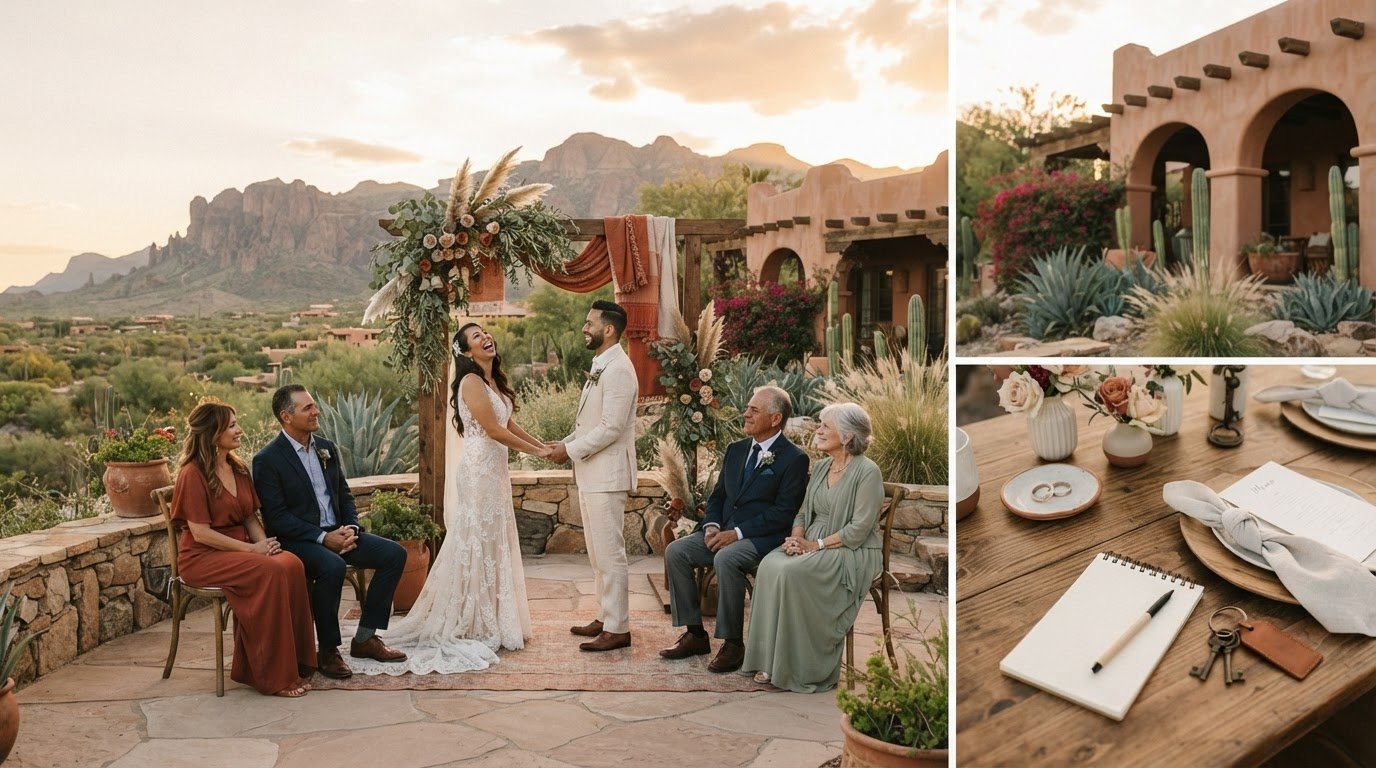

What if the wedding package that sounds simplest leaves you coordinating the most? Small wedding packages all inclusive can make an intimate celebration feel straightforward, but the label alone won’t tell you which services are covered, what costs extra, or whether you’ll need to bring in your own vendors.
It’s natural to want a personal gathering without spending months managing suppliers. Compare each offer detail by detail, so “all-inclusive” means something specific for your celebration, not just a polished name. This guide covers what to ask, how to compare guest limits and inclusions, and how to identify exclusions or upgrade costs before requesting a proposal. You’ll also learn to consider the practical guest experience, including how venue and lodging arrangements fit together. Solana Spanish Villas offers event hosting and guest accommodations in one setting. That combination may simplify arrangements, but you’ll still want to confirm exactly what’s provided. Clear answers leave more room to enjoy the day.
Key Takeaways
- Read “all-inclusive” as a specific list of promised services, then check how guest limits, access hours, and vendor responsibilities shape the offer.
- Compare small wedding packages all inclusive using the same categories, such as venue use, food, rentals, coordination, and lodging.
- Choose between a fuller-service bundle and a venue-led option by weighing the guest experience, your priorities, and how involved you want to be in planning.
- Before booking, request a current proposal and verify capacity, exclusions, schedule, setup and cleanup details, and cancellation terms.
- Consider whether a venue with lodging could make guest arrangements easier. Solana Spanish Villas combines event hosting and accommodations, but confirm current inclusions and arrangements directly.
What should small wedding packages all inclusive actually include?
“All-inclusive” should describe a specific, written bundle, not a promise that every wedding expense is covered. The word wedding can encompass many elements, but a venue’s package may cover only selected parts of the celebration. For small wedding packages all inclusive, value depends on what is provided, for how many guests, and for how long.
Guest count affects more than seating. A proposal should state the maximum included attendance and explain whether food, rentals, or staffing change with the number of guests. It should also specify which spaces you can use, when access begins and ends, and who handles setup, transitions, and cleanup. A shorter list of services that clearly fits your plans may be more useful than a long list with unclear limits.
Which services should an intimate wedding package spell out?
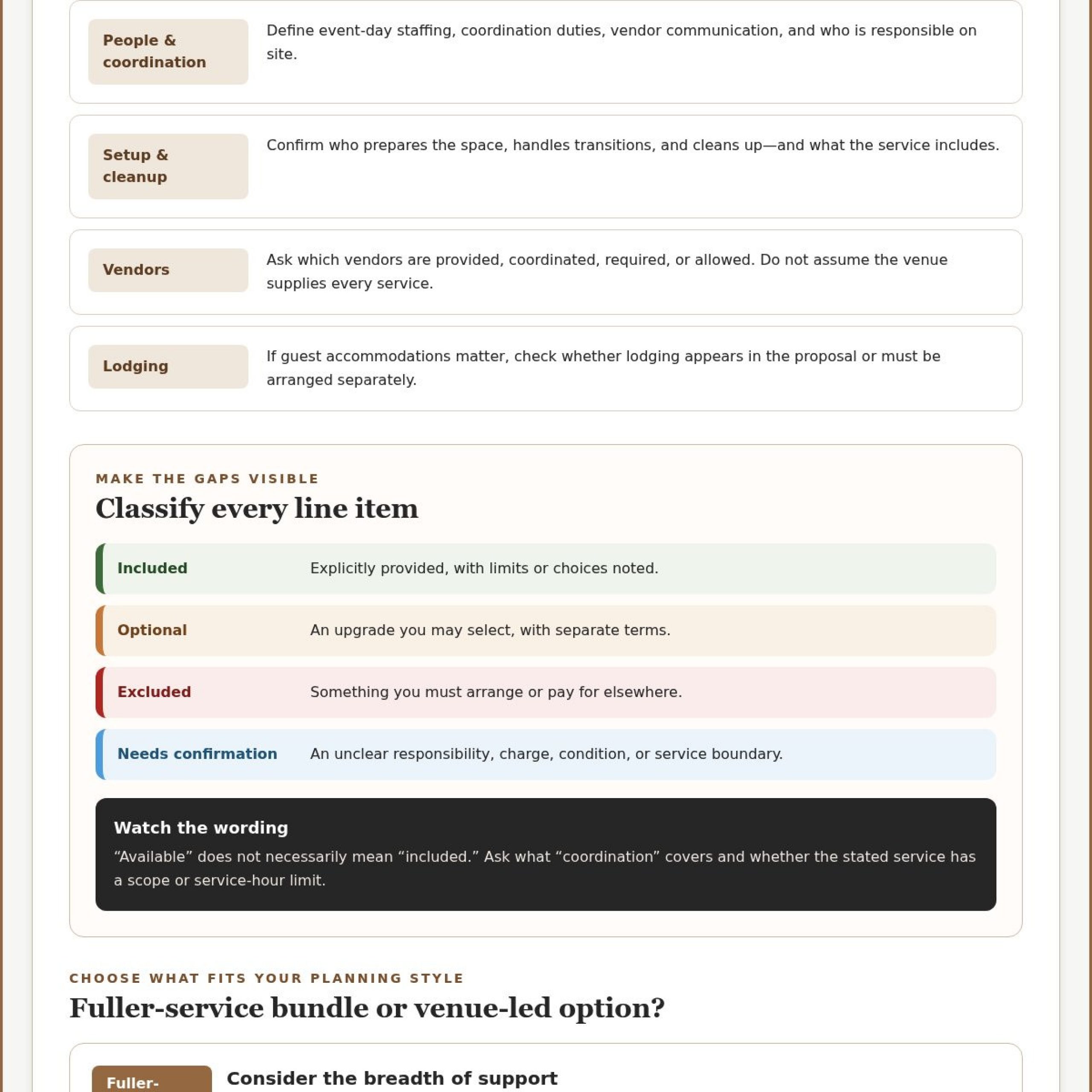
Ask the venue to identify each service as included, optional, upgraded, or supplied by someone else. The proposal should also say who is responsible for each part of the day, from preparing the space to coordinating vendors on site.
- Spaces and schedule: Ceremony and reception locations, access times, and event hours.
- People and coordination: Coordination duties, event-day staffing, and vendor responsibilities.
- Guest arrangements: Food and beverages, along with guest-count limits or service conditions.
- Setup and details: Tables, chairs, linens, décor, setup, and cleanup, with any limitations described.
For example, “coordination included” needs clarification. Does it cover the event-day schedule, vendor communication, or something else? Ask for the specific duties rather than assuming the service includes every planning task.
What does all-inclusive not automatically mean?
The label alone doesn’t confirm that taxes, gratuities, lodging, or vendor fees are included. It also doesn’t mean the venue supplies every wedding vendor. A property may host an event while asking couples to arrange certain services independently, so confirm which vendors are provided, coordinated, required, or allowed.
Before comparing proposals, request a written breakdown that separates the base bundle from optional upgrades and expenses paid separately. Confirm service hours, guest limits, and what happens if your event runs beyond the stated schedule. If lodging matters, ask whether it appears in the proposal or needs to be arranged separately.
A useful definition: An all-inclusive wedding package is a written bundle of named services for a stated guest count and schedule. Optional upgrades and separately billed expenses are outside that bundle unless the proposal says otherwise.
How to compare all-inclusive small wedding packages fairly
Put each proposal into the same framework before weighing its total or atmosphere. A package with many line items may still leave you arranging essential services, while a simpler offer could cover the details that matter most to your celebration. Compare written deliverables and exclusions before comparing package totals.
Use the same categories for every venue, and note whether each item is included, optional, excluded, or still needs confirmation. This makes gaps visible without treating every listed service as equal.
How can couples compare inclusions and exclusions side by side?
Build a comparison sheet with rows for guest limit, venue access, food and beverages, rentals, coordination, staffing, setup, cleanup, and lodging. For each item, record its conditions and who books, pays, and manages it. A rental may be included only up to a stated selection. Coordination may have a specific scope or service-hour limit. Ask venues to clarify anything described as “available” rather than “included.”
- Included: What the proposal explicitly provides, including any limits or choices.
- Optional: Upgrades you can select, with their separate terms.
- Excluded: Items you must arrange or pay for elsewhere.
- Needs confirmation: Unclear responsibilities, additional charges, or service boundaries.
Check that setup, cleanup, staffing, and event-day coordination are defined, not simply mentioned. For a closer look at contract details, consult The Knot’s lawyer-backed guide to wedding contracts, then compare each venue’s written terms with your notes.
How do guest count and lodging change package value?
Compare the minimum and maximum guest counts, any per-guest terms, and what changes if attendance shifts. Confirm whether the venue space, food service, rentals, or staffing have capacity-related conditions. Two proposals are easiest to compare when they’re based on a similar guest count and level of service.
Give lodging its own row: is it part of the package, booked separately at the venue, or arranged elsewhere? A property combining event hosting and accommodations may simplify guest arrangements, but confirm capacity, booking details, and what’s actually included. For a venue with lodging, explore guest accommodation details as one part of your planning, then verify how lodging relates to any event proposal.
Which small wedding package fits your priorities and guest list?
Start with the celebration you want, not the longest list of package features. Consider the guest experience, which parts of the budget matter most, how involved you want to be in planning, and the atmosphere you hope to create. Use those priorities to decide whether a bundled offer or a venue-led arrangement is the better fit.
A fuller-service bundle may reduce the number of separate decisions and offer a more coordinated planning path, but your choices may be limited by the package’s vendors or preset options. A venue-led approach can leave more room to choose vendors yourself, while asking you to take on more coordination. For another perspective on these trade-offs, see this overview of the pros and cons of all-inclusive packages.
When is a bundled package the better fit?
Consider a bundle if you’d rather make fewer vendor decisions and prefer clearly defined responsibilities. Before committing, ask who selects the vendors, what choices you can make, and which details can be customized. A written scope can make planning more manageable by clarifying what’s handled and what remains yours to arrange. Convenience depends on the specifics, not the package label.
When might a venue-and-lodging approach work better?
A venue with accommodations may suit couples who want guests to share more of the experience and value flexibility in vendor selection. On-site lodging can simplify group logistics if availability, capacity, and booking arrangements align with your plans. Solana Spanish Villas offers event hosting alongside guest accommodations, but confirm current availability and which services, if any, are included in an event proposal. For more venue-planning context, read the small wedding venue guide.
Use this simple matrix to identify which structure deserves a closer look:
- Fewer decisions, defined responsibilities: Explore a bundled package and ask about vendor choice and customization.
- More say in vendor selection: Consider a venue-led arrangement and assess how much planning and coordination you’ll manage.
- A shared stay for guests: Look at venues with lodging and verify availability and booking terms separately.
- A particular setting or mood: Prioritize the venue experience, then check whether the service structure supports it.
The best small wedding packages all inclusive are the ones whose format suits both your guest list and your preferred level of involvement. If accommodations are part of your search, you can explore guest accommodation options and confirm how they may fit with event plans.
What to verify before booking a small all-inclusive wedding package
A polished proposal is useful only if it reflects current availability and spells out who is responsible for each part of the event. Before signing, check that the details match your guest list, schedule, and expectations, then keep the written answers with your agreement. This matters for small wedding packages all inclusive, where a vague service description can leave important planning tasks unclear.
Which questions should you ask before signing?
Use this checklist to review the proposal and agreement. Ask the venue to clarify anything that’s missing or could change your plans.
- Request a current proposal: Confirm the event date is available and ask for an itemized description of inclusions, exclusions, optional upgrades, and service limits.
- Verify capacity: Check the maximum event attendance and any conditions that affect the space, seating, food, or rentals.
- Inspect responsibilities: Ask which vendor arrangements the venue manages and which you handle. Confirm payment responsibilities and whether vendors must meet specific insurance requirements.
- Confirm the schedule: Get event hours and access times in writing, including when setup can begin and when cleanup must be complete. Ask how schedule changes or overtime are handled.
- Review the terms: Understand payment milestones, cancellation provisions, and what happens if plans or attendance change. Don’t rely on verbal assurances for important details.
How can you confirm the venue works for your guests?
Walk through the day as a guest would experience it. Ask how guests move between ceremony, reception, and other event spaces, and whether access, seating, and facilities suit the people you’re inviting. If the event depends on an outdoor setting, ask what alternatives are available if weather affects the plan.
Lodging needs its own confirmation. Find out whether accommodations are included in the event proposal, booked separately at the venue, or arranged elsewhere. Verify availability and booking details rather than assuming rooms are reserved as part of a wedding package. A property offering both event hosting and guest accommodations may make group logistics easier, but confirm the arrangement and capacity directly.
For a venue with on-site stays, you can review available guest accommodations while considering lodging separately from event inclusions. Solana Spanish Villas offers accommodations alongside event hosting. Ask the property about current wedding arrangements, capacity, and which services may be included. Clear answers help you choose a setting that feels welcoming and a plan your guests can follow with ease.
Choose a wedding venue that supports the celebration you want
The right venue isn’t necessarily the one with the longest list of inclusions. Look for a clear fit: the written terms should match your priorities, the setting should suit the way you want the day to feel, and the arrangements should work for your guests. Even small wedding packages all inclusive deserve a careful review of what’s bundled and what remains separate.
A venue that also offers accommodations can bring guests together beyond the ceremony and reception. Staying in one place may simplify some group logistics and give the celebration a more connected feel. But lodging is not automatically part of an event arrangement. Confirm availability, booking terms, and whether accommodations are included in the event proposal or handled separately.
What makes a venue with accommodations worth considering?
Solana Spanish Villas is a historic guest ranch dating back to the 1920s, renovated and reopened as a boutique resort. It offers guest accommodations alongside event hosting, so couples can consider the setting and the stay together. These offerings do not confirm a particular wedding bundle. Ask which event services are currently offered, what may be included, and which details require separate arrangements.
For more ideas about how lodging and event spaces can work together, explore this event venues with lodging guide.
How can couples take the next step with confidence?
Before contacting a venue, gather a guest-count estimate, preferred dates, and a short list of priorities. Note which vendors you hope to choose yourself and what kind of support you’d like from the venue. That preparation makes it easier to ask focused questions and compare answers.
Request written details for event hosting and lodging separately. Confirm event capacity, accommodation availability, vendor policies, service inclusions, exclusions, and booking terms rather than assuming they’re part of one arrangement. A thoughtful venue conversation should leave you with a clearer picture of both the celebration and the practical guest experience.
If a historic setting with accommodations is on your list, explore guest accommodation options and ask which event and lodging arrangements are currently offered. Clear details at the outset help you choose a place that feels welcoming and a plan that suits the people you’re gathering.
Choose a setting that makes the celebration feel like yours
The best small wedding packages all inclusive are not defined by the length of their inclusion list, but by how clearly the offer fits your plans. Compare written details, check what remains separate, and choose a level of vendor involvement that feels manageable. A thoughtful venue choice also considers the guest experience, including how event arrangements and overnight stays might fit together.
Solana Spanish Villas offers event hosting and short-term accommodations at a historic guest ranch dating back to the 1920s, renovated and reopened as a boutique resort. Its setting and lodging may be worth exploring, but ask directly about current wedding arrangements, availability, capacity, and which services are included before making plans.
Explore the property and ask about current wedding arrangements. Clear answers can help you move forward with confidence and focus on sharing a meaningful day with your guests.
Frequently Asked Questions
What is included in an all-inclusive small wedding package?
An all-inclusive small wedding package includes the services listed in its written proposal, which may cover the event space, food, rentals, décor, or coordination. The exact bundle varies by venue. For small wedding packages all inclusive, check the guest limit, access hours, service responsibilities, and any selection limits. Ask the venue to identify what’s included, what’s an optional upgrade, and what you’ll need to arrange or pay for separately.
Are venue fees included in all-inclusive wedding packages?
Not necessarily. Some proposals include use of the venue, while others may list the space or particular event areas separately. Don’t assume the package label settles the question. Ask which spaces are available, when you can access them, and whether venue use has conditions or additional charges. Request a written breakdown of the proposal total and clarify any taxes, service charges, or other expenses that aren’t clearly identified.
How do I compare small wedding packages fairly?
Compare proposals using the same categories and a similar guest count. Make a table for venue use, food and beverages, rentals, coordination, staffing, lodging, schedule, and vendor responsibilities. Mark each item as included, optional, excluded, or still needing confirmation. Then compare the scope and limits of each service, not just the number of listed features. A written comparison can reveal whether a seemingly comprehensive offer leaves key tasks to you.
Can a wedding venue with lodging simplify guest arrangements?
Yes, a venue that also offers accommodations may make it easier to plan where guests stay in relation to the celebration. It can also support a more connected gathering, particularly when guests are traveling. Confirm accommodation availability, capacity, booking terms, and whether lodging is included in the event proposal or arranged separately. Solana Spanish Villas offers short-term accommodations alongside event hosting, but confirm specific wedding inclusions and lodging arrangements directly.
What should I ask before booking an intimate wedding package?
Request a current written proposal and ask the venue to spell out inclusions, exclusions, upgrades, capacity, and service hours. Confirm access times, setup and cleanup responsibilities, vendor policies, payment milestones, cancellation terms, and how schedule changes are handled. Ask who manages vendor arrangements and whom you should contact with event-day questions. If lodging matters, verify its availability and booking terms separately rather than assuming it’s part of the wedding package.
Are catering, photography, flowers, and rentals always included?
No. These services may be included, offered as optional upgrades, excluded, or arranged through outside vendors, depending on the venue and proposal. Even when a category appears in a package description, confirm the exact service, choices, limits, and responsible provider. Ask who books and pays each vendor, whether you can select your own, and whether any outside-vendor conditions apply. Get the answers in writing before comparing the package with other offers.
How do I know whether an all-inclusive wedding package fits my guest count?
Compare your estimated attendance with the package’s stated minimum and maximum, then ask how guest numbers affect food, rentals, event space, or other services. Clarify any per-guest terms and what happens if your count changes. Also check that the schedule and venue access suit your plans. A package is a better fit when its written capacity and service conditions match your gathering, not simply because it’s described as intimate.
0 Comment