
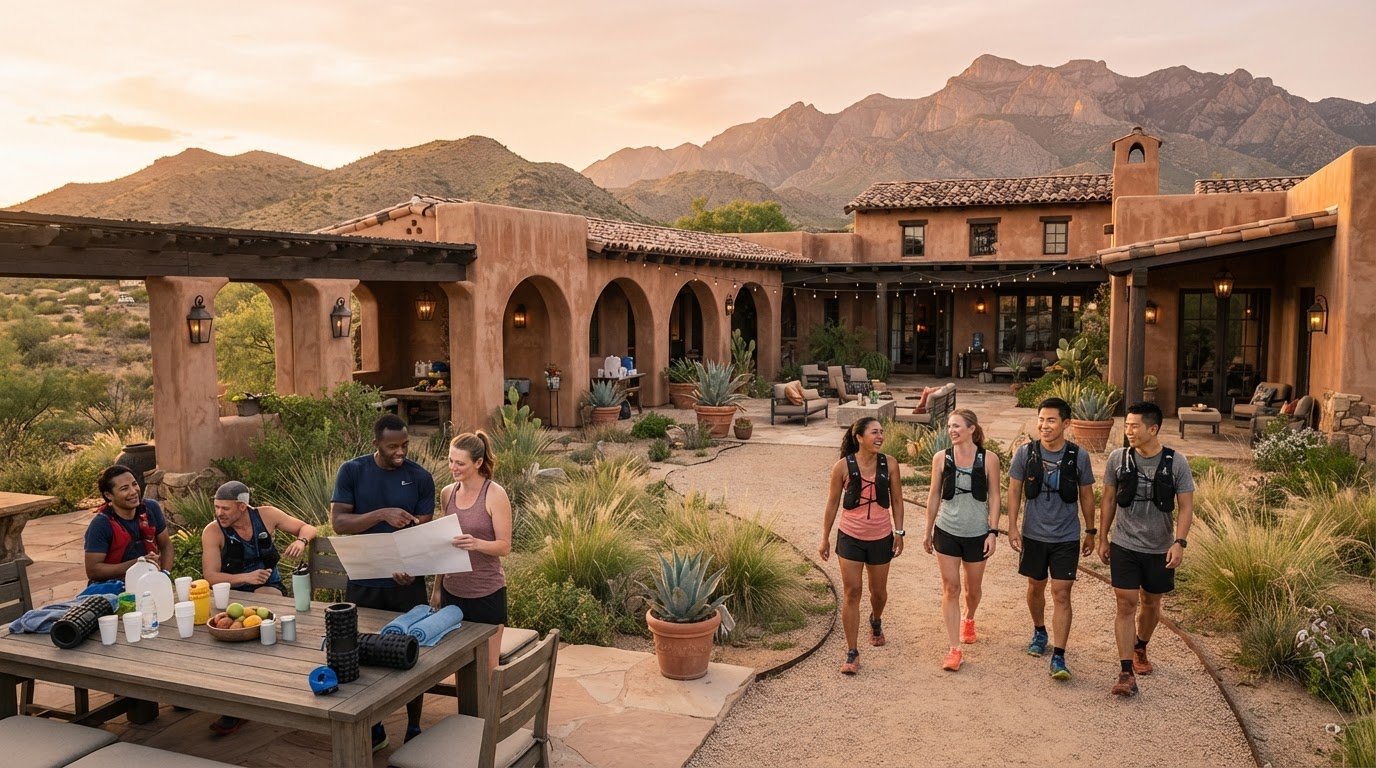

A beautiful setting can inspire a running retreat, but it can’t make an unsuitable itinerary work. The right running retreat venue should support the runs you plan, the group’s stay, and the practical rhythm of the day, from early starts to quieter time for recovery.
Picture runners returning from a route, sharing a meal, then settling into a peaceful evening. To make that plan work, look beyond scenery. Route access, lodging arrangements, schedules, and the needs of runners with different abilities all deserve attention before you book.
This guide explains how to compare venues, what to ask before making a commitment, and how to balance training with rest and group connection. You’ll learn what to verify about routes and running conditions, how to assess lodging and gathering arrangements, and how to plan for participants with different needs. A historic guest ranch may offer a distinctive base for lodging and group gatherings, but you’ll still need to confirm that its arrangements fit your retreat.
Key Takeaways
- Assess a running retreat venue by how well it supports the whole retreat, not by scenery alone.
- Check route distance, surface, elevation, crossings, traffic exposure, and seasonal changes before settling on a running plan.
- Compare lodging capacity, room arrangements, shared space, access, and flexibility, then confirm details directly with the venue.
- Define the retreat format and daily rhythm first, making room for runs, meals, group time, downtime, and varied recovery needs.
- Consider whether a historic guest ranch with lodging and event hosting could suit your group, while verifying the arrangements and running-route information.
What Makes a Running Retreat Venue Work for the Whole Group?
A running retreat venue is a place that can support group lodging, your planned running activities, and the time participants spend together. It might be a dedicated retreat property or a lodging-and-gathering base. Either way, a scenic view is only a starting point. It doesn’t tell you whether the group can sleep comfortably, meet together, or reach appropriate running routes.
Begin by separating essentials from extras. Essentials are the conditions your retreat needs to function: suitable accommodation, appropriate shared space, practical access, and enough schedule flexibility for your planned format. Optional comforts can make a stay more enjoyable, but they shouldn’t distract from requirements that affect safety, inclusion, or the itinerary.
What should a running retreat venue support?
Consider lodging, gathering space, access, and scheduling together. A peaceful property may still be a poor fit if there’s nowhere for the group to meet or if the itinerary depends on arrangements that haven’t been confirmed. Match each requirement to your retreat format, whether you’re planning coached sessions, informal group runs, or a restorative weekend.
Assess running suitability separately. Check routes for distance, surface, and access rather than assuming attractive surroundings mean they’ll work for your group. The range of settings associated with long-distance running, including road, track, and cross-country running, shows why route type matters. Ask who can confirm route access and whether conditions may change by season.
Who is the retreat for, and what does that change?
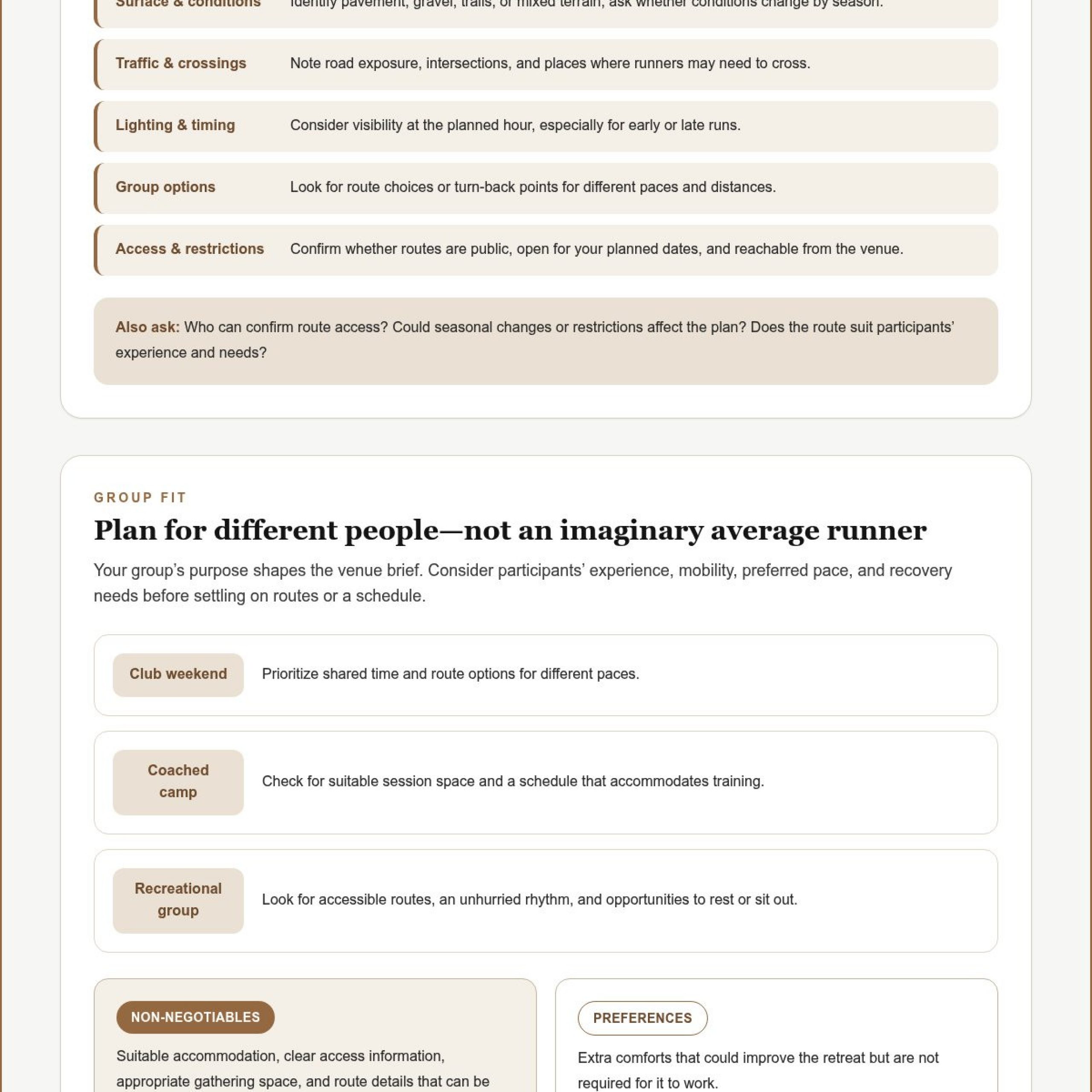
Your group’s purpose shapes the venue brief. A club weekend may prioritize shared time and route options for different paces. A coached camp may need suitable space for sessions and a schedule that accommodates training. A recreational group may value accessible routes, an unhurried rhythm, and opportunities to rest or sit out. Treat these as planning needs, not amenities to assume the venue provides.
Before asking for details, consider participants’ experience, mobility, and preferred pace. A single route or tightly timed schedule may not work for everyone. List your non-negotiables first, then separate them from preferences:
- Essential: Lodging arrangements that fit the group, plus clear information about access and gathering space.
- Running-related: Suitable route options, surfaces, distances, and safety details to verify.
- Group needs: Flexibility for different abilities, paces, and recovery time.
- Optional: Extra comforts that would improve the retreat but aren’t required for it to work.
Use this shortlist to compare practical fit rather than photographs alone. It also gives you a focused set of questions to ask before committing.
How to Evaluate Running Routes, Safety, and Venue Access
A venue can be near appealing routes without offering confirmed or safe access to them. Treat route planning as a separate part of your research. Verify the route, how participants will reach it, and whether it suits the group’s abilities and schedule. Don’t rely on photographs or a general description of the surroundings.
What should organizers verify about running routes?
Review each proposed route independently using maps and relevant local sources. Ask who can confirm access and whether routes are public, open for your planned dates, or subject to seasonal changes and restrictions. Participants should also consider their own experience and needs. The Road Runners Club of America’s running safety tips can help inform planning around awareness and group running.
Use this checklist before adding a route to the itinerary:
- Distance and elevation: Check the full route length and how much climbing or descending it involves.
- Surface and conditions: Identify pavement, gravel, trails, or mixed terrain, and ask whether conditions change by season.
- Traffic and crossings: Note road exposure, intersections, and places where runners may need to cross.
- Lighting and timing: Consider visibility at the planned hour, especially for early or late runs.
- Group options: Look for route choices or turn-back points that can accommodate different paces and distances.
- Access: Confirm whether the route is public, whether restrictions apply, and how the group will reach its starting point.
How can a venue support a safe, practical schedule?
Compare your route plan with arrival and departure times, along with the venue’s confirmed arrangements. Ask whether planned runs fit the group’s access to the property and whether storage or changing arrangements are available. Treat each as a question to verify, not a feature to assume.
Build flexibility into the itinerary. Weather changes, route closures, a slower group pace, or a need for more recovery time can alter the morning plan. Leave room to choose an alternate route or adjust a session without squeezing meals and group activities. If a route appears close to the property, confirm the actual starting point, access path, and any road crossings. Proximity alone doesn’t establish a safe connection.
Keep a record of who confirmed each route detail and when. Check conditions again closer to the retreat, because access and surfaces may change. This helps you make a practical plan and keep participants informed.
Compare Running Retreat Venues by Lodging, Group Fit, and Shared Space
A comfortable room matters, but a successful group stay depends on how all the arrangements work together. Compare each running retreat venue against your group’s needs: where participants will sleep, where they can gather, and how the property fits the retreat schedule. Confirm capacity and amenities directly with the venue. Photographs can’t establish occupancy limits, accessibility, or which spaces are available to your group.
How should you assess lodging and group comfort?
Ask for current room configurations and occupancy details, then consider whether they suit your participant mix. Shared rooms may work for some groups, while others may need more privacy or quiet. Ask about accessibility features relevant to your participants and whether the group can meet without disrupting rest. Evaluate the overall arrangement, not just the appearance of individual rooms.
| Comparison area | What to confirm |
|---|---|
| Capacity | Current overnight occupancy and whether it fits your group’s needs. |
| Room arrangements | Room types, occupancy, privacy, and any accessibility details participants require. |
| Shared space | Which gathering or event spaces are available, and any conditions on their use. |
| Access | Practical access for participants and how it fits the retreat’s planned activities. |
| Flexibility | Whether arrangements can accommodate your schedule and the group’s different needs. |
Which shared spaces and services should you ask about?
Ask which gathering spaces are available, when the group can use them, and whether you need to arrange access in advance. Check food arrangements, equipment storage, and recovery-related facilities individually. Don’t assume these are included because they appear in a photograph or because another venue offers them. Compare confirmed details with your retreat plan.
Then consider how the arrangements work for the group as a whole. A venue may have appealing rooms but no suitable place for participants to meet, or shared space that isn’t available at the times you need it. Track which details are confirmed, which need clarification, and which are essential to your decision.
If a hosted stay is part of your search, you can review lodging details as one point of comparison. Confirm room arrangements, group fit, and gathering needs directly with the property.
Plan the Venue Around Your Running Retreat Schedule and Participant Needs
Decide on the retreat’s rhythm before choosing a setting. A running retreat venue should fit the activities you plan while leaving time for meals, recovery, and the unhurried moments that help a group connect. Use this sequence to turn your ideas into practical questions for venues.
- Define the retreat format. Decide whether the focus is coached training, relaxed group runs, social connection, or a mix. Note participants’ experience, range of paces, mobility needs, and any planned group sessions.
- Map a typical day. Sketch arrival, runs, meals, group activities, quiet time, and departure. Include realistic transitions, such as the time needed to return from a run and gather before the next activity.
- Verify venue fit. Ask whether the property’s confirmed arrangements can support your schedule and group gatherings. Clarify limits on space, timing, access, or services instead of assuming they’re included.
How do you match a venue to the retreat itinerary?
Share a draft schedule when asking about venue arrangements. An early run followed by breakfast and a coaching session requires different timing and gathering arrangements from a leisurely morning run followed by an open afternoon. Ask which spaces are available for your planned sessions and whether the venue can accommodate your schedule. Keep a backup plan for weather, route changes, or a run that takes longer than expected.
For a retreat planned in warm conditions, consider how the expected weather affects your schedule and route choices. Route access and each property’s arrangements still need direct confirmation.
How can the plan include recovery and different participant needs?
A shared retreat doesn’t require every runner to follow the same pace or schedule. Consider offering different route options or start times, with a clear plan for where participants regroup. Build rest and quiet periods into the day, and make some group activities optional. This gives runners with different experience levels and recovery needs more flexibility without making the itinerary feel fragmented.
If you’re considering restorative programming, think through how it fits the overall schedule. Match the program to the venue’s confirmed spaces and services. Don’t assume recovery facilities, meals, or equipment are available.
Solana Spanish Villas is a historic guest ranch offering lodging and event hosting, which may make it worth considering as a gathering base. Confirm that its current arrangements fit your group and planned schedule. You can review available lodging details as part of your assessment.
Is Solana Spanish Villas a Fit for Your Running Retreat?
Solana Spanish Villas may be worth considering if you’re looking for a retreat base that brings lodging and event hosting together. It’s an independently owned and operated historic guest ranch dating to the 1920s, recently renovated and reopened as a boutique resort. Its scenic desert setting and hosted-stay format may suit a group retreat, but they don’t establish that it offers running-specific facilities, routes, or a dedicated running package.
What does the property offer retreat organizers?
Having lodging and event hosting at one property may simplify coordination, provided the current accommodation and gathering arrangements suit your group. Consider Solana Spanish Villas as a possible base, not a pre-set solution. Your route plan, schedule, and participant needs still need to align with what the property can confirm.
Before deciding, ask about the details that determine whether the stay will work in practice:
- Capacity and rooms: Confirm current group accommodation capacity, room configurations, and any relevant accessibility details.
- Gathering spaces: Ask which event or shared spaces are available and whether they suit your planned sessions and group size.
- Running arrangements: Check whether suitable routes or route information can be provided and how access fits your planned runs.
- Schedule and conditions: Discuss the retreat itinerary and confirm applicable booking conditions directly with the property.
What should you confirm before taking the next step?
Share a clear outline of your group’s needs, including the retreat format, participant mix, proposed schedule, and route plan. Ask the property to confirm its current arrangements rather than relying on general descriptions or photographs. In particular, establish whether the lodging and spaces can accommodate your group, and whether the running plan works independently of the accommodation.
These checks will help you decide whether this historic guest ranch is a suitable running retreat venue for your group. If you’re exploring a hosted stay, review current lodging details, then contact the property to discuss your requirements and confirm the arrangements that matter to your retreat.
Choose a Venue That Makes the Retreat Flow
Build the retreat plan around the group, then match the setting to its needs. Before booking, confirm route access and conditions, check that lodging and shared spaces suit your participants, and allow for different paces and recovery needs. A good fit depends on verified arrangements, not scenery alone.
Solana Spanish Villas may be worth exploring as a lodging-and-gathering base. The independently owned historic guest ranch dates to the 1920s and has been renovated. It offers lodging and event hosting in a scenic desert setting. As with any potential running retreat venue, confirm current group capacity, room arrangements, available event spaces, and whether your proposed running schedule and routes are practical. This will help you assess the property without assuming it offers running-specific services.
Explore Solana Spanish Villas and share your group’s needs to discuss whether the property’s current arrangements could suit your plans. With clear questions and a balanced itinerary, you can shape a retreat that feels welcoming, considered, and enjoyable for the whole group.
Frequently Asked Questions
What makes a good running retreat venue?
A good running retreat venue suits the group’s lodging needs and planned schedule, while making it practical to coordinate runs and time together. Check route access, surfaces, safety considerations, accommodation capacity, room arrangements, and shared spaces directly with the property. Scenic surroundings can make a stay memorable, but they don’t confirm that routes are suitable or logistics will work. The best fit depends on your retreat format and participants.
How do I choose a venue for a running retreat?
Start by defining your group size, participant mix, retreat schedule, and essential lodging needs. Compare venues using confirmed details about room arrangements, gathering spaces, route access, and schedule flexibility. Ask who can verify route conditions and whether access restrictions apply. Before booking, test the venue against your actual itinerary, from arrival through departure. Photographs and general descriptions can help you imagine the retreat, but they can’t replace clear answers to practical questions.
Can a running retreat venue provide suitable routes?
Some venues may be near running routes, but proximity alone doesn’t confirm access, safety, or suitability. Ask what route information the property can provide, then independently check distance, surface, elevation, traffic exposure, and restrictions. Consider whether there are options for different abilities and paces. Don’t assume a property maintains trails or offers guided runs unless those services are explicitly confirmed. Participants should also assess routes against their own experience and needs.
What should a running retreat venue include?
The essentials depend on your group and retreat plan. Confirm that lodging, room arrangements, gathering space, and the venue’s schedule can support your itinerary. Ask separately about route access and needs such as equipment storage, meals, or changing arrangements. Treat each amenity as unconfirmed until the property verifies it. This helps you distinguish necessities from optional comforts and avoid planning around features that may not be available.
How many people can a running retreat venue accommodate?
Capacity varies by property and may depend on room configurations, event-space limits, and booking arrangements. Ask for the current maximum overnight occupancy and clarify exactly what it includes. Confirm room availability for your dates, whether shared or private arrangements are possible, and whether accessibility needs can be met. Don’t assume an event’s stated capacity is the same as overnight capacity. Verify each detail directly before inviting participants or finalizing plans.
Is a guest ranch suitable for a running retreat?
A guest ranch may suit a running retreat if its confirmed lodging, shared spaces, and scheduling arrangements match your group’s needs. The property type alone doesn’t establish route access, running facilities, or group capacity. Ask what arrangements are available, then assess proposed routes independently. Compare confirmed details with other venue types and your retreat format. A historic setting can add character to a stay, but practical fit should guide the decision.
0 Comment