

With 67% of workers currently experiencing the heavy fog of burnout, the standard corporate wellness email is no longer enough to save a sinking team. You’ve likely felt the frustration of watching your best people lose their creative spark while turnover costs continue to climb. It’s clear that traditional policies often feel like lip service, failing to reach the root of the exhaustion. Reducing employee burnout requires a radical shift in environment, moving away from the digital glow and into a space designed for genuine restoration.
We believe that your team deserves a sanctuary where they can truly exhale and rediscover their collective purpose. This article explores how to move beyond basic policy to achieve lasting renewal through the science of environmental restoration and intentional retreats. We’ll preview a sustainable framework for long-term mental health that blends the quiet charm of a peaceful escape with the strategic needs of a modern workforce, ensuring your team returns with a renewed sense of engagement.
Key Takeaways
- Identify why 2026 burnout has evolved into “functional cynicism” and why surface-level wellness initiatives no longer suffice for modern teams.
- Explore the science of Attention Restoration Theory and how immersive, natural environments provide the biological reset necessary for creative recovery.
- Differentiate between a standard working offsite and a transformative retreat, focusing on how exclusive-use venues aid in reducing employee burnout.
- Gain a step-by-step framework for designing retreat itineraries that prioritize a sophisticated balance of professional development and restorative downtime.
- Establish a sustainable post-retreat culture that prevents productivity crashes by weaving restorative principles into the everyday rhythm of your organization.
Defining Employee Burnout: Why Traditional Fixes Fail in 2026
By mid-2026, we’ve moved past the simple idea that burnout is just a need for a long weekend. It has evolved into a state of “functional cynicism,” where employees perform their duties with robotic precision but zero emotional investment. This isn’t laziness. It’s a survival mechanism. When we examine the rise of Occupational burnout, we’re looking at a systemic failure that costs U.S. employers an estimated $322 billion annually due to lost productivity and turnover. The “quiet quitting” trend that dominated past years has matured into a deep-seated environmental stress response that policy changes alone cannot fix.
The traditional “Pizza Party” approach to mental health has become a symbol of corporate disconnect. Surface-level perks often feel like lip service to a team that’s drowning in digital noise and mounting expectations. These distractions don’t reach the root of the problem. Reducing employee burnout requires more than a temporary sugar high or a generic “Wellness Wednesday” email. It demands a fundamental shift in how we view the workspace as a living environment rather than just a production floor. Without a physical and psychological reset, the high cost of absenteeism will continue to erode your company’s foundation.
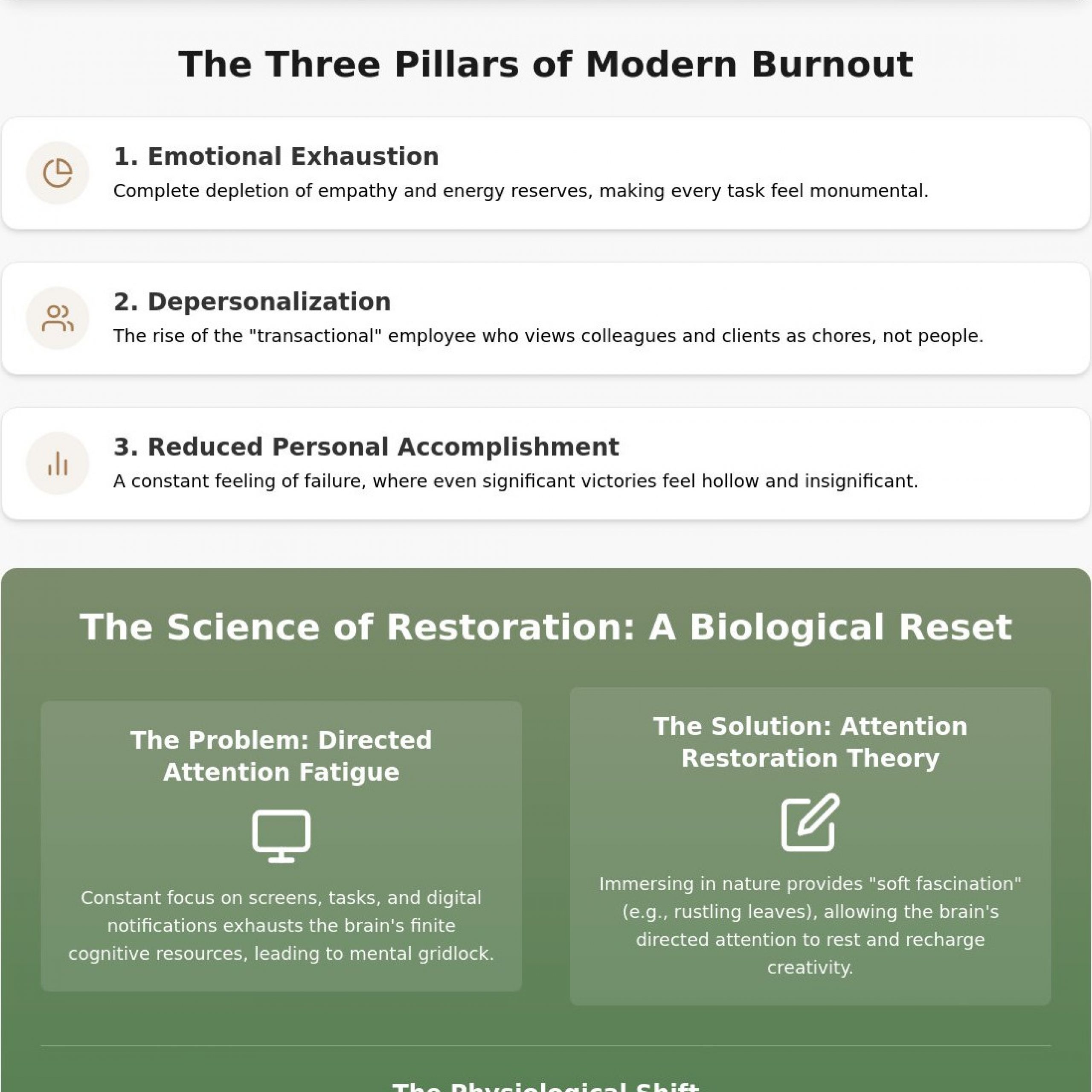
The Three Pillars of Modern Burnout
Modern burnout rests on three heavy pillars. First is emotional exhaustion, where a person’s empathy and energy reserves are completely depleted. Second is depersonalization, leading to the rise of the “transactional” employee who views every interaction as a chore. Finally, there’s a sense of reduced personal accomplishment. Even your top performers may feel they’re failing because the constant pressure makes every hard-won victory feel insignificant.
Why Policy Changes Aren’t Enough
The “always-on” digital tether means that even remote work hasn’t solved the crisis. In 2026, 72% of remote and hybrid employees report burnout, a rate actually higher than their fully in-office counterparts. The psychological weight of the home office, with its blurred boundaries and constant pings, creates triggers that a new HR handbook won’t erase. Burnout is a physiological response to sustained environmental overstimulation. Shifting a corporate policy won’t reset a nervous system that’s been on high alert for months. True recovery requires a physical departure from the triggers of the daily grind and a return to environments that foster genuine tranquility.
The Science of Restoration: Why Environment Dictates Recovery
The human brain wasn’t designed for the relentless flicker of fluorescent lights and the persistent ping of digital notifications. We’re biologically tethered to the natural world, a concept known as biophilia. This innate connection suggests that our cognitive function and emotional stability are deeply influenced by our surroundings. When we ignore this need, we invite the “functional cynicism” that defines modern exhaustion. Following OSHA guidance on workplace stress, it’s clear that addressing environmental factors is a critical component of reducing employee burnout and maintaining a resilient workforce.
Attention Restoration Theory (ART) explains why a simple walk through a garden is more restorative than a nap in a breakroom. Modern work requires “directed attention,” a finite cognitive resource that we exhaust through constant focus on screens and complex tasks. Nature provides “soft fascination,” or low-level stimuli like the rustle of leaves or the shifting of shadows. This allows the brain’s focus mechanisms to rest and recharge. In wide, open spaces, the mind is free to wander. This freedom fosters the creative problem solving often impossible within the confines of a traditional office.
True recovery also requires a shift in our physiology. Most high-pressure environments keep employees in a state of sympathetic nervous system activation, commonly known as the fight-or-flight response. This chronic stress suppresses the immune system and clouds judgment. To heal, the body must move into the parasympathetic state, which is the rest-and-digest mode. A restorative retreat isn’t just a break from the desk. It’s a biological intervention that resets the nervous system through intentional design.
The philosophy of resetting the nervous system through environment is at the heart of regenerative projects like The ARK, which demonstrate how intentional design can foster deep restoration and ecological harmony.
- Biophilic Connection: Restoring the primal link to the natural world to stabilize mood and outlook.
- Soft Fascination: Engaging with natural movement to replenish the brain’s finite cognitive energy.
- Parasympathetic Shift: Guiding the body from a state of high alert to a state of restorative calm.
The ROI of Nature and Green Space
The financial argument for natural settings is grounded in measurable data. Research published in Frontiers in Psychology (2019) indicates that spending just 20 minutes in a space that provides a sense of nature can significantly lower cortisol levels. Beyond stress hormones, exposure to natural light helps regulate circadian rhythms, leading to improved sleep quality and higher energy levels. For leadership looking to protect their human capital, choosing a private, scenic setting for team development is a strategic step toward reducing employee burnout and fostering long-term innovation.
Architecture and Atmosphere as Healing Tools
The physical structure of a venue plays a vital role in how quickly a team builds trust. While large, sterile hotels can feel corporate and impersonal, boutique settings with historical character offer a sense of “gracious hosting” that encourages vulnerability. There’s a profound perspective found in heritage-rich architecture that reminds us of endurance and continuity. Imagine the scent of sun-warmed desert air drifting through an open courtyard or the absolute silence of a secluded villa at dusk. These sensory experiences aren’t just luxuries. They’re tools that lower defenses and foster the deep focus required for genuine restoration.
Strategic Retreats vs. Corporate Offsites: Choosing the Right Antidote
Too many organizations mistake a “working vacation” for a restorative intervention. In reality, packing a laptop for a weekend in a generic hotel ballroom often compounds the very stress it aims to alleviate. A strategic retreat is different. It’s a deliberate departure from the transactional nature of the office. By providing a physical change of scenery, you grant your team the psychological “permission to rest” that they can’t find within their own four walls. This distinction is vital when the goal is reducing employee burnout.
Exclusive-use venues offer a level of intimacy that a bustling hotel cannot match. When your team is the only group on-site, the environment becomes a safe “closed container.” This privacy is essential for the sensitive leadership discussions and vulnerable team bonding required to rebuild a fractured culture. Within these secluded walls, strategic disconnection becomes possible. Creating digital-free zones allows leaders to engage with their surroundings and each other without the constant pull of the “always-on” culture. It’s about trading the digital tether for a sense of place and presence.
The Benefits of Venue-Based Lodging
Shared stays foster the informal “watercooler” moments that simply don’t happen during a standard commute. When a team shares a breakfast table in a sun-drenched courtyard or gathers around a fireplace at night, the barriers of hierarchy begin to soften. This immersive experience is why many are looking at event venues with lodging to facilitate deeper connection. While the logic is often applied to celebrations, it’s equally powerful for professional restoration, allowing teams to bond in a setting that feels like a home rather than a hallway.
Evaluating Retreat Venues for Burnout Reduction
When selecting a location, prioritize privacy and natural beauty over proximity to the city. A truly restorative space should feel like a sanctuary, yet remain supported by professional event hosting capabilities. You shouldn’t have to sacrifice modern comfort for seclusion. Knowing how to choose a unique venue involves looking for spaces that offer a “gracious host” atmosphere. These details ensure that every aspect of the stay supports the goal of reducing employee burnout through thoughtful, high-quality hospitality.
How to Design a Restorative Retreat Itinerary
Designing an itinerary with the explicit goal of reducing employee burnout requires a shift from productivity to presence. It isn’t about filling every hour with a workshop or a slide deck. True restoration happens in the spaces between scheduled events. You must first decide if the primary goal is restoration or ideation. If your team is already deep in the “functional cynicism” we discussed earlier, pushing for a five-year plan will only backfire. You can’t innovate from a place of depletion.
Balance is your most valuable tool. For every hour of structured discussion, provide two hours of serendipitous time. This allows for the organic connections that build trust more effectively than any forced icebreaker. Incorporate wellness-focused activities like sunrise yoga or guided nature walks to ground the experience in the physical world. Food should also be an event in itself, curated to nourish the body with local flavors rather than just feeding a crowd in a rush. Finally, facilitate “The Return” by helping employees identify one or two restorative habits they can carry back to their daily desks.
- Step 1: Define the goal. Choose restoration first if the team is exhausted.
- Step 2: Prioritize serendipity. Leave afternoons open for wandering and quiet talk.
- Step 3: Ground the body. Use nature and movement to break the digital spell.
- Step 4: Nourish. Use high-quality, local culinary experiences to show value.
Nature-Based Team Building
Move beyond the tired clichés of trust falls. Shared outdoor experiences, such as a gentle hike through desert trails or a group stargazing session, create low-stakes adventures that build high-stakes trust. These moments allow personalities to shine outside of job titles. If you’re looking for specific inspiration on flow and timing, consider our guide on Designing a Yoga Retreat Itinerary for Total Renewal. It offers a blueprint for reducing employee burnout through intentional scheduling and shared discovery.
The Role of Professional Facilitation
There is a distinct difference between being managed and being hosted. While internal leaders can guide strategic goals, bringing in a wellness expert or a professional facilitator allows everyone, including the leadership, to participate fully. This ensures every team member feels cared for and heard. The most effective retreats strike a delicate balance between structured morning sessions and long, quiet afternoons reserved for sunset reflection. When you’re ready to move from planning to action, consider booking a private villa for your next retreat to ensure your team has the exclusive sanctuary they need to truly reset.
Creating a Sustainable Culture of Renewal
The true measure of a retreat’s success isn’t found in the moments of quiet reflection by a sun-drenched pool, but in the weeks that follow the return to the desk. To avoid the “Post-Retreat Crash,” where productivity spikes and then plummets, leadership must act as stewards of team energy rather than just monitors of output. If the office environment remains a source of relentless overstimulation, the benefits of a sanctuary stay will quickly evaporate. You must weave the lessons of the retreat into the daily fabric of your business. This might mean protecting “deep focus” hours or encouraging the same “soft fascination” we explored earlier by bringing natural elements into the workspace. Integrating these restorative principles into the daily workflow is the only way to ensure reducing employee burnout becomes a permanent reality for your organization.
We view ourselves as your long-term partner in corporate wellness. A single visit to our villas is often a beginning, not an end. By returning to a place of historical reverence and modern comfort, your team builds a tradition of renewal. They learn that the company values their peace as much as their profit. This long-term commitment transforms the workplace from a site of exhaustion into a culture of sustainable achievement. When leadership models these restorative behaviors, it gives the entire team permission to prioritize their mental health without the fear of falling behind.
The Boutique Retreat as a Recruitment Tool
In 2026, the competitive landscape for talent has shifted significantly. High-performers now prioritize “Restorative Benefits” and mental health support over simple salary bumps. Showcasing a commitment to deep focus and recovery through exclusive offsites signals that you value your people as human beings, not just assets. Discovering The Magic of a Guest Ranch is a powerful way to redefine what modern travel and professional development look like for a sophisticated workforce. By offering these unique experiences, you position your brand as a destination for the industry’s best talent.
Planning Your Next Strategic Escape
Planning your next strategic escape doesn’t have to be a logistical burden. When you choose a private villa, you secure a dedicated space where your team can bond without the distractions of a public hotel or the coldness of a standard conference room. Customizing your stay ensures that the itinerary aligns perfectly with your specific goals for restoration and connection. Whether you’re hosting a small leadership circle or a larger department, the right setting makes all the difference. We invite you to explore our private villa rentals for your next restorative retreat and begin building a sustainable culture of renewal today.
Restoring Your Team’s Creative Vitality for 2026 and Beyond
True recovery begins when we acknowledge that the modern office environment is often a primary source of overstimulation. By moving from “functional cynicism” to a state of restorative calm, you protect your most valuable human capital. We’ve explored how the biological need for nature and the privacy of an exclusive setting are essential tools for reducing employee burnout. These elements combine to create a sanctuary where your team can finally breathe and reconnect with their shared purpose. It’s about more than a temporary break; it’s about establishing a sustainable rhythm of work and rest.
Our historic 1920s estate blends heritage-rich architecture with modern luxury amenities, offering a sophisticated backdrop for professional development. As an exclusive-use private guest ranch, we provide the quiet seclusion and professional retreat hosting capabilities necessary for sensitive leadership discussions. It’s time to trade the digital tether for the tranquility of the desert. We invite you to Secure your dates for a transformative corporate retreat at Solana Spanish Villas. We look forward to hosting your journey toward a more resilient and engaged future.
Frequently Asked Questions
What are the early warning signs of employee burnout in a remote team?
Early indicators often include a noticeable withdrawal from non-essential social channels and a decline in “camera-on” participation during meetings. You might observe a shift toward purely transactional communication where the employee’s usual creative spark is replaced by a robotic, “functional cynicism.” When your top performers start missing deadlines or show a sudden lack of empathy toward colleagues, it’s a clear signal that their cognitive reserves are reaching a breaking point.
How often should a company host a restorative retreat to be effective?
Most successful organizations find that an annual deep-restoration retreat provides a necessary anchor for their culture. However, for high-growth teams in high-pressure industries, bi-annual escapes often yield more significant results in maintaining mental resilience. Regularity is key. It builds a predictable tradition of renewal that employees can look forward to, which helps in managing stress levels throughout the more demanding quarters of the year.
Can a 3-day retreat really reduce long-term employee stress?
A three-day retreat can be remarkably effective if the environment is specifically designed to trigger a parasympathetic nervous system shift. By removing the digital triggers of the office and replacing them with natural “soft fascination,” the brain begins to recover from directed attention fatigue almost immediately. While it won’t solve every systemic issue, it provides the essential biological reset needed to break the cycle of chronic stress and open the door for long-term recovery.
What is the average ROI of a corporate wellness retreat?
The return on investment is primarily measured through a measurable reduction in turnover and absenteeism. Given that burnout costs U.S. employers billions annually in lost productivity, preventing the departure of even one or two key leaders can cover the entire cost of a retreat. Beyond the balance sheet, the ROI manifests as renewed team creativity and a stronger, more cohesive culture that is better equipped to handle future challenges.
How do I justify the cost of a luxury retreat venue to stakeholders?
Frame the choice of a high-end, exclusive-use venue as a strategic investment in risk mitigation and human capital. Traditional hotels often lack the privacy required for sensitive leadership discussions and vulnerable team bonding. A boutique, heritage-rich estate offers a “gracious host” environment that builds trust faster and more deeply than a sterile corporate ballroom. It’s about creating the right conditions for reducing employee burnout and ensuring a high-quality experience for your most valuable assets.
What activities are best for reducing burnout during a team offsite?
Low-stakes nature experiences and shared sensory moments are far more effective than high-adrenaline “forced fun” activities. Guided walks through scenic landscapes, communal stargazing, or shared culinary experiences allow the nervous system to settle. These activities are best for reducing employee burnout because they foster organic connection without the performance pressure often found in traditional team-building exercises. The goal is to move the body and rest the mind simultaneously.
How do we maintain retreat benefits once we return to the office?
The most effective way to sustain the retreat mindset is to integrate restorative principles into your daily workflow. This might include protecting specific hours for deep focus or creating “digital-free” zones for collaborative meetings. Encourage each team member to bring one specific restorative habit back to their desk. When leadership models these behaviors, it creates a sustainable culture where renewal is valued as much as output, preventing the typical post-retreat productivity crash.
Is a private villa better than a hotel for a corporate retreat?
A private villa provides a “closed container” that is essential for fostering a sense of safety and intimacy. Unlike a bustling hotel where your team is just one of many groups, a boutique estate ensures you are the sole focus of the host. This exclusivity allows for a more relaxed, home-like atmosphere where barriers of hierarchy can soften. It’s the difference between being managed by a corporation and being hosted by a dedicated curator of your experience.
0 Comment