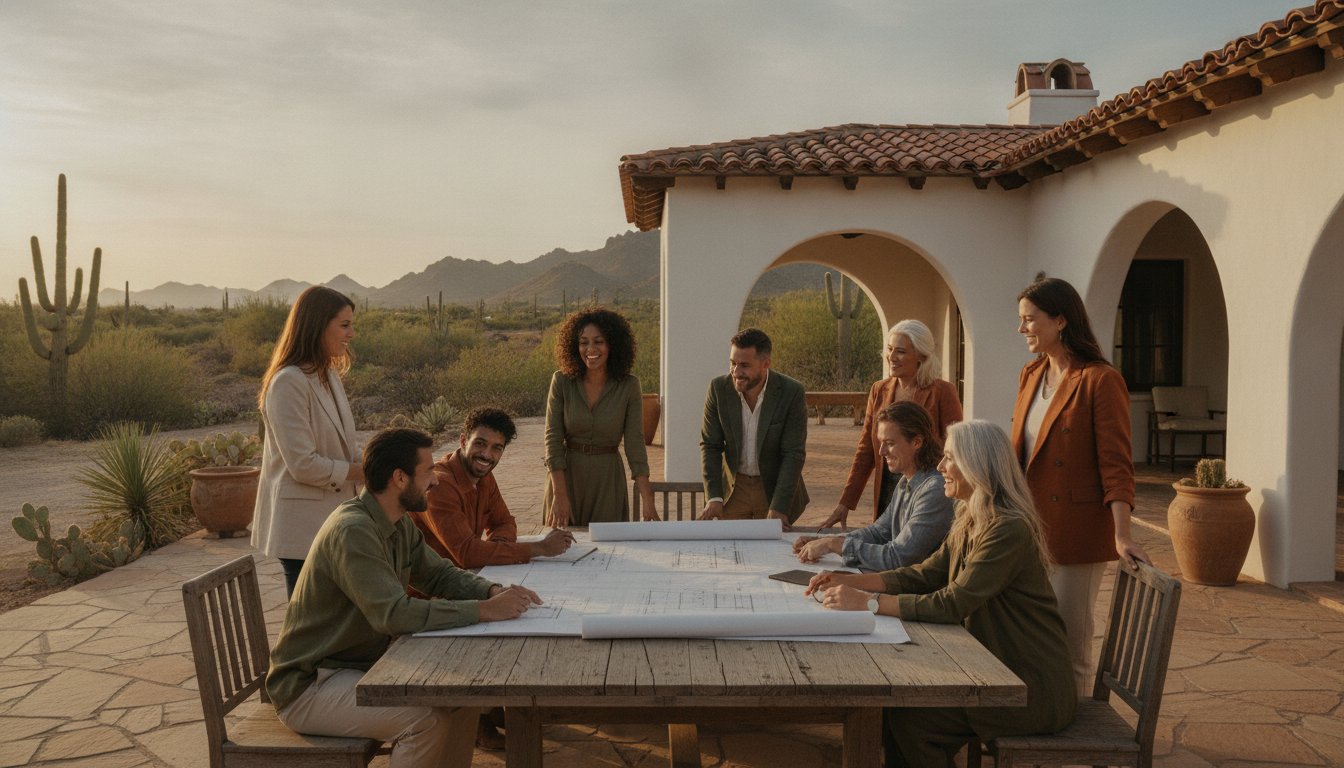

What if the secret to a high-performing team isn’t found in a digital handbook or a forced icebreaker, but in the quiet moments of a shared retreat? Most leaders recognize the exhaustion of hybrid silos and the heavy weight of employee burnout, especially when research shows that companies with strong bonding strategies see a 73% decrease in turnover. You likely understand that true connection requires more than just a scheduled meeting; it demands a space where professional masks can finally drop. By choosing intentional activities for building team cohesion within a serene, immersive environment, you can move away from corporate coldness and toward a culture of genuine trust.
In this guide, you’ll discover how to transform your group dynamics through meaningful experiences that foster lasting professional bonds. We’ll show you how to blend modern hospitality with strategic engagement to achieve higher employee retention and improved collaborative intelligence. From the peaceful restoration of a desert sanctuary to the practical logistics of planning an impactful offsite, you’ll find a clear framework to revitalize your team for 2026 and beyond.
Key Takeaways
- Understand the vital distinction between fleeting team-building events and the enduring thread of trust that defines true team cohesion.
- Discover how to sharpen collaborative intelligence through immersive challenges that mirror professional life within the tranquility of a boutique environment.
- Identify purposeful activities for building team cohesion that foster vulnerability and psychological safety, moving beyond simple predictive trust.
- Leverage the expansive nature of a desert ranch to inspire biophilic learning, where the natural environment encourages renewal and unified thinking.
- Recognize the immersive advantage of shared lodging, where forty eight hours of togetherness solidifies bonds more effectively than any brief workshop.
Defining Team Cohesion: Why Connection Transcends the Office
True connection rarely happens in the sterile, fluorescent glow of a traditional conference room. It begins when the “office mask” finally slips away. This mask is the carefully curated professional persona that employees wear to feel safe or competent in a corporate environment. While it serves a purpose during daily tasks, it often acts as a stubborn barrier to authentic trust. To dissolve these social walls, leaders must look beyond simple checklists. They need to understand group cohesiveness as the invisible thread of trust and shared purpose that binds individuals into a single, resilient unit.
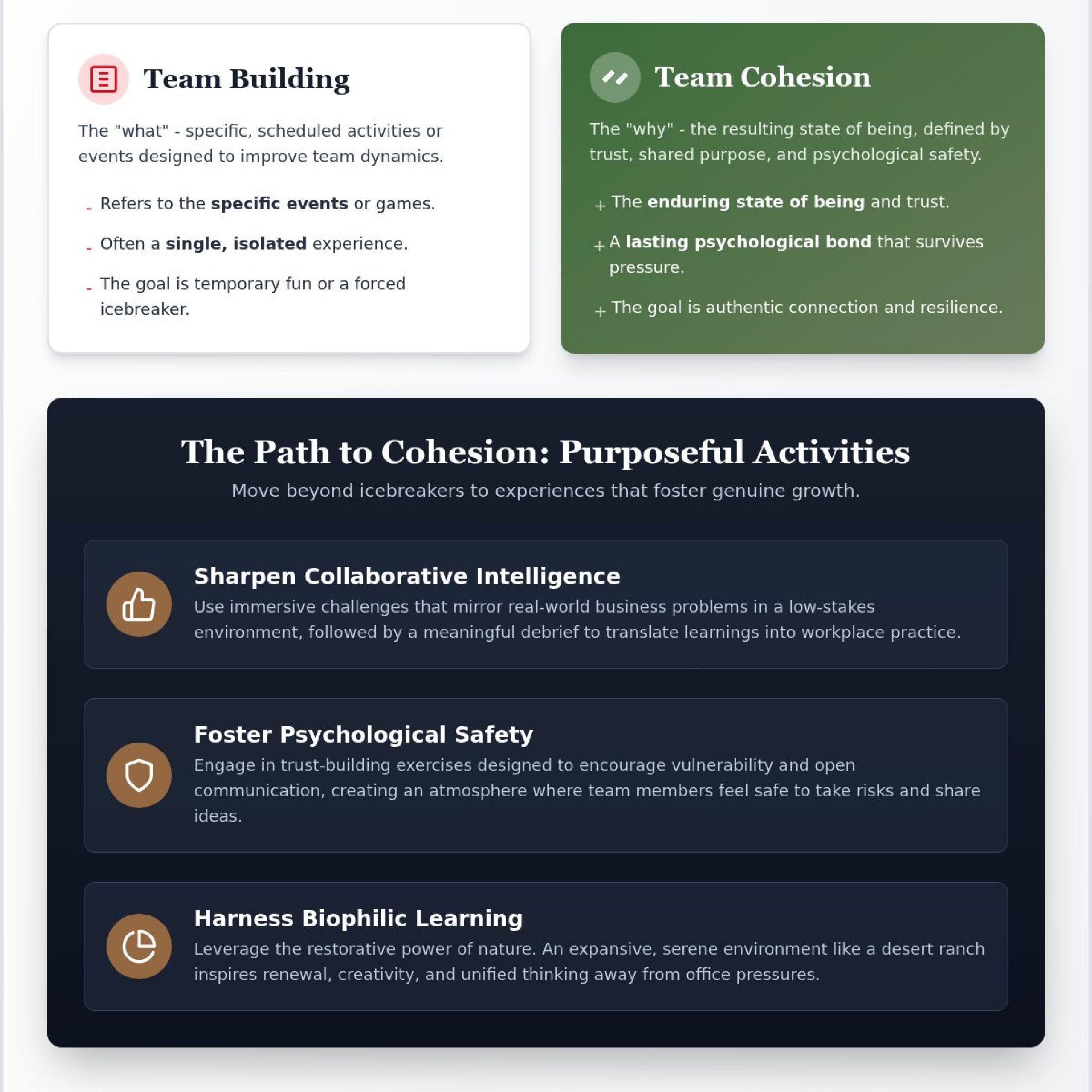
While many use the terms interchangeably, there’s a profound difference between “team building” and “team cohesion.” Team building refers to the specific events or games you schedule on a calendar. Cohesion, however, is the resulting state of being. It’s the quiet confidence a team feels when they know their colleagues truly have their back. When you select specific activities for building team cohesion, the goal isn’t just to have fun for an afternoon. It’s to create a lasting psychological bond that survives the pressures of the work week. The right environment, such as a historic guest ranch, provides the atmospheric “permission” needed for these bonds to form naturally.
The ROI of a Cohesive Workforce
Investing in these bonds isn’t merely a “nice to have” cultural perk. Research from Gartner shows that teams with high levels of cohesion have a 37% higher likelihood of sustained workforce health. This translates to reduced friction during high-stakes decision-making and significantly smoother project execution. When trust is high, communication becomes efficient rather than defensive. Team cohesion is the collective resilience that allows a group to adapt, recover, and thrive together in the face of shared challenges.
The Transition from Hybrid Isolation to Unified Purpose
By 2026, the challenge of fragmented communication in hybrid teams has become a primary driver of employee burnout. Digital interactions, while functional, often lack the sensory depth and shared atmosphere required to build deep empathy. This is why physical proximity in a “third space” is essential for long-term alignment. A private villa or a scenic ranch offers a neutral ground where hierarchy feels less rigid and personal stories can emerge over a shared meal.
Removing the team from their daily routine allows for a natural renewal of spirit. It provides the quietude necessary for meaningful activities for building team cohesion to actually take root. By intentionally planning an offsite in a space that feels like a home rather than a hotel, you signal to your team that their connection is worth more than a standard corporate retreat. You can explore our private accommodations to see how a boutique environment can serve as the ultimate sanctuary for this vital work.
Problem-Solving Activities to Sharpen Collaborative Intelligence
Collaborative intelligence is far more than a corporate buzzword; it’s a tangible competitive advantage. It represents the collective capacity of your team to process complex information and solve problems with greater efficiency than any single individual could achieve alone. When you move beyond simple icebreakers and introduce sophisticated activities for building team cohesion, you’re essentially stress-testing this collective brain. According to the OECD’s collaborative problem-solving framework, the ability to manage shared understanding and take collective action is a critical skill for the modern workforce. These exercises should mirror real-world business challenges, allowing your team to navigate friction in a safe, low-stakes environment.
For these experiences to truly resonate, they must be facilitated with intention rather than just “played.” A professional guide helps the group transition from the activity itself into a meaningful debrief session. This reflection period is where the actual growth happens. It’s the moment when the team realizes how they communicate under pressure, who steps into leadership roles, and whose voice might be getting lost in the noise. Without this structured dialogue, the exercise remains a game; with it, it becomes a blueprint for better workplace collaboration.
Strategic Simulation: The “Desert Survival” Challenge
In this classic consensus-based simulation, team members are presented with a hypothetical scenario where they’ve survived a crash in a harsh environment. Each participant first ranks a list of salvaged items by importance. Then, the team must work together to reach a single, unified ranking through consensus. This process highlights individual decision-making styles and reveals how effectively the group negotiates differing opinions. It’s a powerful way to observe leadership potential and the group’s ability to align under a shared goal. The transition from individual thought to group ranking often exposes the very communication gaps that exist in daily office life.
The Innovation Lab: Reverse Brainstorming
Reverse brainstorming is a structured activity that turns traditional problem-solving on its head. Instead of asking how to make a project succeed, teams are tasked with finding every possible way to make it fail. By intentionally trying to “sabotage” a project, participants feel a psychological safety that allows for radical honesty. It lowers the stakes for critical feedback and boosts empathy by allowing everyone to voice concerns without appearing negative. When conducted in high-end corporate retreat venues, these deep strategy sessions benefit from the tranquility of the surroundings, allowing for clearer thinking and more creative risks. To provide your team with the ultimate sanctuary for these breakthroughs, consider the privacy of our boutique desert accommodations.
Trust-Building Exercises for Psychological Safety and Growth
Psychological safety is the foundational element that allows a group to evolve from a collection of individuals into a high-functioning unit. It’s the belief that one can speak up with ideas, questions, or mistakes without fear of humiliation. While many leaders rely on predictive trust, which is simply knowing a colleague’s habits, true unity requires vulnerability-based trust. This deeper level of connection occurs when team members feel safe enough to say, “I don’t know” or “I made a mistake.” Implementing intentional activities for building team cohesion focused on vulnerability creates a “safe container” where growth isn’t just possible; it’s inevitable.
Creating this environment requires more than a simple agenda. It demands a “Gracious Host” approach, where the physical setting and the facilitation style combine to lower defensive barriers. When participants feel genuinely cared for in a boutique, heritage-rich space, they’re more likely to engage in effective team building activities that challenge their comfort zones. This sense of tranquility and escape provides the necessary emotional distance from daily office stressors to allow for authentic reflection. It’s about moving away from corporate coldness and toward a more intimate, personal narrative.
The “Personal Histories” Exercise
Empathy is the bridge between isolation and unity. In this low-risk exercise, team members share three formative life experiences: where they grew up, how many siblings they have, and a significant challenge from their youth. Understanding a colleague’s background fundamentally changes professional interactions, replacing snap judgments with a more nuanced appreciation of their perspective. To keep this professional yet evocative, the facilitator must model vulnerability first, setting the tone for a respectful and intimate narrative that honors each person’s heritage.
The “Stop, Start, Continue” Feedback Circle
For established teams, trust is often tested through the delivery of feedback. The “Stop, Start, Continue” framework provides a structured trust exercise that improves workflow without devolving into a grievance session. Each member receives feedback on one thing they should stop doing, one thing they should start doing, and one thing they are doing well that they should continue. Facilitating this in a private, neutral setting like a secluded villa ensures that the conversation remains focused on growth rather than defensiveness. This privacy is essential for sensitive trust-building work, allowing the team to emerge with a clearer, more unified path forward.
Nature-Based Activities: Harnessing the Environment for Unity
The sterile environment of a modern office often limits the scope of a team’s imagination. In contrast, the concept of biophilia suggests that humans possess an innate tendency to seek connections with nature and other forms of life. When you move your activities for building team cohesion into the vast, open landscapes of a desert ranch, you’re doing more than just changing the scenery. You’re shifting the brain into a state of “expansive thinking.” Research suggests that nature-based learning sticks better than indoor sessions because it reduces cognitive load and allows for deeper neural processing. This immersive approach is a core pillar of our wellness retreats, where the environment itself acts as a facilitator for holistic health and professional unity.
A natural setting provides a unique sanctuary that encourages quiet reflection alongside group interaction. It moves the team away from corporate coldness toward a more intimate, boutique-style experience. In the desert, the sheer scale of the horizon helps to put professional stressors into perspective. This sense of tranquility and escape is essential for renewal, allowing team members to return to their roles with a refreshed sense of purpose and a stronger connection to their peers.
Sensory Navigation and Mindful Observation
Grounding a team in the present moment is the first step toward authentic connection. Sensory navigation exercises use the natural landscape of Tucson to pull participants out of their digital distractions and into the physical world. These “unplugged” nature walks foster more authentic conversations than any structured meeting ever could. Without the glow of a laptop or the buzz of a smartphone, colleagues begin to notice the subtle details of their surroundings, from the scent of creosote after a rain to the intricate patterns of a historic adobe wall. By incorporating local heritage and the desert environment into the learning narrative, you create a sense of place that makes the experience feel both significant and memorable.
The “Campfire Strategy” Session
There’s a timeless power in the ritual of the fire. Moving a strategy session from a brightly lit boardroom to a starlit campfire changes the entire rhythm of communication. The atmosphere of a guest ranch encourages open-ended, visionary thinking that is often stifled in more formal settings. The rhythmic crackle of a mesquite fire under a vast, indigo sky transforms the rigid hierarchy of a boardroom into a circle of shared vision and quiet reflection. In this space, the pressure to perform is replaced by the freedom to explore. It’s here, amidst the warmth of the flames and the cool desert air, that the most innovative ideas often emerge.
To see how our private, scenic setting can elevate your next executive offsite, explore our short term rentals in Tucson and begin your journey toward a more unified team.
Elevating the Experience: Why Retreat Venues Solidify Team Bonds
While a two hour workshop might introduce a new concept, it’s the immersive nature of a multi day retreat that provides the space for activities for building team cohesion to truly take root. This “Immersive Advantage” acknowledges that deep trust isn’t built on a schedule; it’s cultivated in the organic moments between sessions. When a team spends 24 to 48 hours together, the conversation shifts from tactical updates to meaningful alignment. Choosing event venues with lodging allows for these natural interactions to occur over a shared breakfast or a sunset walk, creating a bond that a brief afternoon session simply cannot replicate.
The environment you choose also serves as a powerful signal of how much you value your workforce. Moving away from the sterile, corporate coldness of a standard hotel toward a space defined by beauty and heritage shows your team that their renewal is a priority. Luxury and comfort aren’t just about indulgence. They’re about providing a sanctuary where employees feel respected and cared for. This shift in atmosphere facilitates the transition from “doing” activities to simply “being” a team, allowing for a more authentic and relaxed professional dynamic.
The Privacy of a Private Villa for High-Stakes Offsites
For sensitive trust-building work or confidential strategy sessions, the privacy of an exclusive-use venue is superior to a public hotel. In a private villa, there’s no “noise” from other guests or bustling lobbies to distract from internal team dynamics. This seclusion allows the group to focus entirely on one another, fostering an environment where high-stakes conversations can happen without reservation. To ensure your next gathering has the intimacy it deserves, you can check availability for private group stays at our historic desert ranch.
Crafting the Perfect Itinerary for 2026
A successful retreat requires a delicate balance between high-energy engagement and restorative “white space.” Over-scheduling can lead to the very burnout you’re trying to prevent, so it’s vital to allow time for quiet reflection and spontaneous connection. Professional hosting removes the logistical friction of the stay, ensuring that leaders can focus on their people rather than the details of catering or transportation. By designing a retreat that reflects your team’s unique culture and values, you create a lasting legacy of unity. As you plan your next series of activities for building team cohesion, remember that the most impactful moments often happen when the agenda is put aside and the spirit of the place takes over.
Cultivating a Legacy of Connection in the Desert
The journey from a fragmented group to a unified force requires more than just a set of instructions; it demands a change of heart and a change of scenery. By moving beyond surface-level games and embracing intentional activities for building team cohesion, you create a culture where psychological safety and collaborative intelligence can flourish. Whether it’s through the quiet reflection of a nature walk or the deep strategy of a campfire session, these shared experiences become the foundation of a resilient, high-performing workforce.
True transformation happens when the environment mirrors the value you place on your people. An atmospheric desert sanctuary provides the tranquility needed for renewal, allowing your team to return with a refreshed sense of purpose. We invite you to plan your next transformative corporate retreat at Solana Spanish Villas. Our private, historic ranch setting offers exclusive use and dedicated support for professional event hosting, ensuring every detail is handled with the care of a gracious host. Take this step toward a more connected future, where the bonds you build today define the successes of tomorrow.
Frequently Asked Questions
What is the most effective activity for team cohesion?
The most effective activities for building team cohesion are those that foster vulnerability-based trust, such as the Personal Histories exercise. These sessions move beyond surface-level interaction to create deep psychological safety within the group. By understanding a colleague’s formative experiences, the team builds a level of empathy that translates into more effective professional collaboration and significantly reduced friction.
How do you measure team cohesion after an event?
You can measure the impact through specific metrics like employee turnover rates and post-event pulse surveys focused on trust. Research indicates that companies with strong bonding strategies see a 73% decrease in employee turnover. Additionally, a Harvard Business Review study showed a 26% increase in productivity after offsite retreats, providing a clear quantitative benchmark for your investment in connection.
How long should a team-building retreat last to be effective?
While any time spent away from the office is valuable, the average corporate retreat lasts 3.78 days to achieve the most significant impact. This duration allows for the “Immersive Advantage,” where the first day breaks down social barriers and the subsequent days focus on deep strategic alignment. A stay of at least 48 hours ensures the team moves from merely doing tasks to being a truly unified unit.
Can team cohesion be built virtually in 2026?
Virtual activities can maintain existing bonds, but they often lack the sensory depth required to build foundational trust in a hybrid world. While virtual options can start as low as $30 per person, they don’t provide the expansive thinking triggered by a physical sanctuary. Use digital sessions for quick tactical check-ins rather than the primary work of building deep, lasting professional bonds.
What is the difference between team building and team cohesion?
Team building refers to the specific events or games you schedule on a calendar, while team cohesion is the resulting state of unity and trust. Think of team building as the tool and cohesion as the finished structure. Cohesion is the invisible thread that keeps a team resilient and aligned during high-pressure projects or periods of rapid organizational change.
How do you handle team members who are skeptical of these activities?
Handling skepticism requires a gracious host approach that prioritizes psychological safety over forced participation. It’s helpful to explain the strategic purpose behind each exercise and ensure the activities for building team cohesion mirror real-world challenges rather than juvenile games. When skeptics see that the session respects their professional dignity and intelligence, their defensive barriers naturally begin to lower.
What are some low-cost activities for building cohesion?
Meaningful connection doesn’t always require a large budget; exercises like the “Stop, Start, Continue” feedback circle or sharing personal histories cost nothing but time. These activities focus on the quality of conversation and the depth of reflection rather than expensive props. The most significant investment is the intentionality of the space and the time carved out for these dialogues to occur without interruption.
Why does the environment matter for team-building success?
The environment matters because it dictates the psychological permission employees feel to drop their professional masks. A historic guest ranch or a scenic desert villa shifts the brain into a state of renewal and expansive thinking that a standard boardroom cannot replicate. This biophilic connection to nature reduces cognitive load, making the lessons learned during the retreat far more likely to stick long after the team returns home.
0 Comment