


What if the secret to planning a large group vacation isn’t getting everyone to agree on every detail, but giving the trip a thoughtful structure with room for individual choice? Coordinating different budgets, schedules, and ideas of a good getaway can quickly turn one person into the full-time organizer. Agreeing on a few shared decisions at the outset helps prevent crossed wires and gives the trip a shape everyone can enjoy.
Start by aligning on the purpose, dates, and spending expectations, then divide planning tasks instead of carrying them alone. This guide walks you through setting a realistic budget, choosing lodging and activities for different needs, and organizing transportation without overloading the schedule. It also covers lodging that brings accommodation and gathering space together, including Solana Spanish Villas’ short-term stays and event hosting. With clear responsibilities and breathing room built into the plan, your group can spend less time sorting out logistics and more time enjoying the moments you came together to share.
Key Takeaways
- Agree on the trip’s purpose first so destination, duration, and activities reflect what the group hopes to share.
- Set spending expectations, dates, and payment responsibilities before making reservations.
- When planning a large group vacation, compare lodging and transportation based on privacy, shared space, accessibility, and convenience.
- Choose one optional anchor activity each day, leaving space for independent plans and different energy levels.
- Keep reservations, arrival details, traveler information, and assigned responsibilities in one shared checklist.
Start Planning a Large Group Vacation by Agreeing on the Trip’s Purpose
A group getaway can begin with lively ideas and the promise of time together, then grow complicated as preferences, schedules, and expectations emerge. One person may picture quiet mornings, while another imagines full days of activities. Before comparing destinations or making reservations, agree on what the group wants the trip to feel like. That shared purpose will guide how long to travel, what kind of setting to seek, and which experiences deserve space in the plan.
Group-trip planning starts with shared priorities, not bookings. To identify them, gather ideas privately, look for recurring themes, then record the experiences and practical needs the group considers non-negotiable. This gives quieter members a chance to weigh in and keeps early choices from being shaped only by whoever speaks first or plans fastest.
Choose the kind of vacation the group wants
Start with a short survey so everyone can contribute before a group discussion. Ask what matters most: relaxation, outdoor activities, cultural experiences, a celebratory gathering, or a blend. Invite each person to name one essential experience and one appealing extra. For instance, a reunion group might agree that shared meals are essential while a guided excursion is optional.
Compare destinations only after sorting answers into three simple categories:
- Shared priorities: Experiences several people are excited about.
- Non-negotiables: Needs or plans the group must accommodate.
- Optional ideas: Activities people can choose without making them central to the trip.
This distinction helps the group decide whether a flexible, self-planned itinerary fits its goals or whether a package tour, with a pre-arranged itinerary, better suits its preferred pace. It also keeps one person’s enthusiasm from becoming an expectation for everyone.
Set a realistic group size and decision structure
An invitation list is not a headcount. Track who has been invited separately from who has confirmed, and avoid decisions that depend on a precise number until responses are clear. This is especially important for room arrangements, shared transportation, or activities with limited places. Keep a simple record of each person’s response and any constraints they’ve shared.
Name one coordinator to keep the plan moving, not to make every choice alone. Divide defined tasks among willing co-planners, such as gathering date preferences, comparing activity ideas, or maintaining shared notes. Before decisions begin, agree on a method: use a quick vote for low-stakes choices and a discussion for choices that affect everyone’s comfort or essential needs. Set a response deadline so the group can move forward without repeatedly reopening settled questions.
Close this first stage with a brief written summary: the trip’s purpose, confirmed travelers, shared priorities, non-negotiables, and how decisions will be made. This becomes the group’s reference point as planning continues, helping each choice support the getaway everyone is trying to create.
Set the Budget, Dates, and Commitments Before Booking
Once the group has a sense of what the trip is for, turn that shared vision into practical boundaries. Agree on a comfortable overall spending range before comparing lodging, transportation, or activities. This lets the group weigh options against what travelers can manage, rather than getting attached to plans that some people can’t afford.
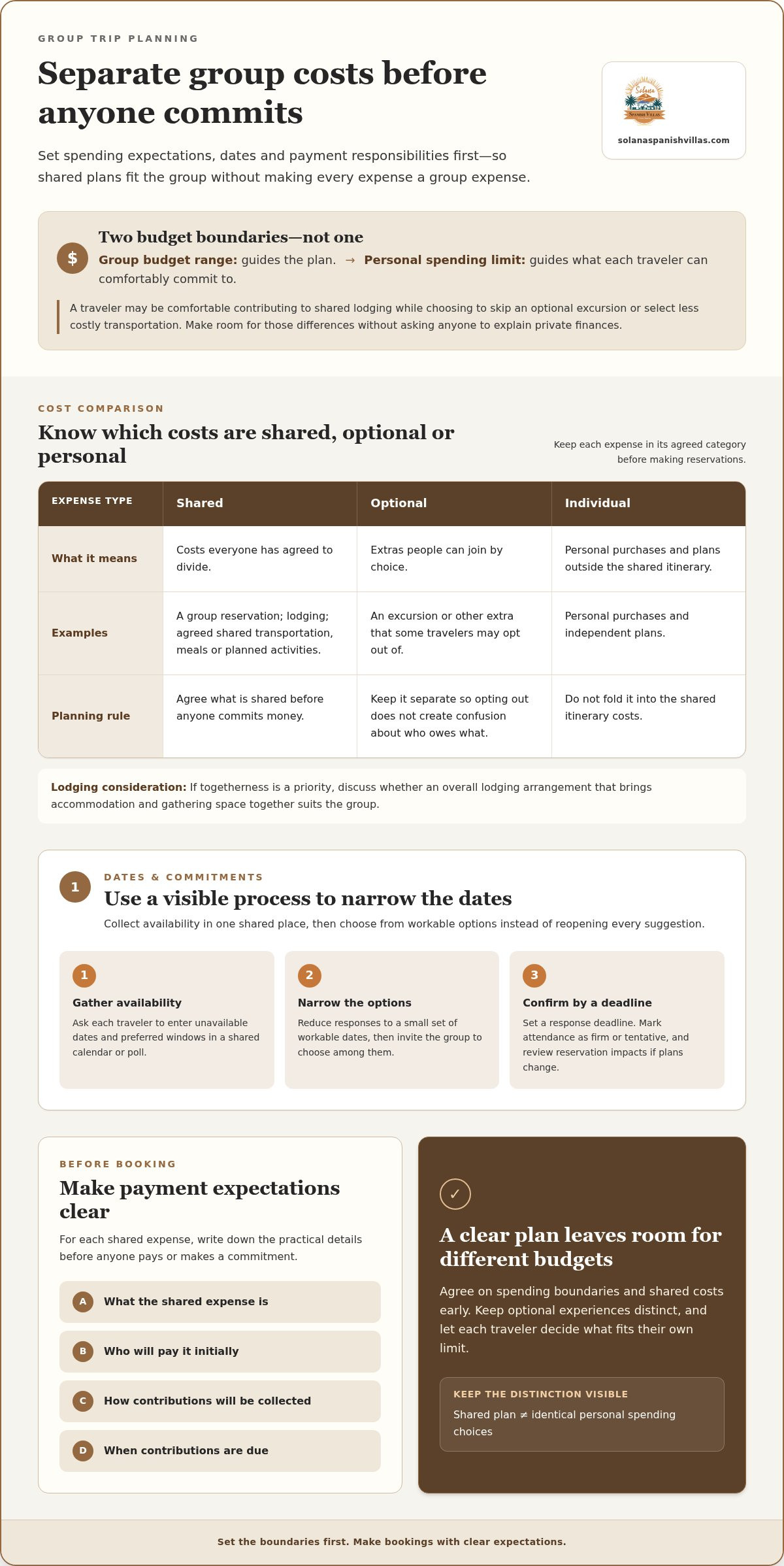
A shared budget range guides the plan; each traveler’s personal spending limit determines what they can comfortably commit to. Those figures aren’t always the same. Someone may be happy to contribute to shared lodging but prefer to skip an optional excursion or choose less costly transportation. Make room for those differences without asking anyone to explain private finances.
Sort expenses into clear categories before anyone commits money:
- Shared: Costs everyone has agreed to divide, such as a group reservation.
- Optional: Activities or extras people can join by choice.
- Individual: Personal purchases and plans outside the shared itinerary.
When estimating shared expenses, include likely trip components such as lodging, transport, meals, and planned activities. Keep optional experiences separate so opting out doesn’t create confusion about who owes what. If togetherness is a priority, include the overall lodging arrangement in this discussion. For example, short-term lodging options that bring accommodation and gathering space together may suit a group seeking a shared base.
Choose dates using a fair, visible process
Ask each traveler to enter unavailable dates and preferred windows in one shared calendar or poll. Narrow the responses to a small set of workable options, then invite the group to choose from those rather than reopening every suggestion. A visible process helps members understand how the decision was reached, even if their preferred dates don’t win.
Set a response deadline that leaves time to organize travel and lodging. Tell everyone when attendance must be confirmed, and distinguish firm commitments from tentative interest. If someone’s plans change afterward, review how that affects shared reservations before making new commitments.
Make payment expectations clear before commitments
Record each shared expense, who will pay it initially, how contributions will be collected, and when they’re due. Agree in advance how the group will handle cancellations, late changes, or a traveler who hasn’t paid by the deadline. For instance, decide whether the remaining travelers will cover a reservation, adjust the plan, or seek a change under its terms. Don’t leave one organizer responsible for costs the group hasn’t agreed to share.
A shared spreadsheet or an expense-tracking app such as Splitwise can keep contributions visible. Update the record as plans change, and make sure everyone can see the latest totals and due dates. Clear records and timely decisions help protect the group’s budget and the good feeling that brought everyone together.
Choose Group Vacation Lodging and Transportation That Fit
With dates and likely attendance taking shape, compare where everyone will stay and how they’ll get around as connected decisions. Planning a large group vacation is easier when the accommodation setup suits the travelers, not just the destination. Consider shared space, privacy, room arrangements, accessibility needs, and travel times together. A place close to every activity may not offer the gathering space the group wants, while a comfortable shared base may require more coordination for daily transportation.
Match the accommodation setup to the people traveling
Use the confirmed traveler list to sketch room arrangements before choosing a lodging style. Note who prefers to share, who needs a private room, and whether family groups or couples want to stay near one another. Discuss access needs, such as avoiding stairs or planning manageable routes, before committing to a layout. These details can change which options feel comfortable and practical.
Compare the main trade-offs:
| Arrangement | Can suit groups that value | Consider |
|---|---|---|
| One private stay | Gathering in a shared setting and coordinating from a common base | Room layout, privacy, and whether the setup fits confirmed travelers |
| Separate rooms | Individual privacy and distinct sleeping arrangements | Keeping rooms close together and coordinating shared time |
| Nearby accommodations | A mix of lodging preferences or room needs | Extra movement between stays and a clear plan for meeting up |
A single stay that combines lodging with gathering space can make shared moments easier to organize. For groups drawn to that arrangement, explore available short-term stays as one lodging model. The best fit depends on the group’s confirmed headcount, privacy preferences, and practical needs.
Coordinate arrivals and choose a practical home base
Before finalizing where to stay, collect each traveler’s arrival window, luggage needs, and mobility considerations. Then map who needs a ride, who can share transportation, and whether arrivals are close enough to coordinate. A simple arrival sheet can list names, times, pickup plans, and separate arrangements, helping prevent confusion when people reach the destination at different times.
Compare the home base with the group’s planned activities. Staying near key outings can reduce daily travel, while a comfortable gathering place may better support meals and relaxed time together. Don’t assume every traveler needs to move as one unit. Some may prefer separate transport or downtime between plans. Account for those possibilities, along with luggage and access needs, before confirming reservations or choosing vehicles and routes.
Bring the decision together by checking three things side by side: the room plan against confirmed travelers, arrival logistics against travel windows, and location against the group’s priorities. This practical review helps the stay feel welcoming without making coordination another full-time job.
Build a Flexible Itinerary for Different Group Energy Levels
A satisfying group itinerary gives everyone a few moments to look forward to without turning every hour into an obligation. Different ages, interests, and energy levels can shape how people want to spend a day, even when they share the same reason for traveling. Build each day around one optional anchor activity, then leave space for meals, rest, and individual plans. This creates a gentle rhythm while keeping the schedule adaptable.
Plan shared moments without requiring constant togetherness
Choose a few occasions the group can anticipate, such as a welcome meal, a relaxed gathering, or an activity connected to the trip’s purpose. Make attendance expectations clear. If an outing is optional, say so warmly so people can decline without feeling they’re disappointing the group. For a hosted gathering, consider how the setting supports both the occasion and the stay. This guide to event venues with lodging offers ideas for bringing a gathering and accommodation together.
Offer choices that differ in pace and commitment. For example, a day might include a planned guided outing for those who want structure, a nearby low-key alternative, and free time for anyone who prefers to unwind. Share the basic details in advance, including the meeting time, expected duration, and whether people need to sign up. That gives travelers room to decide based on their interests and comfort with planning ahead.
Keep coordination simple. Choose one group channel for updates, name clear meeting points, and share changes there rather than relying on word of mouth. If a few travelers make separate plans, agree on when and where the group will reconnect.
Leave room for rest, weather, and changing plans
A day with one main activity can still feel full, especially if it involves travel or sustained effort. Avoid stacking demanding plans back-to-back. Leave a buffer between activities for meals, transit, and a pause to recharge. A loose outline might look like this:
- Morning: Optional anchor activity, with an easier alternative for those who want it.
- Afternoon: Open time to rest, explore independently, or meet up informally.
- Evening: A shared meal or gathering, with attendance expectations stated clearly.
Keep a simple backup idea for weather changes, closures, or a group that would rather slow down. It might be a more relaxed outing or extra free time, rather than a replacement activity that requires everyone to reorganize. When planning a large group vacation, flexibility is part of the plan, not a sign that the plan has failed.
For a getaway that includes a hosted gathering, explore lodging and event-hosting options as you shape the itinerary. Choose shared moments with care, then let the open spaces between them belong to each traveler.
Bring the Vacation Plan Together With a Clear Final Checklist
Before departure, gather the latest details in one shared document so travelers aren’t searching through scattered messages for arrival times or reservation information. Assign someone to maintain it, and give the group access to the same current version. This final review is a chance to catch mismatched details, clarify responsibilities, and make sure everyone knows where to find essential information.
Use a final group-vacation readiness check
Confirm the traveler list, dates, rooming preferences, arrival plans, and who is responsible for each shared task. Add reservation references, meeting points, key contacts, and the agreed communication channel. Each traveler should keep their own personal documents and travel requirements accessible rather than depending on the coordinator to hold everything. Use a concise checklist:
- Reservations: Check dates, names, and cancellation terms.
- Traveler needs: Review accessibility requirements and dietary needs relevant to shared plans.
- Arrival: Reconfirm timing, transport arrangements, and where to meet.
- Communication: Share the itinerary and agree where updates will be posted.
Keep sensitive personal information with the traveler who needs it; the shared document should coordinate the group, not become a repository for private records.
Make the stay part of the shared experience
As you review the final plan, consider what kind of setting will make the group feel at ease. Some travelers may prize privacy, while others value a place to gather between outings. A lodging property that also hosts events can bring accommodation and shared occasions into one setting, which may suit a group hoping to spend meaningful time together without requiring everyone to follow the same schedule.
Solana Spanish Villas is an independently operated historic guest ranch dating to the 1920s, renovated and reopened as a boutique resort. It brings short-term lodging and event hosting together for groups seeking a stay with gathering space. The right setup depends on the group’s preferences, rooming needs, and plans.
With the essentials gathered, read through the document once as a traveler would: Can each person find their arrival plan, reservation details, responsibilities, and the latest itinerary? Make missing information clear before the journey begins. Thoughtful organization can ease the handoff from planning to the pleasure of being together.
If a shared setting fits your group’s vision, explore a group stay that brings lodging and gathering together. Planning a large group vacation doesn’t mean managing every moment; it means giving everyone a clear starting point for a memorable getaway.
Turn the Plan Into a Shared Anticipation
The next step in planning a large group vacation is to shift gently from organizing to looking forward. Invite each traveler to choose one small thing they’re excited about, whether it’s a meal together, an unhurried morning, or a chance to discover somewhere new. These personal points of anticipation help the trip feel like a shared experience, not simply a schedule everyone has agreed to follow.
If gathering in one place is part of your group’s vision, consider a stay that pairs lodging with event hosting. Solana Spanish Villas offers a setting shaped by historic character and modern hospitality, giving groups a backdrop for time together. Let the place you choose support the kind of memories you hope to make, while leaving room for each person to enjoy the getaway in their own way.
Explore Solana Spanish Villas for your group getaway and take the next step toward a trip your group can look forward to sharing.
Frequently Asked Questions
How far in advance should you plan a large group vacation?
For a popular destination, begin planning 9 to 12 months ahead, especially if the group needs lodging and key activities that can accommodate everyone. AvantStay recommends this window for popular destinations. Start by setting a decision timeline, then prioritize reservations with limited options before filling in flexible details. A less complicated trip may need less lead time, but early agreement gives travelers time to arrange schedules, save, and confirm participation.
How do you plan a group trip when everyone has different budgets?
Build the shared plan around a contribution level the group can accept, then make higher-cost extras optional. For example, everyone might join the same core outing while travelers choose whether to add a separate guided experience. Keep essential shared expenses distinct from personal upgrades, and avoid assuming that equal participation means everyone has the same spending limit. A plan with modest options and clear choices can include more travelers without pressure to overspend.
What is the best way to collect vacation money from a group?
Use one agreed payment method and keep a simple record of contributions, expenses, and outstanding balances. Name a treasurer who can share updates, save receipts, and report what each payment covers. Set contribution deadlines before making shared commitments, rather than asking one person to cover costs indefinitely. After each major expense, update the record promptly so travelers can see the current status and raise questions while there’s still time to resolve them.
How do you choose lodging for a large group vacation?
Choose lodging by comparing the group’s confirmed rooming needs with its preferred balance of privacy and time together. A shared property can make it easier to gather, while separate rooms may offer more individual space. Consider whether families, couples, and solo travelers need different arrangements, then compare the practical effort of coordinating one stay with the logistics of nearby accommodations. The most suitable setup is one travelers can use comfortably, not simply the option with the most shared space.
How do you handle a group member who changes plans?
Ask the traveler to share the change as soon as possible, then identify which parts of the itinerary it affects. A late arrival may only require adjusting a pickup, while a cancellation could affect room assignments or shared reservations. Keep individual changes from derailing the whole trip when possible, and make decisions based on the reservation terms and the group’s agreed approach. Update the current plan so everyone is working from the same information.
How can you plan a group vacation without overscheduling?
Separate fixed commitments from ideas the group can decide on during the trip. Avoid placing demanding activities on consecutive days; alternate busier outings with lighter stretches so travelers can recover or choose a quieter pace. Leave enough time between plans for meals and travel, and avoid treating every open hour as a gap that needs filling. A thoughtful itinerary gives the group shape without making rest feel like a change of plans.
What should a group vacation organizer share with travelers before departure?
Share a clear itinerary that includes reservation details, check-in instructions, addresses, planned departure times, and the best way to reach the organizer. Include directions or meeting points for moments when the group may arrive separately, and make the latest version available offline in case travelers lose connectivity. Each person should know what they’re responsible for bringing or arranging. Clear, accessible information helps travelers arrive prepared without relying on one person to answer every question.
0 Comment