


The most profound breakthroughs of your retreat won’t happen in the boardroom; they’ll happen in the quiet moments between sessions, often facilitated by the very walls your guests call home. As a leader, you understand that rooming is more than a list of names. It’s an act of social engineering. You’ve likely spent hours over a spreadsheet seeking the best retreat room assignment tips, balancing the nuances of personality with the architecture of the estate, all while worrying about potential maintenance hiccups or the dreaded guest complaint. It’s a delicate dance between hospitality and logistics that can feel overwhelming as your event date nears.
This article shares the strategies you need to master this essential craft for your 2026 events. We’ll show you how to strategically pair guests to enhance comfort, manage diverse room tiers with grace, and ensure a seamless flow that minimizes check-in friction. By the end of this guide, you’ll have a clear, sophisticated system for organizing your accommodations, allowing you to step into your role as a gracious host with total confidence. Let’s explore how to turn your private estate stay into a sanctuary of connection and refined comfort.
Key Takeaways
- Understand how the physical environment and sleep quality directly influence a participant’s ability to absorb content and connect with the group.
- Discover how to categorize lodging into private, shared, and communal tiers to meet the diverse privacy needs of 2026 retreat attendees.
- Master essential retreat room assignment tips for pairing roommates based on energy levels and personality types to prevent social friction.
- Implement a structured rooming list system and a 72-hour finalization lock to ensure a seamless, error-free check-in process for your guests.
- Learn why the architectural heritage and boutique charm of a private guest ranch can elevate the standard rooming experience into a memorable narrative.
The Psychology of Space: Why Strategic Rooming Matters
A guest’s journey doesn’t begin at the first keynote or the opening dinner. It begins the moment they turn the key in their door and step into their private sanctuary. If the environment is jarring or the roommate pairing feels forced, the brain enters a subtle state of defensive stress. Research into sleep hygiene and cognitive function shows that environmental anxiety directly impairs the prefrontal cortex, which is the area of the brain responsible for learning and social engagement. When you apply intentional retreat room assignment tips, you aren’t just filling beds. You’re protecting your guests’ cognitive bandwidth. You’re ensuring they have the mental energy to engage with your content rather than managing the internal friction of an uncomfortable stay.
Setting the Tone for Transformation
The Gracious Host Philosophy
Mastering rooming requires a shift in perspective. You must move away from simple inventory management and toward a philosophy of guest curation. A gracious host anticipates a guest’s needs before they’re ever voiced, turning the rooming list into the first touchpoint of your event’s hospitality. Thoughtful placement is the most effective tool to prevent the formation of exclusive cliques that can unintentionally alienate others in a large group. By strategically placing individuals who don’t already know each other in shared living areas, you encourage a broader sense of community.
This approach mirrors the psychology of confined living, where the careful selection and placement of individuals in a shared environment determines the overall success of a mission. This level of intentionality is particularly vital when organizing A Sanctuary for the Soul: Wellness Retreats, where the goal is total restoration. When guests feel seen and considered in their placement, their anxiety melts away. They can then transition from being a traveler in a strange place to a participant in a shared story.
Designing Your Lodging Tiers: Balancing Privacy and Community
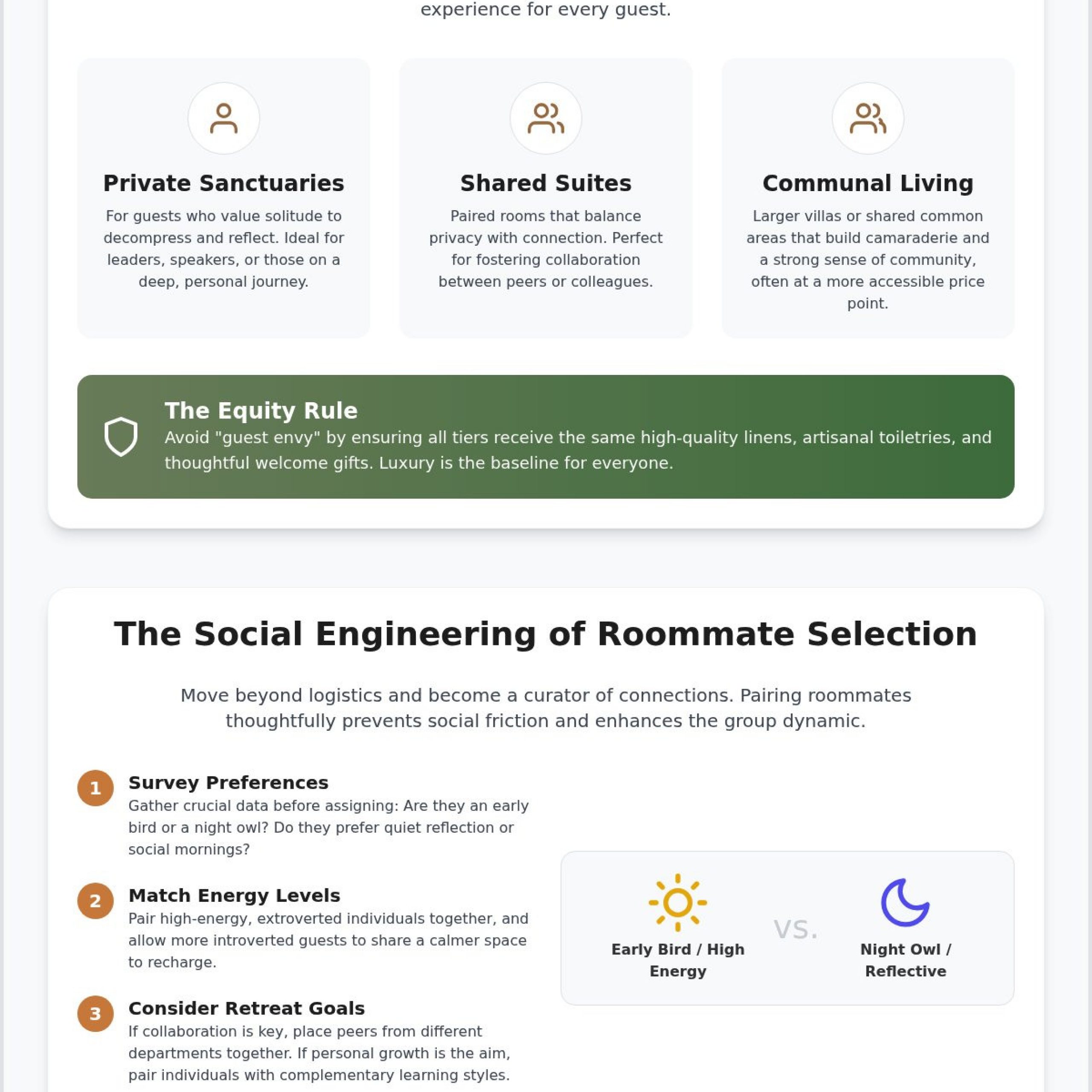
Designing lodging tiers for a high-level retreat is an exercise in thoughtful curation. Unlike a standard hotel block where every room is a carbon copy, a private estate offers a tapestry of living spaces that can be tailored to your guests’ specific needs. When considering your retreat room assignment tips, start by defining three distinct lodging tiers: Private, Shared, and Communal. This structure allows you to honor the “Privacy Premium,” a concept where guests willingly pay more for a solo sanctuary to ensure they have the space to decompress after intense sessions. Conversely, shared and communal rooms lower the barrier to entry for budget-conscious attendees while fostering a sense of camaraderie.
To avoid the pitfall of “guest envy,” you must ensure equity in amenities across all price points. While one guest may have a larger suite, every attendee should enjoy the same high-quality linens, artisanal toiletries, and thoughtful welcome gifts. This baseline of luxury reinforces the feeling that everyone is a valued member of the circle, regardless of their room’s square footage. It’s about creating a cohesive experience where the quality of rest is guaranteed for all, drawing from roommate relationship research which highlights how personality traits and clear communication patterns impact the success of shared living environments.
The Private Villa Advantage
Private estates provide a level of flexibility that traditional hotels simply cannot match. You have the power to create “neighborhoods” within the property, grouping specific departments or sub-groups together to encourage organic networking. This architectural intimacy is a hallmark of the experience, as explored in The Ultimate Guide to Private Estate Rentals. By utilizing a property’s natural layout, you can designate quiet zones for deep work and social hubs for evening connection, all within the same estate walls.
Managing Shared Spaces
For shared accommodations, the “Shared Private” model is the gold standard for 2026 leaders. This configuration provides each guest with a private bedroom while sharing a common living area or bathroom. To facilitate roommate matching for strangers, especially in wellness settings, use a short intake survey to pair guests with similar sleep schedules and social energies. When setting up these rooms, prioritize adult-friendly furniture configurations. Use two queen beds or even two twins with high-end headboards; avoid bunk beds or overly cramped quarters that might signal a lack of professional respect. If you are planning an upcoming gathering, consider how these layouts might function best at a bespoke event venue designed for group harmony.
The Social Engineering of Roommate Selection
Energy is a finite resource during a high-stakes event. When you approach the rooming list as an architect of human connection, you’re practicing social engineering. The most successful 2026 leaders recognize that pairing an extreme introvert with a high-energy extrovert can lead to “social burnout” by the second morning. Introverts require a quiet sanctuary to process the day’s insights; without it, they may withdraw during key collaborative sessions. Conversely, pairing two high-intensity extroverts can create a social vortex that keeps them awake until the early hours, ultimately diminishing their engagement with your content. Your goal is to balance these energies to maintain a steady, productive cadence throughout the stay.
Strategic rooming is also your most effective tool for breaking down corporate silos. If your goal is to foster cross-departmental innovation, use the rooming list to pair individuals who rarely interact in the office. This forces a shift in perspective before the first session even begins. However, this requires high-quality data. Your registration form should act as your primary intelligence tool, gathering nuanced details on sleep habits, social preferences, and even “early bird” versus “night owl” tendencies. These retreat room assignment tips ensure that the roommate relationship supports, rather than hinders, the retreat mission.
Personality Matching Frameworks
To prevent roommate friction, prioritize matching guests based on their circadian rhythms. A night owl who stays up reading will inevitably disturb an early bird who rises at 5:00 AM for yoga. Beyond sleep cycles, identify your “social anchors.” These are high-EQ participants who naturally include others and can help integrate newer or more reserved members of the group. Placing a social anchor in a shared suite can significantly improve the experience for a first-time attendee.
Pro-tip for shared rooms: If a guest mentions they use a CPAP machine or are a heavy snorer, prioritize them for a solo room. If inventory is tight, pair them with another guest who has indicated they are a heavy sleeper or someone who routinely uses white noise machines to rest.
Managing Conflict and Requests
As a gracious host, you will occasionally face the “Sniper,” a guest known for being difficult or prone to complaints. The best strategy is to place this individual in a private room or with a very resilient social anchor to protect the rest of the group’s morale. While it’s tempting to honor every roommate request, you should strategically deny those that reinforce existing cliques. Rooming should serve the growth of the whole community, not just the comfort of a few.
When a guest asks for a last-minute change, use a script that emphasizes the intentionality of your design: “Our rooming selections were carefully curated to support the specific flow of our Strategic Planning Retreat Agenda and foster new connections. While we can’t make changes tonight, let’s see how the first evening unfolds.” This approach maintains the authority of your plan while remaining empathetic to their needs.
Logistics and Execution: Creating a Flawless Rooming List
The beauty of a well-organized retreat lies in the details that guests never see. While previous sections explored the social dynamics of placement, the logistical execution is what transforms a plan into a seamless reality. A master rooming list acts as the central nervous system for your event. It ensures that when a guest arrives, tired from travel, their transition into their sanctuary is effortless. To achieve this, your documentation must be exhaustive. One of the most vital retreat room assignment tips is to include specific columns that go beyond simple names. Your master list should track:
- Guest full name and preferred pronouns
- Assigned villa and specific bedroom number
- Arrival and departure times for luggage coordination
- Specific mobility requirements or ADA needs
- Internal notes on welcome gift placement or dietary-specific snacks
Timing is just as critical as the data itself. You should implement a “72-hour lock” on all assignments. This window allows the host property to finalize housekeeping schedules, prepare personalized welcome materials, and coordinate staff for luggage handling. Without this lock, last-minute changes can ripple through the venue’s operations, leading to delays at check-in or misplaced bags. Always hold one “Maintenance Buffer” room unassigned. This extra space serves as a vital safety net for rare maintenance issues or unexpected social friction that requires a guest to be moved quickly and discreetly.
The Handover to the Venue
The transition of data from your spreadsheet to the property’s concierge should be methodical. Provide the list in a clean, digital format that allows the front desk to sort by both villa name and guest last name. Communicating mobility needs early is a non-negotiable part of your “gracious host” duty. If a guest requires a ground-floor suite or proximity to the main lodge, these details must be highlighted long before arrival. For a deeper look at how this fits into your broader journey, consult our Retreat Planning Timeline Checklist.
Digital vs. Physical Check-in Flows
In 2026, the check-in experience should feel personal rather than transactional. Use digital QR codes sent via email to provide guests with a map of the estate and their specific villa location. However, maintain privacy by never posting a full rooming list in a public area. For large-scale corporate events, consider appointing a “Rooming Concierge” from your team. This person acts as the primary point of contact for any lodging questions, allowing the venue staff to focus on hospitality. If you’re ready to host your group in a setting that values this level of precision, you can reserve your private estate today and begin the curation process.
Elevating the Experience: Hosting at a Private Guest Ranch
The choice of venue serves as the silent foundation of your retreat’s success. In 2026, the trend toward “agriluxury” has redefined the executive offsite, moving leaders away from sterile conference hotels and into spaces with deep roots and architectural soul. A private guest ranch offers more than just a place to sleep; it provides a narrative. The thick, historic walls and sprawling courtyard layouts of a heritage estate create a natural sense of tranquility that aids in the “social engineering” discussed in previous sections. When you apply your retreat room assignment tips within this setting, you’re leveraging the environment to deepen the guest experience. The physical beauty of the surroundings acts as a catalyst for the internal work your participants have come to do.
For retreat leaders interested in exploring the “agriluxury” movement firsthand, learn more about Skylo Farm and their unique luxury grain silo retreat in rural Kansas.
This boutique advantage allows for a level of personalization that larger resorts simply cannot replicate. Every guest room becomes a curated sanctuary, blending Western comfort with the high-end amenities required by the modern professional. From artisanal textiles to hand-selected local welcome treats, these touches signal to your guests that they are part of an exclusive, thoughtfully prepared journey. Whether it’s a desert ranch or a luxury beachfront property like Villa Cielito del Mar, it’s this fusion of old-world charm and contemporary quality that makes private estates the preferred choice for high-stakes corporate and wellness gatherings where privacy and focus are the ultimate luxuries.
One of the most significant benefits of a private estate is the ability to secure a total property buyout. This ensures there are no outside guests or unrelated distractions during your rooming process, giving you complete command over the environment. When you have exclusive access, the common areas transform into natural extensions of the guest rooms. You can designate specific villas for late-night strategy sessions and others as strictly quiet zones for reflection. To see how these versatile spaces can be configured for your next group, you can explore our private estate accommodations and begin envisioning your layout.
Final Touches for the Gracious Host
The transition from a logistical list to a warm welcome happens in the final few hours before arrival. As a gracious host, your duty is to ensure that every room feels like the “best” room on the property. Accomplish this by placing personalized welcome notes and local amenities in each suite, ensuring that even the most modest room carries a sense of prestige. Conduct a final walk-through with the venue manager to verify that every detail, from the temperature of the room to the placement of the registration packets, is perfect. For more insights on selecting the right setting for your team, refer to our Corporate Retreat Venues Guide. This final layer of attention to detail is what transforms a well-organized event into a memorable, transformative experience for every leader in attendance.
Cultivating Connection Through Intentional Hospitality
The success of your 2026 event depends on the harmony of the environment you create. By moving from simple logistics to a gracious host philosophy, you transform a standard stay into a curated experience that fosters deep connection. These retreat room assignment tips ensure that every guest feels seen, respected, and energized for the work ahead. You’ve learned how to balance social energies, manage lodging tiers with equity, and execute a flawless check-in through rigorous planning.
At Solana Spanish Villas, we combine the heritage of a historic 1920s guest ranch with sophisticated boutique renovations to provide a sanctuary for your team. Our private, scenic desert setting and specialized expertise in corporate and wellness hosting allow you to maintain total control over your group’s flow. It’s time to step away from the corporate coldness of traditional hotels and into a place that inspires tranquility and renewal. Plan your next curated group escape at our private guest ranch. Your vision deserves a setting that honors the history of the land while meeting the high standards of the modern leader.
Common Questions About Retreat Rooming
Should I let retreat participants choose their own roommates?
Letting participants choose their own roommates is often the best path for ensuring immediate guest comfort and reducing initial anxiety. However; for corporate offsites intended to bridge departments, you might choose to selectively pair individuals who don’t usually work together. A balanced approach involves allowing requests while reserving a few curated pairings to meet your retreat’s specific social goals. This allows for both personal safety and professional growth.
How do I handle a guest who is unhappy with their room assignment?
Address dissatisfaction with the empathy of a gracious host while maintaining the integrity of your plan. Listen to their specific concerns to determine if the issue is a simple preference or a genuine sleep health necessity. If a resolution isn’t possible through conversation, use your pre-planned “Maintenance Buffer” room to move the guest discreetly. This prevents a single complaint from disrupting the collective peace of the retreat.
What is the best way to manage rooming for a mixed-gender retreat?
The most sophisticated way to manage mixed-gender rooming is to provide private rooms or “shared private” suites where each guest has a separate bedroom. This configuration preserves individual privacy while allowing guests to enjoy shared common areas together. Always provide clear; gender-neutral options on your registration form and ensure that communal bathrooms, if any, are clearly designated and secured to maintain a high standard of professional hospitality.
How many people should I put in a shared room to maintain comfort?
For a professional or executive retreat in 2026, limit shared rooms to two people to maintain a boutique-level experience. While communal lodging can work for some high-impact wellness settings, adult professionals generally require more personal space to decompress. Ensuring each person has a queen-sized bed and ample storage for their belongings signals that you value their comfort as much as their contribution to the event.
What information should I collect on the registration form for rooming?
Your registration form is the primary tool for gathering essential retreat room assignment tips and social data. You should collect information on sleep schedules, such as “early bird” versus “night owl” tendencies, and social energy levels. It’s also vital to ask about medical requirements like CPAP machine usage or heavy snoring. This data allows you to pair roommates with compatible rhythms, significantly reducing the potential for midnight friction.
How do I handle last-minute cancellations in a shared rooming plan?
When a cancellation occurs, avoid the impulse to immediately shuffle other guests, as this often creates a chain reaction of frustration. If the budget allows, let the remaining guest enjoy a private room as an unexpected upgrade. If you must move them, do so with a personal explanation. Having a clear policy in your initial registration materials regarding rooming changes helps manage expectations when these logistical shifts become necessary.
Should I charge different prices for different room types?
Implementing tiered pricing is a standard practice that honors the “Privacy Premium” many guests are willing to pay. You should offer a higher price point for solo sanctuaries and a more accessible rate for shared or communal accommodations. This structure ensures that your retreat remains financially viable while providing options that cater to different budgets. Just ensure that the baseline level of luxury and amenities remains consistent across all tiers.
What is a “rooming list” and when should I send it to the venue?
A rooming list is the master document that correlates guest names with specific villas and bedrooms. It acts as the definitive guide for the venue’s front desk and housekeeping teams. You should send the finalized list to your host property at least 72 hours before the retreat begins. This 72-hour lock provides the venue staff enough time to prepare personalized welcome notes and coordinate luggage handling for a seamless arrival.
0 Comment