
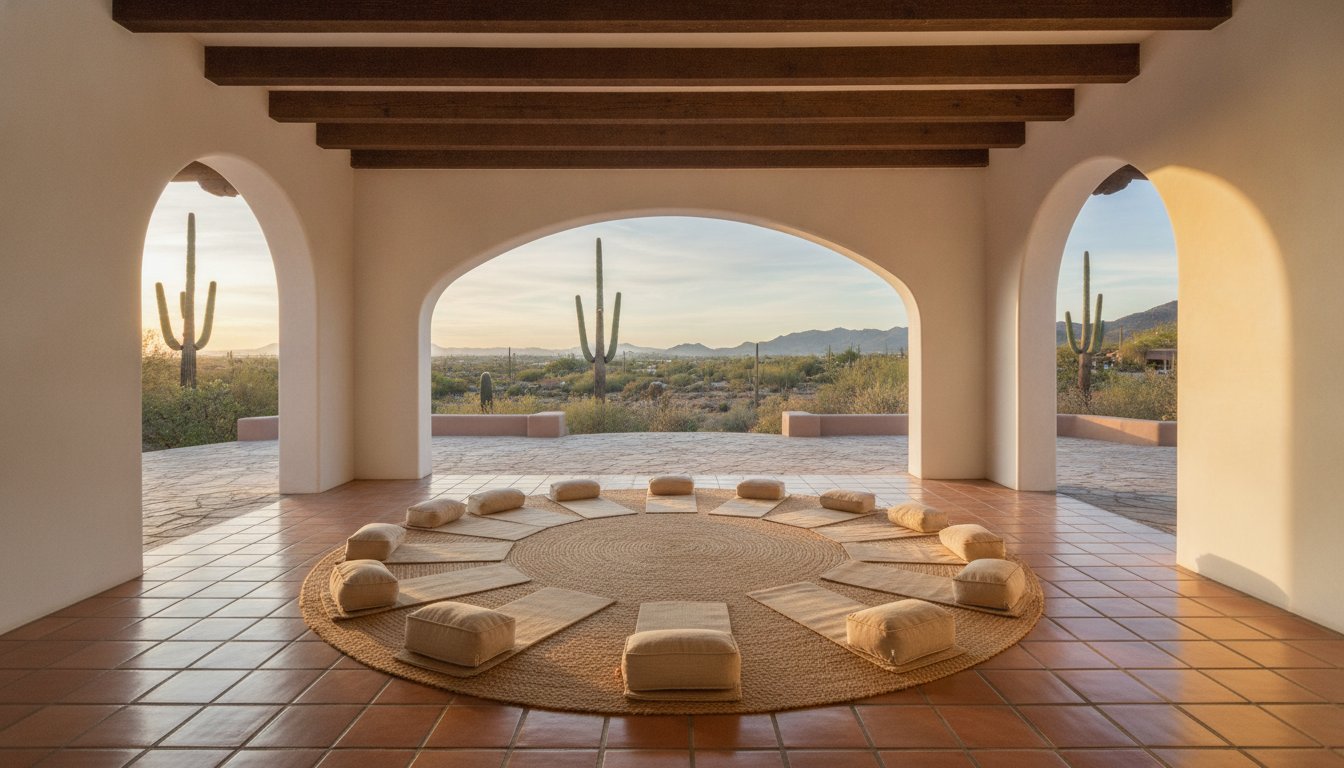

The success of a deep somatic session isn’t just about the facilitator’s skill. It’s fundamentally tied to the physical walls that hold the experience. You’ve likely felt the frustration of a session interrupted by the muffled sounds of a neighboring group or the physical restriction of a room too small for active movement. It’s difficult to guide participants into a state of surrender when the environment itself feels exposed or inadequate.
Finding the right breathwork retreat venue for 2026 requires looking beyond aesthetic beauty to prioritize the specific physiological needs of the nervous system. We agree that a high-end experience should feel like a private sanctuary, free from the coldness of corporate spaces or the distractions of shared facilities. You deserve a setting that acts as a silent partner in the healing process, blending historical charm with the modern comforts required for deep work.
This guide will walk you through the essential spatial and logistical requirements for hosting deep somatic work in a setting that prioritizes privacy and safety. We’ll examine how to evaluate acoustics, floor plans, and secluded estate buyouts to ensure a seamless hosting experience for your next transformative gathering.
Key Takeaways
- Understand why your physical surroundings act as a silent co-facilitator and how aesthetic harmony supports nervous system regulation during deep somatic journeys.
- Learn how to calculate precise floor space and acoustic requirements for a breathwork retreat venue to ensure participants have full range of motion and total sonic privacy.
- Discover the benefits of private estate buyouts and a dedicated hosting team that understands the unique flow and sensitivity of wellness retreats.
- Identify the logistical essentials for participant care, including specialized kitchen capabilities for retreat diets and dedicated spaces for post-session integration.
- Explore how the grounding atmosphere of a private guest ranch combines heritage and modern luxury to create a secure, high-end environment for your group.
Defining the Ideal Breathwork Environment for Deep Somatic Work
The success of a deep somatic journey depends on the integrity of the “container.” In the context of a breathwork retreat venue, the container is the physical environment that holds the collective energy of the group. It isn’t merely a room; it’s a silent co-facilitator that either invites the nervous system to relax or signals it to stay on guard. When participants enter a space that feels intentional, grounded, and aesthetically harmonious, their physiology begins to shift before the first breath is even taken.
Aesthetic harmony isn’t about superficial beauty. It’s about creating a sense of “place” through the blend of historical reverence and modern hospitality. A venue that balances heritage with refined, contemporary comforts provides a grounding element that is essential for intense emotional work. This fusion of old-world charm and modern convenience creates a bridge between the participant’s daily life and the depths of their inner world, allowing for a more profound experience.
Somatic Safety and Environmental Psychology
Architecture plays a profound role in somatic safety. High ceilings and expansive windows don’t just provide views; they encourage mental openness and prevent the feeling of being constricted during intense releases. Natural light is a primary signal of safety for the human brain, helping to regulate the circadian rhythm during multi-day retreats. We prioritize spaces that avoid “institutional vibes”, the cold, sterile feeling of corporate meeting rooms or generic hotels, because authentic vulnerability requires an atmosphere that feels like a home rather than a facility.
Natural landscapes surrounding the venue offer what psychologists call “soft fascination.” This gentle engagement with nature, like watching wind move through desert brush or the play of shadows on stone walls, is vital for post-session integration. It allows the brain to rest and process the experience without the overstimulation of urban noise or artificial environments.
Privacy as a Prerequisite for Transformation
True transformation is often loud, messy, and deeply personal. Seclusion is non-negotiable for facilitators who prioritize the “energetic bubble” of their group. Shared retreat centers, where strangers might wander past a window or hear emotional outbursts from a neighboring room, can inadvertently trigger a participant’s “freeze” response. This disruption can halt progress and make people feel self-conscious about their audible expressions.
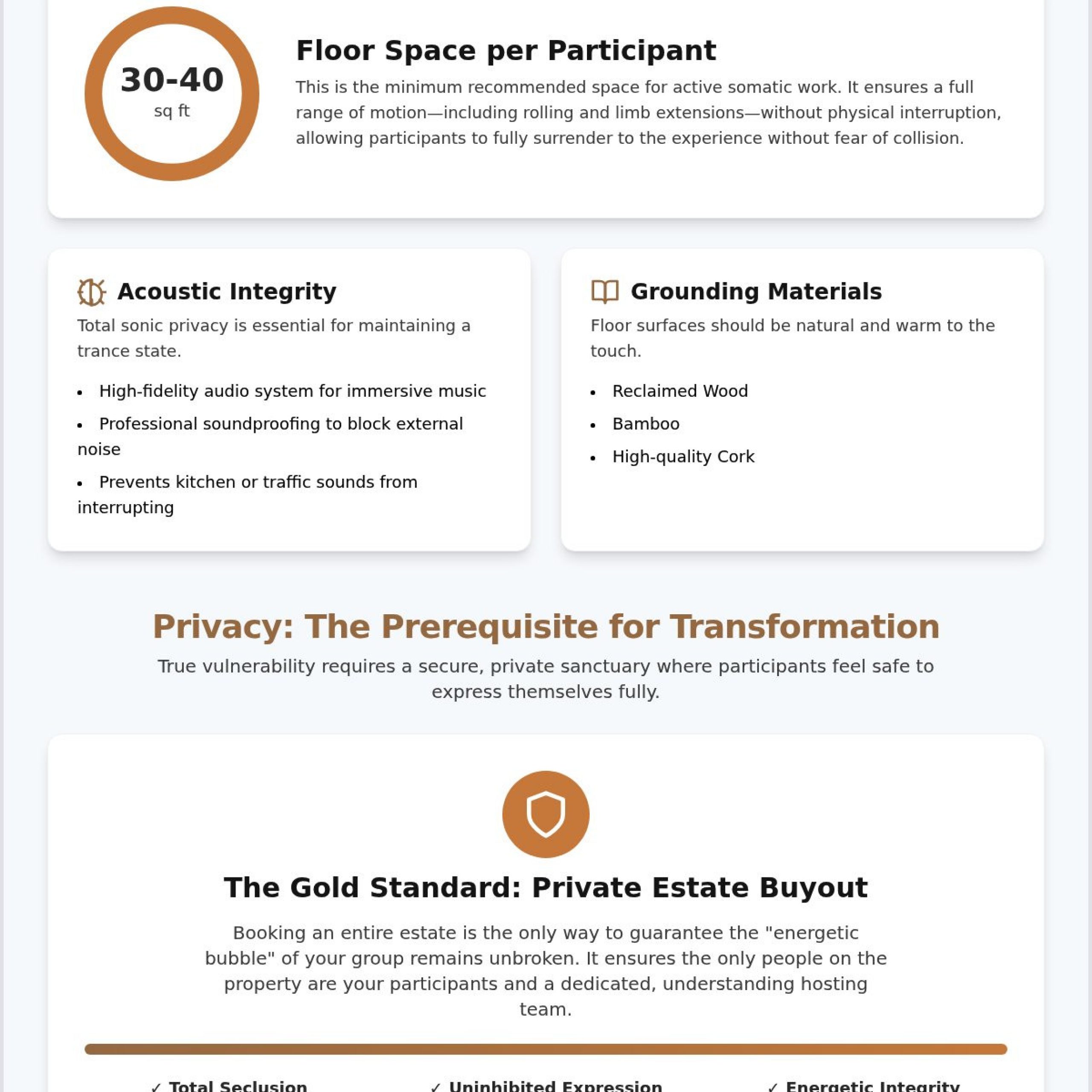
Choosing a private estate buyout is the gold-standard solution for a breathwork retreat venue. It ensures that the only people on the property are your participants and a dedicated, professional hosting team that understands the rhythm of your work. This total seclusion allows participants to scream, weep, and move with total freedom, knowing they are held in a secure, private sanctuary.
Technical Spatial Requirements for Breathwork Venues
While the energetic atmosphere sets the stage, the technical specifications of a breathwork retreat venue determine the safety and comfort of the actual session. Beyond the aesthetic charm, a facilitator must evaluate a space through a lens of physical practicality. The depth of a participant’s journey is often limited by their perceived physical boundaries. If they fear hitting a neighbor or a wall, they won’t fully surrender to the movement. Calculating the right dimensions is vital; for active somatic movement, facilitators should look for 30 to 40 square feet per participant. This allowance ensures a full range of motion, including rolling or limb extensions, without the risk of physical interruption.
Floor surfaces should prioritize natural materials like reclaimed wood, bamboo, or high-quality cork. These materials offer a warmth and tactile grounding that cold tile or laminate simply cannot provide. The acoustic integrity of the room is equally paramount. Deep work requires a high-fidelity audio system and soundproofing that prevents external noise, like kitchen activity or passing vehicles, from breaking the trance state. A truly professional setting allows the music to become an immersive, uninterrupted wave of support.
The Anatomy of a Breathwork Hall
Visibility and movement flow are the foundations of a well-designed hall. The layout must allow the lead facilitator and assistants to move freely between mats to provide hands-on support without creating bottlenecks. Storage for bolsters, blankets, and eye masks should be discreet yet accessible, preserving the room’s aesthetic harmony and avoiding a cluttered environment. Lighting controls are equally essential. Systems must be dimmable and lean toward the warm spectrum, avoiding the harsh blue light that triggers the body’s alert state and interferes with deep relaxation.
Climate and Air Quality Controls
Intensive breathing sessions significantly increase carbon dioxide levels and humidity in a room. High-volume air exchange and HEPA filtration are essential for maintaining a crisp, clean environment that supports high-oxygen intake. Since body temperatures can swing from intense heat to shivering cold during a journey, the HVAC system must be responsive and quiet enough to avoid being a distraction. The ideal temperature for a breathwork hall typically ranges between 68 and 72 degrees Fahrenheit to accommodate these rapid physiological fluctuations.
If you are searching for a space that meets these rigorous technical standards while offering a secluded, high-end environment for your group, focus on venues designed for total estate buyouts. This ensures that every technical detail, from the air quality to the floor texture, is under your control for the duration of the retreat.
The Case for Private Villa and Estate Buyouts
Choosing a breathwork retreat venue that offers a full estate buyout is more than a luxury; it’s a strategic choice for participant safety and nervous system regulation. Shared centers often force groups to interact with strangers in common areas or dining halls, which can trigger a subtle state of hyper-vigilance. For someone who has just completed an intensive emotional release, encountering a tourist or an unrelated group can feel jarring and invasive. A private villa provides a secure “bubble” where the only faces seen are those of trusted companions and a professional hosting team dedicated to your group’s well-being.
The “gracious host” model is central to this experience. Instead of navigating the cold bureaucracy of a large resort, facilitators work with a dedicated team that understands the specific flow and sensitivity of a retreat. This allows the space to be personalized, removing the generic hotel feel and replacing it with the specific energetic signature of your practice. You can explore private group lodging options for your next retreat to see how a dedicated estate supports this level of intimacy and professional care.
Exclusive Access vs. Shared Retreat Centers
Exclusive access grants you total control over the environment. You decide when the kitchen serves meals, how the noise levels are managed, and where group bonding occurs. While the upfront cost of a buyout is higher than booking a few rooms at a general resort, it’s often more cost-effective when you factor in the value of total privacy. Pricing your retreat to reflect this premium ensures you can provide a truly secluded environment where trust builds quickly and deeply among participants. This seclusion isn’t just a perk; it’s the foundation of a safe somatic container.
Lodging as a Tool for Integration
Integration doesn’t end when the session in the hall is over. It continues in the quiet, reflective moments of the night. Private or semi-private rooms are essential for “processing” time, giving participants a sanctuary to decompress without the pressure of social interaction. High-quality bedding and ergonomic support aren’t just boutique amenities; they’re vital tools for nervous system recovery. After a day of intense somatic work, the body needs a soft, restorative place to land. Blending this modern comfort with a sense of escape from daily life provides the perfect foundation for lasting transformation and deep rest.
Logistics and Participant Care Essentials
Logistics are the invisible threads that hold a transformative experience together. When searching for a breathwork retreat venue, the operational capabilities must match the spiritual intentions of your program. A truly supportive environment ensures that every logistical detail, from the timing of the morning tea to the accessibility of the walking paths, is handled with professional precision. This level of care allows the facilitator to stay fully present with the group, trusting that the physical needs of the participants are being met by a dedicated team that functions as a silent co-host.
Accessibility remains a vital part of this participant care. A high-end venue should be inclusive, ensuring that participants of all physical abilities can navigate the primary gathering spaces and lodging with ease. This commitment to inclusivity removes potential barriers to safety and belonging, allowing every guest to focus entirely on their inner work without the stress of physical obstacles. When the environment is designed for ease of movement, the nervous system can remain in a state of relaxed receptivity, facilitating deeper trust in the process.
Nourishment for Somatic Healing
The relationship between diet and deep somatic work is profound. Menus should be carefully curated to support the body’s healing process, often prioritizing anti-inflammatory ingredients that don’t tax the digestive system during active sessions. Heavy meals can ground the energy too much or cause discomfort during intensive breathing. Having a professional kitchen within a private estate buyout allows for total control over the menu, ensuring that dietary restrictions and specialized retreat protocols are followed perfectly.
Hydration is equally critical for flushing the system after a deep release. Dedicated tea stations, stocked with herbal infusions and electrolytes, should be woven into the daily flow. These small but essential details provide a sense of ritual and care, grounding participants as they transition between intensive hall sessions and periods of restorative rest. A professional kitchen team understands that nourishment is part of the therapy itself, not just a break from it.
Outdoor Spaces and Nature Connection
True integration often happens best under an open sky, where the scale of the landscape helps put internal shifts into perspective. Wide-open vistas and natural landscapes provide a sense of “soft fascination” that helps the mind process deep emotional releases without the pressure of analytical thought. High-quality integration spaces, such as fire pits for evening ceremonies, cozy lounge areas, and well-maintained nature trails, offer participants a variety of ways to ground themselves after a journey.
Creating “sacred” outdoor spaces for group reflections or sunrise meditations adds another layer of depth to the retreat experience. These areas act as a bridge between the internal work done in the hall and the expansive beauty of the natural world. If you are ready to host your next gathering in a space that prioritizes these essential care elements, you can book a high-end estate for your wellness retreat to ensure every detail is handled with grace and professionalism.
Hosting Your Breathwork Retreat at a Private Guest Ranch
A guest ranch offers a unique energetic weight that few other environments can match. The combination of wide-open vistas and deep-rooted heritage provides an immediate sense of grounding, which is essential when the work involves high-intensity emotional states. Selecting a guest ranch as your breathwork retreat venue allows you to tap into a “sense of place” that feels both ancient and revitalizing. It’s a setting where the horizon line acts as a reminder of the vastness of the human experience, helping participants feel both small and significant at once. This balance of Western heritage and modern comfort serves as a powerful anchor for the deep somatic work occurring within the hall.
By choosing a private estate rental, you eliminate the friction points often found in larger, more corporate facilities. You aren’t just another booking in a crowded calendar; you’re the sole focus of a team dedicated to your vision. This boutique approach simplifies the planning process, allowing you to customize everything from the layout of the primary hall to the specific herbs used in the evening’s communal meals. It’s about creating a bespoke container where every detail is polished and every need is anticipated before it’s even voiced.
A Sanctuary for the Facilitator
Organizer burnout is a real risk in the wellness industry. When you partner with a venue that understands the “gracious host” model, you offload the heavy lifting of logistics. This allows you to stay in “facilitation mode” rather than “troubleshooting mode.” Professional event hosting capabilities ensure that meal transitions, room turnovers, and technical needs happen seamlessly in the background. Integrating local heritage and architectural charm into your retreat narrative adds a layer of authenticity that participants can feel. It transforms the stay from a mere trip into a storied experience of renewal, preservation, and high-quality care.
Ready to Plan Your Transformative Event?
Before you send your first inquiry or Request for Proposal (RFP), prepare a clear list of your non-negotiables. This should include the specific floor space requirements for mat layouts and your needs for total acoustic isolation during active sessions. When you present a luxury venue to your potential participants, focus on the safety and exclusivity of the sanctuary you’ve curated for them. A high-end setting validates the importance of their inner work and justifies the investment in their own healing journey. If you’re ready to secure a space that prioritizes these standards, book your private estate buyout at Solana Spanish Villas to begin crafting your 2026 retreat experience.
To ensure your first site visit is productive, consider this brief checklist:
- Confirm total square footage of the primary gathering hall.
- Test the acoustic privacy from kitchen and staff areas.
- Verify the ratio of private bathrooms to guest rooms.
- Discuss the flexibility of meal times to match your session flow.
- Walk the nature trails to identify specific grounding spots for participants.
Crafting a Sanctuary for Transformation
The success of your 2026 retreat begins with the walls that hold your vision. We’ve explored how technical precision in floor space and acoustics must combine with the profound need for total group seclusion. A truly transformative breathwork retreat venue isn’t just a place to sleep; it’s a silent partner that speaks through its atmosphere and architectural heritage. When you prioritize a secure energetic container, you give your participants the permission they need to fully surrender to their healing journey.
By choosing an exclusive private estate buyout, you ensure that your group’s process remains undisturbed by the outside world. Solana Spanish Villas offers a unique blend of sophisticated historical charm and modern amenities specifically designed to support deep somatic work. Our team provides dedicated support for wellness facilitators, handling the logistics so you can stay present with your group. Secure your private retreat venue at Solana Spanish Villas today. We’re here to help you host an experience that resonates long after the final breath.
Frequently Asked Questions
What is the most important feature of a breathwork retreat venue?
The most important feature is the ability to create a secure, private “container” that ensures nervous system safety. A breathwork retreat venue must provide a sanctuary where participants feel safe to express deep emotions without fear of being heard or interrupted by outsiders. This sense of total seclusion allows for profound surrender, as the physical environment acts as a silent co-facilitator throughout the entire healing process.
How much floor space do I need per participant for a breathwork session?
For a session involving active somatic movement, you should calculate between 30 and 40 square feet of floor space per participant. This allows for a full range of motion, including limb extensions and rolling, without the risk of physical interruption from neighboring mats. Ensuring this generous spacing prevents participants from feeling restricted, which is essential for maintaining a state of openness and vulnerability during intensive work.
Is it better to host a retreat at a hotel or a private villa?
Hosting at a private villa or estate is generally superior to a hotel because it eliminates the presence of strangers in common areas. Hotels often have thin walls and shared facilities that can trigger hyper-vigilance in retreat guests. A private estate buyout provides an exclusive “bubble” where every person on the property is part of your intentional group, fostering a deeper level of trust and collective bonding.
What kind of ventilation is required for high-intensity breathwork?
High-intensity sessions require a robust HVAC system capable of high-volume air exchange and fresh air intake. Intensive breathing significantly increases carbon dioxide levels and humidity within the hall, making HEPA filtration and silent ventilation essential for participant comfort. The system should maintain a stable temperature range, typically between 68 and 72 degrees Fahrenheit, to accommodate the rapid physiological fluctuations and body temperature swings common during deep sessions.
How do I ensure participant privacy at a large venue?
The only way to truly guarantee total privacy at a large venue is through an exclusive estate buyout. This ensures that your group has sole access to all lounges, dining areas, and grounds, preventing accidental encounters with unrelated guests. When the entire property is dedicated to your retreat, you can control the noise levels and the energetic field of the space, creating a seamless experience from the hall to the guest rooms.
Can a guest ranch support a high-end wellness retreat?
A guest ranch is an ideal setting for a high-end wellness retreat because it offers a grounding connection to nature and local heritage. Modern guest ranches provide boutique resort amenities and professional event hosting while maintaining a sense of tranquility and escape. The combination of wide-open vistas and refined, comfortable lodging creates a sophisticated atmosphere that supports both the physical and emotional needs of discerning retreat participants and facilitators.
What questions should I ask a venue about their acoustic privacy?
You should ask about sound leakage from the kitchen or staff areas into the primary gathering hall. Inquire if the venue has experience hosting groups that require total acoustic isolation for audible emotional releases. It is also important to verify if they can accommodate high-fidelity audio systems without disturbing other guests; this becomes a non-issue if you have secured a private estate buyout for your breathwork retreat venue.
Do I need a commercial kitchen for my wellness retreat?
While you don’t necessarily need a commercial-sized facility, having access to a professional kitchen is vital for supporting specialized retreat diets. Breathwork often requires light, anti-inflammatory meals that don’t interfere with the somatic process. A professional kitchen team can manage complex dietary restrictions and time meal service perfectly with your session flow, ensuring that nourishment becomes a supportive part of the overall healing experience rather than a logistical distraction.
0 Comment