
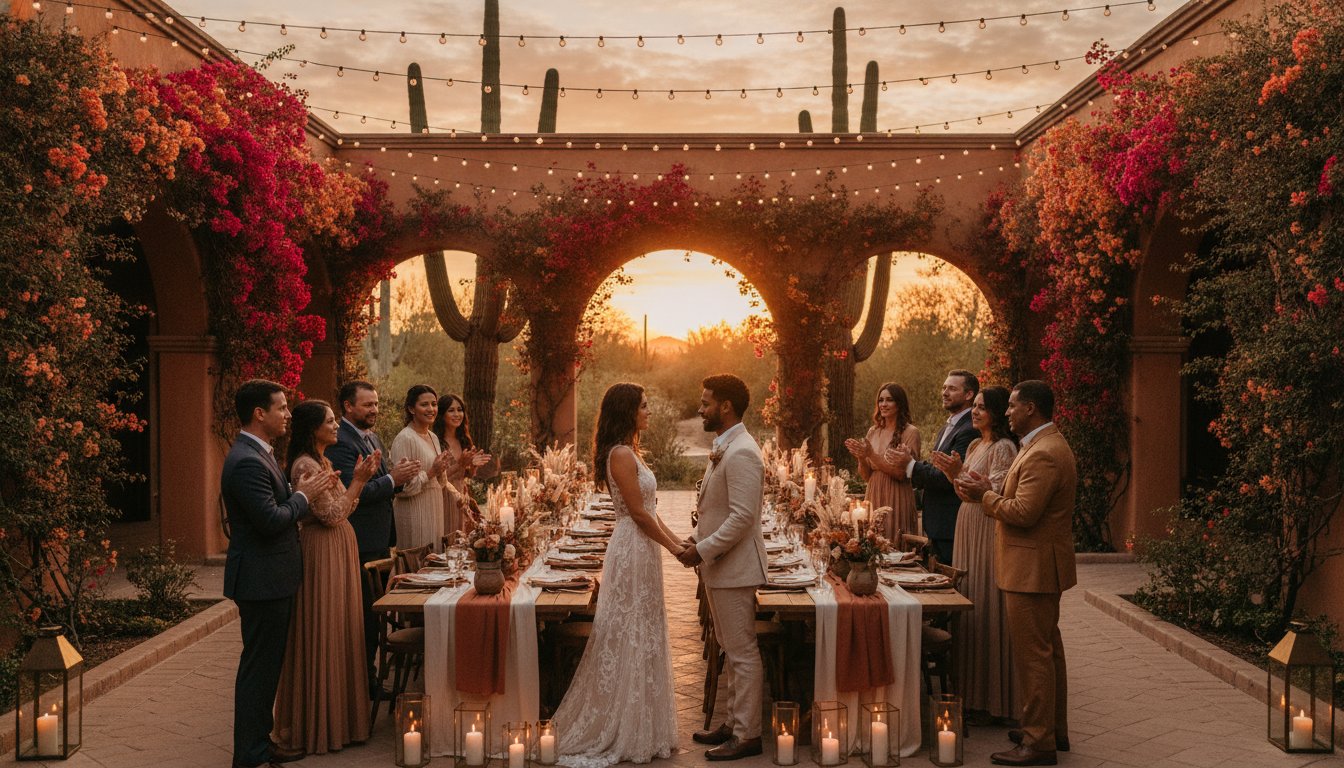

What if the most luxurious wedding you ever attend isn’t a grand ballroom filled with hundreds of acquaintances, but a sun-drenched courtyard shared with only your twenty closest friends? It’s a common struggle to face pressure from family to invite every distant relative, yet you likely crave something more intimate and meaningful. Learning how to plan a micro-wedding allows you to shift your focus from managing a massive crowd to curating a high-end, atmospheric experience. This isn’t about shrinking a traditional event. It’s about choosing quality and connection over sheer volume.
You deserve a celebration that feels full and vibrant, even with a smaller guest list. We understand the desire for a private retreat where the venue itself feels like a gracious host, offering both historical charm and modern refinement. In this 2026 guide, we’ll show you how to transform a five-hour event into a multi-day immersion. You’ll discover how to select a unique guest ranch that provides privacy, find the perfect balance of luxury for your headcount, and create a stress-free planning process that honors your story.
Key Takeaways
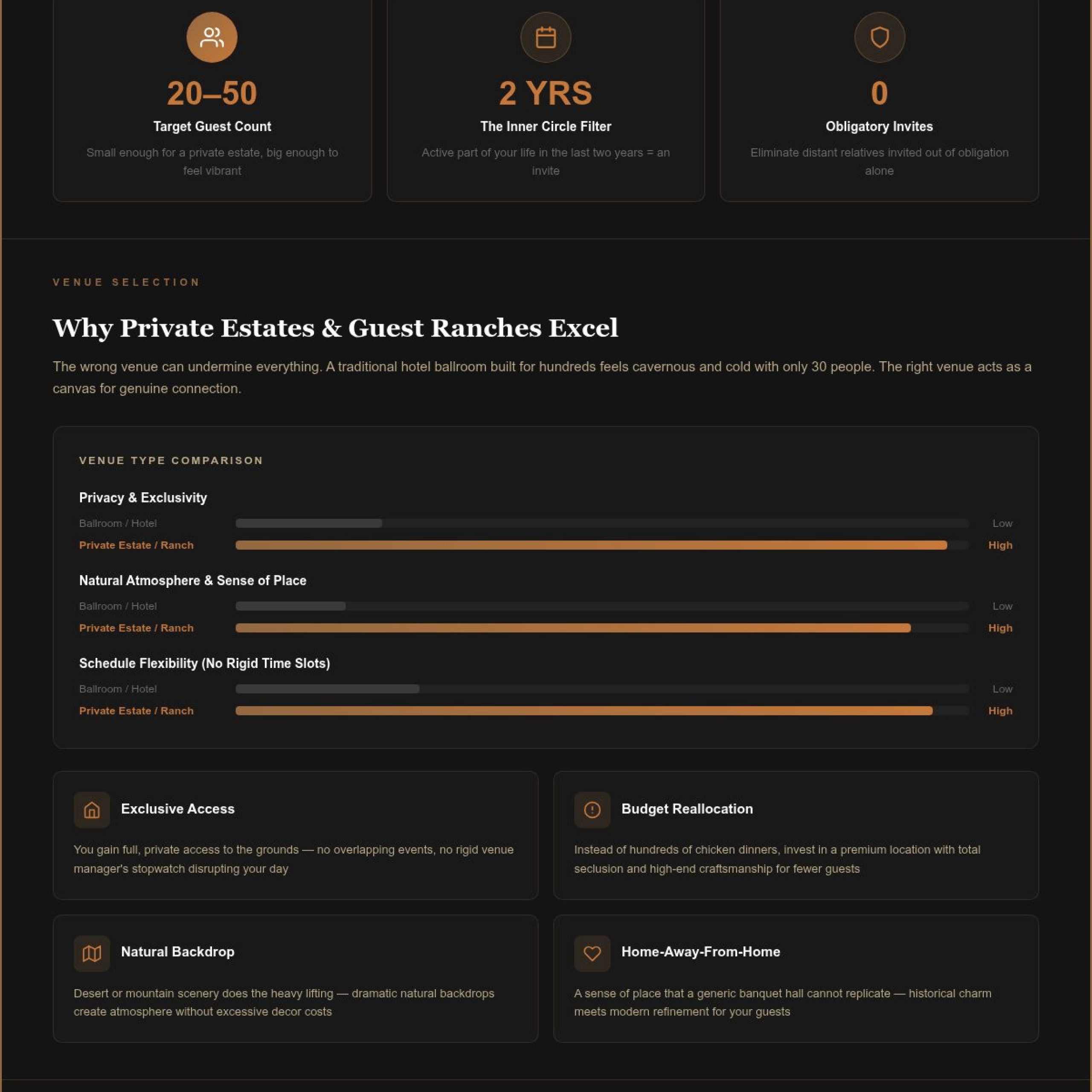
- Understand the shift toward intentionality by defining your celebration as a curated gathering of 20 to 50 guests rather than a traditional large-scale event.
- Discover how to plan a micro-wedding by selecting a private guest ranch or estate that offers an intimate, atmospheric backdrop without feeling sparse.
- Master the “Inner Circle” rule to navigate guest-list guilt and prioritize those who have been an active part of your life over the last two years.
- Learn to extend your celebration beyond a five-hour ceremony into a multi-day wedding retreat that emphasizes shared experiences and relaxation.
- Identify the specialized vendors and high-touch planning strategies required to execute a small-scale event with the same sophistication as a grand gala.
What is a Micro-Wedding? Defining the 2026 Small Celebration
A micro-wedding is a refined celebration typically hosting between 20 and 50 guests. While the headcount is smaller, the creative ambition is often much greater. In 2026, the focus has shifted away from the “obligatory” guest list toward a more intentional curation of those who truly matter in your daily life. This evolution moves away from traditional wedding formats that often prioritize sheer volume, favoring instead an immersive experience that unfolds over several days. When you research how to plan a micro-wedding, you aren’t just looking for a smaller room; you’re looking for a venue that acts as a canvas for genuine connection.
The Core Philosophy: Presence Over Perfection
The emotional landscape of a small wedding is vastly different from a large gala. By limiting the guest list, couples find they can actually spend quality time with every person they’ve invited. In 2026, we see a distinct preference for deep conversation over crowded dance floors. A micro-wedding is a high-touch, low-stress alternative to the traditional ballroom gala. It allows for a sense of tranquility and a focus on the beauty of the surroundings, where every detail reflects your heritage and personal story. For couples who want to anchor their celebration with an authentic, high-end dining experience, you can learn more about Via Trenta Osteria & Wine Bar. This intimacy fosters a feeling of a peaceful retreat rather than a performance.
Micro-Wedding vs. Minimony vs. Elopement
It’s easy to confuse these terms, but the distinctions are vital for your logistics. An elopement is an intimate exchange between the couple, often occurring in total privacy or with two witnesses. A “minimony” is a tiny ceremony of fewer than 10 people, frequently used as a commitment before a larger future event. The micro-wedding sits in the sweet spot for families. It provides enough guests to feel like a vibrant party, yet remains small enough to host at specialized guest ranch accommodations. This middle ground avoids the isolation of an elopement while bypassing the overwhelming stress of a 200-person guest list.
The 2026 landscape prioritizes the guest experience above all else. This means trading a five-hour reception for a multi-day wedding retreat. By choosing a private estate or guest ranch, you ensure that your celebration isn’t just an event, but a shared memory rooted in a specific, beautiful place. Understanding how to plan a micro-wedding starts with this mindset: you’re hosting a gathering where your guests feel truly seen, cared for, and relaxed.
Choosing the Right Canvas: Why Private Estates and Ranches Excel
Selecting a venue for an intimate group requires a fundamental shift in perspective. A traditional hotel ballroom designed for hundreds of guests often feels cavernous and cold when only 30 people are present. Instead, private estates and guest ranches offer a “right-sized” environment where the architecture and landscape embrace your guests rather than swallowing them. When you explore how to plan a micro-wedding, focus on finding a space that feels like a home away from home. These venues provide a sense of place that a generic banquet hall simply cannot replicate.
The financial logic of a smaller celebration is equally compelling. While average wedding costs continue to rise, the micro-wedding model allows you to reallocate your budget. Instead of paying for hundreds of chicken dinners, you can invest in a premium location that provides total seclusion and high-end craftsmanship. This approach transforms the wedding from a fleeting event into a meaningful investment in your guest’s comfort and experience.
The Private Estate Advantage
Privacy is the ultimate luxury. Public venues often operate like “wedding factories” with rigid time slots and overlapping events that can make your day feel transactional. A private estate eliminates these distractions. You gain exclusive access to the grounds, allowing for a relaxed rhythm that mirrors a peaceful retreat. This flexibility lets you design a celebration that isn’t rushed by a venue manager’s stopwatch. You can explore private properties for group stays that provide the perfect balance of historical reverence and modern hospitality.
The Guest Ranch Aesthetic in 2026
For 2026, the “Western Heritage” aesthetic is evolving into a sophisticated blend of rugged beauty and polished refinement. These venues utilize dramatic, natural backdrops to create a sense of atmosphere without requiring excessive decor costs. The desert or mountain scenery does the heavy lifting, providing a timeless canvas for your ceremony. If you are drawn to these wide-open spaces, you might find inspiration in The Ultimate Guide to Desert Wedding Venues. This style emphasizes comfort and quality, ensuring your celebration feels both grounded and luxurious.
By housing your guests onsite, you turn a single day into a cohesive group journey. Shared lodging transforms acquaintances into a community through morning coffee on the patio or late-night conversations by a fire pit. It is the hallmark of a gracious host to provide a space where everyone feels like a welcome guest in a historic home. For those seeking this level of intimacy, visiting Solana Spanish Villas can help you visualize how a private ranch serves as the ultimate backdrop for your celebration.
The Art of the Guest List: Curating an Intimate Atmosphere
The most significant hurdle in learning how to plan a micro-wedding is often the emotional weight of the guest list. You aren’t just choosing names; you’re deciding who will witness your most private promises. It’s natural to feel a sense of guilt when omitting distant relatives or old acquaintances. However, to maintain the tranquility and connection of an intimate event, you must shift your perspective. A guest list is not a debt to be repaid, but a circle to be protected.
To simplify this process, apply the “Inner Circle” rule. Ask yourselves: who has been an active, supportive part of our lives in the last two years? If you haven’t shared a meal or a meaningful conversation in that time, they likely belong in your extended circle rather than your core wedding group. This logic also supports a strict “No Plus One” policy. In a group of 30, a stranger can inadvertently shift the energy of the room. Your guests will understand that every seat is reserved for someone with a deep, personal connection to the couple.
Strategic Curation Framework
Organizing your list into categories helps manage family expectations. Start with your “Core” (immediate family and best friends), then “Close” (those you see monthly), and finally “Extended.” When handling the “Uncle Jim” situation, which is the distant relative your parents insist on inviting, be firm but kind. Explain that the venue has a strict capacity to preserve the intimate atmosphere. By framing the decision around the venue’s physical limits and your desire for a multi-day retreat, you move the conversation away from personal rejection.
Communicating the Vision
In 2026, digital stationery has become the standard for setting a sophisticated, modern tone. High-end digital invites allow you to share more than just a date; you can paint a picture of the experience through curated imagery and detailed itineraries. Use your invitations to emphasize the “micro” nature of the event. Phrasing like “An intimate gathering of our closest circle” or “A private retreat for our nearest and dearest” sets expectations early.
For those who cannot attend in person, managing expectations is key. You might offer a high-quality live stream for the ceremony, but be clear that the reception is a private, offline experience. This allows you to include a wider community without compromising the privacy of your guest ranch celebration. It’s about being a gracious host to everyone, whether they are sitting in your sun-drenched courtyard or watching from a screen thousands of miles away.
Designing the Itinerary: Beyond the Five-Hour Ceremony
The magic of an intimate celebration lies in the luxury of time. In 2026, the “slow wedding” movement is redefining how to plan a micro-wedding by trading the frantic pace of a single day for the steady rhythm of a retreat. Instead of a hurried five-hour reception, couples are curating multi-day experiences where the venue serves as a sanctuary for connection. This immersive approach works. It feels different. It allows guests to transition from travelers to participants, ensuring that the atmosphere remains relaxed and deeply personal from the first toast to the final farewell.
The Arrival and Welcome
Your first day sets a tone of tranquility. A relaxed welcome reception in a sun-drenched courtyard or by a historic fire pit encourages guests to shed the stresses of travel. By utilizing onsite amenities like scenic trails or private pools, you facilitate natural bonding before the ceremony even begins. This model of Event Venues with Lodging for Immersive Hosting ensures your inner circle feels at home from the moment they arrive. It’s about being a gracious host who prioritizes comfort over a rigid schedule.
The Ceremony and Celebration
The wedding day itself should feel like a natural crescendo rather than a performance. For the ceremony, consider a circular seating arrangement that places you at the heart of your community. This layout maximizes the sense of presence and ensures every guest has a front-row view of your vows. When considering how to plan a micro-wedding with a focus on atmosphere, the “long table” dinner is a masterclass in intimacy. Family-style dining under the stars encourages conversation and allows you to focus your budget on high-end, locally sourced catering and artisan details that reflect your personal taste.
The journey concludes with a quiet farewell brunch on the third day, providing a space for reflection before guests depart. By incorporating wellness activities like morning yoga or guided walks, you offer a holistic experience that honors both the occasion and the people attending. If you’re ready to host a celebration that feels like a peaceful retreat, book your private guest ranch stay to begin curating your unique itinerary.
Logistics and Planning: Making the Vision a Reality
The final phase of learning how to plan a micro-wedding involves mastering the logistics of a high-touch event. While you don’t need the same volume of staff as a 200-person gala, the quality of each interaction becomes far more visible. This is why many 2026 couples are opting for a specialized coordinator rather than a traditional large-scale planner. Detail matters here. A coordinator for an intimate event focuses on the subtle flow, such as the timing of a sunset toast or the personalized comfort of each guest, rather than managing a massive vendor fleet. It’s a shift from crowd control to true hospitality curation.
Since your guest list is intentionally curated, your photography and videography serve a dual purpose. They capture the raw, unhurried emotions of your inner circle while providing a window for those who weren’t present to experience the atmosphere. In a small group, a skilled photographer can blend into the background. They capture candid moments of connection that are often lost in larger crowds. These visual stories become the primary way you share your heritage and celebration with the world.
Vendor Selection for Small Groups
Boutique vendors are often a superior fit for small celebrations. Unlike high-volume companies that prioritize scale, boutique professionals value the craftsmanship of a singular, atmospheric event. When negotiating, look for packages that emphasize quality over quantity. You might trade a massive floral wall for a series of exquisite, hand-crafted centerpieces that guests can enjoy up close. This mindset also applies to the broader experience of your stay. Many couples now look for a Sanctuary for the Soul by integrating wellness elements like private yoga or guided meditation into their vendor list.
Final Preparation Checklist
Your site visit to a private estate should focus on the guest flow between indoor and outdoor spaces. Look for historic properties that offer both privacy and character. This ensures the environment feels like a lived-in home rather than a cold rental. Finalizing your rooming list is the last logistical hurdle. Assigning rooms based on family dynamics and friendships ensures that the communal spirit of the guest ranch thrives from the moment everyone checks in. If you’re ready to begin this journey, you can plan your private wedding retreat with Solana Spanish Villas to ensure every detail is handled with care.
Embrace a New Tradition of Intimacy
Choosing a smaller celebration isn’t about sacrifice. It’s about the profound luxury of presence. By trading a crowded ballroom for a curated gathering, you ensure that every guest feels like a cherished participant in your story. You’ve learned how to plan a micro-wedding by prioritizing intentional guest lists, selecting atmospheric venues, and extending the celebration into a meaningful multi-day retreat. This shift allows for genuine connection in a world that often feels too rushed.
Your wedding deserves a backdrop as unique as your commitment. Imagine a place where historic 1920s heritage meets modern luxury, providing a private guest ranch atmosphere that serves as a sanctuary for your soul. With lodging available for your entire inner circle, you can transform your vows into a shared journey of relaxation and reflection. Discover the perfect private estate for your 2026 micro-wedding and begin crafting an experience that will be remembered for generations. Your path to a stress-free, high-end celebration starts with a single, intentional choice.
Frequently Asked Questions
How many guests are typically at a micro-wedding?
A micro-wedding typically hosts between 20 and 50 guests. This specific headcount allows for a vibrant celebration while maintaining a deep sense of intimacy. Unlike a traditional large-scale gala, this size ensures that the couple can share meaningful moments with every person in attendance. It’s an intentional choice that prioritizes connection over a massive crowd, making the experience feel like a private dinner party rather than a performance.
Is a micro-wedding cheaper than a traditional wedding?
While a smaller guest list can reduce overall costs, most couples choose to reallocate their budget toward higher-end experiences. Instead of paying for hundreds of average meals, you might invest in premium catering, top-tier photography, or a historic guest ranch venue. This approach allows you to achieve a level of luxury that might be unattainable at a larger scale. It’s about trading volume for exceptional quality and a peaceful atmosphere.
How do I tell people they aren’t invited to our micro-wedding?
Transparency is the most gracious path. You should explain that you’ve chosen a small, intimate format to ensure a multi-day retreat with your core circle. Phrasing your decision around the venue’s physical capacity or your desire for a private experience helps remove the feeling of personal rejection. Many couples send out marriage announcements after the fact or offer a digital stream of the ceremony to include their wider community without compromising privacy.
What is the best type of venue for an intimate wedding?
The best venue for an intimate celebration is one that offers total privacy and a sense of place. A private guest ranch or historic estate provides a “right-sized” canvas that doesn’t feel empty with a small group. These spaces often include onsite lodging, which is essential for creating a cohesive group journey. Look for a location that acts as a gracious host, offering both historical charm and modern refinement to anchor your event.
Can we still have traditional elements like a first dance at a micro-wedding?
You can absolutely include traditional elements like a first dance, cake cutting, or toasts. One of the greatest benefits of learning how to plan a micro-wedding is the flexibility to keep only the traditions that feel authentic to you. Because the setting is more intimate, these moments often feel more emotional and less like a scripted show. You have the freedom to customize every detail to reflect your personal heritage and modern style.
How do I handle lodging for my guests at a private estate?
Managing lodging is a key part of hosting a successful wedding retreat. When you book an event venue with lodging, you can assign rooms based on family groups or close friendships to foster bonding. It’s helpful to provide a clear rooming list and a detailed itinerary before guests arrive. This ensures that your inner circle feels welcome and relaxed, turning a single ceremony into a shared, multi-day experience in a scenic setting.
Is a micro-wedding the same as an elopement?
No, these are distinct celebrations defined by their scale and intent. An elopement is typically a private exchange between the couple, often involving just two witnesses or immediate family. A micro-wedding is a full celebration with a curated guest list of up to 50 people. It includes all the hallmarks of a wedding, such as a meal and reception, but on a scale that emphasizes quality time and a boutique atmosphere.
What are the biggest mistakes to avoid when planning a small wedding?
The biggest mistake is choosing a venue designed for hundreds of people, which can make a small group feel lost. Another common error is failing to scale your vendor needs appropriately. When you focus on how to plan a micro-wedding, you must prioritize the guest experience through high-touch details rather than sheer volume. Avoid the trap of “obligatory” invitations; every seat should be reserved for someone who truly understands and supports your journey.
0 Comment