


What if the quiet confidence of a successful retreat began not with the first guest’s arrival, but with the precise architecture of your balance sheet? Many gifted organizers start with a vision of renewal and connection, only to find themselves kept awake by the looming weight of venue deposits and the opaque math of fixed versus variable costs. It’s a heavy burden to carry when you’re trying to hold space for others. You likely recognize that a transformative experience requires more than just a beautiful setting; it demands a robust retreat planning checklist that accounts for everything from hospitality-grade boutique venue costs to the 10% contingency fund recommended for 2026 events.
We agree that your focus should be on your guests, not on the fear of a financial deficit. This article promises to help you master the economics of hosting through a comprehensive framework designed to balance soulful experiences with sustainable profit margins. We’ll provide a clear financial roadmap, offering you the confidence to select premium venues and communicate the true value of your high-ticket offerings. By the end, you’ll have a repeatable model for profitable hosting that honors both your professional expertise and your guests’ need for a peaceful escape.
Key Takeaways
- Shift your perspective from the “Passion Trap” toward a model of Atmospheric Stewardship where emotional transformation and financial sustainability coexist.
- Master the essential line items of a modern budget by using our detailed retreat planning checklist to determine your precise break-even guest count.
- Transition to value-based pricing to ensure your high-ticket offerings reflect the profound impact of your work rather than just the cost of overhead.
- Leverage the private estate buyout as a strategic tool to eliminate competing distractions and maximize your profit margins through exclusive lodging.
- Secure your financial future with registration frameworks that protect your deposit and hosting styles that turn first-time guests into lifelong community members.
The Economic Foundation: Why Some Retreats Thrive While Others Fail
True profitability in the retreat world is a dance between the ethereal and the practical. It’s the point where a guest’s life-changing breakthrough meets your surgical operational efficiency. Many gifted hosts fall into the “Passion Trap,” where they focus so much on the curriculum that they neglect the spreadsheet. This results in an event that is emotionally rich but financially draining. In 2026, we’ve seen a decisive shift toward smaller, high-ticket gatherings at private estates. This trend is driven by the 32 million remote workers in the U.S. who crave authentic connection over corporate coldness. By embracing “Atmospheric Stewardship,” you position the venue as a partner in the transformation, justifying a premium price point while maintaining a rigorous retreat planning checklist to protect your margins.
The Breakdown of Retreat Revenue Streams
A sustainable model doesn’t rely on a single check. Your revenue should flow from multiple sources to ensure the business remains resilient. Primary tuition is your foundation, but the most successful organizers look for ways to deepen the guest’s investment. Consider these streams to enhance your bottom line:
- Add-on services: Offer private coaching sessions or specialized breakout workshops that provide a more intimate level of guidance than the main program.
- Merchandise and digital follow-ups: Extend the revenue lifecycle beyond the final day with curated physical goods or digital recordings that allow the transformation to continue at home.
- Tiered lodging: Provide options for premium suites versus shared accommodations to capture different budget levels within your high-ticket audience.
Common Financial Pitfalls for New Organizers
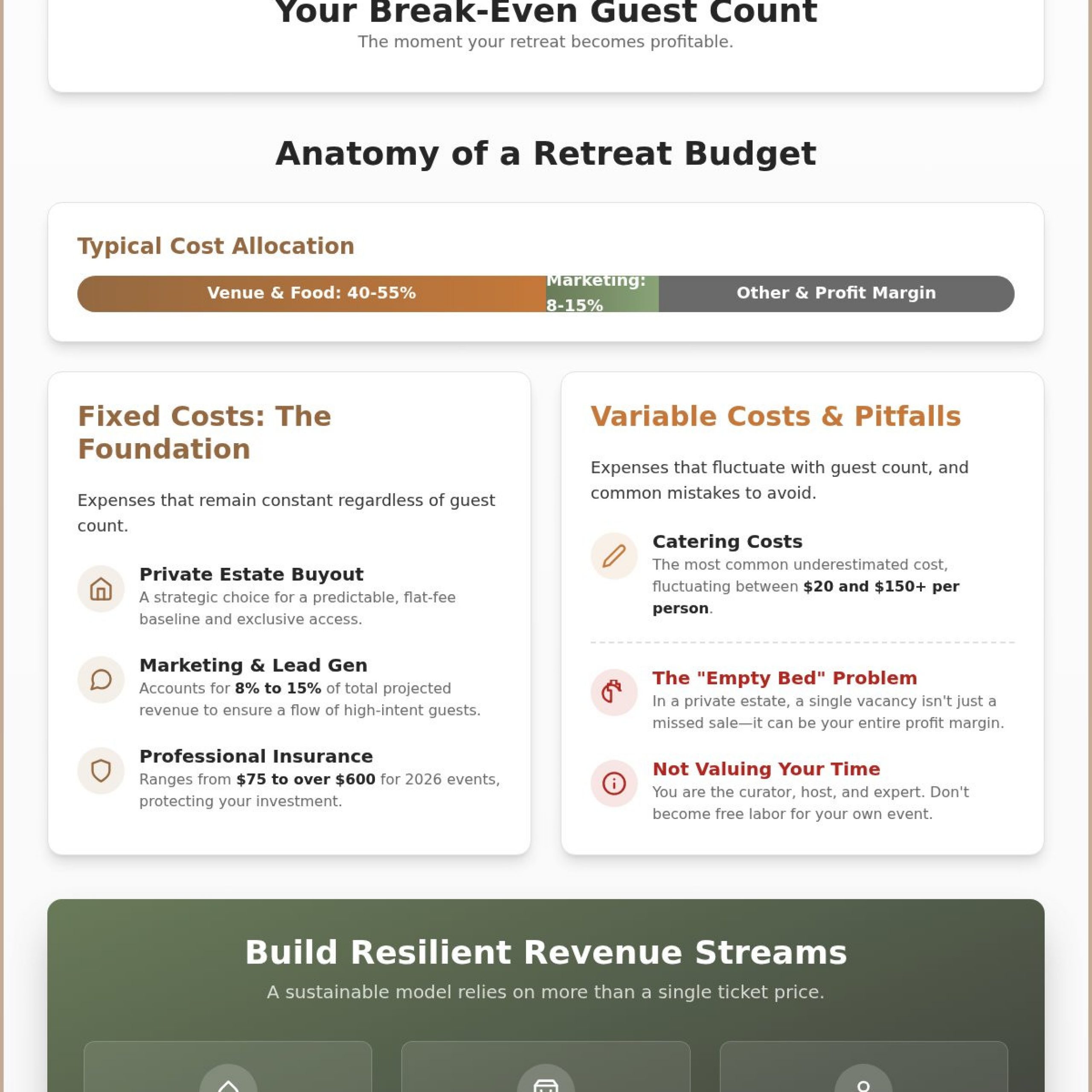
Success requires a deep understanding of event management principles to avoid the quiet leaks that sink a budget. New hosts often underestimate variable costs like catering, which can fluctuate between $20 and $150 per person depending on the service style. There’s also the “Empty Bed” problem. In a private estate setting with limited capacity, a single vacancy isn’t just a missed opportunity; it’s often where your entire profit margin was hidden. Many hosts also fail to value their own time. You’re the curator and the gracious host, not free labor. When you account for the 40% to 55% of your budget typically consumed by the venue and food, every detail in your retreat planning checklist must be accounted for to ensure you aren’t paying for the privilege of working. A private estate buyout can simplify these calculations by providing a fixed cost for lodging and exclusive access, giving you total control over the environment and your financial outcome.
The Comprehensive Retreat Profitability Template
A successful retreat is built on the interplay between a vision and a spreadsheet. While the atmosphere provides the soul, the budget provides the structure that allows that soul to thrive. To move beyond the uncertainty of deposits and guest counts, your retreat planning checklist must include a rigorous breakdown of every financial lever. In 2026, the most resilient organizers use a simple “Break-Even Math” formula: Total Fixed Costs divided by (Ticket Price minus Variable Cost per Guest). This calculation reveals the exact moment your retreat moves from a passion project into a profitable venture. Knowing your minimum guest count early allows you to focus on the “gracious host” experience rather than the stress of the ledger.
Fixed Costs: The Non-Negotiables
Fixed costs are the expenses that remain constant, regardless of whether you host five guests or fifteen. A flat-fee private estate buyout is often the most strategic choice here. It eliminates the complexity of per-room negotiations and provides a predictable baseline for your lodging. Beyond the venue, your marketing and lead generation budget should account for 8% to 15% of your total projected revenue. This ensures a steady flow of high-intent participants. Don’t overlook professional event insurance, which in 2026 typically ranges from $75 for small gatherings to over $600 for larger events. Finally, investing in high-quality facilitators ensures the transformative value that justifies a high-ticket price point.
Variable Costs: Scaling with Your Group
Variable costs breathe with your guest count, requiring careful stewardship to prevent margin erosion. Catering is often the largest of these, with 2026 market rates for plated dinners reaching up to $120 per person. When you manage dietary requirements and service styles, look for ways to enhance the experience without bloating the bill. Welcome kits and materials serve as tactile reminders of the journey, but these should be sourced with an eye for quality over quantity. Logistics and transport can be a hidden drain, so consider venues that offer a guest ranch style experience where everything happens in one cohesive location. This reduces the need for constant shuttling and keeps the focus on the serene environment you’ve curated. If you’re looking for a setting that balances these logistics with historical charm, a wellness retreat venue with all-inclusive options can significantly simplify your variable cost tracking as part of your retreat planning checklist.
Value-Based Pricing: How to Charge for Transformation
Pricing a high-end experience requires a shift in perspective from “cost-plus” accounting to a value-based model. Instead of simply totaling your expenses and adding a margin, consider the profound impact your retreat has on a guest’s life or a company’s culture. For corporate clients, the return on investment is quantifiable. Research indicates that companies with strong team bonding strategies see a 73% decrease in employee turnover, and highly engaged employees can lead to 21% higher profitability. When you position your event as a catalyst for these results, a four-figure price point becomes a strategic investment rather than a luxury. For a deeper dive into these calculations, consult our guide on how to price a wellness retreat to ensure your numbers reflect the true weight of your expertise.
Tiered Pricing and Early Bird Incentives
A well-structured retreat planning checklist should always account for the psychology of commitment. Early bird deadlines aren’t just for cash flow; they create a necessary sense of urgency that helps guests move past the “someday” mindset. You can further optimize your margins by offering VIP tiers. These might include exclusive access to heritage suites, private one-on-one sessions, or curated local gifts. By providing these premium options, you allow guests to self-select their level of intimacy and luxury. This approach also creates the financial room to offer scholarship spots, ensuring your retreat remains accessible to a diverse community without compromising your overall profitability.
Integrating 2026 Wellness Trends into Your Price
In 2026, the definition of luxury has moved away from packed itineraries toward “nervous-system-friendly” scheduling. Guests are increasingly willing to pay more for a “less is more” approach that prioritizes spaciousness, integration, and silence. A private villa setting serves as a sanctuary that a standard hotel simply cannot replicate, offering a level of privacy and safety that justifies premium pricing. This sense of exclusivity is a major driver in modern wellness retreat marketing. When your retreat planning checklist prioritizes the quality of the environment and the pace of the experience, you align your pricing with the deep renewal your guests are searching for. Choosing a private estate buyout ensures that no outside noise or distractions can break the container you have so carefully built.
Venue Selection as a Profit Strategy
Choosing a venue is the most significant decision on any retreat planning checklist. It is often the largest line item, consuming 40% to 55% of the total budget. However, a heritage-conscious space isn’t just an expense; it’s a primary marketing asset. A boutique guest ranch with a storied past creates an immediate sense of value that justifies a premium ticket price. This “Atmospheric Stewardship” allows you to sell an experience of tranquility and escape that a standard hotel room simply cannot offer. When the setting feels like a private sanctuary, guests perceive the transformation as already underway before the first session begins.
The “Private Buyout” advantage is a critical component of this strategy. Sharing a facility with vacationing families or loud corporate mixers can shatter the delicate container of a wellness intensive. By securing the entire estate, you eliminate competing noises and distractions. This exclusivity ensures your guests feel like the sole focus of a gracious host, which is essential for maintaining the high-ticket price point. It also allows you to customize every corner of the environment, from the scent in the library to the rhythm of the communal meals.
The Economics of the Private Estate Rental
Consolidating your lodging and event space into a single line item simplifies your financial math and reduces “leakage.” Leakage occurs when guests leave the site for meals or entertainment, breaking the group synergy and often leading to unexpected logistical costs. Utilizing private group rentals allows you to keep the entire experience contained. This model provides superior control over the guest journey and ensures that every dollar spent on hospitality contributes directly to the retreat’s impact. It also streamlines your variable costs, as you aren’t negotiating separate room blocks and meeting room rentals.
Weekday vs. Weekend Booking for Better Margins
Timing is a powerful lever for increasing your profit margins. While weekend dates are often in high demand, the mid-week corporate offsite is a growing trend for 2026. With over 32 million Americans working remotely, companies are looking for Tuesday-to-Thursday windows to build team connection. These weekday bookings often provide better value, allowing you to negotiate value-adds like late checkouts or upgraded welcome receptions instead of simple price discounts. Similarly, leveraging off-peak seasons for high-margin wellness intensives can significantly lower your overhead. If you are ready to secure a venue that serves as both a sanctuary and a strategic asset, view our private guest ranch accommodations to start your next retreat planning checklist with confidence.
Executing the Profitable Retreat: From Deposit to Post-Event
The transition from a conceptual vision to a lived experience requires a shift in your retreat planning checklist toward tactical protection. Protecting your cash flow is the most vital step in this phase. Many organizers find that the anxiety of a venue deposit vanishes when they implement a rigorous registration framework. By securing non-refundable deposits from your guests, you create a financial buffer that honors your commitment to the venue and your facilitators. Gracious hosting begins with clear boundaries. It ensures that the container you’ve built remains stable and respected from the very first interaction.
Registration and Payment Logistics
Conversion for high-ticket retreats often depends on the flexibility of your payment structures. While a single payment is ideal for immediate cash flow, a well-designed retreat registration payment plan can significantly increase your enrollment rates by making the investment more manageable. It’s essential to pair these plans with a transparent cancellation policy. This isn’t about rigidity; it’s about mutual respect. A well-communicated policy reduces the risk of financial friction and allows you to maintain the “gracious host” persona even during difficult conversations. This level of professional stewardship is a hallmark of a sustainable hosting model.
Choosing a Partner, Not Just a Venue
A boutique venue with heritage-conscious values does more than provide a bed; it acts as a silent partner in your success. When you select a space with professional hosting capabilities, you reduce your own operational overhead. You can focus on the transformation while the venue stewards the atmosphere. This sense of place becomes a core part of your brand identity, encouraging high re-booking rates that lower your long-term marketing costs. To see how a sanctuary can elevate your next event, explore our private villas for groups and discover a setting designed for both deep renewal and financial health.
The 10-Point Financial Health Check
Before you welcome your first guest, run your numbers through this final retreat planning checklist to ensure your margins are secure:
- Confirm your break-even guest count is met.
- Verify all variable costs, such as catering and transport, are locked in.
- Ensure event insurance is active and covers your specific activities.
- Set aside a 10% contingency fund for unexpected needs.
- Review guest dietary requirements to prevent catering overages.
- Confirm all facilitator contracts are signed and deposits paid.
- Track your marketing spend against your guest acquisition cost.
- Validate that all guest payment plans are on schedule.
- Plan your post-retreat upsell to a digital membership or future date.
- Account for your own time as a professional cost center.
Stewardship and Sustainability: Your Path to Profitable Hosting
Mastering the economics of a retreat isn’t about sacrificing the soul of your event for the sake of a spreadsheet. It’s about ensuring that your vision has the financial foundation to thrive year after year. By moving toward value-based pricing and embracing the strategic advantage of a private estate buyout, you create a container where both your guests and your business can flourish. Your retreat planning checklist is now a roadmap for Atmospheric Stewardship, allowing you to focus on the “gracious host” experience while your margins remain secure.
When you’re ready to elevate your offering, choose a partner that values heritage and hospitality as much as you do. Our historic 1920s guest ranch provides a private boutique estate experience with expert event hosting support to ensure every detail is handled with care. Plan your next high-margin retreat at Solana Spanish Villas and step into a setting where transformation and profitability meet. You’ve already got the vision to change lives; now you’ve the framework to build a legacy.
Frequently Asked Questions
Is it possible to make a profit on a small retreat of 10-12 people?
Yes, small groups often yield higher margins when you prioritize intimacy and exclusivity. By utilizing a private guest ranch buyout, you consolidate lodging and event costs into one predictable line item. This allows you to charge a premium for a “sanctuary” experience. Your retreat planning checklist should focus on high-ticket tuition for these limited spots, as intimate groups require less operational overhead while fostering deeper, more valuable transformations for your participants.
How much should I budget for marketing my first retreat?
You should generally allocate between 8% and 15% of your total projected revenue toward marketing and lead generation. For your first event, staying closer to the 15% mark helps build necessary momentum and brand awareness. This budget typically covers social media advertising, email software, and professional content creation. Effective marketing ensures you hit your break-even guest count early, which is a vital step in any professional retreat planning checklist.
What is the typical profit margin for a wellness retreat?
Typical profit margins for wellness retreats in 2026 range from 20% to 40% after all operational costs are settled. Achieving this requires a careful balance of fixed venue fees and variable catering expenses. Organizers who utilize private estate rentals often see better margins because they control the entire environment. This control reduces “leakage” from external vendors and allows for value-based pricing that reflects the profound, transformative nature of the experience.
Should I include airfare in the retreat price or keep it separate?
It’s generally best to keep airfare separate from your retreat price. Including flights adds significant logistical complexity and financial risk due to fluctuating ticket prices and individual travel preferences. Instead, focus your pricing on the “on-site” experience, including boutique lodging, curated meals, and your specialized workshops. You can still support your guests by providing clear arrival windows and offering coordinated ground transportation from the nearest major airport to the guest ranch.
How do I handle guests who want a discount or a late payment plan?
We recommend offering structured payment plans rather than price discounts to maintain the integrity of your high-ticket offering. Discounts can inadvertently devalue the transformative work you’re providing. A gracious host approach involves being firm on value while being flexible on timing. Reviewing our guide on building a retreat registration payment plan can help you create clear payment schedules that increase conversion rates for premium retreats without eroding your profit margins or creating resentment among guests who may have paid the full tuition upfront.
What are the hidden costs of hosting a retreat at a private estate?
Hidden costs often include event insurance, which can range from $75 to $600 depending on group size, and a necessary 10% contingency fund for unexpected needs. You should also account for the value of your own time and travel. Other often-overlooked items include gratuities for service staff, specialized dietary sourcing for catering, and the shipping of materials for welcome kits. Tracking these small leaks is essential for maintaining a healthy bottom line.
How far in advance should I book my venue to ensure profitability?
Booking your venue 4 to 6 months in advance is the standard for ensuring profitability. This timeline provides ample opportunity to secure early bird registrations, which are critical for covering your initial deposits. It also allows you to execute a methodical, multi-phase marketing campaign. Waiting too long limits your venue choices and often forces you into higher marketing spends to fill seats quickly, which can significantly eat into your final margins.
Do I need specific insurance to host a profitable retreat?
Yes, professional general liability insurance is a non-negotiable requirement for hosting any profitable retreat in 2026. This coverage protects you against claims related to bodily injury or property damage during the event. Many premium venues and private estates require proof of insurance before they allow you to host on their grounds. It’s a small investment, often under $150 for small groups, that provides essential peace of mind for both the organizer and the guests.
0 Comment