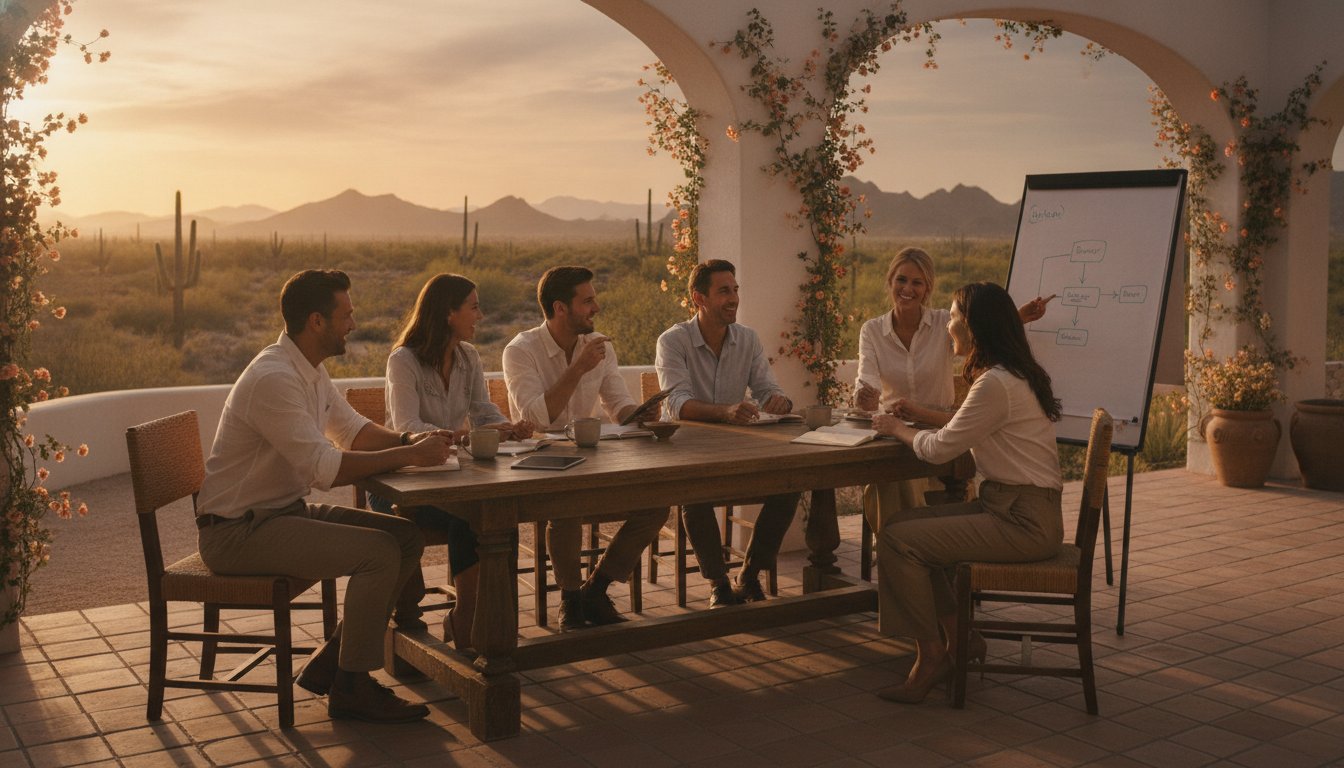

Did you know that 91% of companies planning offsites today are managing remote or hybrid teams? While these gatherings are essential for culture, the pressure to deliver a perfect agenda for 3-day corporate retreat often leads to over-scheduled days that leave teams exhausted rather than inspired. It’s a common struggle to find that sweet spot between necessary strategy sessions and the quiet moments of connection that happen over a shared meal or a walk through a sun-drenched landscape.
We understand the hesitation that comes with planning these events. You want to avoid the “forced fun” that feels cringeworthy while ensuring your business goals are met. You deserve a plan that honors both your professional objectives and your team’s need for renewal. This article promises to help you master the art of the 72-hour offsite, blending high-impact strategy with meaningful connection in a way that feels both professional and deeply personal.
We’ll walk you through a turnkey schedule that moves your team from operational noise to strategic clarity. By the end, you’ll have a blueprint for an experience that doesn’t just fill a calendar, but actually fuels a 26% increase in productivity and a lasting sense of shared purpose.
Key Takeaways
- Learn why the 72-hour “Goldilocks” zone is the ideal timeframe for transforming team dynamics and achieving strategic clarity.
- Discover how to design a “soft landing” arrival that sets an intentional tone and moves beyond standard icebreakers from the start.
- Master a high-impact agenda for 3-day corporate retreat using the 20/80 rule to balance deep work with interactive, collaborative workshops.
- Transition from ideas to action by distilling three days of insights into a concrete post-retreat manifesto and actionable business goals.
- Understand why exclusive-use venues like private estates and guest ranches foster the psychological safety needed for authentic team breakthroughs.
The Architecture of a 3-Day Corporate Retreat Agenda
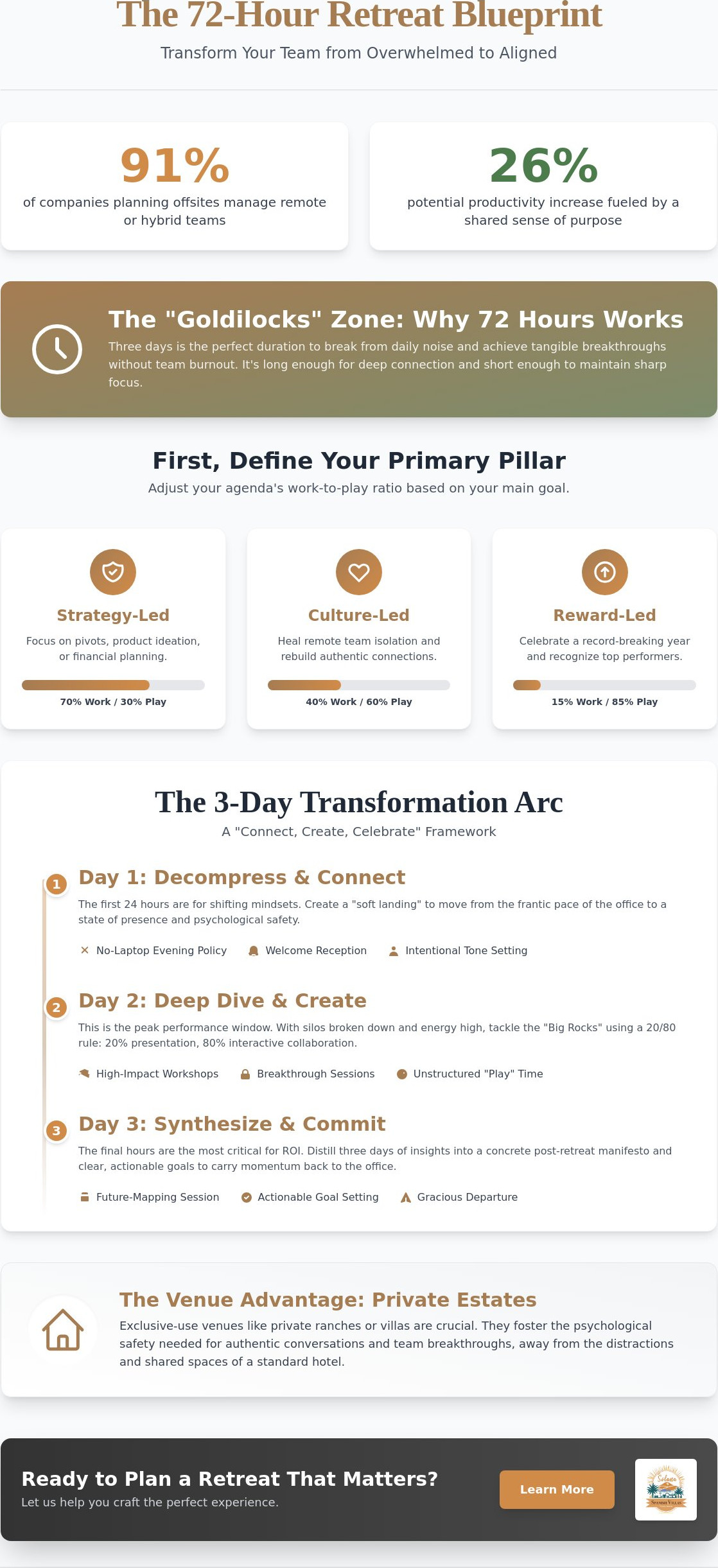
A well-crafted agenda for 3-day corporate retreat is more than a simple sequence of meetings. It’s a carefully designed arc that allows your team to transition from the frantic pace of the office to a state of focused, creative clarity. Seventy-two hours represents the “Goldilocks” zone for corporate transformation. It’s long enough to break down the barriers of daily operational noise, yet short enough to keep the momentum high and the focus sharp. Since the average retreat length is 3.78 days, a three-day stay provides the perfect duration to achieve tangible business breakthroughs without risking burnout.
To ensure success, we suggest the “Connect, Create, Celebrate” framework. This structure prioritizes human connection before diving into high-stakes strategy. Before the first session begins, set clear KPIs. Are you looking for three new product ideas, a resolved cultural conflict, or a finalized budget? By identifying these “Big Rocks” first, you ensure the foundational goals aren’t crowded out by the “Sand” of minor logistical details or unplanned distractions. Mastering the agenda for 3-day corporate retreat requires this delicate balance between rigid productivity and the fluid space needed for innovation.
The Psychological Arc: From Noise to Clarity
Modern professionals don’t just “turn off” when they arrive at a new destination. It typically takes a full 24-hour “unplugging” period for the mind to settle into a retreat environment. Use Day 1 to soften the edges of the corporate mindset and break down departmental silos. Day 2 is your peak performance window where you build bridges and tackle your hardest problems while energy is high. The final four hours of Day 3 are actually the most critical for your return on investment. This is when ideas are distilled into actionable goals, ensuring that the inspiration of the retreat translates into the reality of the office.
Defining Your Primary Retreat Pillar
Your agenda should reflect the current emotional state of your company. Identify if this is a Strategy-Led retreat focused on a pivot, or a Culture-Led gathering designed to heal a remote team’s isolation. Some events are Reward-Led, falling more into the traditional category of Corporate entertainment to celebrate a record-breaking year. Adjust your work-to-play ratio accordingly. A strategy-heavy retreat might lean toward 70% deep work, while a cultural reset requires more space for organic, unhurried conversations in a tranquil setting. This intentionality ensures every minute spent away from the desk serves a higher purpose.
Day 1: Arrival, Decompression, and Setting the Intentional Tone
The first day of your offsite is the most critical window for shifting the collective mindset. While many planners treat arrival as a mere logistical hurdle, a truly effective agenda for 3-day corporate retreat uses these initial hours to signal a departure from the ordinary. Instead of the sterile, hurried atmosphere of a standard hotel lobby, imagine your team arriving at a private estate where the air is still and the architecture tells a story. This “soft landing” experience allows for immediate decompression. It’s about more than just handing out room keys; it’s about inviting your colleagues into a shared home where the pressure of the inbox begins to fade.
One of the key benefits of a company retreat in a nature-based setting is the instant physiological shift it triggers. By leveraging the tranquil atmosphere of a guest ranch or a private villa, you create a sense of psychological safety from the moment they step out of the car. This is the time to implement a “no-laptop” policy for the evening. By removing the temptation to “just check one thing,” you give your team permission to be fully present. This boundary is essential for moving beyond the surface-level interactions that dominate remote or hybrid work environments.
The First 4 Hours: Logistics and Welcome
The first four hours should feel unhurried yet structured. Coordinate arrivals with a curated welcome reception featuring local flavors rather than a generic buffet. Property tours serve a dual purpose here. They orient the team to the physical space and ground them in their new environment. During this walk, introduce the “House Rules” for digital boundaries. Be clear about when the team is expected to be “on” and when they are encouraged to disconnect. This clarity reduces the anxiety often associated with offsite events and ensures everyone starts on the same page.
Evening: The “Shared Table” Experience
As dusk settles, transition to a family-style dinner. A shared table is far superior to a formal banquet for fostering genuine bonding. It encourages the passing of plates and the natural flow of conversation. This relaxed setting is the perfect time for a “State of the Union” address that feels more like a fireside chat than a board presentation. If you’re looking for the perfect backdrop for this kind of connection, consider the intimate setting of a private villa. End the night with low-stakes social activities like stargazing or fireside storytelling. These moments, free from cringeworthy icebreakers, are where the most profound team alignment begins to take root.
Day 2: The Deep Dive—Collaboration and Breakthroughs
Day two is the heart of your journey. Having shed the weight of travel and daily distractions on day one, your team is now primed for deep work. The architecture of a successful agenda for 3-day corporate retreat relies heavily on the 20/80 Rule. This principle suggests that only 20% of your time should be spent on passive presentations, while 80% is dedicated to interactive workshops and collaborative problem-solving. By tackling your most complex strategic hurdles while energy is high in the morning, you capitalize on the cognitive clarity that a retreat environment provides.
Research from Harvard Business Review indicates that companies can see a 26% increase in productivity following a well-structured offsite. This isn’t achieved through endless slideshows, but through active engagement. We recommend moving sessions outdoors whenever possible. “Walk and talk” breakout sessions along shaded pathways or heritage gardens allow for a more fluid exchange of ideas than a boardroom ever could. This physical movement mirrors the mental agility you’re asking of your team, turning a simple stroll into a catalyst for innovation.
Morning: Strategic Alignment and “Big Thinking”
Start the day with a “Start, Stop, Continue” session to evaluate departmental workflows with fresh eyes. This exercise encourages radical honesty in a safe, unhurried space. Incorporate thirty minutes of individual reflection in total silence; this allows introverted team members to process their thoughts before the group discussion begins. Choosing the right corporate retreat venues is vital here, as an inspiring backdrop of historical architecture and natural beauty naturally elevates the level of discourse and encourages “big thinking” beyond the quarterly report.
Afternoon: Immersive Team Building and Shared Challenges
As the afternoon sun begins to mellow, pivot from cognitive work to physical connection. Select activities that require genuine collaboration rather than hollow competition. Nature-based challenges, such as navigating local trails or learning traditional ranch-style skills, foster deeper bonds than traditional office games. Crucially, build in ninety minutes of “white space” before dinner. This unscheduled time is when the most authentic connections happen. Whether it’s a quiet conversation by the pool or a shared moment of rest, these unscripted intervals are the secret sauce of a truly effective agenda for 3-day corporate retreat.
Day 3: Synthesis, Future-Mapping, and Gracious Departures
The final morning of your retreat shouldn’t feel like a hurried race to the airport. While many planners view day three as a mere logistical wrap-up, a sophisticated agenda for 3-day corporate retreat treats these hours as the most vital window for integration. This is when the ethereal ideas of yesterday become the concrete strategies of tomorrow. By focusing on synthesis, you ensure that the creative breakthroughs achieved in a tranquil, heritage-rich setting aren’t lost the moment your team returns to their digital dashboards.
We recommend a dedicated synthesis session to distill 48 hours of expansive thinking into exactly three actionable goals. This keeps the momentum manageable and focused. To solidify these intentions, your team can co-author a “Post-Retreat Manifesto.” This isn’t a dry corporate document; it’s a living record of the values and commitments forged during your time away. It serves as a North Star for the coming months, preserving the clarity found within the walls of a private villa or the quiet expanse of a guest ranch.
Morning: Turning Inspiration into Action
Transitioning from “retreat brain” to “operational brain” requires a structured handoff. Assign clear “Owners” and “Deadlines” to every initiative born on day two. This prevents the “Monday Morning” slump where inspiration fades under the weight of unread emails. Documenting these outputs should be a shared, low-friction activity. Use large-scale visual mapping or digital whiteboards to capture the essence of the discussion without killing the creative vibe. The goal is to answer one question: What changes the moment we step back into the office?
The Final Brunch: Gratitude and Celebration
Conclude your stay with a final brunch that emphasizes gratitude. Peer-to-peer recognition in a group setting is a powerful tool for building lasting psychological safety and mutual respect. During this time, ask each member to share their “One Thing,” which is the single most impactful insight they’re taking home. As you coordinate departures, ensure the final hour feels intentional rather than rushed. A stress-free exit is part of the gracious host experience, leaving your team feeling refreshed and ready to lead. If you’re ready to design an experience that leaves a lasting impact, reserve your private corporate villa today.
Choosing the Right Backdrop: The Private Estate Advantage
The physical environment where your team gathers is not a mere backdrop; it is the silent facilitator of your entire agenda for 3-day corporate retreat. While traditional hotels are often the default choice, they frequently lack the intimacy required for genuine transformation. A private estate or guest ranch offers the luxury of “exclusive use,” a factor that fundamentally shifts the group dynamic. When there are no strangers in the lobby and no competing conferences in the next room, a unique sense of psychological safety emerges. This privacy allows for the kind of radical honesty and open dialogue that simply cannot happen in a public, institutional setting.
Choosing event venues with lodging rather than separated conference centers ensures that the thread of connection is never broken. In a historic villa or a secluded ranch, every corner of the property becomes a potential workspace. A scenic, heritage-conscious setting adds a layer of weight and importance to your gathering, signaling to your team that their work is valued. This “pattern interrupt” is essential for creative thinking, as it physically removes the team from the sterile aesthetics of the modern office and places them in a world of craftsmanship and natural beauty.
The ROI of Privacy and Seclusion
Public hotel lobbies are filled with “corporate distractions” that pull attention away from the mission at hand. In contrast, a private estate provides shared common spaces, like a grand kitchen or a fireside lounge, where organic, late-night breakthroughs often occur. These unscripted moments are where the real work of alignment happens. By eliminating the noise of the outside world, you create a sanctuary for focus. This seclusion isn’t just about peace; it’s a strategic investment in your team’s ability to think deeply without interruption.
Customizing Your Experience in a Guest Ranch Setting
A guest ranch allows you to leverage on-site amenities for a truly tailored agenda for 3-day corporate retreat. Whether it’s a morning strategy session held on a sun-drenched patio or a team-building exercise rooted in local culture, the experience is entirely yours to shape. This “gracious host” approach replaces institutional hospitality with personalized service that anticipates your team’s needs. Every detail, from the heritage-inspired decor to the unhurried pace of the day, is designed to foster renewal. If you’re ready to move beyond the traditional hotel experience, we invite you to browse our premier guest ranch properties and begin planning a retreat that your team will remember for years to come.
Crafting Your Team’s Next Chapter
Designing a transformative offsite requires more than a simple list of meetings. It’s about honoring the psychological journey your team takes as they move from daily operational noise toward long-term strategic clarity. By prioritizing a balanced agenda for 3-day corporate retreat, you create space for both high-impact breakthroughs and the quiet, unscripted moments that build genuine trust. Whether you’re facilitating deep work workshops or gathered around a shared table for a final brunch, every hour should serve the dual purpose of business growth and human connection.
The setting you choose acts as the final, essential ingredient in this formula. We invite you to experience the historic 1920s guest ranch charm and professional event hosting capabilities found within our walls. Our estates provide the exclusive use and scenic tranquility required for true psychological safety and open dialogue. Plan Your Exclusive 3-Day Retreat at Solana Spanish Villas and give your team the gift of unhurried focus. We look forward to welcoming you to a place where heritage and modern strategy meet.
Frequently Asked Questions
How much time should be spent on “work” vs. “fun” in a 3-day agenda?
A balanced ratio is typically 60% deep work and 40% connection or “fun” activities. This ensures business goals are met without exhausting the team. In a 72-hour arc, this often looks like focused mornings for strategy and afternoons for immersive experiences. It’s about the quality of engagement rather than just filling hours with activities. This rhythm respects the team’s energy and prevents burnout.
What is the best way to handle “forced” team building so it feels natural?
The best way to make team building feel natural is to choose activities that require genuine collaboration rather than performative competition. Nature-based challenges, like navigating a local trail or preparing a meal together in a private villa, foster organic bonds. Avoid scripted icebreakers. Instead, create environments where shared effort leads to a common goal, allowing relationships to develop at their own steady pace.
How do I ensure remote employees feel included in a physical retreat?
Inclusion starts long before the retreat begins by involving remote staff in the planning of the agenda for 3-day corporate retreat. Ensure they have an equal voice during strategy sessions and prioritize activities that don’t rely on “inside office” jokes. A nature-based setting helps level the playing field, as everyone is equally new to the environment, fostering a shared sense of discovery and belonging.
Should we allow spouses or families to attend a 3-day corporate offsite?
Inviting families is generally discouraged for a 3-day strategic offsite as it can dilute the focus on team alignment. The “exclusive use” of a private estate is intended to create a dedicated sanctuary for professional growth and deep connection. If you wish to include families, consider adding a separate “plus-one” day after the official retreat concludes, keeping the core sessions focused and intimate.
How do I calculate the ROI of a 3-day corporate retreat?
Calculate ROI by measuring specific KPIs set before arrival, such as the number of strategic goals finalized or documented productivity increases. Research from Harvard Business Review suggests a 26% boost in productivity post-offsite. Additionally, look at long-term metrics like employee retention. Companies with strong bonding strategies, including retreats, often see a 73% decrease in employee turnover, which represents a significant cost saving for any organization.
What are the most common mistakes when planning a 3-day itinerary?
Over-scheduling is the most frequent error, leaving no “white space” for organic conversation. Another mistake is treating the retreat like a compressed work week instead of a strategic arc. Failing to set clear digital boundaries often results in a “working retreat” where no one actually unplugs. This prevents the team from reaching the state of creative clarity that a well-planned itinerary is designed to provide.
How many people can typically be accommodated at a private villa for a retreat?
Private villas and boutique guest ranches typically accommodate groups ranging from 10 to 50 guests comfortably. This smaller scale is ideal for fostering the psychological safety and intimacy needed for strategic breakthroughs. For larger organizations, booking multiple adjacent villas within a single estate can maintain the feeling of exclusivity while providing ample lodging, ensuring every team member enjoys the comfort and heritage of the surroundings.
Should I hire an external facilitator for our 3-day retreat?
Hiring an external facilitator is highly recommended if your agenda for 3-day corporate retreat involves resolving conflict or navigating a major pivot. A neutral third party allows leadership to participate fully as peers rather than moderators. This ensures the conversation remains objective and helps guide the team through the psychological arc from noise to clarity, ultimately leading to more tangible and lasting business breakthroughs.
0 Comment