


Did you know that companies prioritizing intentional team-building see a 73% decrease in employee turnover? It’s a staggering figure that proves a thoughtful offsite is a vital strategic investment rather than a mere luxury. We know that the path to a successful executive retreat often feels like a high-stakes balancing act. You want to curate a restorative, boutique experience that inspires your leadership team, yet the fear of hidden vendor fees and the pressure to justify costs to a CFO can make the process feel heavy.
This guide introduces a comprehensive corporate retreat budget template created to help you master your financials with grace and precision. We provide a framework that balances atmospheric elegance with the fiscal responsibility your board expects. You’ll learn how to allocate funds for maximum team impact, identify where to find off-peak savings, and streamline your planning into a single, professional spreadsheet. By the time you’re finished reading, you’ll have a clear, defensible roadmap that transforms complex logistics into a seamless journey toward renewal.
Key Takeaways
- Discover why the shift toward curated estate experiences offers a more intimate, effective environment for team renewal than traditional “off-the-shelf” hotel packages.
- Organize your financials with a corporate retreat budget template that balances essential logistics with the sensory details of a high-end, boutique offsite.
- Uncover the “invisible” costs, such as industry-standard service charges and specific permits, to ensure your budget remains defensible and transparent for stakeholders.
- Evaluate the fiscal advantages of private properties over corporate hotels by understanding how consolidated meeting and lodging costs can eliminate fragmented fee traps.
- Transition from a spreadsheet to a sanctuary by using your strategic framework to negotiate better terms with luxury ranch resorts while prioritizing the attendee experience.
The Architecture of a Strategic 2026 Corporate Retreat Budget
A strategic budget serves as the foundational blueprint for Corporate entertainment and team building. It transforms a simple trip into a purposeful sanctuary for growth and cultural alignment. In 2026, the most effective leaders recognize that a corporate retreat budget template is more than a financial constraint. It’s a design document. It outlines how every dollar spent will foster a sense of belonging and renewal. Before you enter a single figure into your worksheet, you must establish “North Star” goals. Are you seeking strategic alignment, or is the primary objective deep restorative rest? These goals dictate whether you prioritize high-tech breakout rooms or tranquil outdoor dining spaces.
The landscape of executive offsites has shifted significantly. Generic, “off-the-shelf” hotel packages are losing ground to curated estate experiences. Modern teams crave intimacy and a sense of place that traditional conference hotels often fail to provide. When you choose a private estate, you eliminate the fragmentation of shared lobbies and public dining halls. This shift toward exclusivity allows for a more cohesive narrative, where the environment itself encourages the 26% increase in productivity that research from Harvard Business Review associates with well-executed retreats.
The Psychology of Spending: Experience vs. Logistics
Investing in atmosphere yields a higher long-term ROI than generic corporate perks. A “Gracious Host” approach to financial planning means prioritizing the sensory details that make guests feel truly cared for. You must distinguish between fixed costs, such as the venue buyout, and variable costs like per-head catering. By focusing on quality over quantity, you create a boutique-style narrative that feels personal rather than corporate. This emotional connection is what drives the 73% decrease in employee turnover seen in companies with strong team-building strategies.
Top-Down vs. Bottom-Up Budgeting Models
Planners often face a choice between a leadership-mandated cap and building a budget from the ground up using vendor quotes. For 2026, it’s essential to incorporate inflation buffers into your initial estimates to account for rising hospitality costs. When presenting your corporate retreat budget template to executive leadership, focus on value-based outcomes. Highlight how private villa rentals can consolidate meeting and lodging costs, offering a more defensible and streamlined financial model than fragmented hotel bookings. This clarity builds trust with stakeholders and ensures the retreat remains a protected priority for the organization.
Essential Line Items: A Comprehensive Category Breakdown
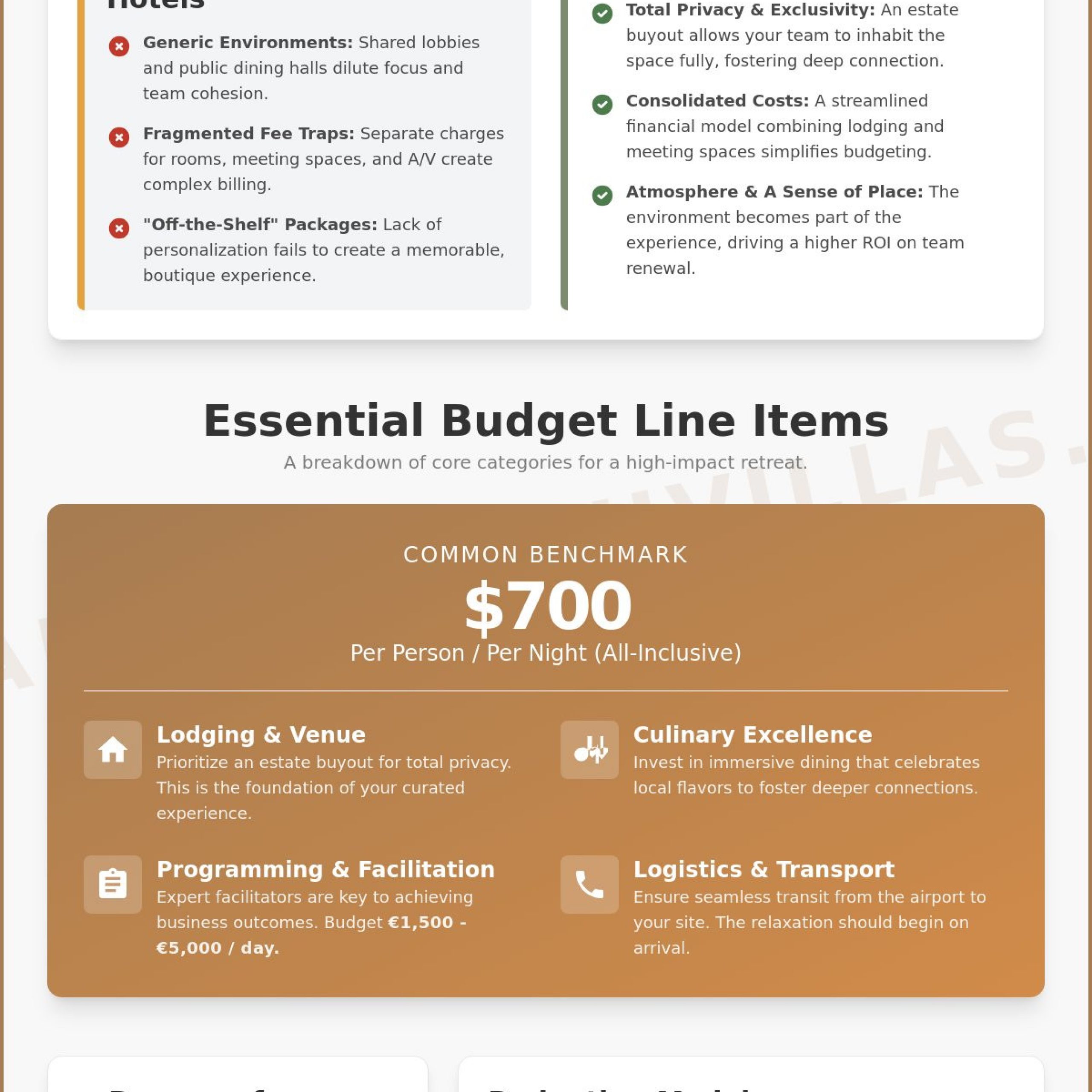
Building your financial framework requires a granular look at the elements that define the guest experience. When you populate your corporate retreat budget template, you aren’t just listing expenses; you’re curating a journey. Each line item should reflect a commitment to quality and team renewal. For 2026, a common benchmark for all-inclusive corporate retreats is approximately $700 per person per night. This figure typically encompasses accommodation, meals, and core programming, providing a helpful baseline for your initial estimates.
Lodging and Exclusivity: For a truly transformative offsite, consider the value of an estate buyout or a private guest ranch. Unlike standard hotels, these settings offer total privacy, allowing your team to inhabit the space fully without the distractions of other guests. Culinary Excellence: Move beyond standard “catering” by focusing on immersive dining that celebrates local heritage flavors. This sensory engagement fosters deeper connections among colleagues. Programming and Facilitation: Expert facilitators, often costing between €1,500 and €5,000 per day, are essential for achieving specific business outcomes. Referencing an essential guide to crafting a company retreat can help you weigh these costs against your strategic goals. Logistics and Transportation: Don’t overlook the “journey.” Budget for seamless transit from the airport to your secluded site to ensure the relaxation begins the moment your team arrives.
The “Sanctuary” Category: Wellness and Atmosphere
Soft costs often provide the highest emotional impact. Budgeting for yoga instructors, meditation sessions, and wellness-focused amenities transforms a business trip into a restorative escape. These elements are critical for a wellness retreat experience that prioritizes mental clarity. Atmospheric touches like heritage-inspired decor or evening fire-pit gatherings create a “gracious host” environment that encourages authentic conversation. Explore how a dedicated event venue can simplify these line items by offering inclusive luxury packages.
Operations and Technology Requirements
Modern retreats require a balance of digital connectivity and intentional disconnection. Ensure your corporate retreat budget template accounts for high-speed connectivity, even in a desert or ranch setting. You’ll need to decide what AV equipment for hybrid meetings to rent versus what the venue provides. Additionally, consider the cost of digital detox tools or specialized workshop materials that facilitate deep focus. Allocating a 5-10% contingency fund within this category will protect your organization from unexpected technical needs or last-minute adjustments.
Navigating the “Invisible” Costs That Derail Planning
Even the most carefully curated corporate retreat budget template can be undermined by the subtle, often overlooked expenses that surface during the final stages of planning. These “invisible” costs aren’t merely accounting errors. They’re the logistical realities of high-end hospitality that require a “gracious host” perspective to manage effectively. Service charges and gratuities, frequently referred to as the industry standard “plus-plus,” can add a significant percentage to your food and beverage totals. It’s common to see a 20% to 24% surcharge that catches even experienced planners off guard if they only focus on the base price per plate.
Taxes and Resort Fees in the Modern Hospitality Landscape
Understanding the difference between state occupancy taxes and property-specific resort fees is essential for financial clarity. While taxes are mandated by local government, resort fees are often property-defined charges for amenities like pool access or high-speed internet. To avoid surprises, negotiate “all-in” pricing to simplify your corporate retreat budget. This approach ensures you identify hidden surcharges in vendor contracts before any signatures are exchanged. It reflects a commitment to transparency and heritage-conscious professionalism.
The Cost of Flexibility: Cancellation and Attrition
Modern group travel requires a sophisticated approach to risk management. You must budget for the “what-ifs” that can disrupt even the most harmonious plans. Attrition clauses in lodging contracts can be particularly punishing if your headcount drops unexpectedly after the cut-off date. Understanding these terms allows you to manage the financial impact of empty rooms or unserved meals. For high-investment executive offsites, event insurance provides an extra layer of security. It preserves your investment and ensures that the focus remains on team renewal rather than fiscal recovery. This proactive stewardship of resources allows you to plan with confidence and peace of mind.
Calculating the Value of Privacy: Private Estates vs. Corporate Hotels
Choosing a venue is often the most significant decision you’ll record in your corporate retreat budget template. While many planners default to high-end urban hotels, these traditional choices often come with a “Fragmented Cost” trap. Hotels are designed to monetize every square inch and every hour of your stay. You might find separate line items for breakout room rentals, daily coffee refreshes, and even high-speed internet in meeting areas. These incremental fees quickly erode a budget that appeared manageable on paper. In contrast, a private estate or boutique guest ranch operates on an “Inclusive Luxury” model. When you secure a private villa rental, the living rooms, patios, and dining halls become your private breakout spaces at no additional cost.
Security and confidentiality represent an unquantifiable value that hotels simply cannot match. In a public resort, your executive team discusses sensitive strategy in the presence of other tourists and competitors. An exclusive estate buyout ensures that the only people on the property are your team and a dedicated service staff. This privacy fosters a level of psychological safety that is essential for deep work. When comparing the per-person daily rate, a boutique guest ranch often proves more cost-effective than an urban hotel once you account for the lack of hidden surcharges and the consolidation of lodging and meeting facilities.
Hidden Savings in Exclusive Use Venues
Utilizing event venues with lodging allows you to eliminate the traditional “room hire” fees that plague hotel contracts. You also gain the freedom to bring in preferred caterers rather than being locked into rigid hotel food and beverage minimums. This flexibility allows you to prioritize quality and heritage-inspired flavors that resonate with your brand. Furthermore, having your team stay and work in the same location drastically reduces transportation costs and time spent in transit between sites.
The Cultural Impact of a Secluded Setting
A heritage-rich ranch environment fosters a much deeper connection than a standard, windowless ballroom. The natural beauty of a secluded setting acts as a catalyst for renewal and creative thinking. Research indicates a 26% increase in productivity after offsite retreats, and much of this “Innovation ROI” is driven by the environment itself. Positioning your venue as a key driver of success helps justify the investment to stakeholders. It moves the conversation from “cost per room” to “value per breakthrough.” To begin curating your own exclusive team experience, explore our private corporate retreat offerings today.
Finalizing Your 2026 Strategy: From Spreadsheet to Sanctuary
The final stage of your planning journey is where the cold logic of a spreadsheet meets the warm reality of hospitality. Your corporate retreat budget template is now a living document, ready to be reviewed through the lens of the attendee experience. Ask yourself: does this allocation reflect the tranquility we wish to provide? Every line item should serve the ultimate goal of team renewal. This clarity allows you to negotiate with confidence when speaking with luxury ranch resorts. By presenting a well-defined framework, you demonstrate a commitment to quality that invites vendors to become true partners in your vision.
Once the retreat concludes, a methodical reconciliation process is essential. Comparing your actual spend against your projected figures provides the defensible data your CFO requires. It also offers invaluable insights for your next offsite. This transition from financial architect to “gracious host” is a deliberate act. It moves your focus from the cost of the event to the value of the connections made within its walls. You’re no longer just managing a corporate retreat budget template; you’re stewarding a culture of excellence and mutual respect.
The Final Polish: Vetting Your Vendors
Sophisticated event execution requires vendors who understand the delicate balance between professional service and intimate hospitality. Their tone must align with your brand’s desire for a peaceful, boutique narrative. Site visits, whether physical or virtual, are vital for finalizing your budget allocations. They allow you to see the light on the patio or the texture of the heritage decor before committing funds. Use your remaining budget to build “surprise and delight” moments. Perhaps it’s a locally sourced gift in each room or a stargazing session led by a regional expert. These small touches often leave the most lasting impressions on your leadership team.
Your Next Step: Securing the Ideal Venue
In 2026, the demand for premier private estates has reached new heights. Early booking is essential to secure a sanctuary that meets your specific needs. When you initiate a request for proposal (RFP), ensure it reflects the strategic framework you’ve built. A detailed RFP saves time and ensures that the venue can truly accommodate your “inclusive luxury” model. Discover how Solana Spanish Villas provides the ultimate backdrop for your Airbnb Tucson group experience. Let us help you transform your strategic plan into a legacy of team renewal and shared discovery.
Transforming Your Financial Blueprint into a Shared Experience
Mastering your corporate retreat budget template is the first step toward a truly transformative team journey. By shifting your focus from fragmented hotel costs to the inclusive luxury of a private estate, you create a defensible financial plan that prioritizes executive confidentiality and deep renewal. You’ve learned how to navigate invisible surcharges and how to align every line item with the high-impact goals of your organization. This strategic approach ensures that your 2026 offsite is both fiscally responsible and emotionally resonant.
At Solana Spanish Villas, we invite you to step away from the corporate coldness of traditional venues. Our historic 1920s guest ranch, thoughtfully revitalized with modern luxury renovations, offers the perfect sanctuary for your next leadership gathering. We provide an exclusive-use environment where professional event spaces meet the serene beauty of the desert. It’s a place where history and contemporary comfort blend seamlessly to support your team’s most important work. View Our Private Desert Estate for Your Next Retreat and begin planning an experience that your team will remember long after the reconciliation is complete. We look forward to welcoming you.
Frequently Asked Questions
How much should a corporate retreat cost per person in 2026?
In 2026, a comprehensive corporate retreat typically costs between $3,000 and $4,000 per person when flights and accommodations are included. For executive-level offsites that prioritize premium destinations and specialized programming, daily budgets often range from $800 to $1,500 per person. These figures ensure a sophisticated balance between high-end hospitality and the necessary logistical support for a productive team gathering in a restorative setting.
What is the most commonly overlooked expense in a retreat budget?
Service charges and gratuities, often referred to as “plus-plus,” are the most frequently overlooked expenses in any planning process. These surcharges can add 20% to 24% to your food and beverage totals, catching even experienced planners by surprise during final reconciliation. It is essential to account for these hidden costs in your initial corporate retreat budget template to maintain fiscal transparency and avoid unexpected hits to your contingency fund.
Should I include travel costs for remote employees in the main retreat budget?
Yes, travel costs for remote or hybrid employees should be integrated into the primary budget to provide a complete and defensible financial picture. Since 91% of companies organizing offsites now operate under remote or hybrid models, transportation usually accounts for 10% to 20% of the total spend. Including these costs early prevents the trap of fragmented accounting and helps justify the investment as a vital tool for team renewal.
Is it cheaper to book a hotel or a private villa for a 20-person retreat?
For a group of 20, an exclusive estate buyout or private villa is often more cost-effective than a traditional high-end hotel. Private properties eliminate “room hire” fees for breakout spaces and allow you to avoid rigid hotel food and beverage minimums. This “inclusive luxury” model consolidates lodging and meeting costs into a single, streamlined figure while providing the unquantifiable value of total team privacy and confidentiality.
How much of my budget should be allocated to team building activities?
You should typically allocate 10% to 15% of your total budget to team-building activities and professional facilitated programming. While it’s tempting to reduce this area, expert facilitators are key to achieving the 26% increase in productivity often seen after successful offsites. Investing in nature-based activities or heritage-inspired workshops ensures the experience moves beyond a simple trip into a strategic and meaningful business investment.
What is a reasonable contingency fund for a three-day offsite?
A reasonable contingency fund for a three-day offsite is 10% of the total projected spend. This essential buffer protects your organization against 2026 travel shifts, last-minute technical requirements, or unexpected vendor adjustments. Having this reserve allows you to maintain the role of a gracious host even when logistical challenges arise, ensuring that the team’s sense of tranquility and focus remains entirely undisturbed throughout the journey.
Can I negotiate venue rates for mid-week corporate retreats?
Negotiating rates for mid-week retreats is highly effective, as many premier venues offer significant savings for bookings outside of peak weekend dates. Choosing off-peak months or mid-week timeframes can lead to cost reductions of 25% to 35%. This strategy allows you to access a premium corporate retreat budget template framework while staying within a modest budget, making exclusive guest ranch experiences more accessible for your leadership team.
How do I justify the cost of a luxury guest ranch to my finance department?
Justify the cost by focusing on the documented return on investment regarding team retention and cultural alignment. Point to research showing that companies with strong retreat strategies see a 73% decrease in employee turnover. Emphasize that a heritage-rich, secluded environment fosters deeper innovation than a standard urban hotel, transforming the retreat from a line-item expense into a vital strategic growth plan for the organization.
0 Comment