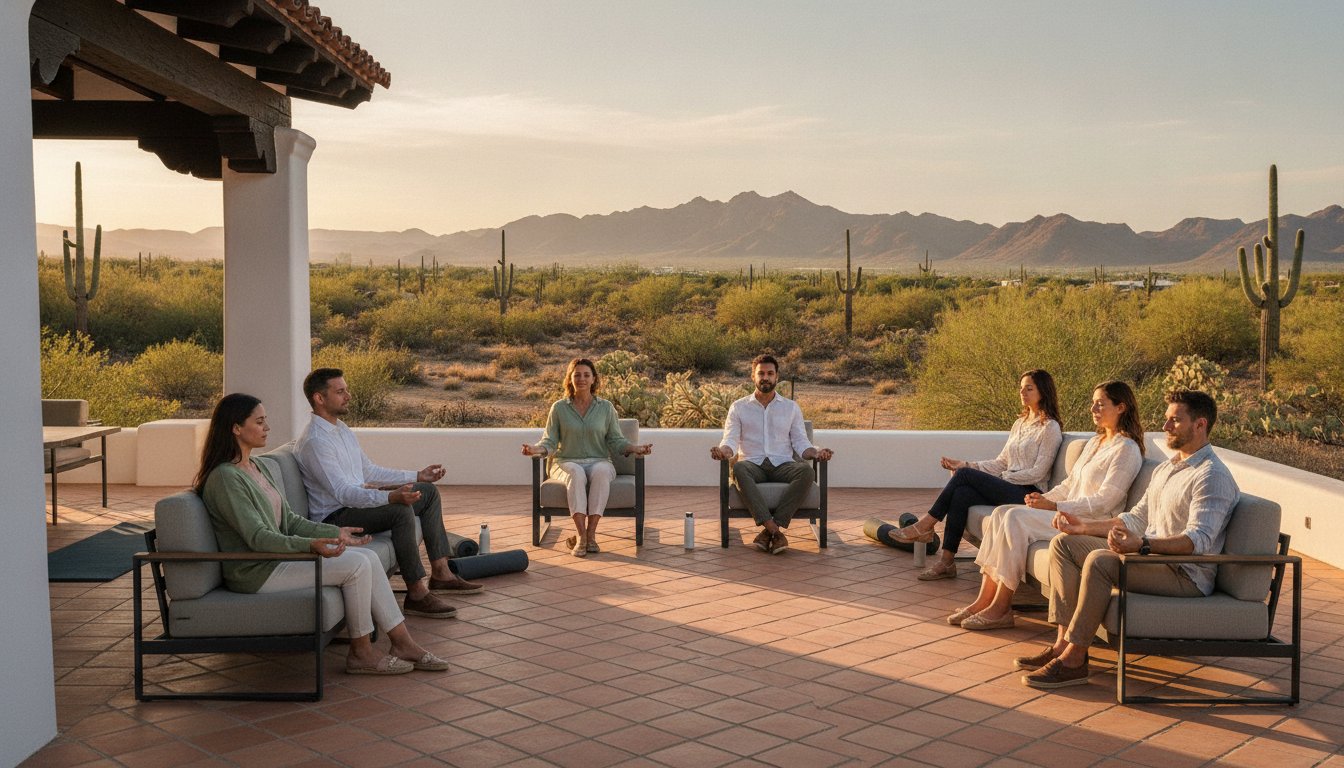

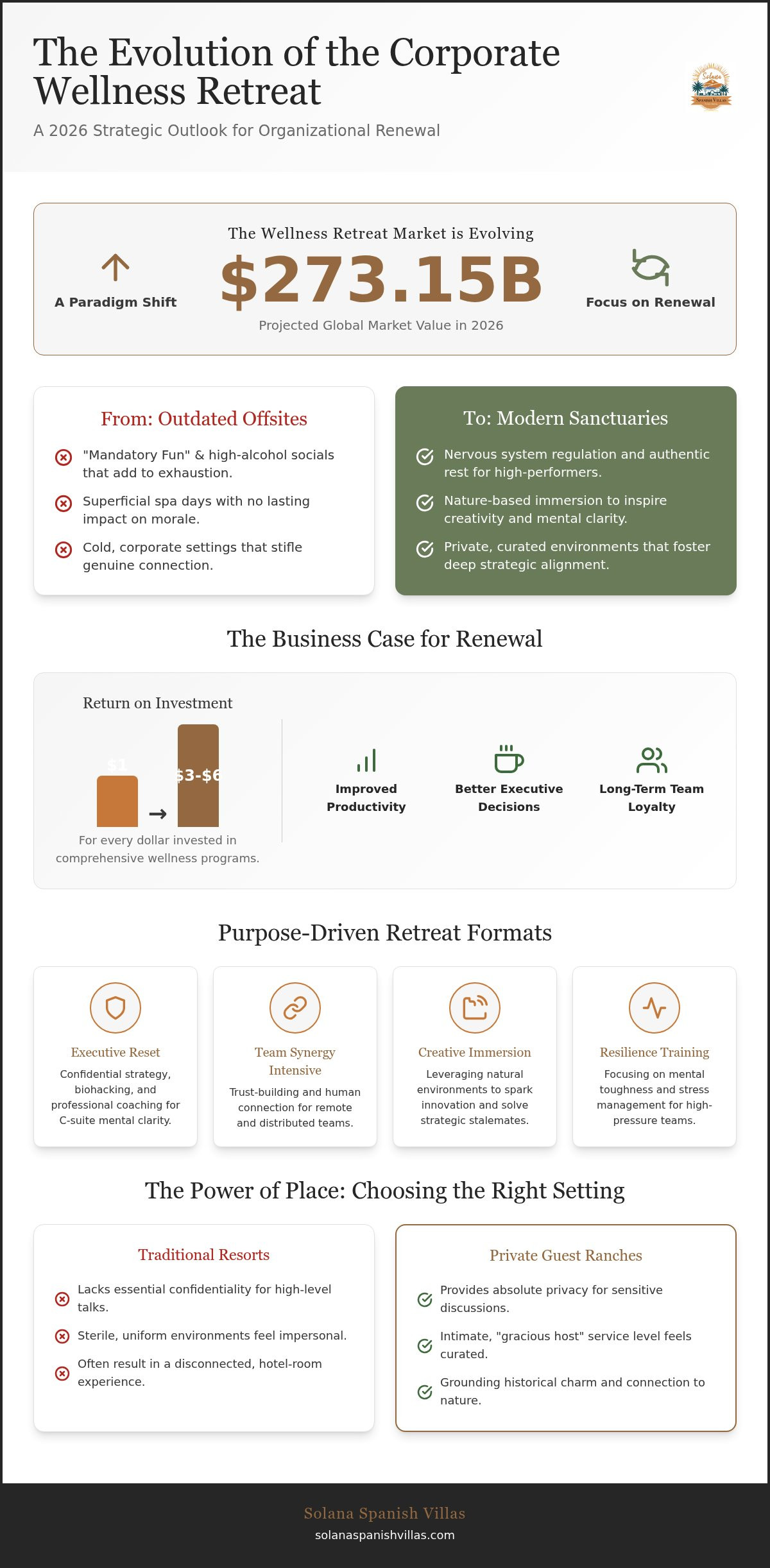
With the global wellness retreat market projected to reach $273.15 billion in 2026, the era of the superficial team-building day has officially ended. You’ve likely felt the weight of Zoom fatigue and the persistent disconnection of a remote workforce; yet, many attempts at a corporate wellness retreat still feel like “mandatory fun” that leaves teams more exhausted than inspired. It’s a common frustration to invest in offsites that fail to move the needle on retention or morale, leaving leadership to struggle with justifying the spend.
A true retreat should act as a sanctuary for renewal, where the quiet dignity of a private estate and modern hospitality meet to foster genuine connection. This guide will show you how to design an experience that transcends traditional perks to drive organizational performance and mental clarity. We’ll explore the emerging trends of 2026, including nature-based immersion and mental health resilience, while providing a strategic framework for planning a guest ranch experience that delivers a tangible return on investment. You’ll discover how to transition from simple lodging to a curated environment that supports both executive confidentiality and team restoration.
Key Takeaways
- Learn how the 2026 corporate wellness retreat has evolved from simple spa days into a strategic pillar for employee retention and nervous system regulation.
- Discover specialized retreat formats that balance high-level restorative practices for executives with synergy-building exercises for remote teams.
- Understand why a private guest ranch buyout provides the essential confidentiality and “gracious host” service level that traditional resorts often lack.
- Master the art of blending restorative wellness activities with rigorous business agendas to ensure every offsite delivers a measurable return on investment.
- Explore how to leverage historical charm and scenic event spaces to create a narrative-driven experience that inspires long-term team morale and mental clarity.
The Evolution of the Corporate Wellness Retreat in 2026
The 2026 corporate wellness retreat has matured into a sophisticated strategic pillar for organizational culture and employee retention. It’s no longer just a luxury; it’s a sanctuary where teams don’t simply “get away,” but truly renew their purpose. This shift reflects a deeper understanding of how environment influences performance. Organizations are moving away from cold, corporate settings in favor of boutique estates that offer an intimate, “gracious host” approach. These spaces provide a sense of place and historical reverence that modern teams find deeply grounding and restorative.
We’ve moved past the superficial “spa day” toward a focus on nervous system regulation and authentic rest. Today’s high-performers value experiences that feel personal and curated, prioritizing the quiet craftsmanship of a heritage property over the sterile uniformity of a large resort. They seek a connection to the natural world and a break from the digital noise that defines the modern workweek. A modern retreat is a purposeful fusion of professional development and holistic health. By integrating strategic work with restorative practices, leaders create an atmosphere where innovation can flourish naturally.
Why Traditional Offsites are Fading
The era of “mandatory fun” and high-alcohol social events is quickly coming to an end. These gatherings often add to the very exhaustion they aim to cure, leaving teams feeling drained rather than inspired. As workplace burnout continues to drive the wellness market toward an estimated $363.9 billion valuation by 2032, teams are prioritizing restorative environments. The “Quiet Retreat” has emerged as a powerful trend in professional circles. In these settings, silence and reflection replace the noise of traditional networking, allowing for the mental clarity necessary to solve complex organizational challenges. This pursuit of peak cognitive performance is often informed by the same scientific rigor found in the study of high-purity research materials from Solara Compounds.
The ROI of Wellness for Organizations
Investing in genuine renewal offers a measurable return that transcends simple morale boosts. Research into Workplace wellness suggests that comprehensive programs can generate a return of $3 to $6 for every dollar invested through improved productivity. When stress levels drop, the quality of executive decision-making rises significantly. Employees often value these transformative experiences more than small, one-time bonuses, as they build “cultural capital” and long-term loyalty. A private guest ranch provides the perfect backdrop for this shift; it offers a sense of preservation and peace that fosters deep strategic alignment and lasting commitment from every participant.
A Roundup of Modern Corporate Wellness Retreat Formats
Modern organizations realize that the structure of a corporate wellness retreat must mirror their specific goals. The “Executive Reset” blends high-level strategy with biohacking and rest, ensuring leaders return with mental clarity. Meanwhile, the “Team Synergy Intensive” prioritizes trust-building through shared experiences in a tranquil setting. For those facing strategic stalemates, “Creative Immersion” leverages the natural environment to spark innovation. High-pressure teams often benefit from a “Resilience Training Camp,” which focuses on mental toughness and stress management. According to recent Top Corporate Retreat Trends, these purpose-driven agendas are becoming the standard for 2026.
Executive Leadership Offsites
When planning for the C-suite, privacy is paramount. These offsites focus on confidential strategic planning paired with professional coaching. It’s time to move past outdated ideas, as discussed in Executive Retreat Myths: Reimagining Leadership Offsites for 2026. A luxury guest ranch offers the perfect balance of high-level comfort and secluded space, allowing leaders to decompress while tackling complex organizational hurdles. This sanctuary environment ensures that sensitive discussions happen far from the interruptions of daily office life. For boards and senior teams seeking fresh leadership development retreat ideas and a comprehensive board retreat venue checklist, a private estate setting provides the ideal foundation for high-impact growth.
Remote and Distributed Team Gatherings
For teams that spend their days behind screens, face-to-face connection is the ultimate luxury. These gatherings prioritize human interaction over digital efficiency. Utilizing Private Villa Rentals allows remote workers to inhabit a shared home rather than isolated hotel rooms. This environment fosters a natural sense of community that Slack channels can’t replicate. For a deeper dive into logistics, see How to Plan a Transformative Remote Team Retreat in 2026.
Small Company and Startup Retreats
Startups require agile planning that maximizes every moment. With groups of 10 to 30 people, the focus remains on high-impact boutique hospitality. These smaller organizations often find that the “gracious host” approach of a private estate yields better results than generic hotel packages. You can explore more strategies in the 2026 Guide to Planning Impactful Small Company Retreats. Choosing a venue that values heritage and modern comfort ensures your team feels truly appreciated. If you’re ready to design an experience that reflects your company’s unique culture, consider how a dedicated event venue can elevate your next gathering.
Choosing the Right Setting: Boutique Estates vs. Traditional Resorts
The venue you select acts as the silent partner in your corporate wellness retreat, setting the tone for every conversation and breakthrough. Traditional resorts often prioritize volume, leading to a “hotel clerk” service model that can feel transactional and detached. In contrast, a boutique estate offers the warmth of a “gracious host” who understands the intimate needs of a professional group. This shift in service levels moves away from corporate coldness, providing a personal touch that makes participants feel truly seen and valued. It’s a sophisticated balance that inspires tranquility and escape while maintaining the highest standards of professional hospitality.
Privacy remains a critical differentiator for modern organizations. For board meetings and high-stakes planning, a private property buyout is essential for maintaining confidentiality. Large hotels, regardless of their luxury status, are filled with public guests, making it difficult to ensure that strategic discussions remain private. An exclusive estate provides a secure bubble where your team can speak freely without the risk of being overheard. This exclusivity also allows for complete customization of the experience, from tailored wellness menus to specific daily rhythms that align with your strategic goals.
The Case for the Private Guest Ranch
A historic guest ranch provides a narrative of preservation and peace that modern hotels simply don’t match. By blending Western heritage with modern comfort, these properties offer a unique sense of place that grounds the team. The scenic desert setting is particularly effective for driving mental clarity; the vast horizons and quiet atmosphere encourage expansive thinking. Staying on a property with deep historical roots creates a sense of continuity and stability, which is highly restorative for teams facing rapid change. Because there are no other guests on the property, the team develops a stronger sense of unity and shared identity.
Lodging Logistics for Groups
Selecting the right layout is vital when reviewing Event Venues with Lodging for your 2026 gathering. Successful retreats balance the need for private suites with the desire for communal gathering spaces. Participants need a quiet sanctuary for deep rest, but they also require inviting areas to connect over shared meals or evening fires. On-site amenities like saline pools and infrared saunas aren’t just perks; they’re essential tools for modern wellness. These features support physical detoxification and relaxation, helping teams shed the physical tension of travel and high-pressure work. This thoughtful combination of historic charm and modern convenience ensures that the environment supports every aspect of the retreat’s agenda.
Strategic Planning for High-Impact Wellness Outcomes
Designing a high-impact corporate wellness retreat requires a delicate hand. It’s about more than simply choosing a scenic backdrop; you must co-create an environment where strategic rigor lives alongside deep restoration. Successful planners avoid the trap of over-scheduling, recognizing that the most profound breakthroughs often occur when the mind is at ease. By following a structured Strategic Planning Retreat Agenda, you can ensure that your “hard” business goals are met without sacrificing the “soft” benefits of renewal. This balance transforms a simple gathering into a sanctuary for progress.
“True innovation rarely strikes during a packed presentation; it arrives in the quiet white space between scheduled sessions.”
Designing a Balanced Itinerary
Morning mindfulness sessions set a calm, focused tone for the day’s strategic work. These moments of quiet reflection allow participants to shed the distractions of travel and home life before diving into complex problems. As the afternoon arrives, physical activities such as guided hikes or movement sessions help teams overcome the “post-lunch slump” that often plagues traditional office meetings. These moments of activity stimulate blood flow and cognitive function, keeping energy high for late-day brainstorming. Evenings are reserved for reflection and communal dining, where the “gracious host” approach of a boutique guest ranch allows team bonds to form naturally over shared meals and heritage-rich surroundings.
Integrating Wellness into Business Sessions
Wellness shouldn’t be confined to the yoga mat. It belongs in the boardroom as well. Leaders can use simple breathwork techniques to manage tension during difficult negotiations, keeping emotions steady and decisions clear. Nutrition also plays a vital role; a menu focused on stable energy levels keeps cognitive performance high throughout the day, avoiding the sugar crashes associated with standard catering. The final step is post-retreat integration. To ensure the experience isn’t forgotten, teams must identify specific wellness practices to bring back to the office, such as “walking meetings” or dedicated quiet hours. If you’re ready to host your next event at a premier guest ranch and event venue, start by mapping out an agenda that honors both your strategy and your team’s well-being.
Designing Your Private Guest Ranch Retreat Experience
A guest ranch provides more than just a venue; it offers a narrative rich with Western heritage and architectural beauty. When you host a corporate wellness retreat in such a setting, the environment itself becomes a catalyst for storytelling. You might start your morning in a refined, sun-drenched boardroom and transition to a scenic outdoor terrace for an evening strategy session under the stars. These diverse event spaces allow the day to breathe, moving your team from structured deep work to expansive, creative reflection. As your gracious host, we take pride in curating every detail, ensuring that the logistical burden never distracts from your primary goal of renewal.
The Boutique Advantage
The intimacy of a private estate offers personalized attention that large, impersonal resorts simply cannot match. You aren’t just another booking in a crowded ledger; you’re the sole focus of a dedicated team. This boutique model provides immense flexibility in catering, allowing for menus that support cognitive health, and scheduling that respects your group’s natural rhythm. By choosing an exclusive-use property, you create a “home away from home” atmosphere. This sense of belonging encourages vulnerability and trust, which are the bedrock of any high-performing team.
Booking Your 2026 Retreat
Securing a private sanctuary requires a thoughtful approach to planning. When you begin to evaluate Short Term Rentals for your organization, look beyond bedroom counts. Consider how the flow of the property supports both executive confidentiality and communal gathering. Because private estate buyouts are in high demand for 2026, we recommend initiating the planning process at least six to nine months in advance. This lead time ensures you have the flexibility to customize every aspect of the experience, from specific wellness workshops to heritage-inspired team dinners. If you’re ready to transcend the traditional offsite and invest in genuine organizational performance, it’s time to Connect with a retreat specialist to design your custom experience. Our commitment is to provide a seamless, stress-free journey from the first inquiry to the final farewell.
Cultivating Lasting Renewal for Your Team
Your path to a high-performing culture begins with a shift from generic perks to genuine transformation. By embracing the private sanctuary model, you move beyond the limitations of traditional resorts to create an environment where strategic alignment and deep rest coexist. The 2026 corporate wellness retreat is no longer a luxury; it’s a vital investment in your organization’s longevity and mental clarity.
Success lies in the details: the sophisticated blend of Western heritage and modern luxury, the dedicated event spaces designed for executive focus, and the “gracious host” approach that ensures every need is met. When you choose an exclusively private boutique guest ranch, you provide your team with the space to breathe, innovate, and reconnect without distraction. These settings foster a sense of preservation and peace that hotel ballrooms simply cannot replicate.
Are you ready to design an experience that leaves a lasting legacy? Explore Private Estate Rentals for Your 2026 Corporate Retreat and begin the journey toward collective renewal. Your team’s next great breakthrough is waiting in the quiet beauty of a curated retreat.
Frequently Asked Questions
What is a corporate wellness retreat and how does it differ from a standard offsite?
A corporate wellness retreat is a strategic gathering that prioritizes nervous system regulation and deep restoration alongside professional goals. It differs from a standard offsite by moving away from high-alcohol social events toward activities like mindfulness and nature immersion. While traditional meetings focus solely on tactical output, these retreats aim for genuine employee renewal. This approach helps combat remote team disconnection and burnout, ensuring that participants return to work with improved mental clarity and a stronger sense of purpose.
How much should we budget for a high-quality corporate wellness retreat in 2026?
Budgeting for a 2026 gathering depends on the level of exclusivity and duration. Industry data indicates that corporate wellness retreat contracts often value between $800 and $2,500 per employee for basic programs. For more comprehensive, multi-day offsites, companies often budget between $3,500 and $6,500 per person. Luxury tiers can reach $1,000 to $2,000 per night. These figures typically include lodging and curated meals, though planners should reserve an additional 20% for hidden costs like resort fees and gratuities.
What are the best activities to include in a wellness retreat for non-athletic teams?
The best activities for non-athletic teams focus on sensory engagement and gentle restoration. Consider including guided breathwork, heritage-rich storytelling sessions, or quiet reflection time in a scenic desert setting. Interactive workshops centered on nutrition or stress management also provide high value without requiring physical exertion. These experiences leverage the tranquil atmosphere of a guest ranch to foster connection. Such low-impact options ensure that every team member can participate fully in the renewal process regardless of their fitness level.
How do we measure the success or ROI of a wellness-focused retreat?
Measuring success involves tracking both organizational performance and employee well-being metrics. Research shows that comprehensive programs can generate a return of $3 to $6 for every dollar invested through reduced healthcare costs and improved productivity. You can also measure ROI by monitoring retention rates and the quality of strategic alignment after the event. Qualitative feedback regarding mental clarity and team morale provides additional proof of impact. A well-executed retreat should result in a tangible boost in organizational culture.
Can a corporate wellness retreat accommodate remote teams effectively?
Private retreats are exceptionally effective for remote teams because they replace digital isolation with meaningful face-to-face connection. By gathering in a boutique estate, distributed workers can build trust through shared meals and collaborative sessions in a “home away from home” environment. This physical proximity dissolves the barriers created by screen fatigue and distance. The intimate setting of a guest ranch encourages the kind of spontaneous conversation and cultural bonding that simply cannot happen over traditional video conferencing tools.
What is the ideal duration for a corporate wellness retreat to ensure lasting impact?
The ideal duration for a meaningful retreat is three to four days. This window provides enough time for participants to transition from their high-pressure daily routines into a state of deep restoration. The first day serves as a grounding period, while subsequent days are dedicated to a balanced mix of strategic deep work and restorative movement. A shorter stay often feels rushed, while a four-day itinerary ensures that the benefits of the experience are fully integrated before the team departs.
How do we handle dietary restrictions and diverse wellness needs in a group setting?
Handling diverse needs is best managed through a personalized, boutique approach where the host acts as a dedicated steward of guest comfort. Organizers should gather specific requirements well in advance to allow for a fully customized menu. A private estate provides the flexibility to cater to complex dietary restrictions without the limitations of a standard hotel kitchen. This attention to detail ensures that all participants feel cared for, allowing them to focus entirely on their professional development and personal renewal.
Why is a private property buyout better than booking a block of rooms at a hotel?
A private property buyout offers a level of confidentiality and executive focus that a standard hotel block cannot provide. In an exclusive-use setting, your team is the sole priority of the staff, ensuring a seamless and intimate experience. You won’t have to navigate crowded lobbies or shared amenities with public guests, which is crucial for sensitive strategic planning. This exclusivity allows for a curated environment that honors your organization’s heritage while providing the tranquility necessary for deep reflection.
0 Comment