
What if the traditional hotel ballroom is actually the greatest obstacle to your company’s next strategic breakthrough? For many leadership teams, the annual executive retreat has become a predictable cycle of PowerPoint fatigue and surface-level networking in crowded, distracting environments. You’ve likely felt the frustration of leaving a three-day session with a handful of half-baked ideas and no clear path for follow-through. It’s a common struggle, but it doesn’t have to be your reality.
We believe that true leadership alignment requires more than just a change of scenery; it requires a change of soul. In this article, you’ll discover how to move beyond the myths of corporate offsites to design a high-impact executive retreat that generates genuine energy and secure, sensitive discussions. We will preview the 2026 shift toward outcome-oriented planning and the power of atmospheric immersion. You’ll see why companies with strong bonding strategies see a 73% decrease in employee turnover, and how private, heritage-rich settings replace corporate coldness with a sense of place that invites clarity and renewed purpose for your entire C-suite.
Key Takeaways
- Redefine your next executive retreat as a purposeful strategic pause, moving away from the “expensive meeting” myth toward genuine breakthroughs.
- Avoid the “Privacy Paradox” of large luxury hotels by choosing exclusive estate buyouts that protect sensitive and confidential leadership discussions.
- Transition from daily operational firefighting to deep strategic work by identifying the single most important question your team needs to solve.
- Leverage the power of historic architecture and tranquil, heritage-rich environments to spark creative thinking and a refreshed long-term vision.
- Adopt the “Gracious Host” model of hospitality to remove logistical distractions and foster deeper, more authentic connections among senior leaders.
Beyond the Boardroom: What an Executive Retreat Is (and Isn’t)
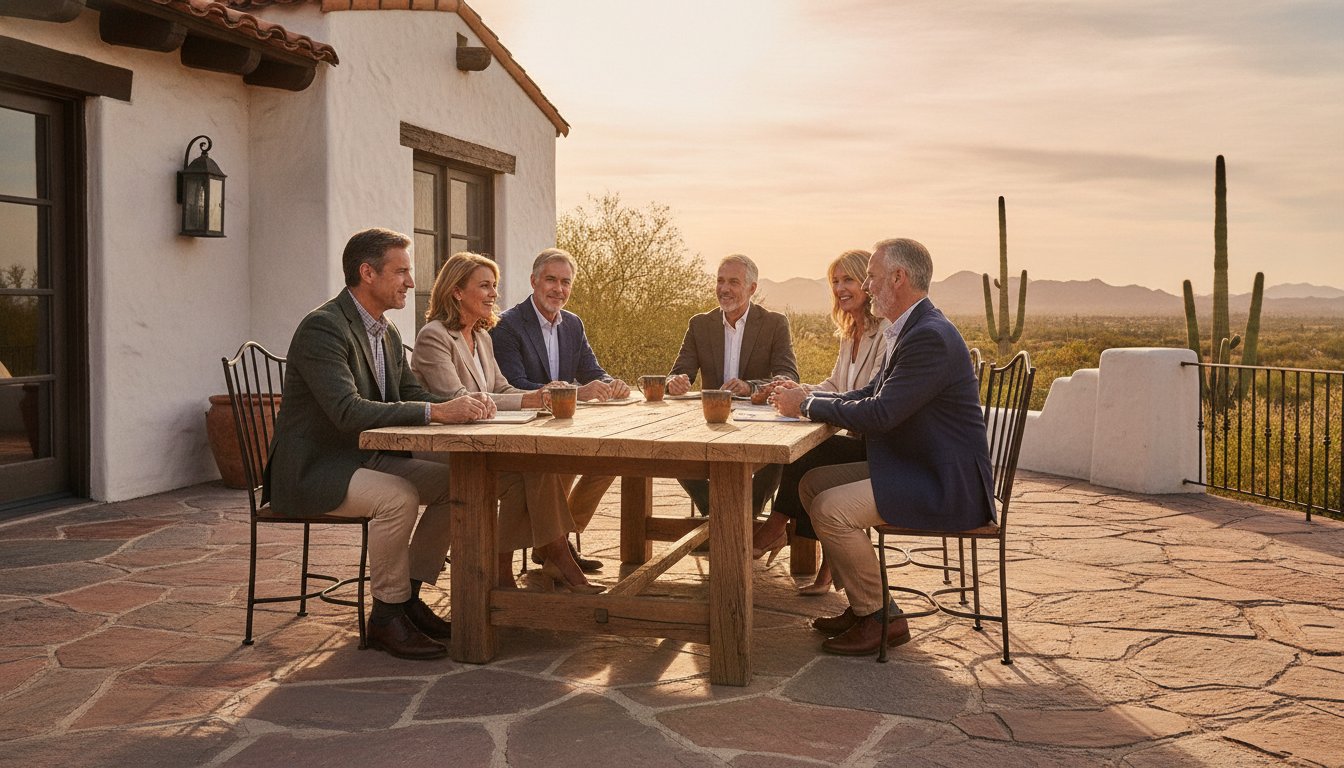
As we look toward 2026, the definition of a successful executive retreat has shifted from a luxury perk to a vital strategic pause. It’s no longer enough to simply move the team from one boardroom to another, even if the second one has a view of the desert. The persistent myth that a retreat is just a meeting in a more expensive room ignores the psychological impact of environment. When leaders stay trapped in familiar patterns, they produce familiar results. Genuine breakthroughs require a departure from the “PowerPoint Marathon” trap, where information-heavy agendas stifle the very creativity they were meant to foster. Instead, the goal is “Strategic Immersion,” a state where the daily noise of the office fades, replaced by the quiet confidence of a historic, heritage-rich setting.
This shift in scenery isn’t just about comfort; it’s about context. A Corporate retreat should provide a sense of place that inspires long-term thinking rather than tactical firefighting. By stepping into a space that values craftsmanship and history, leaders are reminded of the legacy they are building. It’s a transition from the clinical to the personal, moving away from corporate coldness toward an environment that feels both professional and deeply welcoming.
The ROI of Stepping Away
Environmental changes do more than just lower stress levels. New, evocative surroundings can trigger neuroplasticity, encouraging the brain to form new connections and solve complex problems more effectively. The cost of “Status Quo” thinking in a standard office environment is often hidden but immense, resulting in missed opportunities and stagnant growth. The modern executive retreat serves as a high-velocity catalyst for high-stakes decision-making, stripping away the mundane to reveal the monumental; for those ready to explore global destinations that offer such transformative power, check out Funny Times Travel & Tours for specialized retreat planning in South America.
Busting the “Fluff” Myth
Skeptics often view offsites as “soft” or lacking in substance. However, for senior leaders, soft-skill bonding is a hard-business necessity. There is a distinct difference between a general “Team Building” day focused on activities and an executive retreat designed for strategic alignment. While team building might improve morale, a strategic offsite builds the trust required for difficult, confidential conversations. You can measure success by looking at long-term outcomes, such as the 73% decrease in employee turnover seen in companies with strong bonding strategies, or the clear execution of a new three-year plan. It’s about creating a sustainable culture of leadership that persists long after the team returns to the city.
The Privacy Paradox: Why Luxury Hotels Often Fail Senior Leaders
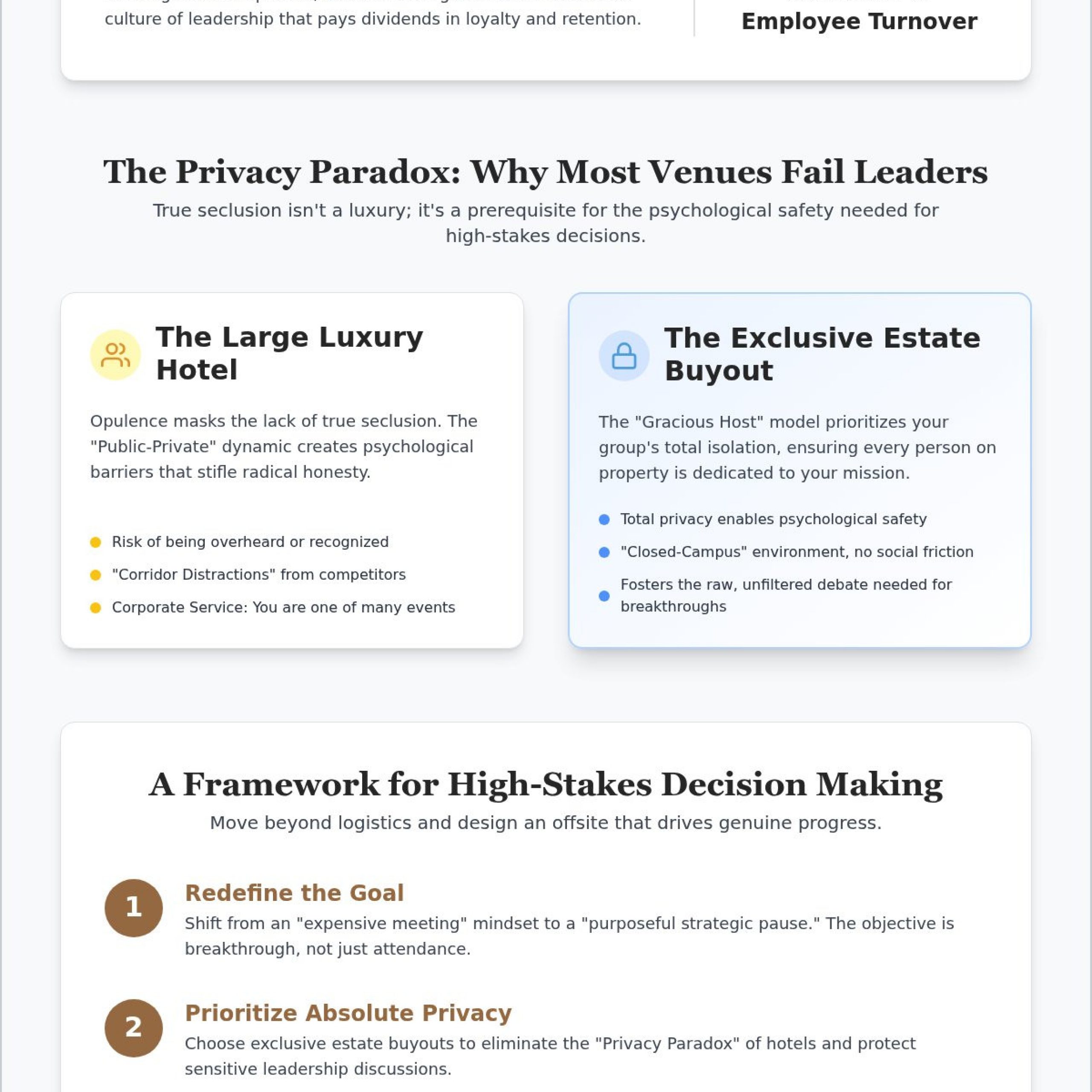
The allure of a five-star resort often masks a fundamental flaw for senior leadership teams. While these properties offer opulence, they rarely provide true seclusion. In a large luxury hotel, your “private” meeting is only a thin wall away from a bustling lobby or a crowded restaurant. This “Public-Private” dynamic creates a subtle but persistent psychological barrier. When a C-suite team is discussing a sensitive merger or a difficult restructuring, the risk of being overheard or recognized by industry peers in a shared elevator can stifle the radical honesty required for a great executive retreat. It’s a hidden cost that many planners overlook until the team feels the weight of the public eye.
Total privacy isn’t just a luxury; it’s a prerequisite for psychological safety. The “Gracious Host” model, common in boutique historic estates, prioritizes the group’s isolation above all else. Unlike the “Corporate Service” model found in major hotel chains, where you are merely one of many events, an exclusive buyout ensures that every person on the property is dedicated solely to your mission. This level of security is essential for high-stakes decision-making. It allows leaders to drop their professional armor and engage in the kind of raw, unfiltered debate that leads to genuine breakthroughs. Without the fear of outside observation, the conversation moves from safe platitudes to bold, transformative ideas.
Eliminating the “Corridor Distraction”
Running into a competitor or a former colleague in a hotel corridor can immediately shift an executive’s mindset from visionary to guarded. For leadership teams of 10 to 30 people, a “closed-campus” environment is invaluable. It removes the social friction of the outside world, keeping the focus entirely on the team’s dynamics and strategic goals. You might Explore private villa rentals for your next executive group to see how an intimate setting fosters deeper transparency than any ballroom ever could.
The Sanctuary Effect
Nature acts as a powerful cognitive reset. A scenic desert setting, with its vast horizons and quiet stillness, provides the “blank canvas” necessary for long-term visioning. Research suggests that natural surroundings lower cortisol and improve the brain’s executive function, making it easier to process complex information without the fatigue of city life. Understanding the benefits of private property buyouts reveals how a dedicated sanctuary allows for a seamless flow between deep work and thoughtful reflection. This atmospheric immersion is what transforms a standard executive retreat into a milestone event for the company. To truly unlock your team’s potential, consider the quiet elegance of a private guest ranch experience where the only distractions are the heritage and the stars.
Strategic Immersion vs. Tactical Firefighting: Choosing Your Retreat Format
The most common mistake in planning an executive retreat is treating it like an extended staff meeting. When leadership teams use their offsite to tackle daily operational fires, they sacrifice the rare opportunity for high-level visioning. This “Tactical Firefighting” feels productive in the moment, but it leaves the larger strategic questions unanswered. A 2026-ready retreat should prioritize “Strategic Immersion,” where the agenda focuses on the company’s lifecycle and long-term trajectory. A well-crafted strategic planning retreat agenda looks very different from a simple wellness offsite. While restoration is key, the primary goal here is to solve for the “Summit,” the next major peak the organization must climb together.
Choosing between a bespoke individual immersion and a collaborative team offsite depends entirely on your current leadership transition. For a newly appointed CEO, a solitary retreat in a quiet, historic setting can provide the mental space needed to define a personal legacy. However, for established teams, the focus must shift toward group dynamics. Experts at Harvard Business Review have spent years rethinking the executive retreat, emphasizing that camaraderie isn’t just a byproduct; it’s the foundation of strategic alignment. In a residential setting, successful programs balance “Me Time” for reflection with “We Time” for collective visioning, ensuring that no one feels overwhelmed by constant social interaction. This balance allows for a deeper executive retreat experience that honors both the individual and the team.
The Role of the Facilitator
There’s a prevailing myth that the CEO should lead every session. In reality, when the leader acts as the moderator, they can’t fully participate in the debate. Bringing in an external guide or coach allows the CEO to step down from the pedestal and become a peer in the discussion. This shift is vital for uncovering hidden team tensions and fostering authentic participation. By integrating leadership coaching into the physical flow of the retreat, the experience moves beyond a simple itinerary. It becomes a transformative journey where the environment and the facilitator work together to unlock fresh perspectives that are often buried under the weight of daily office life.
Designing an Offsite for High-Stakes Decision Making
High-stakes leadership requires a focused environment. To design a truly impactful executive retreat, you must first distill the event’s purpose into “One Big Question.” This single inquiry should guide every discussion, ensuring that the team doesn’t drift into minor operational details. When the primary goal is clear, the atmosphere of the venue must then rise to meet it. A setting that feels historic and permanent encourages leaders to think in decades rather than quarters. Once the objective is set, the planning moves into a curated sequence of decisions that prioritize quality over quantity.
- Venue Selection: Choose a space that mirrors the gravity of your decision. A historic guest ranch or a boutique estate conveys a sense of legacy that a standard hotel cannot match.
- The Guest List: For 2026, the trend favors smaller, high-impact cohorts of 6 to 12 executives. This intimacy allows for deeper networking and more personalized strategic work.
- Accountability Framework: Define how decisions will be communicated and tracked. The breakthroughs achieved in a peaceful sanctuary must survive the transition back to the daily grind.
- Logistics and Tech: Ensure the environment supports high cognitive function. This includes secure, high-speed connectivity for sensitive data and lodging that offers genuine, uninterrupted rest.
The 90-Day Planning Horizon
Planning an offsite at the last minute is the primary reason for failure. A rushed schedule often leads to logistical friction that distracts from the strategic mission. We recommend following a structured retreat planning timeline to ensure every detail, from airport transfers to private tech needs, is handled with precision. When interviewing venue coordinators, ask specific questions about data security and exclusive-use availability. This ensures your executive retreat remains a protected space for sensitive discussions.
Nutrition and Performance
The era of heavy, sluggish banquet food is over. Modern leadership requires “Athlete-Friendly” dining that sustains energy throughout long sessions. High-performance catering focuses on fresh, local ingredients that nourish the body without the mid-afternoon crash. Coupled with a “Nervous-System-Friendly” schedule that respects sleep quality, this approach ensures your C-suite remains sharp. You can View our premium properties designed for group stays to see how we blend luxury comfort with professional utility. Ready to transform your leadership team’s future? Book your private guest ranch retreat and experience the difference that a dedicated, historic sanctuary can make.
Elevating Executive Presence through Historic Estate Buyouts
The physical environment where leaders gather dictates the scale of their ambitions, acting as a silent partner in the decision-making process. Historic architecture isn’t merely an aesthetic choice; it’s a catalyst for long-term visioning that pulls the mind away from the mundane. When an executive retreat takes place within walls that have stood for a century, the conversation naturally shifts from quarterly quotas to generational legacies. A boutique resort offers a level of flexibility that standard corporate hotels simply can’t provide, allowing for a schedule that breathes and adapts to the team’s needs. It’s here that Western heritage meets modern comfort, creating a “Gracious Host” experience that feels both professional and personal. By positioning a Luxury Guest Ranch as your sanctuary, you provide your team with the silence and space required to lead with clarity and conviction.
This sense of place is what distinguishes a memorable offsite from a routine meeting. Large hotel chains are designed for efficiency and high turnover, but a historic estate is designed for stewardship and reflection. The shift toward smaller, more intimate retreats in 2026 rewards those who prioritize atmosphere. When you remove the clinical coldness of a modern ballroom, you replace it with a warmth that invites vulnerability and creative risk-taking. For organizations with teams of 10 to 30 people, our 2026 guide to planning impactful small company retreats offers a sophisticated roadmap for designing an offsite that balances strategic alignment with genuine renewal. This atmospheric immersion is the key to unlocking executive presence, allowing leaders to step into their roles with a renewed sense of purpose and connection to the company’s broader mission.
A Legacy of Leadership
Staying in a property with a 100-year history encourages “Generational Thinking,” prompting leaders to consider how their decisions today will echo decades from now. The desert setting offers a unique appeal for reflection, where the vast horizons mirror the expansion of one’s own strategic vision. It is a rare environment where the fusion of old-world charm and modern executive convenience creates a seamless transition from deep historical reverence to contemporary strategic refinement. This setting doesn’t just host a meeting; it inspires a renewal of spirit and a preservation of the values that drive your organization forward.
The Private Estate Advantage
Choosing a private estate buyout grants you total control over the environment, schedule, and atmosphere. There are no other guests to consider and no rigid hotel protocols to follow, which means your team can move seamlessly between deep work and unstructured connection. This exclusivity allows for the integration of “Wellness Gatherings” alongside strategic workshops, ensuring that leaders leave feeling restored rather than drained. Whether it’s a morning of guided reflection or an evening of collaborative discussion under the stars, the estate becomes an extension of your company’s culture. Ready to secure your space? Book a private estate buyout for your 2026 executive retreat and discover the power of a truly dedicated leadership sanctuary.
Reimagining Your Leadership Legacy
Reclaiming the true purpose of an executive retreat requires a departure from the clinical and the crowded. By choosing strategic immersion over tactical firefighting and total privacy over public luxury resorts, you create a sanctuary where high-stakes decisions are met with clarity. It’s a shift toward smaller, more intentional gatherings that rewards teams prioritizing deep alignment and atmospheric focus.
Our historic 1920s guest ranch heritage provides the perfect cultural backdrop for these breakthroughs. Through exclusive private estate buyouts, we offer the scenic desert tranquility necessary for your team to focus on what matters most. This fusion of Western heritage and modern luxury ensures your leadership team remains sharp, secure, and inspired.
Ready to transform your next offsite into a milestone for your company? Secure Your Private Executive Estate for 2026 and experience the gracious host model of leadership support. We look forward to welcoming you to a place where history inspires the future.
Frequently Asked Questions
How long should an effective executive retreat last?
An effective executive retreat typically lasts between two and four days to balance intensive strategic work with necessary reflection. This timeframe allows the team to settle into the environment, move past surface-level operational updates, and engage in the deep work required for long-term visioning. A multi-day stay ensures that the sanctuary effect has time to take hold, leading to more creative problem-solving and genuine team connection.
Is it better to host a retreat at a hotel or a private estate?
Choosing a private estate over a hotel is generally the better option for senior leaders who require absolute confidentiality and psychological safety. Private estates eliminate the corridor distractions of large resorts, ensuring that sensitive discussions remain protected from outside ears. This exclusive environment allows for a gracious host model of hospitality, where the entire property and staff are dedicated solely to your team’s strategic success.
What is the ideal group size for a leadership offsite?
The ideal group size for a leadership offsite is a small, high-impact cohort of 6 to 12 executives. This size allows for intimate, high-stakes discussions while ensuring that every voice is heard during the decision-making process. While larger senior teams can be accommodated, keeping the group focused on the most critical decision-makers often leads to more actionable results and a stronger sense of shared accountability.
How do we ensure the retreat leads to actionable results?
You ensure actionable results by defining a single big question that the retreat must answer and establishing a clear follow-through framework. Success is rarely found in an over-scheduled agenda; instead, it comes from intentional pacing that alternates strategic work with periods of decompression. By treating the retreat as the beginning of a process rather than a standalone event, you can maintain the momentum of your breakthroughs long after you leave.
Should we include wellness activities in a strategic retreat?
Wellness activities should be included in a strategic retreat as a deliberate investment in executive performance and cognitive clarity. These moments aren’t merely perks; they are essential for lowering cortisol and refreshing the brain’s executive function during intense decision-making sessions. Incorporating the natural environment through quiet reflection or outdoor activities provides the mental blank canvas required for visionary thinking and sustainable leadership energy.
How do I handle room assignments for senior executives?
Room assignments for senior executives should prioritize privacy, equity, and the high-quality rest required for peak performance. Utilizing a boutique resort or private guest ranch ensures that every suite offers a similar level of luxury and comfort, which prevents status friction within the C-suite. Providing leaders with a private sanctuary at the end of each day allows them to process information and recharge, ensuring they remain sharp throughout the retreat.
What is the average cost per person for a luxury executive retreat?
The budget for a premium executive retreat typically reflects the need for high-impact outcomes and absolute privacy. Industry professionals suggest that a total budget allocation often dedicates about 30 percent to accommodations and 20 percent each to dining and exclusive activities. Focusing on the total cost per person, rather than just nightly rates, provides a more accurate picture of the investment required for a truly transformative leadership experience.
Can we host a retreat for a remote or distributed leadership team?
You can certainly host a retreat for a distributed team; in fact, it is often a critical tool for building alignment among geographically separated leaders. These in-person gatherings provide a rare opportunity for remote executives to build the trust and camaraderie that digital platforms can’t replicate. A secluded, heritage-rich setting serves as a powerful anchor for company culture, helping distributed teams feel more connected to the organization’s history and its future. For distributed organizations looking to bridge the digital divide through shared physical experience, our complete guide to planning a transformative remote team retreat in 2026 offers a practical framework for designing an in-person gathering that addresses virtual fatigue and rebuilds genuine connection. If your organization is smaller and still developing its offsite strategy, exploring resources on planning a small company retreat that balances culture-building with strategic focus can provide a practical starting point for your 2026 planning.
0 Comment