
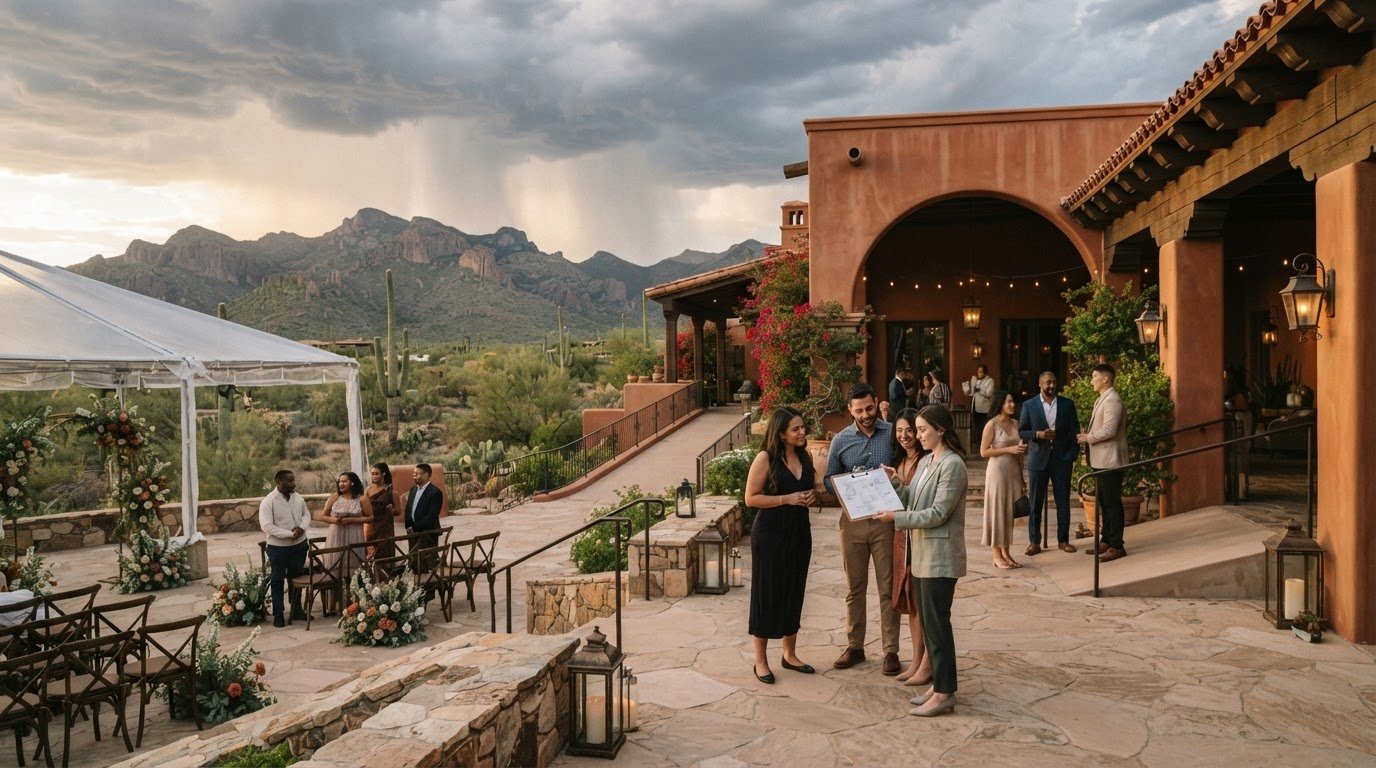

A beautiful outdoor setting can still leave you with a difficult decision when the forecast turns. A venue contingency plan for bad weather makes that moment easier to manage by agreeing in advance when to change course, who makes the call, and how guests will hear about it.
If you’re unsure what conditions should trigger a change, or whether a backup space can comfortably accommodate your guests, you’re not alone. A strong plan puts safety, comfort, and accessibility first while preserving the parts of the event that matter most.
This guide covers how to set weather triggers and decision deadlines, assign communication responsibilities, and assess whether an alternative space suits your event and guest count. You’ll also find questions to ask your venue about confirmed spaces, capacities, accessibility, weather-related changes, and vendor coordination. Settle those details ahead of time so you can act thoughtfully instead of improvising as conditions change.
Key Takeaways
- A venue contingency plan for bad weather should set clear actions that protect guests and preserve the event’s essential moments.
- Agree on weather triggers, decision deadlines, and who has authority to make the call before event day.
- Compare backup options by capacity, accessibility, setup time, sound, catering, and guest comfort, not appearance alone.
- Prepare concise updates for guests and vendors so changes to timing, transport, clothing, or arrival instructions are easy to follow.
- Ask the venue to confirm spaces, capacities, responsibilities, and weather-related policies in writing before relying on them.
What a Venue Contingency Plan for Bad Weather Should Protect
A garden ceremony, an open-air gathering, or a reception planned around outdoor spaces can all be affected by a changing forecast. A venue contingency plan for bad weather spells out what to do when conditions disrupt the planned setup, so organizers and venue staff aren’t left making rushed decisions.
A weather contingency plan is an agreed set of actions for protecting people and adapting an event when weather disrupts the planned setup. Like any contingency plan, it prepares an alternative before it’s needed. Distinguish between conditions that call for a manageable adjustment, such as moving an activity under cover, and hazards that require an immediate safety-first response. Use forecasts to guide planning, but follow relevant official warnings and venue procedures when they apply.
Which weather risks should organizers consider?
Look beyond rain. Wind can affect temporary structures and décor; heat, cold, lightning, and poor air quality may change whether it’s comfortable or safe to continue outdoors. Consider the hazards relevant to the season and setting, how long guests may be exposed, and what equipment or activities are planned.
Think through guest access as well. A route that’s manageable in dry weather may become difficult in rain, and moving between spaces may take extra time for guests who need step-free access. Check current official forecasts and guidance from relevant authorities, and verify safety recommendations with qualified or responsible sources. Don’t rely on guesswork or a single forecast snapshot.
What should the plan protect first?
Put guest and staff safety ahead of the schedule, décor, photography, and convenience. Decide in advance who can pause activities or activate the safety response, and how that decision will reach venue staff and attendees. If conditions become dangerous, focus on clear communication and safe next steps, not preserving the original timeline.
Once safety is addressed, identify what gives the event its meaning. A ceremony, presentation, or shared meal might move, change format, or be shortened. For each essential activity, consider:
- Whether guests can reach the alternative space safely and accessibly.
- How shelter, hydration, restrooms, and comfortable waiting areas will be handled.
- Whether arrival and departure instructions need to change.
For events that combine gathering spaces with group lodging, such as weddings, corporate retreats, or wellness gatherings, coordinate updates for attendees and overnight guests. Clear priorities help the experience adapt while keeping care and hospitality at its heart.
How to Set Weather Triggers, Decision Roles, and Backup Plans
A weather plan is useful when it turns a forecast into an agreed next step. Build your venue contingency plan for bad weather with the venue before event day. Document what conditions prompt a routine adjustment, what requires an urgent safety response, and who has authority to act. BizBash’s guide to avoiding weather disasters also highlights the value of planning roles and communication in advance.
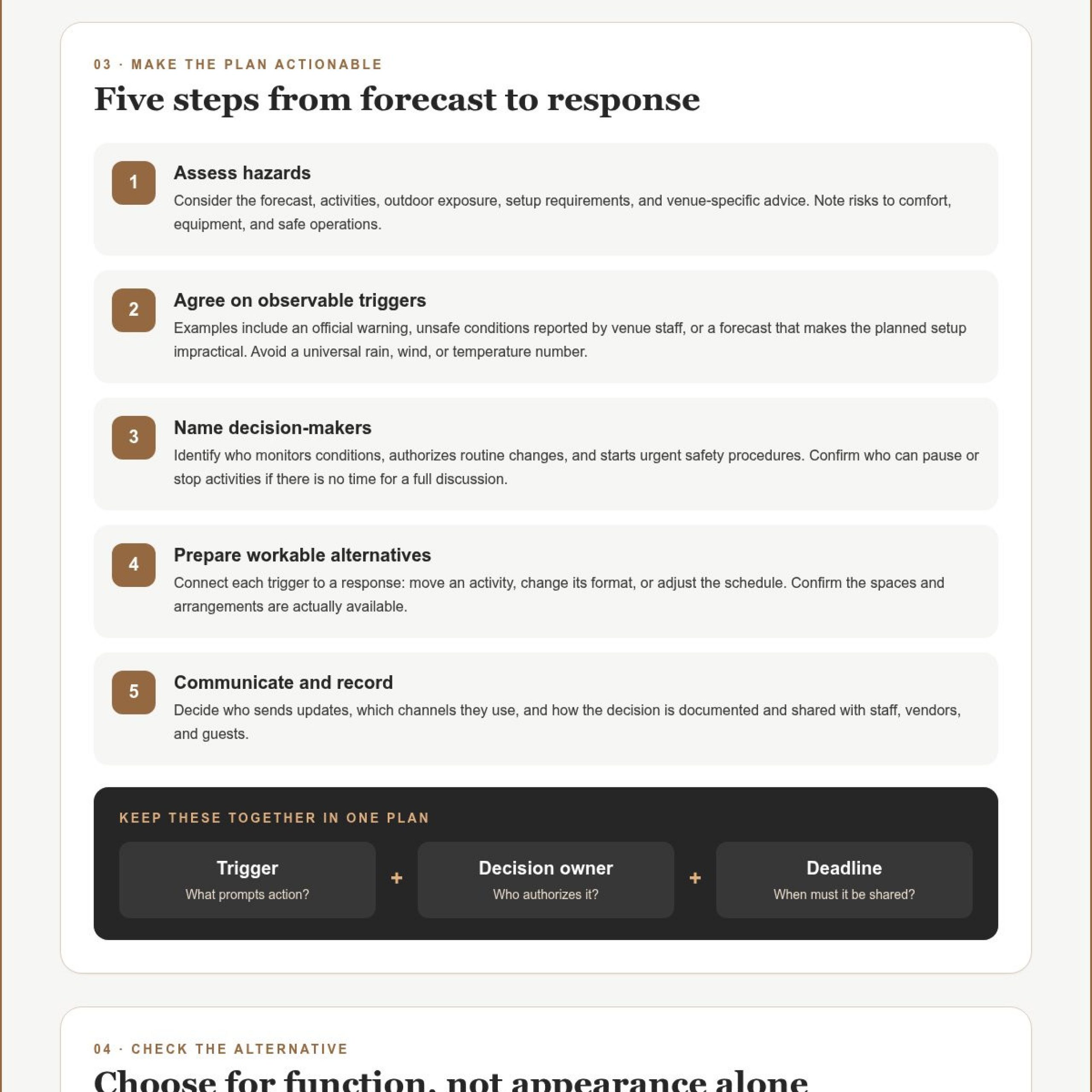
Keep the weather trigger, decision owner, and deadline together in one plan so everyone knows what prompts action, who authorizes it, and when the decision must be shared.
- 1. Assess hazards. Consider the forecast, event activities, outdoor exposure, setup requirements, and venue-specific advice. Note which conditions could affect comfort, equipment, or safe operations.
- 2. Agree on triggers. With the venue, describe observable conditions that prompt a change, such as an official warning, unsafe conditions reported by venue staff, or a forecast that makes the planned setup impractical. Avoid a universal rainfall, wind, or temperature number. What is workable depends on the event, site, equipment, and guidance.
- 3. Assign decision-makers. Name the organizer and venue contacts who monitor conditions, authorize routine changes, and initiate urgent safety procedures. Confirm who can pause or stop activities if there’s no time for a full discussion.
- 4. Prepare alternatives. Link each trigger to a workable response, such as moving an activity, changing its format, or adjusting the schedule. Confirm which spaces and arrangements are actually available for your event.
- 5. Communicate and record. Decide who sends updates, which channels they’ll use, and how the decision will be documented and shared with staff, vendors, and guests.
When should an event move indoors or change format?
Set decision checkpoints around the event’s actual needs. An early check can flag uncertainty while there’s still time to review alternatives. A later checkpoint can account for updated conditions and setup progress. Record what conditions and venue advice prompt each change, as well as the latest practical time to act. Don’t wait for certainty if that would leave too little time to move equipment or notify guests.
Who makes the call and who informs guests?
Write down names, roles, and backup contacts for monitoring conditions, authorizing changes, and updating guests. Set a decision deadline that gives staff, vendors, and attendees time to respond. Choose a primary channel, such as email or text, and a backup in case messages don’t reach everyone. Name a contact for guests who need accessible instructions. For events with overnight guests, coordinate updates about the event with any changed arrival or departure plans.
Compare Weather Backup Options Before You Choose a Venue
A backup plan should preserve the parts of an event guests came to experience, not simply move them out of the weather. As you develop a venue contingency plan for bad weather, compare alternatives against the event itself. A ceremony and reception have different needs from a working session or wellness gathering. A covered area may protect guests from light rain but still be unsuitable if wind, heat, or another hazard makes it unsafe or uncomfortable.
Consider five possible responses: move indoors, use a covered space, delay the start, modify or shorten activities, or reschedule. None is automatically the best choice. For a wedding, moving a ceremony indoors may preserve the key moment. A shorter outdoor ceremony followed by a change of setting may work only if the transition is safe and comfortable. Ask the venue which options are genuinely available for your event, rather than treating a space or date as guaranteed.
How do you assess whether a backup space is workable?
Look beyond whether everyone can fit. Confirm capacity in the intended layout, accessible routes, restrooms, power, sound needs, catering arrangements, and the time required to reset the space. Check whether essential equipment and vendor setups can be accommodated. Ask what’s included, what needs to be moved or rearranged, who coordinates the transition, and whether the alternative supports the event’s defining moments. A desert wedding venue planning guide can also help you consider how ceremony and reception settings shape the overall experience.
Use a comparison framework when discussing options with the venue. For each alternative, record:
- Option and trigger: What change would prompt this choice?
- Decision owner and lead time: Who authorizes it, and how much time is needed to act?
- Practical fit: Can it support guest capacity, access, sound, catering, and setup?
- Trade-offs: What changes for the schedule, atmosphere, activities, or guest comfort?
When is changing the schedule better than changing the space?
A brief delay may make sense if conditions are expected to improve and waiting won’t create bigger problems. Weigh that against guest travel, vendor availability, meal timing, and the time needed to adjust equipment or staffing. If guests are staying overnight, consider how a delay or rescheduling affects their arrivals, departures, and communications. Planning for event venues with lodging means treating event updates and guest accommodation plans as connected decisions.
Compare options early, then confirm the selected arrangement, responsibilities, and any limitations with the venue in writing. That shared understanding helps maintain a cohesive experience when the setting or schedule must change.
Build a Weather-Ready Event Timeline and Guest Communication Plan
A calm response starts well before the forecast becomes urgent. Add weather checkpoints to your venue contingency plan for bad weather, from the first venue conversation through the post-event review, and assign someone to own each step. Confirm in writing which spaces and arrangements are available, who coordinates changes, and how updates will be shared with the venue team, vendors, and guests.
- When contracting: Document the agreed backup options, decision roles, and any weather-related change terms that need clarification.
- During planning: Confirm vendor contacts, guest communication channels, accessibility needs, and the latest practical time to change plans.
- Before setup: Assign someone to check official forecasts at agreed times and share updates with decision-makers.
- During setup and on event day: Check that the confirmed alternative is ready, routes and signs are clear, and relevant staff and vendors know the current plan.
- Afterward: Record what worked, where confusion arose, and what should be revised for another event.
What belongs on the event-day weather checklist?
Keep one checklist with the forecast-check schedule, the person monitoring conditions, venue and vendor contacts, backup-space readiness, signage, staffing, and guest routes. Record each decision’s time, reason, and notification channels. This gives the team a shared reference if conditions change again and helps prevent conflicting instructions from different staff members.
How can you communicate changes without creating confusion?
Choose one source of truth, then repeat the same update through the agreed channels, such as email and text. State what changed, what guests should do, when to act, and where to ask questions. Arrange a non-digital way to reach people who may not see messages promptly, and coordinate accessible instructions with the person responsible for guest support.
Prepare short templates in advance and fill in only confirmed details:
- Plan change: “The event plan has changed. Please go to [confirmed space] for [activity]. Follow signs or ask [contact].”
- Transport or arrival: “Use [confirmed route or entrance] and arrive by [time]. Contact [name or role] if you need assistance.”
- Clothing: “Conditions may change. Please bring [appropriate clothing item] for the updated plan.”
Before sending, align the wording with venue staff, vendors, speakers, and anyone supporting guests with accessibility needs. For events with overnight guests, coordinate event updates with confirmed lodging or arrival instructions so people receive a consistent message.
Review available property details, then ask the venue which event arrangements, responsibilities, and communication steps it can confirm for your gathering.
Choose an Event Venue That Can Discuss Bad-Weather Contingencies Clearly
A venue’s confidence in describing its weather arrangements matters, but clear details are more useful than broad reassurance. Before booking, use your venue contingency plan for bad weather to ask what’s confirmed, what depends on availability, and what still needs to be agreed in writing. Treat uncertain answers as open questions, not as an assumed backup.
What should you ask a venue before you book?
Ask specific questions about your event, then keep the answers with your booking documents. For each alternative space, confirm whether it’s available for your date, its capacity in the intended layout, any access limitations, and how much time it takes to prepare.
- Which indoor or covered spaces, if any, can be considered for this event, and what capacities and accessibility details are confirmed?
- Who monitors weather conditions, who can authorize a change, and who contacts staff, vendors, and guests?
- What are the decision deadlines, change procedures, and responsibilities for resetting spaces or adjusting vendor setups?
- Which contract terms apply to weather-related changes, cancellation, or rescheduling?
Separate written confirmations from assumptions. A room discussed during a tour isn’t necessarily a reserved backup, so clarify its availability and suitability for your event. Ask for documented responsibilities and procedures rather than relying on a general promise that the venue will “work something out.”
How can a venue support a seamless change of plan?
Talk through how a change would affect the event as a whole. Who coordinates the transition? How will vendors receive the updated plan? If guests are staying overnight, how will event changes connect with lodging and arrival information? Ask how the options the venue can confirm might preserve essential moments and guest comfort, including accessible routes and clear instructions.
Solana Spanish Villas is an independently owned, renovated historic guest ranch that hosts weddings, corporate retreats, and wellness gatherings, with event spaces and group accommodations. Ask directly about capacity, lodging coordination, and weather arrangements. Confirm which spaces and procedures are available for your dates rather than assuming a particular backup facility or policy is included.
A conversation before booking helps turn a beautiful setting into a considered event plan. Explore available stays and ask about event arrangements, including which weather-related details can be confirmed for your gathering.
Plan with Confidence, Whatever the Forecast Brings
A thoughtful venue contingency plan for bad weather gives everyone a steadier path forward: agree on observable weather triggers, name the people authorized to decide, and set deadlines that leave time to act. Compare alternatives for capacity, accessibility, setup, and guest comfort, then put confirmed arrangements and responsibilities in writing.
Clear communication completes the plan. Use consistent updates for guests, vendors, venue staff, and anyone coordinating accessibility or lodging, so a change in schedule or setting doesn’t create confusion. The goal isn’t to predict every turn in the weather. It’s to protect people and preserve what matters most about the gathering.
Solana Spanish Villas hosts weddings, corporate retreats, and wellness gatherings, with event hosting and group accommodations available through the property. Ask which spaces and weather-related arrangements can be confirmed for your event, and how guest communication could be coordinated if plans change. Explore the property and start a conversation about your event to discuss your gathering and its weather plan.
Frequently Asked Questions
What should a venue contingency plan for bad weather include?
A venue contingency plan for bad weather should specify the hazards to monitor, the conditions that trigger a change, and who has authority to decide. Include confirmed backup options, decision deadlines, setup responsibilities, and a communication process for guests, staff, and vendors. Check practical details such as capacity, accessibility, and guest routes. Put venue arrangements and relevant contract terms in writing so the plan is clear before event day.
When should an event organizer decide to move an outdoor event indoors?
Decide by an agreed deadline that leaves enough time to prepare the alternative and notify everyone. Set forecast-check checkpoints based on the event schedule, setup needs, and uncertainty in the conditions. Agree on observable triggers with the venue and consider official forecasts and relevant safety guidance. There’s no single rainfall, wind, or temperature threshold that suits every event. If conditions become dangerous, prioritize safety rather than waiting for the planned decision time.
What happens if bad weather starts during an outdoor event?
Follow the response agreed with the venue, putting guest and staff safety ahead of continuing the program. The authorized person should pause or stop activities when conditions call for it, then direct people according to the venue’s confirmed safety procedures and relevant official guidance. Communicate where guests should go and what to do next. Don’t improvise a route or move people into an unconfirmed space during hazardous conditions.
Can a venue guarantee that an outdoor event will go ahead in bad weather?
No venue can control the weather or promise that outdoor conditions will remain suitable. Ask what arrangements the venue can confirm for your event, including alternative spaces, capacity, and access limitations. Review written procedures and contract terms for weather-related changes, cancellation, or rescheduling. Treat a possible backup as unconfirmed until its availability and use are clearly agreed. A practical plan prepares you to adapt rather than guaranteeing the original setup.
How do you choose a backup location for a wedding or retreat?
Choose a backup that can support the event’s essential activities and guest needs, not just fit the group. Confirm capacity in the intended layout, accessible routes, restrooms, power, sound, catering arrangements, and setup time. Consider whether the space preserves key moments, such as a ceremony or presentation, and whether vendors can adapt. For retreats or events with overnight guests, plan how a change could affect lodging, arrival details, and the overall schedule.
How should guests be notified about a weather-related event change?
Use one clear source of truth and share the same decision through the communication channels selected in advance, such as text and email. State what changed, where guests should go, when they should act, and who can answer questions. Coordinate the message with venue staff, vendors, and anyone supporting accessibility needs. Have a non-digital way to reach guests who may not see updates promptly, and keep signs and staff instructions consistent with the message.
0 Comment