
What if the biggest threat to your group’s breakthrough isn’t the agenda, but the four walls surrounding it? Many organizers settle for a retreat center that feels more like a sterile dormitory than a sanctuary, only to find that institutional coldness stifles the very creativity they hoped to spark. You deserve an environment that supports a genuine nervous system reset, especially since research shows that 37% of travelers in 2026 now cite mental health as their primary reason for attending a retreat.
It’s exhausting to manage logistics when the venue feels like it’s working against you. We understand that you need more than just meeting space; you need a partner that anticipates your needs with the warmth of a gracious host. This article reveals the essential criteria for selecting a venue that balances historical charm with modern professional standards. We’ll walk through everything from ensuring total privacy to verifying that the lodging supports the deep, immersive tranquility your guests crave. By the end of this checklist, you’ll know exactly how to secure a space that transforms your gathering from a simple meeting into a restorative experience.
Key Takeaways
- Identify the shift toward boutique, immersive spaces that move beyond the cold, corporate feel of traditional meeting venues.
- Learn how to vet a retreat center for total privacy and natural immersion to ensure your group remains focused and undisturbed by external crowds.
- Discover the essential standards for accommodations that blend historic architectural charm with the modern refinements of high-end hospitality.
- Evaluate the level of professional support available, including dedicated coordinators and catering flexibility for specific wellness or professional goals.
- Understand the unique benefits of an exclusive-use estate where the environment is fully tailored to support your intended emotional or professional shift.
Defining the Modern Retreat Center: More Than Just a Meeting Space
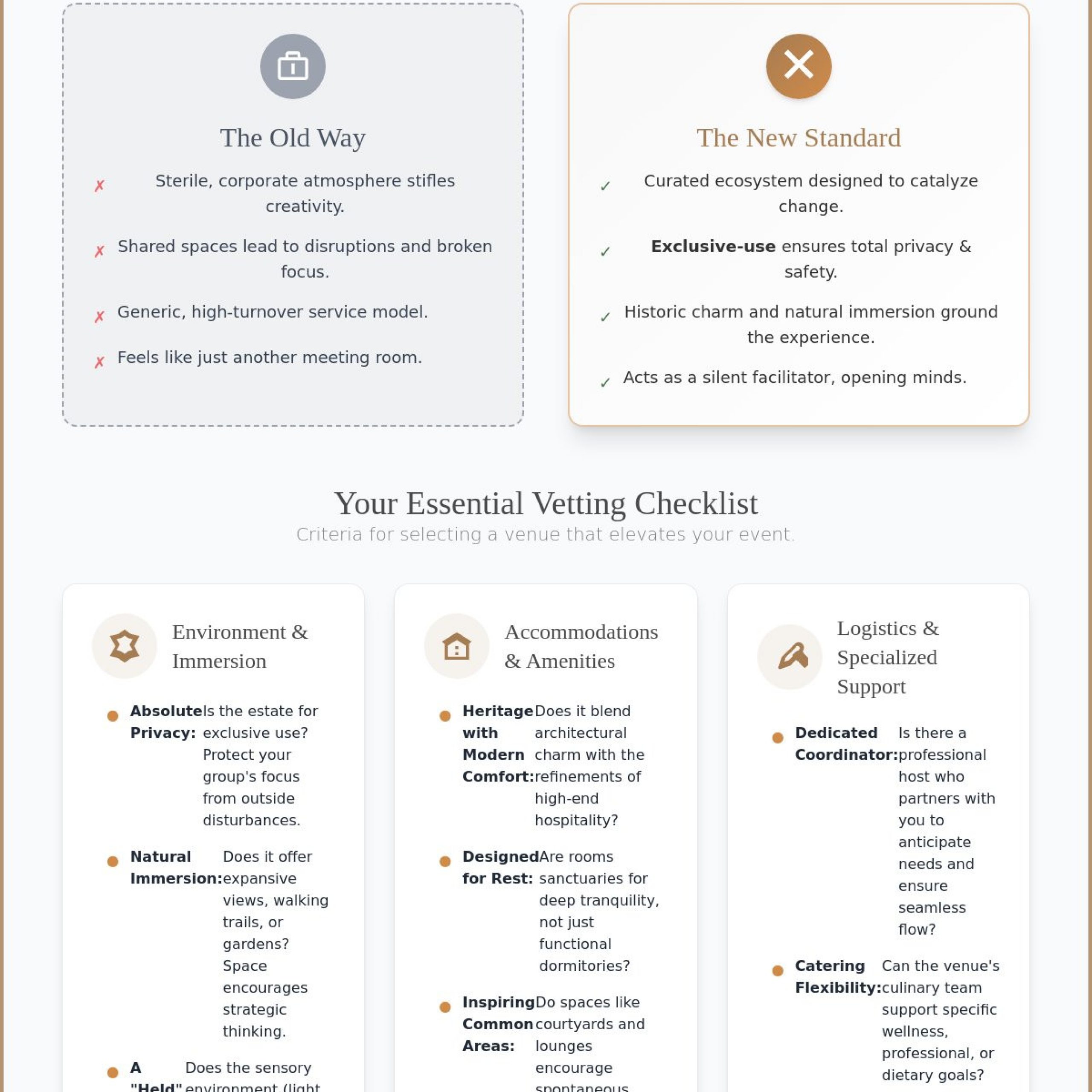
For too long, the term “retreat” conjured images of drafty church basements or sterile hotel ballrooms with humming fluorescent lights. In 2026, the definition has shifted. A premier retreat center is no longer just a place to sleep and meet; it’s a curated ecosystem designed to catalyze change. Unlike a standard hotel, which prioritizes high turnover and generic convenience, a true retreat venue acts as a silent facilitator. It offers a sense of “place” that grounds the experience, ensuring that the environment itself does the heavy lifting of lowering defenses and opening minds.
The global wellness retreat market is projected to reach $273.15 billion in 2026, driven by a 10.1% growth rate. This surge reflects a collective craving for boutique environments that offer more than just a Wi-Fi connection. Attendees are looking for architectural heritage and natural seclusion. These elements aren’t just “nice to have” anymore; they are the primary variables in a retreat’s success. When you choose a venue with history and character, you’re providing your group with a narrative framework that supports their personal or professional growth.
The Core Purpose of a Retreat Environment
At its heart, the modern retreat environment serves as a “step away” from the relentless digital noise of everyday life. To understand the historical context of what is a retreat, one must look at the tradition of withdrawal for the sake of reflection. Today, this manifests as a safe container for innovation or healing. Sensory details play a pivotal role here. The way morning light hits a hand-plastered wall or the gentle rustle of desert trees provides a rhythmic backdrop that signals to the brain that it’s safe to be vulnerable. This sensory alignment is what distinguishes a professional hosting environment from a simple rental property.
Identifying Your Group’s Specific Needs
Every gathering has a unique energetic requirement. A wellness retreat might prioritize open-air yoga spaces and quiet corners for meditation, while corporate retreats often require a seamless blend of high-functioning technology and intimate breakout zones. The physical layout dictates the flow of human interaction; a space with winding paths and shared courtyards encourages the “accidental” conversations where the best ideas often emerge. A retreat center is a curated environment designed for intentional group focus.
When vetting a potential site, consider how the architecture influences the mood. High ceilings can encourage “big picture” thinking, while cozy, shaded nooks are better for private coaching or deep reflection. By matching the venue’s physical personality to your group’s goals, you ensure the logistics don’t just work; they inspire.
The Environment Checklist: Prioritizing Privacy and Natural Immersion
The physical surroundings of a retreat center are never neutral. They either pull your guests toward deep reflection or push them back into the frantic pace of their daily lives. When you step onto the grounds, the first thing you should feel is a sense of “held” space. This feeling is often the result of deliberate seclusion. One of the most common complaints from organizers is the frustration of sharing a venue with other groups. If your session on vulnerability is interrupted by a loud corporate mixer in the next room, the container is broken. For a truly successful leadership team off-site, exclusivity isn’t a luxury; it’s a requirement for psychological safety.
Natural immersion acts as a biological reset. The “Psychology of Space” tells us that expansive views, whether of rugged mountain peaks or the rolling Sonoran desert, encourage the brain to move beyond tactical “to-do” lists and into strategic, big-picture thinking. When the horizon is wide, the mind follows suit. Look for centers that offer private walking trails and hidden gardens where participants can process their thoughts in motion. This movement between structured indoor sessions and unstructured outdoor reflection is where the real breakthroughs happen.
Seclusion vs. Accessibility
True seclusion shouldn’t mean a grueling travel schedule. The ideal venue offers a gated, private estate model that feels worlds away while remaining within a reasonable drive from major transit hubs. This balance ensures that attendees arrive fresh and ready to engage rather than exhausted by the journey. Vetting for noise pollution is equally critical. A premier center will be situated far from flight paths or heavy traffic, allowing the natural soundscape to take center stage. This silence is the foundation of peaceful retreats that foster genuine growth.
Architectural and Aesthetic Harmony
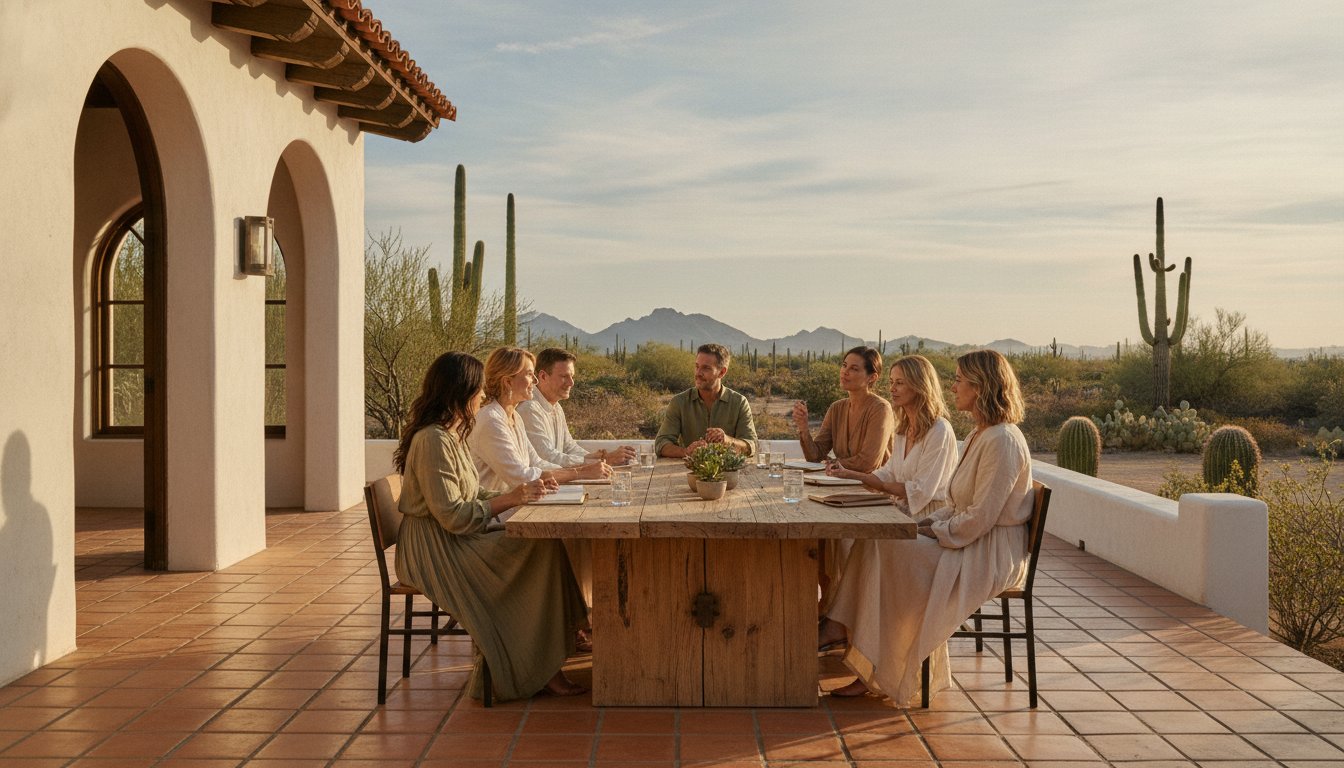
While modern minimalism has its place, it often lacks the warmth required for deep human connection. Architectural heritage, such as the hand-plastered walls and terracotta tiles of a Spanish Villa, provides a sense of permanence and history. This “gracious host” aesthetic makes guests feel cared for by their environment. When evaluating common areas, use this checklist to ensure the space supports intimacy:
- Fireplaces: Do they serve as natural gathering points for evening storytelling?
- Patios: Are there shaded, sun-drenched courtyards for morning coffee and quiet conversation?
- Intimate Nooks: Does the layout provide small alcoves for one-on-one coaching or private reflection?
If you’re seeking a space that perfectly marries this historical character with professional privacy, consider how the secluded grounds of Solana Spanish Villas can serve as the sanctuary your group needs to reconnect and recharge.
Accommodations and Amenities: Balancing Heritage with Modern Comfort
A retreat center should never feel like a compromise on comfort. While the goal is often to unplug, the physical experience of sleep and nourishment dictates the group’s capacity for deep work. In 2026, the “dormitory” model of thin mattresses and shared hallway bathrooms is a relic of the past. Today’s organizers look for lodging that honors the heritage of the location while providing the refinements of a boutique hotel. This balance ensures that when guests retire to their rooms, they feel a continuation of the sanctuary experienced throughout the day. Comfort is the foundation of transformation. When a guest enters a room filled with the scent of cedar and the sight of hand-woven blankets, their nervous system begins to settle immediately.
The choice between private and shared rooms significantly alters group dynamics. For executive leadership sessions, private rooms are essential to allow for individual processing and rest. In contrast, certain wellness programs may utilize shared suites to build camaraderie. Regardless of the configuration, modern essentials are non-negotiable. Even in a “digital detox” environment, high-speed Wi-Fi must be available for the organizer’s logistics, and sophisticated climate control ensures that the desert heat or mountain chill never distracts from the retreat’s purpose. These amenities should be invisible but reliable, supporting the experience without dominating it.
The Boutique Guest Ranch Standard
The Guest Ranch model offers a specific type of Western heritage that resonates deeply with the 2026 traveler’s desire for authenticity. Instead of standardized, cookie-cutter rooms, look for “un-standardized” spaces. Each room should tell a story through its unique textiles, local art, and architectural quirks. High-end linens, plush towels, and private, tiled bathrooms are essential details that make a guest feel truly valued. This level of craftsmanship reflects a “gracious host” approach, moving away from the coldness of corporate hospitality toward something more intimate and personal.
Functional Spaces for Gathering
Meeting rooms shouldn’t feel like boardrooms. The most effective spaces for 2026 are “outdoor living rooms” and airy halls flooded with natural light. When vetting a retreat center, prioritize versatility. Can the main hall transition from a structured workshop space to a cozy evening lounge? The importance of informal connection points, such as a fire pit or a shaded courtyard, cannot be overstated. These are the places where the most profound insights are often shared. Dining facilities are the heart of this experience. A private kitchen that allows for communal meals around a heavy wooden table fosters a sense of belonging that a standard restaurant simply cannot replicate.
Logistics and Specialized Support: Vetting for Wellness or Corporate Needs
The success of any gathering often rests on the logistics that remain invisible to the attendees. When a retreat center operates with the precision of a professional host, the organizer is finally free to focus on the content rather than the coffee. One of the first questions to ask is whether the venue provides a dedicated on-site coordinator. This person acts as a steward of your experience, ensuring that every transition, from the morning keynote to the evening fire pit session, flows without friction. They bridge the gap between your creative vision and the venue’s physical capabilities.
Catering is no longer just about sustenance; it’s a core component of the transformative process. In 2026, premium venues must offer sophisticated flexibility to manage complex dietary needs, particularly for wellness retreats where nutrition is often part of the curriculum. Whether it’s a plant-based, farm-to-table menu or a traditional Western feast, the quality of ingredients and the grace of the service reflect the overall standard of care. Beyond the plate, vetting for specialized equipment is essential. Ensure the venue provides high-quality AV systems for corporate presentations or professional-grade yoga mats and props for wellness sessions. Safety and accessibility must also be verified to ensure every participant feels comfortably accommodated and included.
Wellness and Spiritual Retreat Requirements
For those hosting more contemplative programs, the physical environment must offer specific quiet zones. A checklist for these spaces includes acoustic privacy, comfortable floor seating, and proximity to natural soundscapes. Integrating local culture or nature-based activities, such as guided desert walks or heritage tours, adds a layer of depth to the itinerary. For more insights on crafting these meaningful experiences, explore the evolution of spiritual retreats in the modern age. These details turn a simple trip into a true inner pilgrimage.
Corporate and Leadership Retreat Support
Strategic sessions require a high degree of privacy. A premier retreat center should offer exclusive-use models where sensitive discussions remain within the group and away from the ears of other guests. On-site team-building opportunities, such as shared cooking classes in a villa kitchen or outdoor challenges, foster the kind of organic connection that standard office environments lack. The ROI of such a high-quality environment is well-documented; companies that invest in these immersive offsites often see a measurable increase in employee retention and cross-departmental innovation. If you’re ready to plan your next high-impact event, book your corporate retreat in Tucson to experience the difference a dedicated host makes.
Choosing an Exclusive-Use Estate for Your Next Retreat
The final decision in choosing a retreat center often comes down to the level of control you have over the atmosphere. Institutional centers or large-scale commercial hotels often require you to share common areas, dining rooms, and even hallways with strangers. This lack of privacy can dilute the focus of your program and disrupt the sense of safety required for deep work. In 2026, the “Private Villa” model has emerged as the gold standard for high-impact gatherings. When you secure an exclusive-use estate, the entire property becomes a dedicated sanctuary for your group. This exclusivity ensures that the energy of your retreat remains contained and potent, allowing for a level of immersion that shared facilities simply cannot provide.
A boutique resort feel offers a stark contrast to the coldness of corporate hospitality. Instead of navigating endless corridors and generic ballrooms, your guests move through intimate, character-filled spaces that feel like a private home. This sense of ownership over the environment fosters a deeper connection among participants. It allows the venue to act as a “gracious host” that anticipates needs without the intrusive presence of outside crowds. When the environment is fully tailored to your group, the logistics fade into the background, and the intended emotional or professional shift takes center stage.
The Solana Spanish Villas Experience
Solana Spanish Villas offers a rare fusion of 1920s heritage and modern luxury renovations. It is a place where history is preserved through hand-plastered walls and original architectural details, yet every modern comfort is meticulously integrated. The appeal of this private desert setting lies in its versatility. It serves as an evocative backdrop for desert weddings, a secure environment for sensitive corporate strategy sessions, and a tranquil haven for wellness practitioners. Our commitment as a steward of this land is to act as a dedicated guide for your group’s unique journey, providing a space that feels both professional and deeply personal.
Booking Your 2026 Retreat
Planning an exclusive-use retreat requires a methodical approach to timing. For large groups, it is wise to begin the selection process 9 to 12 months in advance to secure your preferred seasonal dates. Once you have narrowed your choices, a site visit is essential. This allows you to walk the trails, test the acoustics of the gathering halls, and feel the rhythm of the estate in person. During this phase, prioritize contract transparency. A professional retreat center will provide clear, comprehensive pricing that avoids hidden fees for equipment or basic amenities. As you prepare your itinerary, look for ways to maximize the venue’s natural assets, such as sunrise meditation on the patio or sunset reflection sessions overlooking the desert horizon. If you are ready to move beyond the institutional and into the extraordinary, plan your private retreat with Solana Spanish Villas.
Elevating Your Group’s Journey in 2026
Selecting a space that balances professional hosting with deep, immersive tranquility is the final piece of your planning puzzle. The most impactful gatherings happen when privacy, architectural character, and expert logistics align perfectly. Whether you’re hosting a high-stakes strategy session or a restorative wellness program, the right retreat center should feel like a partner that anticipates your needs before they’re spoken. This level of intentionality ensures your guests feel valued and supported from the moment they arrive.
At Solana Spanish Villas, we offer a historic 1920s guest ranch that has been thoughtfully updated with modern boutique renovations. Our private, scenic desert setting provides the total seclusion your group requires to disconnect from daily noise and reconnect with one another. From our expert hosting for weddings to our specialized support for corporate and wellness retreats, we’re dedicated to being the gracious host your vision deserves. Our blend of heritage and contemporary comfort creates a sanctuary where breakthroughs are inevitable.
Book Your Exclusive 2026 Retreat at Solana Spanish Villas and begin crafting an experience that lingers long after your guests return home. We look forward to welcoming you to the beauty of the desert.
Frequently Asked Questions
What is the difference between a retreat center and a conference hotel?
A retreat center emphasizes a “step away” from the everyday through curated, low-density environments, whereas a conference hotel focuses on high-volume efficiency. Retreat venues prioritize the “gracious host” model, offering intimate spaces that support emotional or professional shifts. In 2026, the market has shifted toward these boutique settings because they provide a sense of place and tranquility that standard hotels often lack.
How do I know if a retreat center is suitable for a corporate group?
You can determine suitability by evaluating the venue’s ability to provide total privacy for sensitive strategic sessions. Look for dedicated event coordinators and professional AV infrastructure that doesn’t feel institutional. A premier center will offer a mix of formal meeting areas and informal “outdoor living rooms” to foster the organic connection necessary for high-level leadership teams.
Should I choose a retreat center with on-site lodging?
Choosing a venue with on-site lodging is essential for maintaining group cohesion and minimizing the logistical friction of daily travel. It allows participants to remain fully immersed in the experience without the interruption of commuting to an off-site hotel. This continuity is vital for programs that involve evening reflection or early morning wellness sessions in a secluded desert setting.
What are the benefits of an ‘exclusive use’ retreat venue?
Exclusive use provides total control over the environment, ensuring that no outside groups or distractions disrupt your container. This model is particularly beneficial for high-profile groups or therapeutic retreats where psychological safety is the priority. It allows every courtyard, patio, and dining hall to be fully dedicated to your group’s specific journey and energy.
Can a retreat center accommodate specific dietary needs for wellness groups?
Yes, a professional retreat center should offer sophisticated flexibility to manage complex dietary requirements, including plant-based or farm-to-table menus. In 2026, premium venues act as partners in your wellness goals, ensuring that nutrition supports the transformative process. Always verify that the kitchen can handle specific allergens or specialized meal plans during your initial site visit.
What safety features should I look for in a secluded retreat center?
Look for centers that have established emergency preparedness plans and clear communication protocols for secluded locations. Essential features include gated access, well-marked trails, and on-site staff trained in first aid. While seclusion is the goal, ensuring that the property complies with local health codes and safety regulations provides the necessary peace of mind for organizers.
How far in advance should I book a retreat center for 2026?
For the 2026 season, you should aim to book your venue 9 to 12 months in advance, especially for exclusive-use estates. This timeline is particularly important if you’re planning around peak weather windows or holiday weekends. Early booking ensures you have the necessary lead time to customize the itinerary and coordinate with specialized facilitators or caterers.
Is a historic property better than a modern one for a wellness retreat?
Historic properties often provide a sense of warmth and permanence that modern minimalism can’t replicate. The architectural heritage of a 1920s guest ranch, for example, offers a nostalgic charm that grounds the attendee’s mindset. While modern centers are functional, the “soul” of a historic venue often acts as a silent facilitator for the renewal wellness groups seek.
0 Comment