
What if the secret to an unforgettable celebration isn’t chasing the latest viral trend, but anchoring your personal narrative to the physical character of your setting? Learning how to choose a wedding theme shouldn’t mean drowning in thousands of conflicting social media boards or agonizing over rental pieces that might feel out of place. When design choices feel scattered, it’s easy to lose sight of the warm, tranquil atmosphere you actually want to create.
It’s completely natural to feel the tension between different aesthetic tastes, budget realities, and the worry that your decor will clash with your venue’s architecture. You deserve a celebration that feels like a gracious, authentic retreat rather than a copy-pasted gallery. In this guide, you’ll discover how to curate a timeless, cohesive wedding theme that reflects your story and elevates your venue’s natural surroundings. Ahead, we break down a step-by-step path to master your color palette, streamline vendor decisions, and craft an unforgettable guest experience with total confidence.
Key Takeaways
- A well-defined wedding aesthetic acts as a functional architectural filter, keeping your spending focused and preventing costly, disjointed decor purchases.
- Discover a practical framework for how to choose a wedding theme by translating your shared travel history, home interior style, and natural tastes into a cohesive story.
- Working with your venue’s built-in structural charm and landscape palette reduces the need for heavy styling while creating an effortlessly refined atmosphere.
- Explore how to interpret leading design archetypes, from quiet modern minimalism to historic ranch romance, through textured linens, intentional lighting, and authentic materials.
- Elevate your gathering from a simple party to an immersive retreat by weaving thematic cues across every sensory touchpoint, from textured paper goods to curated hospitality details.
What Is a Wedding Theme and Why Does It Matter?
A wedding theme is far more than a checklist of decorative props or a collection of viral color swatches. At its best, a theme serves as an architectural design language, a quiet, guiding philosophy that shapes the atmosphere of your celebration. While ancient wedding traditions provide the sacred foundation for the ceremony itself, your aesthetic vision informs how guests feel from the moment they step onto the grounds. When couples first explore how to choose a wedding theme, they often fall into the trap of purchasing disjointed accessories online. True thematic clarity acts as an editorial filter. It safeguards your budget by preventing impulsive orders of mismatched decor that clash with your setting.
The Distinction Between Wedding Theme, Style, and Vibe
Understanding the interplay between style, vibe, and theme brings instant clarity to your design process:
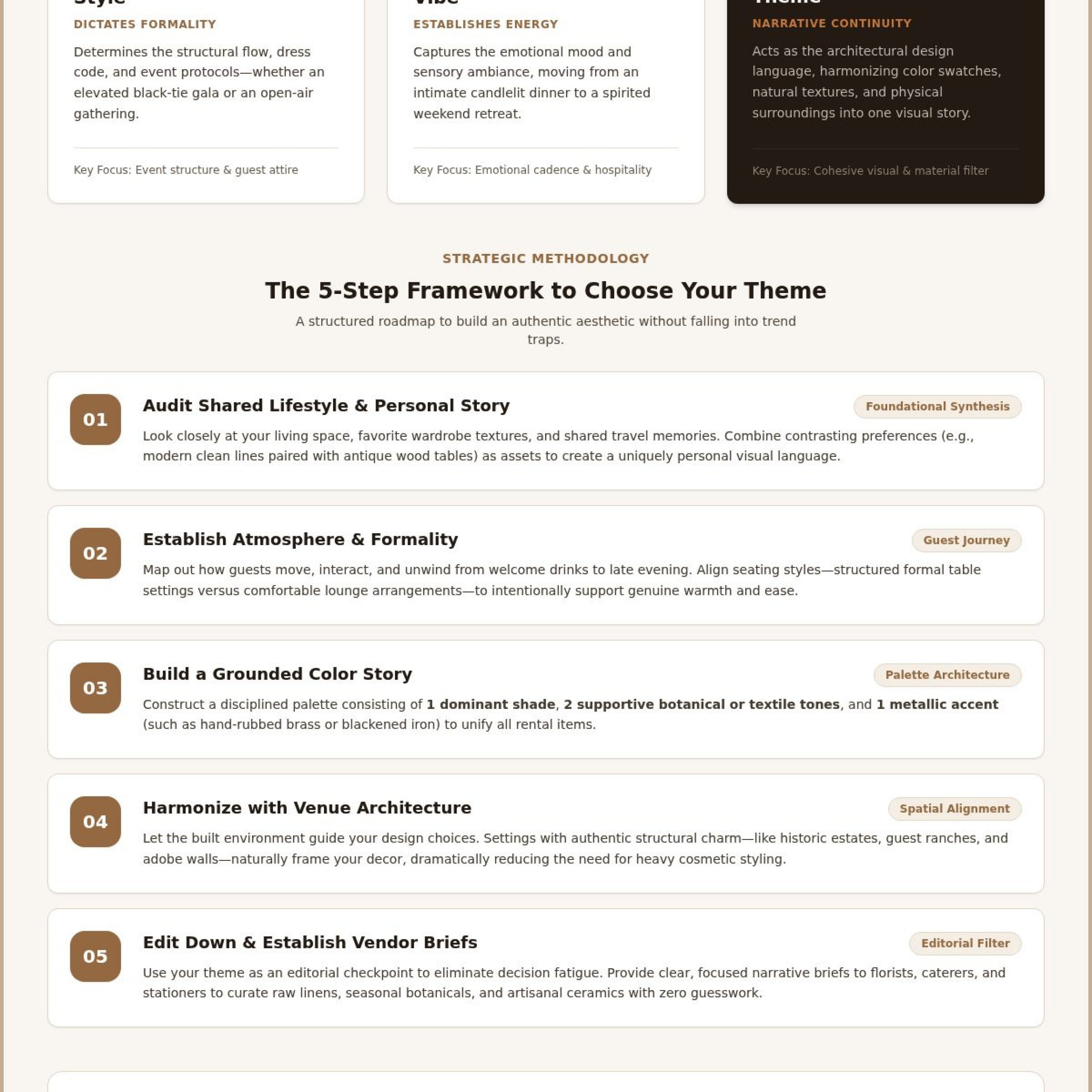
- Style dictates formality: It determines the dress code and structural flow, whether you host a black-tie evening or an open-air gathering.
- Vibe establishes emotional energy: It captures the mood, from a candlelit dinner party to a spirited weekend retreat.
- Theme provides narrative continuity: It anchors the tactile details, harmonizing your color palette, natural textures, and venue architecture into one cohesive visual story.
When these three layers align, an intimate outdoor reception feels natural rather than staged, allowing heirloom details and organic elements to shine effortlessly.
How a Cohesive Theme Simplifies Your Planning Process
Decision fatigue is one of the quietest stressors in event design. A clearly articulated concept eliminates endless second-guessing by giving your creative team a singular North Star. When florists, stationers, and caterers receive a focused narrative brief, they can suggest specific materials, such as raw textured linens, seasonal botanicals, or artisanal ceramics, that directly elevate your vision.
Mastering how to choose a wedding theme rooted in spatial harmony also prevents expensive aesthetic pivots late in the planning timeline. By committing to an authentic look early, every rental order, floral installation, and lighting decision works in unison to create an elevated guest experience.
How to Choose a Wedding Theme: A 5-Step Strategic Framework
Thematic synthesis is the deliberate art of blending two distinct personal aesthetics into a singular, balanced visual language that honors both partners. When partners find themselves drawn to opposing styles, learning how to choose a wedding theme becomes an exercise in creative curation rather than compromise. Instead of endlessly scrolling through digital feeds, you can build an authentic concept by following a structured, five-step path that translates your real lives into a cohesive environment.
Step 1: Audit Your Shared Lifestyle and Personal Story
Begin by turning inward. Look closely at your living space, favorite wardrobe textures, and the places where you have felt most at ease together. If one partner leans toward structured modern lines while the other prefers weathered antiques, treat that contrast as an asset. You might combine clean ceramic place settings with antique wood tables, filtering out fleeting internet fads that feel foreign to your daily life.
Step 2: Establish Your Desired Guest Atmosphere and Formality
Decide early how you want guests to move, interact, and unwind throughout the celebration. A formal plated dinner requires crisp linens and structured floral heights, whereas an open-air gathering invites comfortable lounge seating and communal tables. Map out the emotional arc from your opening welcome drinks to the final quiet moments under the stars, ensuring every design choice supports genuine comfort and warm hospitality.
Steps 3 to 5: Palette Selection, Venue Harmony, and Editing Down
The final three stages transform your concept into a tangible, coordinated reality:
- Step 3: Build a grounded color story: Select one dominant shade, two supportive botanical or textile tones, and a metallic accent, such as hand-rubbed brass or blackened iron, to unify rentals.
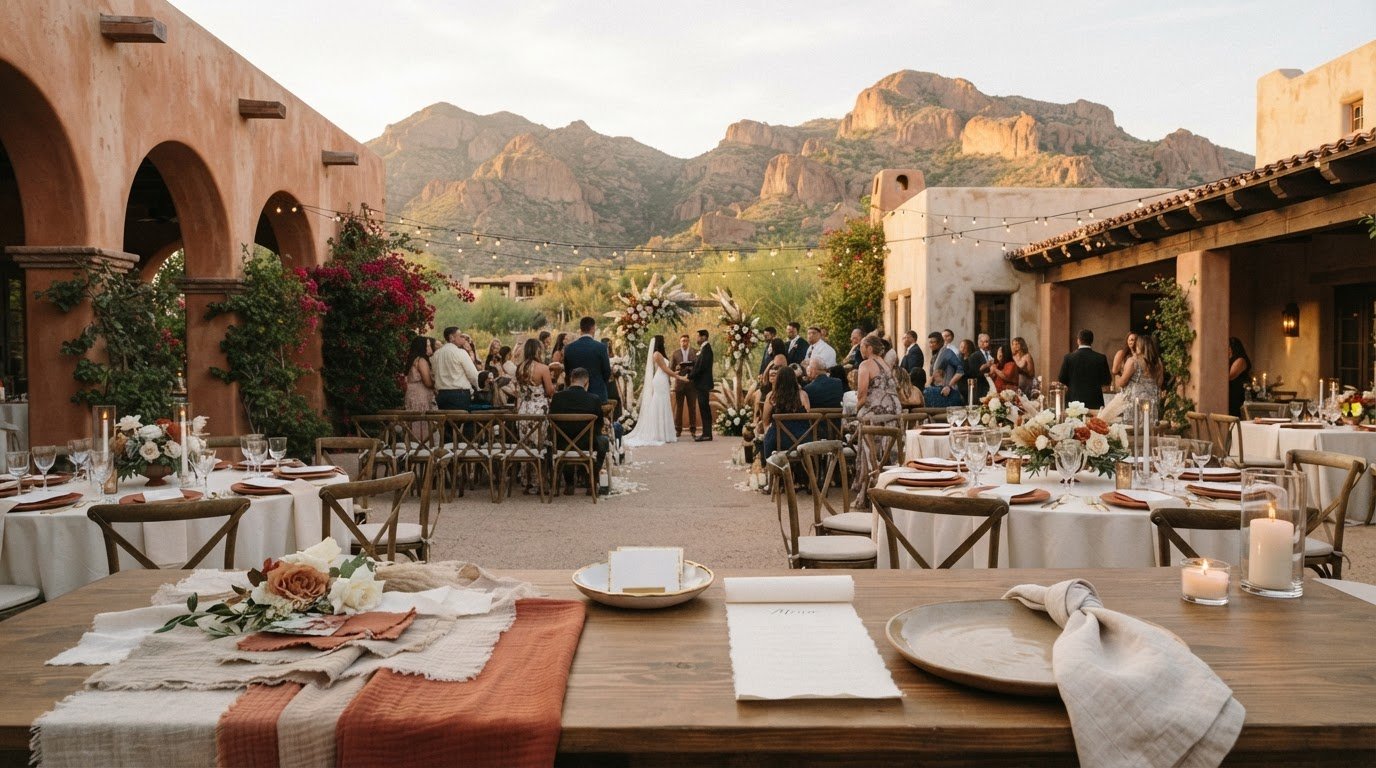
- Step 4: Harmonize with venue architecture: Rather than forcing an aesthetic onto a space, let the built environment guide you. While reviewing popular wedding themes can spark ideas, choosing an authentic setting like a historic estate or guest ranch provides natural adobe textures and dramatic landscape backdrops that ground your palette effortlessly. For celebrations spread over a weekend, exploring historic wedding venue settings with private lodging allows you to craft an immersive, multi-day retreat.
- Step 5: Apply the rule of restraint: Edit out thirty percent of your decorative accessories. Removing cluttered signage or extraneous tabletop trinkets lets high-craftsmanship elements, architectural character, and open space breathe.
By stepping through these milestones sequentially, you establish a confident design blueprint that keeps both partners aligned throughout planning.
Evaluating Popular Wedding Themes and Aesthetic Styles
Every design archetype communicates through a specific language of textures, light, and architectural lines. Instead of relying on broad, generic labels, selecting the right aesthetic requires looking at how raw materials interact under shifting daylight. When evaluating popular wedding themes, your goal is to find tactile pairings that feel grounded and timeless rather than staged for a single photograph.
Understanding how to choose a wedding theme means breaking down each concept into tangible design components:
- Florals: Structured garden arrangements, airy meadow-style installations, or sculptural desert branches.
- Textiles: Crisp pressed cotton, raw slubbed linens, or layered velvet draping.
- Architectural Pairing: Symmetrical ballrooms, open-air courtyards, or historic masonry walls.
Historic Heritage and Refined Rustic Aesthetics
Authentic heritage style moves far beyond burlap table runners and wooden mason jars. This aesthetic celebrates enduring craftsmanship through weathered terracotta tiles, hand-hewn ceiling beams, forged wrought iron, and rough-cut stone. Pair matte ceramic tableware with unbleached linens, native branches, and clusters of beeswax tapers to create a warm, candlelit sanctuary that honors the past without feeling like a novelty farm setting.
Modern Organic and Desert Minimalist Styles
Modern organic design relies heavily on negative space, quiet luxury, and architectural simplicity. Smooth lime-wash plaster, sand-toned stoneware, and natural bleached wood form a clean backdrop that highlights sculptural florals like single-stem calla lilies or airy dried grasses. Uplighting washes across dramatic outdoor rock faces or textured clay walls after twilight, letting the natural surroundings carry the decorative weight.
Classic Formal and Romantic Garden Concepts
Classic elegance uses balance and symmetry to create an enduring sense of occasion. Think tailored letterpress stationery, fine crystal stemware, and polished silver accents set against sprawling garden roses and fragrant jasmine vine. You can soften traditional ballroom formality by hosting your reception along an arched open-air veranda, using climbing greenery and tiered candlelight to merge crisp refinement with relaxed botanical charm.
Reviewing these distinct material palettes helps clarify how to choose a wedding theme that resonates with your personal taste. Once you identify the textures that move you, harmonizing those materials with your venue’s natural architecture becomes an effortless, intuitive next step.
Harmonizing Your Theme with Venue Architecture and Season
Every venue possesses an unmistakable architectural soul. Trying to force an incompatible aesthetic onto a physical space is the fastest path to budget bloat, requiring heavy pipe-and-drape masking and excessive floral installations. Understanding how to choose a wedding theme that works in harmony with existing masonry, arched verandas, and native foliage lets the venue carry the visual narrative effortlessly.
Reading the Architectural Bones of Your Space
Before selecting a single rental linen, conduct an honest audit of your venue’s permanent physical characteristics:
- Unalterable surfaces: Saltillo tile floors, historic adobe walls, carved wooden doors, and structural ceiling trusses cannot be hidden easily.
- Flow of movement: Courtyards, covered arcades, and outdoor fire pits naturally encourage distinct pockets of conversation.
- Surrounding vistas: Jagged mountain ranges, open grasslands, and native flora should serve as living backdrops rather than competing elements.
When you accentuate built-in property charm, your decorative spending shifts from disguising flaws to highlighting handcrafted details.
Aligning Color Stories with Natural Light and Seasonality
Natural illumination transforms physical pigments throughout the day. Direct, midday sun washes out delicate pastels, making muted blush or pale sage appear flat against open-air surroundings. Choosing deeply saturated hues, such as rich fig, ochre, or midnight indigo, ensures your palette holds its depth under open skies. As twilight approaches, warm amber festoon lighting and beeswax tapers effortlessly bridge the transition from an airy ceremony to an intimate, candlelit dinner.
The Advantage of Private Estate and Boutique Lodging Venues
Hosting a wedding across multiple days provides unmatched creative freedom. Choosing private event venues with lodging transforms a brief evening into a cohesive weekend retreat. You can style a casual welcome supper beside a tranquil pool terrace, transition to a formal ceremony against historic 1920s architecture, and close with a relaxed morning-after brunch in an open-air courtyard.
Couples drawn to sweeping organic backdrops often select scenic desert wedding venues, where centuries of cultural heritage and striking geological features frame the gathering. If you are ready to bring your bespoke celebration to life, explore historic estate venue dates that provide private boutique accommodations alongside breathtaking event grounds.
Mastering how to choose a wedding theme grounded in architectural reality guarantees a stress-free planning journey and an authentic, elevated experience for every guest.
Translating Your Wedding Theme into Immersive Guest Touchpoints
True immersion doesn’t rely on personalized party trinkets or excessive signage. Instead, an elevated theme engages all five senses, quietly enveloping guests in an atmosphere of warmth, comfort, and gracious hospitality. When refining how to choose a wedding theme, the secret lies in curating intentional touchpoints that feel organic to the setting, allowing the natural character of your venue to do the heavy lifting.
Paper Goods and Sensory Details: From Save-the-Dates to Tables
Tactile paper goods set expectations long before the celebration begins. Heavyweight cotton cardstock, deckled edges, subtle blind debossing, and rich wax seals offer a quiet preview of your gathering’s tactile language. On the reception tables, carry these motifs forward through handcrafted stoneware, raw linen napkins, and layered candlelight. Consider subtle ambient elements that linger in memory: a faint drift of cedarwood or orange blossom incense, paired with an acoustic guitar set as twilight deepens.
Culinary and Beverage Integration with Your Overall Vision
Your menu should taste like the environment you are celebrating. A formal plated dinner with paired regional vintages elevates a classic, black-tie courtyard setting, while hearty family-style platters evoke the welcoming warmth of an old-world ranch supper. Craft signature cocktails featuring native botanical garnishes, crisp citrus, and vintage glassware. Later, surprise guests with thoughtful late-night bites that honor your favorite personal travels, served around an open stone hearth under the night sky.
Curating the Complete Wedding Weekend Experience
When an event extends across several days, every micro-moment becomes part of the shared story. Greet travelers with welcome baskets wrapped in muted linen ribbons, filled with artisanal treats and thoughtfully penned weekend itineraries. Offering gentle attire suggestions, such as recommending relaxed earth tones or cocktail attire suited for outdoor brick terraces, helps guests feel comfortable and visually unified with the surroundings. For couples seeking a private, historic canvas that effortlessly hosts both lodging and multi-event celebrations, exploring Solana Spanish Villas provides an authentic setting where heritage architecture and serene landscapes naturally elevate your design.
Understanding how to choose a wedding theme ultimately comes down to creating a generous, sensory haven for your loved ones. When every texture, melody, and dish reflects your shared path, the entire weekend feels effortlessly timeless.
Crafting an Unforgettable Celebration Grounded in Place
Designing an elevated wedding isn’t about chasing viral internet boards. It’s about honoring who you are as a couple and welcoming your loved ones into an environment of genuine warmth. As you explore how to choose a wedding theme, remember that restraint and architectural alignment create the most enduring impressions. When you allow natural stone, organic textures, and shifting daylight to set the stage, your styling decisions become remarkably simple and deeply intentional.
If you envision a gathering that extends beyond a single fleeting evening, an authentic venue makes all the difference. With authentic 1920s historic estate architecture offering built-in romance, you can host a seamless multi-day private buyout pairing versatile event spaces with luxury guest lodging. Ready to begin your next chapter in a space steeped in timeless charm? Discover private estate wedding settings at Solana Spanish Villas and design an experience your guests will cherish for a lifetime.
Frequently Asked Questions
How far in advance should we choose our wedding theme?
You should finalize your core aesthetic approximately nine to twelve months before your wedding date, immediately after securing your venue. Nailing down this foundation early guides your stationer, floral designer, and rental orders without last-minute scrambling. If you are learning how to choose a wedding theme, establishing your look prior to booking decorative vendors ensures every contract and creative proposal directly serves your cohesive vision.
Can we combine two completely different wedding themes together?
Yes, you can seamlessly combine contrasting styles by treating one as the structural base and the other as an accent layer. For instance, pairing the clean geometry of modern minimalism with the rich, weathered textures of a historic Spanish villa creates compelling visual depth. Use neutral textiles and authentic architectural finishes to anchor the space, then introduce the second aesthetic through tabletop ceramics, paper details, and subtle ambient lighting.
What happens if our wedding theme clashes with our venue?
When your vision clashes with your venue, pivot your styling to honor the architecture rather than attempting to disguise the space with expensive pipe and drape. Forcing an ultra-modern aesthetic into an ornate historic ballroom or rustic guest ranch feels jarring and strains your budget. Instead, adapt your color palette and materials to complement permanent surfaces like hand-painted tiles, wood ceiling beams, or natural stone masonry.
How much of our total budget should be allocated toward thematic decor?
Most couples allocate between 10% and 15% of their total wedding budget specifically toward decorative elements like florals, specialized rentals, linens, and custom lighting. For a typical wedding, decoration costs commonly range from $2,000 to $10,000, depending on the scale and complexity of the installations. Choosing a naturally scenic or historic setting preserves your budget, because the built environment provides organic beauty without excessive rented props.
Is a formal wedding theme necessary for a small, intimate gathering?
A formal theme is never mandatory for an intimate celebration; your gathering should reflect the level of hospitality and personal comfort you prefer. Micro-weddings and boutique retreats often feel most powerful with an elevated organic or relaxed dinner party aesthetic. Focusing on tactile details, such as handcrafted ceramic plates, tailored stationery, and a curated multi-course wine dinner, creates a luxurious experience without the rigid constraints of traditional formality.
What is the biggest mistake couples make when choosing a wedding theme?
The biggest mistake couples make when exploring how to choose a wedding theme is purchasing trendy decorative items before securing their venue. Buying mismatched accessories from social media feeds creates visual clutter and often clashes with the physical property. Select your venue first, assess its lighting and architectural materials, and let those existing bones inform your design narrative before spending money on individual decor pieces.
Can our wedding theme change after sending save-the-dates?
You can refine your aesthetic after mailing save-the-dates, provided you maintain the general formality level communicated to guests. While your color palette or floral textures can evolve during rental meetings, shifting from a relaxed outdoor retreat to a black-tie ballroom celebration confuses traveling attendees. If you adjust subtle details, let the formal invitation suite reflect the refined vision so guests arrive appropriately dressed and prepared.
0 Comment