

Why does a $5,000 site fee often end up costing more than a $20,000 all-inclusive estate buyout? It’s a question that haunts many couples as they begin their search for the perfect backdrop. You likely dreamed of a venue that feels like a peaceful retreat, only to be met with a confusing wedding venue cost breakdown and unexpected 20 percent service charges that cloud your vision. It’s frustrating to compare the heritage and charm of a private ranch against the rigid packages of a corporate hotel when the true bottom line remains hidden.
This 2026 guide offers the structured clarity you need to master these complex financial landscapes. We’ll move past the surface-level stickers to explore how site fees, labor costs, and administrative surcharges interact. By the end of this guide, you’ll have a clear framework for evaluating contracts and understanding how immersive hosting can actually lower your overall investment. You deserve to feel like a gracious host, confident that every dollar spent on your sanctuary contributes to a legacy of beautiful memories rather than a list of hidden fees.
Key Takeaways
- Learn to navigate the 2026 national price ranges for various venue types, moving beyond simple room rental fees to understand the total investment.
- Master a professional wedding venue cost breakdown that deciphers the “plus-plus” factor and distinguishes between administrative service charges and gratuities.
- Compare the predictable structure of traditional hotel ballrooms against the atmospheric exclusivity and flexible logistics of a private guest ranch or villa.
- Discover how the immersive “buyout” model allows you to leverage guest lodging revenue to significantly offset your overall event site fees.
- Gain a clear framework for evaluating contracts, ensuring you can invest with confidence and avoid unexpected 20 percent surcharges.
Decoding the Sticker Price: What Does a Wedding Venue Cost in 2026?
The sticker price of a wedding venue is rarely the final number you’ll see on an invoice. It’s helpful to view your wedding venue cost breakdown as a collection of layers, starting with the physical space and extending into service infrastructure. While a basic community hall might offer a low entry point, a luxury guest ranch provides a comprehensive ecosystem of hospitality, heritage, and atmosphere. Historically, the venue and its associated catering consume about 30 to 40 percent of a couple’s total budget, making it the most significant investment in the celebration’s foundation.
Across the United States, 2026 projections show a vast spectrum of pricing. DIY spaces often start with a simple flat fee, while high-end estates and boutique resorts utilize a “per person” model or a substantial “site fee” to maintain exclusivity. Understanding wedding reception traditions and costs is essential here, as many venues bundle rentals, lighting, and staff into their base price. Others operate as a blank canvas, where the initial fee is lower but the logistical expenses for tables, chairs, and power can quickly escalate.
The Influence of Seasonality and Day of the Week
Saturday remains the most sought-after real estate in the wedding industry, commanding the highest premiums due to its convenience for traveling guests. However, a shift is occurring. Many couples now embrace the intimacy of a weekday retreat or a Thursday celebration to secure their dream location at a more accessible rate. Sunday weddings are also rising in popularity, offering a relaxed conclusion to a weekend of festivities. Choosing an off-peak month or a non-traditional day doesn’t just save money; it often grants you more dedicated attention from the venue’s stewardship team.
Site Fees vs. All-Inclusive Packages
A site fee is the baseline investment for exclusive property access. This model is common in private villas and historic ranches where the value lies in the preservation of the environment and the privacy of the grounds. In contrast, all-inclusive packages offer the convenience of a “one-stop shop,” covering food, beverage, and basic decor. While these packages simplify the planning process, they often lack the customization found in estate buyouts. If you value a tailored experience that reflects your personal heritage, a site-fee-based venue allows you to curate every detail, from the culinary offerings to the specific floral arrangements that grace the architecture.
The Anatomy of a Venue Invoice: A Line-by-Line Breakdown
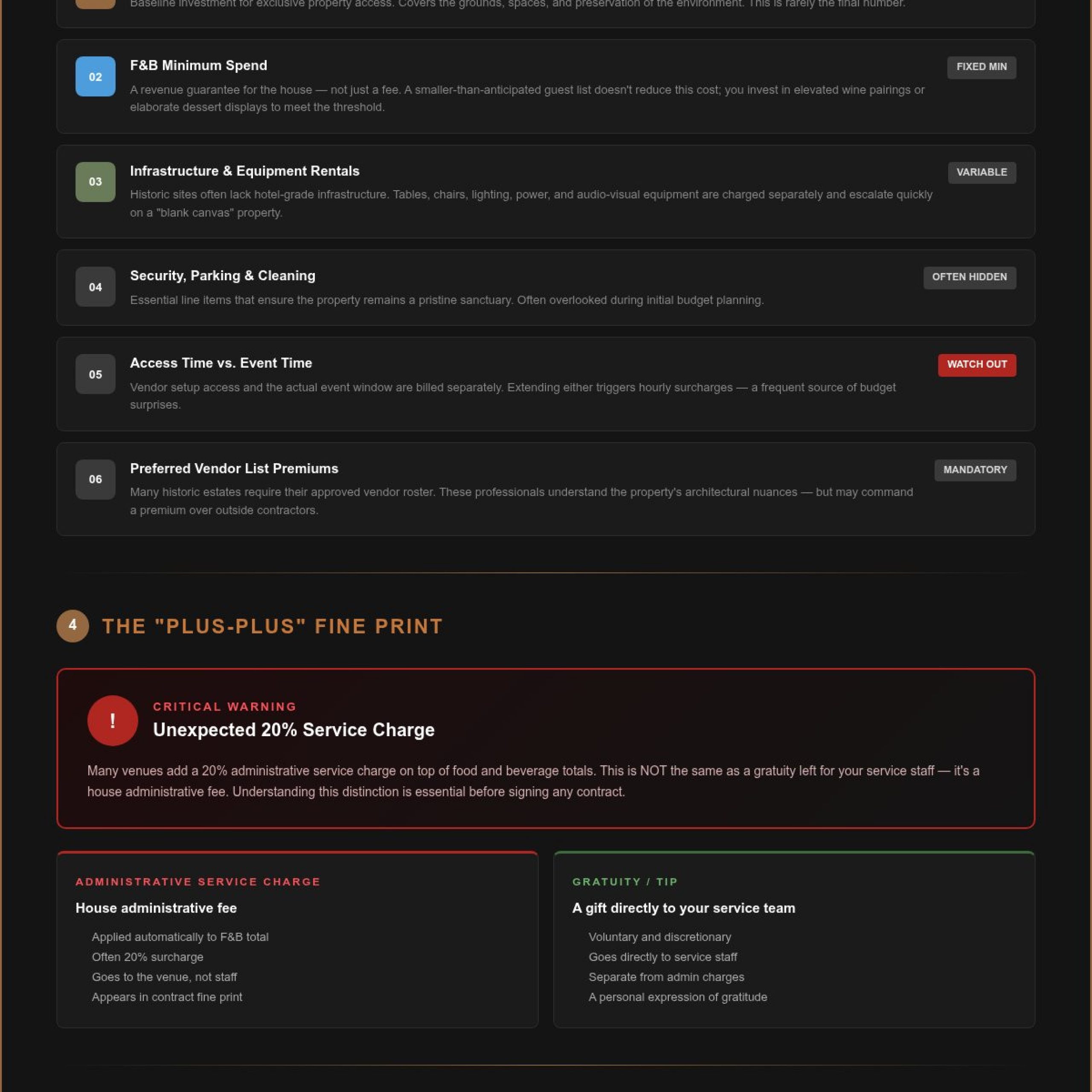
Auditing a contract requires a shift from dreamer to detail-oriented steward. A comprehensive wedding venue cost breakdown often includes essentials that stay hidden until the final draft. While the site fee covers the grounds, smaller line items like security, parking, and cleaning fees ensure the property remains a pristine sanctuary for your guests. It’s also vital to distinguish between “access time” for vendors to set up and “event time” when the music plays. Extending either usually triggers hourly surcharges that can surprise an unguided budget.
Many historic estates require you to use a preferred vendor list. These professionals understand the architectural nuances of the property, but they may come at a premium compared to outside contractors. Don’t mistake the Venue Manager for a personal Wedding Planner. The former ensures the lights stay on and the heritage is preserved, while the latter manages your specific timeline and vendor coordination. According to data on average wedding costs according to Forbes Advisor, these logistical layers are where many couples find their initial estimates falling short.
Food and Beverage (F&B) Minimums
Most professional event venues implement a minimum spend requirement, especially on peak dates. This isn’t just a fee; it’s a guarantee of revenue for the house. If your guest list is smaller than anticipated, you don’t simply pay less. Instead, you might invest in elevated wine pairings, a refined late-night snack station, or an elaborate dessert display to reach the agreed-upon threshold. It’s a way to ensure the quality of service remains high regardless of the final headcount.
Infrastructure and Equipment Rentals
The “blank canvas” of a historic site is breathtaking, but it often lacks the basic infrastructure of a modern hotel. You must account for high-quality linens, comfortable seating, and tables that complement the surroundings. Outdoor settings or 1920s-era structures may also require supplemental power and specialized lighting to ensure a safe, atmospheric evening. Choosing a private guest ranch with included lodging can often streamline these logistics, as many essentials are already part of the estate’s heritage.
Traditional Venues vs. Private Estate Buyouts: A Comparison
Choosing between a grand hotel and a secluded villa is more than a stylistic choice; it’s a decision about the rhythm of your celebration. While hotels offer predictable pricing, you’re often one of several events sharing a lobby or elevator. In contrast, a private villa or guest ranch provides a sanctuary where your story is the only one being told. This exclusivity is a cornerstone of a modern wedding venue cost breakdown, reflecting a shift toward intimate, high-quality experiences. As we look at U.S. inflation and consumer price trends, the value of a comprehensive buyout becomes clearer, as it stabilizes costs across multiple days of hosting.
Guest ranches represent a unique fusion of Western heritage and modern luxury. They offer an escape from the corporate coldness of a ballroom, replacing it with the warmth of a historic estate. This “immersive hosting” approach is the leading trend for 2026, as couples seek to provide their guests with a sense of place and tranquility rather than just a seat at a table. It’s a move away from the transactional nature of event planning toward a more boutique, personal narrative.
The Privacy Premium
The true luxury of 2026 is time and seclusion. Traditional venues often limit your joy to a strict six-hour window, but private estates invite you to linger. By selecting event venues with lodging, you create a multi-day itinerary that transforms a single evening into a weekend of connection. This model ensures that your investment covers not just a room rental, but the creation of a home base for your inner circle. You aren’t just paying for a space; you’re paying for the absence of strangers and the freedom to wake up in the same sanctuary where you celebrated the night before.
Logistical Freedom and Customization
Hotels often rely on rigid catering menus and strict noise ordinances that can stifle the spirit of a celebration. Private buyouts offer the freedom to curate a culinary experience that honors your heritage, whether that involves a formal banquet or a relaxed ranch-style feast under the stars. Curfew restrictions are also typically more flexible at a private estate, allowing the evening to fade naturally rather than being cut short by a hotel’s public-area policies. Private buyouts turn a wedding into a residential retreat. This flexibility allows for a deeper level of craftsmanship in every detail, from the late-night snacks to the morning-after brunch on the terrace.
Navigating the “Fine Print”: Taxes, Service Charges, and Gratuities
Mastering a wedding venue cost breakdown requires you to look beyond the initial site fee and into the world of “plus-plus” (++) pricing. This industry shorthand represents the additional sales tax and service charges that apply to your food, beverage, and rental totals. Depending on your region, these additions can increase your final invoice by 25 to 30 percent. It’s also standard for professional event venues to require a liability insurance policy, typically ranging from $1 million to $2 million. This policy protects both the property’s heritage and your guests, ensuring that the peaceful retreat you’ve planned remains a sanctuary for everyone involved.
Sales tax impacts vary significantly. While some regions only tax food and beverage, others apply taxes to the physical rental of the space itself. A detail-oriented steward of the budget will ask for a mock invoice early in the process to see how these regional rates interact with the base fees. This transparency prevents the “sticker shock” that often occurs in the final weeks of planning, allowing you to invest with confidence in the quality and craftsmanship of your celebration.
The Service Charge vs. Gratuity Debate
One of the most common pitfalls in contract reading is confusing a service charge with a tip. A service charge, usually 20 to 25 percent, is a mandatory administrative fee that covers the venue’s operational overhead. It supports the complex logistics of event management and the ongoing preservation of the architecture. It is not a direct payment to the waitstaff or bartenders. For those who provide direct care on the day of the event, such as the banquet captain or parking attendants, you should budget for separate gratuities. Reviewing the “Administrative Fee” clause in your contract will clarify whether any portion of the service charge is actually distributed to the staff.
Protection and Deposits
Historic and luxury properties often require a damage deposit to safeguard their architectural heritage. This is a reasonable request for a site with 1920s-era masonry or delicate natural environments. In a post-2020 landscape, pay close attention to “Act of God” or Force Majeure clauses. These sections should offer a balanced approach to rescheduling, reflecting a partnership between the host and the venue. Before signing, always conduct a thorough site visit to document the property’s condition. This ensures that your deposit is returned promptly after your stay. If you’re looking for a venue that values this level of transparency and personal stewardship, consider a private guest ranch buyout where the fine print is as welcoming as the surroundings.
The Private Villa Advantage: Leveraging Lodging to Offset Costs
A private estate buyout represents the pinnacle of immersive hosting. Instead of a six-hour window in a sterile room, you secure a historic sanctuary for the entire weekend. This approach fundamentally alters your wedding venue cost breakdown by turning a static expense into a shared experience. When your core wedding party stays on-site, the property becomes more than a backdrop. It transforms into a residential retreat where memories are crafted over morning coffee on the terrace and late-night conversations by the fire. This proximity fosters a sense of tranquility that no hotel shuttle can replicate. It’s a move toward a more boutique, personal narrative that justifies the travel for your closest guests.
The psychological value of this “home base” cannot be overstated. You aren’t just renting a space; you’re acting as a dedicated steward of your guests’ comfort. This model replaces the transactional feel of a ballroom with the warmth of a heritage-conscious estate. Your wedding becomes a destination guest ranch experience where the journey of discovery is just as important as the ceremony itself. It allows for a relaxed, steady pace that mirrors the natural environment, ensuring you feel like a guest at your own celebration.
The Math of the Lodging Offset
The financial logic of a buyout is often its best-kept secret. By utilizing private property booking systems, you can allow guests to contribute to the lodging portion of the contract. Consider a hypothetical scenario where the total buyout price is offset by the revenue generated from filled guest rooms. This revenue flows back into your budget, significantly lowering the effective site fee. Your guests aren’t just paying for a room; they’re investing in a vacation-plus-wedding experience. It’s a sophisticated way to provide high-quality hospitality while maintaining a disciplined investment in your venue choice.
Finalizing Your Venue Choice
Before you sign, apply a three-question litmus test to your venue value. Does the property offer total exclusivity for your timeline? Can the lodging revenue be leveraged to offset the site fee? Does the venue management team act as a gracious host rather than a corporate entity? A venue that values tradition and detail-oriented service will often save you money on external coordination, as the architecture and heritage provide their own inherent beauty. Your next step is to move from the budget breakdown to a personal inquiry. Seek a sanctuary that blends old-world charm with modern convenience, ensuring your investment creates a legacy of peaceful reflection.
Securing a Sanctuary for Your 2026 Celebration
Mastering the nuances of your wedding venue cost breakdown allows you to move from a place of uncertainty to one of confident stewardship. You now have the tools to audit every line item, from service charges to infrastructure fees, while recognizing the immense value of an exclusive property buyout. By leveraging guest lodging revenue, you don’t just offset your initial investment; you create a residential retreat where your closest friends and family can truly connect in a private, atmospheric setting.
Solana Spanish Villas offers a sanctuary where historic charm meets modern luxury, providing boutique resort privacy for intimate groups. Our team provides expert guidance on immersive event hosting to ensure your celebration feels like a peaceful, well-curated escape. Explore our private villa accommodations for your 2026 celebration and begin your journey toward a weekend defined by heritage and hospitality. You deserve a planning process that is as gracious and inviting as the property you choose.
Frequently Asked Questions
What is the average cost of a wedding venue in 2026?
Projections suggest a wide range depending on venue type and exclusivity. National averages often sit between $12,000 and $16,000 for standard event spaces. However, private estate buyouts or luxury guest ranches command higher initial fees because they provide a sanctuary rather than just a room. When evaluating a wedding venue cost breakdown, it’s essential to consider that these figures often include more than just the site, covering essential infrastructure and professional stewardship.
What is included in a typical venue site fee?
A standard site fee generally covers exclusive access to the property’s grounds and architectural highlights for a specific duration. This baseline investment often includes basic utilities, lighting, and the presence of a venue manager to ensure the heritage of the site is respected. In a boutique guest ranch setting, the fee might also encompass curated lounge furniture or outdoor ceremony spaces that reflect the natural beauty of the environment, reducing your need for external rentals.
How much should I budget for venue service charges and taxes?
You should typically set aside an additional 25 to 30 percent of your base contract for these mandatory fees. This “plus-plus” factor includes regional sales taxes and administrative service charges. It’s important to remember that a service charge supports the operational overhead and the dedicated staff who maintain the property’s tranquility. These fees are separate from gratuities, which are voluntary tokens of appreciation for the individuals who provide personal care during your stay.
Is it cheaper to have a backyard wedding or rent a private estate?
While a backyard celebration avoids a site fee, the logistical costs often exceed the price of a professional venue. You must rent every essential piece of infrastructure, from high-quality restrooms and power generators to professional-grade kitchens. A private estate or guest ranch provides these amenities as part of its heritage, offering a more polished and tranquil experience. The hidden costs of transforming a residential space often make an established venue a more disciplined investment.
What is a food and beverage minimum and how does it work?
This is a guaranteed revenue threshold that the venue requires you to meet through catering and bar services. It ensures the house can maintain its high standards of hospitality on peak dates. If your guest count is lower than expected, you can still reach the minimum by upgrading your menu with refined wine pairings or artisanal late-night snacks. It’s a way to ensure every dollar contributes to the quality and craftsmanship of your celebration.
Can guest lodging actually pay for my wedding venue fee?
Yes, many couples successfully leverage a buyout model to significantly lower their effective site fee. By allowing your closest friends and family to book the on-site accommodations, the revenue from those guest rooms can be applied toward the total contract cost. This strategy turns your wedding venue cost breakdown into a shared investment. It allows you to host an immersive, multi-day retreat while maintaining a sophisticated and professional approach to your overall event budget.
What are the most common hidden costs in wedding venue contracts?
Unexpected expenses often include liability insurance requirements, cleaning fees, and surcharges for extended vendor setup times. You might also encounter fees for power distribution in historic structures or parking attendants for larger groups. A gracious host will provide a transparent invoice early in the process, but it’s wise to ask specifically about administrative fees and whether they include staff gratuities to ensure your financial plan remains accurate and complete.
How far in advance should I book a private villa or guest ranch?
We recommend securing your sanctuary at least 12 to 18 months in advance, especially for peak Saturday dates in 2026. Private estates and boutique guest ranches offer a level of exclusivity that makes them highly sought after by couples seeking a peaceful retreat. Booking early ensures you have the time to curate a multi-day itinerary and allows your guests to plan their travel to your destination with ease and anticipation.
0 Comment