

The most expensive hour of your offsite isn’t the keynote or the gala dinner; it’s the sixty minutes lost to a forced game that makes your senior leadership reach for their smartphones. We’ve all felt that collective “cringe” when traditional corporate retreat icebreakers fail to respect the professional maturity of the room. It’s a common frustration for organizers who want to build a cohesive culture without wasting valuable time on low-value activities that feel more like a chore than a connection.
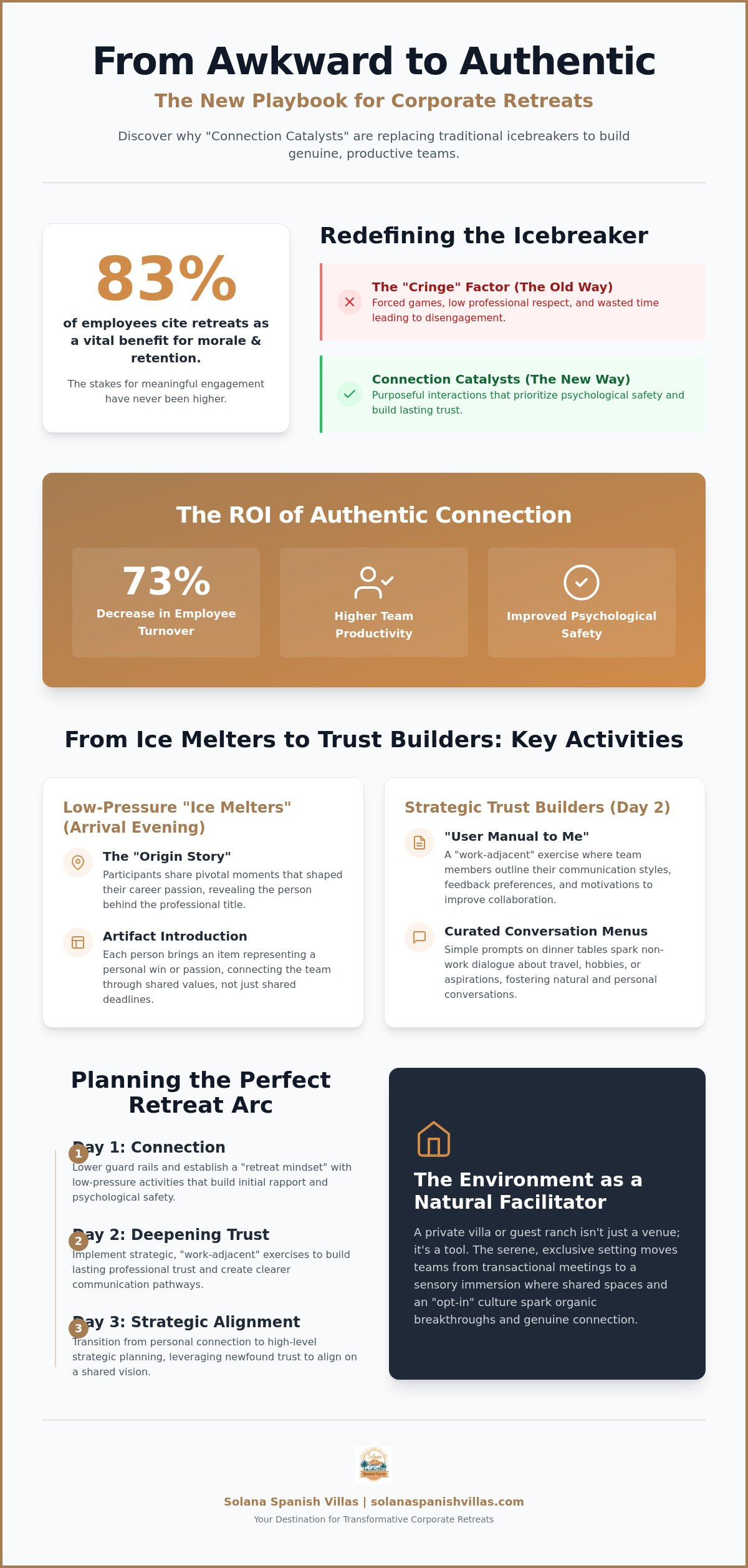
You deserve a strategy that transforms forced interactions into genuine professional bonds. With 83% of employees citing retreats as a vital benefit for their morale and retention, the stakes for engagement have never been higher. This guide reveals how to move beyond the boardroom with sophisticated “connection catalysts” designed for high-end environments. We’ll show you how a private desert setting and a touch of Western heritage can naturally melt silos, creating an atmosphere where authentic dialogue thrives and your team returns more productive than ever.
Key Takeaways
- Learn why modern corporate retreat icebreakers are shifting toward “connection catalysts” that prioritize psychological safety and professional respect over superficial games.
- Discover low-pressure arrival activities, such as the “Artifact Introduction,” designed to lower guards and establish a focused retreat mindset from the very first evening.
- Implement “work-adjacent” exercises like the “User Manual to Me” to build lasting professional trust and create clearer communication pathways across departmental silos.
- Understand how choosing a private villa or guest ranch environment acts as a natural facilitator, using shared living spaces to spark organic breakthroughs.
- Follow a structured three-day implementation guide to transition your team smoothly from personal connection to high-level strategic alignment and shared vision.
Redefining the Icebreaker: Why Connection Catalysts Win in 2026
The traditional offsite often begins with a palpable tension. As colleagues gather under a sprawling desert sky, there’s often a quiet apprehension that someone might soon ask them to role-play or share an embarrassing “fun fact.” This “cringe” factor isn’t just an awkward moment; it’s a failure of design. In 2026, the most effective corporate retreat icebreakers have evolved into “connection catalysts.” These are curated interactions that respect professional boundaries while gently inviting the person behind the title to step forward into the warmth of genuine conversation.
Traditional games fail because they lack a clear “why.” When senior leadership feels an activity is “touchy-feely” without purpose, they disengage. Authentic bonding requires a foundation of team-building principles that prioritize psychological safety over performance. By replacing forced fun with purposeful reflection, you transform the retreat from a series of tasks into a journey of discovery. The ROI of this shift is measurable. Research has shown that companies with strong team bonding strategies can see a 73% decrease in employee turnover. When teams build genuine trust, they return to the office with higher productivity because the friction of departmental silos has been replaced by the grease of mutual understanding.
The Psychology of Professional Vulnerability
Many employees experience a biological threat response when asked to participate in group games. Their brains perceive a risk to their professional status in front of peers and superiors. To move past this, a “gracious host” approach is essential. You must set the stage for participation without coercion, allowing the serene environment to do the heavy lifting. For executive teams, the safe-to-share threshold is reached when participants feel their professional competence is fully respected even as they reveal the personal values that drive their decision-making.
From Meetings to Retreats: The Scale of Engagement
A weekly Zoom check-in is a transactional exchange; a retreat is a sensory immersion. This difference in scale requires a deeper level of engagement that only a private, scenic setting can provide. At a private villa or guest ranch, the atmosphere itself facilitates connection. An “opt-in” culture is vital here. By offering activities that align with specific goals, whether it’s high-stakes innovation or resolving long-standing conflicts, you ensure that every moment feels like an investment. When planning corporate retreat icebreakers, remember that the venue is your most powerful facilitator, turning a simple gathering into a transformative milestone for your organization’s heritage.
Low-Pressure “Ice Melters” for the Arrival Evening
The arrival evening serves as a critical bridge between the high-pressure office environment and the tranquil reflection of an offsite. On Day 1, your primary objective is to lower guard rails and establish a “retreat mindset” that favors curiosity over competition. Instead of jumping into complex corporate retreat icebreakers that demand high energy, focus on low-pressure “ice melters” that feel like a natural extension of a dinner party. When guests arrive at a private guest ranch or villa, the environment should invite them to exhale before they are asked to engage.
The Power of the “Origin Story”
Sharing “how I got here” is perhaps the most effective low-risk bonding tool available. Rather than a dry recitation of resumes, facilitate a “2-Minute Bio” that focuses on passion. Ask participants to describe the pivotal moments that shaped their character. This exercise is best held in a relaxed setting, perhaps gathered around a crackling fire pit or within a comfortable shared lounge. When people share their origins, they humanize themselves to their peers, making it easier to spice up your corporate retreat with deeper strategic work on the following days. It’s about building a narrative of who they are, not just what they do.
Sensory Icebreakers: Beyond Verbal Communication
Sometimes the most powerful corporate retreat icebreakers aren’t spoken at all. A shared “Welcome Experience,” such as a tasting of local heritage foods or regional wines, provides a neutral point of discussion. These shared physical experiences reduce social anxiety by giving everyone a common sensory focus. Pay close attention to the atmosphere; warm lighting and soft music can melt initial tension more effectively than any forced game. If you’re looking for a setting that naturally facilitates this level of intimacy, consider how the right event venue in Tucson can serve as the perfect backdrop for these early connections.
Strategic Team Building: Activities for Deepening Professional Trust
By the second morning of your offsite, the initial social jitters have usually dissolved into the crisp desert air. The focus must now shift. While the arrival evening was about lowering guards, Day 2 is about deepening the professional foundation. This is where we move from social bonding to “work-adjacent” corporate retreat icebreakers. These activities don’t tackle your quarterly KPIs directly, but they address the underlying mechanics of how your team communicates, trusts, and solves problems together.
The “User Manual to Me” exercise is a cornerstone of this transition. Each leader shares their own personal operating system. Do you prefer a quick morning Slack or an afternoon deep-dive call? How do you like to receive constructive feedback? By revealing these preferences, you remove the invisible friction that often leads to workplace misunderstandings. It’s a simple yet profound way to build psychological safety. When a colleague knows your “manual,” they don’t have to guess your intentions; they can simply follow your lead.
To bridge the gap between connection and hard strategy, use the “Stop-Start-Continue” icebreaker. This collaborative exercise asks the group to identify one habit the team should abandon, one new practice to adopt, and one core strength that must be preserved at all costs. It’s a gentle way to surface collective frustrations and aspirations before you dive into the heavier sessions of the afternoon. As you explore our corporate retreat venues, you’ll find that having a dedicated, private space for these honest conversations is just as important as the activities themselves.
The “Values Alignment” Workshop
Authentic engagement happens when personal values intersect with the corporate mission. In the quiet, intimate corners of a private villa, host small breakout groups for value-mapping. Ask your team to identify the three core values that drive their work. Are they rooted in craftsmanship, heritage, or innovation? Documenting these insights creates a shared language that you can carry back to the office, ensuring that the retreat’s breakthroughs don’t evaporate once you leave the ranch.
Problem-Solving Scenarios: The “Ranch” Mentality
Stepping outside the “office context” allows for more creative logic. The “Homestead Challenge” uses metaphorical scenarios to test group problem-solving. Imagine your team must navigate a complex logistical puzzle using only the resources available on a traditional estate. These metaphorical challenges strip away the titles and hierarchies that can stifle innovation in a boardroom. When you’re visualizing “Future Headlines” for the company’s success two years from now, doing so against a backdrop of Western heritage provides a sense of perspective and longevity that a standard hotel room simply cannot match.
Maximizing the Retreat Environment for Natural Facilitation
The physical environment of your offsite often acts as a silent facilitator, doing the heavy lifting that structured corporate retreat icebreakers sometimes cannot. While a traditional hotel ballroom creates a transactional atmosphere, a private villa offers an intimate narrative that encourages guests to settle in and stay a while. This is the essence of the “Kitchen Table” effect. When executives share a living space, the most profound breakthroughs often happen over a late-night coffee or while prepping a casual breakfast. These unscripted moments allow for a level of vulnerability that a fluorescent-lit meeting room simply stifles.
Utilizing outdoor spaces for evening reflections adds another layer of depth to the experience. A crackling fire pit or a quiet courtyard under the stars provides a sense of sanctuary. It’s in these heritage-rich settings that teams can discuss the legacy of their work and the future they wish to build. For those who prefer a more cosmopolitan but equally refined backdrop, check out Serra On Vine. By leaning into the “gracious host” model, you ensure that every corner of the property serves a purpose, turning a simple stay into a curated journey of professional renewal.
Designing “Collision Points”
Spontaneous connection is rarely accidental; it’s the result of thoughtful design. By strategically placing coffee stations and lounge areas in sun-drenched courtyards or near historic fireplaces, you create “collision points.” These are spaces where a junior manager and a C-suite executive might find themselves discussing regional history or desert flora. Shared lodging further dismantles hierarchical barriers, replacing the cold anonymity of separate hotel floors with the warmth of a shared home. View our private villa rentals for groups to see how these layouts foster communal trust.
Nature-Based Connection
The desert landscape is more than a backdrop; it’s a physiological tool. Natural surroundings significantly reduce cortisol levels, opening the mind to expansive ideas and reducing social friction. Try a “Walking Meeting” icebreaker by pairing individuals from departments that rarely speak for a short trail walk. This shared movement through nature bypasses the defensive “threat response” common in office settings, allowing for fluid and creative dialogue. For more on how the environment impacts your bottom line, see our piece on The ROI of Nature in Executive Retreats.
Perhaps the most sophisticated icebreaker is scheduled silence. High-end retreats in 2026 are moving away from back-to-back agendas toward “white space.” Giving your team an afternoon to simply exist within a peaceful, scenic space allows the morning’s strategic lessons to marinate. It’s during these quiet intervals that the most authentic professional bonds are forged. If you’re ready to move beyond the boardroom, consider how a corporate retreat in Tucson can provide the space your team needs to truly connect.
Planning the Perfect Retreat Arc: A 3-Day Implementation Guide
A truly transformative offsite is more than just a collection of disconnected activities; it is a meticulously designed narrative arc. To ensure your corporate retreat icebreakers deliver a high return on investment, you must align them with the natural energy of the group over a three-day period. This structured approach prevents the “cringe” factor by meeting participants where they are emotionally, gradually building from personal safety to high-level strategic alignment.
- Phase 1 (Arrival): The Foundation of Safety. Your first evening is dedicated to lowering cortisol levels and establishing a personal, non-work identity. As explored in our earlier sections, low-pressure “ice melters” like the Artifact Introduction help guests transition from their corporate roles into a more reflective, human mindset.
- Phase 2 (Middle): The Deep Dive. This is the engine room of your retreat. On the second day, focus on professional styles, shared values, and the collective vision. Activities like the “User Manual to Me” or value-mapping workshops thrive here, as the initial social barriers have already begun to dissolve.
- Phase 3 (Departure): The Bridge. The final morning is about integration. Focus on concrete commitments, shared gratitude, and building “The Bridge” back to the office. This ensures that the insights gained in the desert don’t evaporate the moment the team returns to their desks.
Ending a retreat too abruptly can lead to “Retreat Whiplash,” where the sudden return to high-volume emails feels jarring and erodes the bond you’ve built. To avoid this, conclude with a low-pressure closing circle. This final moment of reflection allows the team to decompress together, ensuring the transition back to the daily grind is as smooth as the serene environment that hosted them.
The “Gratitude Hot Seat” Closing
A sophisticated way to conclude is through a “Gratitude Hot Seat.” In this professional exercise, each team member is briefly acknowledged for a specific contribution they made during the retreat or a strength they bring to the organization. To keep this impactful rather than overly sentimental, provide clear guidelines: focus on specific, work-related observations. This final icebreaker ties back to your original objectives by reinforcing a culture of recognition and mutual respect, sending your team home with a sense of purpose and belonging.
Booking Your Sanctuary for Connection
The success of any facilitation starts with the setting. Choosing a private villa or guest ranch is the first strategic step in ensuring your corporate retreat icebreakers actually work. Exclusive-use venues provide the privacy necessary for sensitive leadership discussions and the “Kitchen Table” atmosphere that hotels simply cannot replicate. When your team isn’t sharing a lobby with hundreds of strangers, they feel a greater sense of ownership and psychological safety. Plan your next transformative corporate retreat with us and discover how the right environment can turn a simple meeting into a lasting legacy for your brand.
Cultivating the Next Era of Professional Connection
The evolution of the executive offsite demands a departure from the predictable. By replacing outdated games with sophisticated connection catalysts, you prioritize the psychological safety and professional respect of your leadership team. We’ve explored how a structured three-day arc ensures that every interaction serves a higher purpose, moving from personal discovery to strategic alignment. Modern corporate retreat icebreakers are no longer about simple entertainment; they’re about intentional architecture that transforms a group of colleagues into a unified, high-performing force.
The right setting is the final piece of this puzzle. Our private, exclusive-use estate offers the perfect sanctuary for these sensitive discussions, combining historic 1920s guest ranch charm with the modern luxury your team expects. Here, Western heritage meets contemporary refinement, providing a secure backdrop where total confidentiality is guaranteed. Book Your Private Villa Retreat Today to begin crafting an experience that resonates long after the desert sun sets. Your team’s next breakthrough is waiting in the quiet, sun-drenched corners of our historic villas.
Frequently Asked Questions
How do you do an icebreaker without it being cheesy?
The key to avoiding the “cringe” factor is to ensure every activity has a clear, professional purpose that respects your team’s maturity. Instead of focusing on high-energy games, use “connection catalysts” that prioritize psychological safety and intellectual curiosity. By framing interactions around shared values or personal heritage rather than physical performance, you create an environment where participation feels like a choice rather than a chore.
What are some icebreakers for senior executives who hate games?
Senior leaders typically respond best to activities that acknowledge their expertise and value their time. Intellectual exercises like “Future Headlines,” where the team visualizes company success two years from now, or the “Artifact Introduction” work well because they focus on legacy and storytelling. These corporate retreat icebreakers leverage the group’s professional identity, making the connection feel like a strategic investment rather than a distraction.
How much time should be allocated to icebreakers during a 3-day retreat?
You should generally allocate 10% to 15% of your total retreat agenda to intentional connection activities. This follows standard industry benchmarks for team-building allocation, ensuring you build enough trust to support the heavy lifting of strategic sessions. For a typical 3.78-day retreat, this equates to roughly four to six hours of structured bonding spread across the arrival evening and morning transitions.
What is the “User Manual to Me” exercise and why does it work?
The “User Manual to Me” is a professional exercise where team members document and share their specific communication preferences and feedback styles. It works because it makes invisible expectations visible, effectively removing the friction that leads to workplace misunderstandings. By sharing how they prefer to receive a morning briefing or a difficult critique, leaders build a foundation of trust that persists long after they leave the villa.
Can icebreakers actually improve team productivity after the retreat?
Yes, research has documented a 26% increase in productivity following offsite retreats that successfully build team cohesion. When corporate retreat icebreakers are used to melt departmental silos and build psychological safety, the resulting trust allows for faster decision-making and more effective collaboration. This isn’t just about feeling good; it’s about creating a more efficient, aligned workforce that understands how to pull in the same direction.
How do you handle employees who refuse to participate in icebreakers?
Adopt an “opt-in” culture that respects individual boundaries and prevents a biological threat response. If an employee is hesitant, offer them a less visible role, such as a scribe or timekeeper, which keeps them engaged without the pressure of the spotlight. A gracious host understands that building trust cannot be coerced; providing a serene, private environment often encourages natural participation more effectively than any mandate.
0 Comment